Bruce Goldberg, “Ayn Rand’s ‘For the New Intellectual,’” New Individualist Rev., vol. 1, no. 3 (Nov. 1961): 17–24 [omnibus edition pp. 97–104] (html1; html2). Repixeled in part below.
Related:
From Hoppe:
Among some followers of Austrianism, the Kant interpretation of Ayn Rand (see, for instance, her Introduction to Objectivist Epistemology [1979]; or For the New Intellectual [1961]) enjoys great popularity. Her interpretation, replete with sweeping denunciatory pronouncements, however, is characterized by a complete absence of any interpretive documentation whatsoever. On Rand’s arrogant ignorance regarding Kant, see B. Goldberg, “Ayn Rand’s ‘For the New Intellectual,’” New Individualist Rev., vol. 1, no. 3 (1961).”1
Related
- Hoppe: My Discovery of Human Action and of Mises as a Philosopher
- Rothbard, My Break With Branden and the Rand Cult (Liberty, September 1989), Part II.B: “The Goldberg Expulsion”
- Ayn Rand to Mises: “You are treating me like a poor, ignorant little Jewish girl!”
Ayn Rand’s “For the New Intellectual”
BRUCE GOLDBERG*
SURELY ONE OF the singularly most exciting intellectual occurrences of the last few years is that libertarianism has found a dynamic spokesman, a philosopher who seeks to discover the key to man’s survival in the undeniable truth that A is A, an economist who seeks to demonstrate the superiority of capitalism by deducing it from that same truth, a moralist who defines the path to virtue as following from a single axiom—existence exists, and, in addition to all this, a novelist who makes the best-seller list of the New York Times. Her influence, especially on the college campus, cannot be denied, even by those who, whether on the left or the right, regard her as a knot on the tree of knowledge. Ayn Rand is unquestionably a figure to be reckoned with Though her novels have contained philosophical passages, it has not been altogether easy to see how the various threads join. Now, her latest publication, For the New Intellectual, offers a selection of those passages, with an overtly philosophical introduction which places the rest of the system in perspective. At last the eager student can get some sort of overview of the intellectual edifice which is presented for his acceptance. I must say at the outset that I have not found the offering very palatable. Not, let me hasten to add, because I disagree with the conclusions—free trade, a minimum of governmental interference in the economy, the immorality of altruism, are, I think, eminently justifiable intellectual positions. Rather it is the paucity of rational arguments, the frequency with which nonsense is offered as self-evident truth, the hysterical ranting against opponents who have had their views distorted beyond recognition, the amateurish psychologizing—in a word, the sloppiness of the whole thing, which forces me to regard it as a paradigm of philosophical incompetence. The temptation is to see it as a huge joke, a farce by means of which its creator can laugh at the gullible. But at the risk of being taken in I shall treat this book seriously, with perhaps only the popularity of the doctrine to justify the enterprise. My method shall be the following—I shall quote, sometimes at length, from the book, and then comment on the material presented.
The following passage contains, in an important sense, the core of Ayn Rand’s “theory of man,” i.e., a statement of the characteristics by virtue of which man is a moral agent. It is on the basis of this theory, together with certain other epistemological “truths” (which I shall consider later) that she hopes to construct a system of morality. For this reason, what Miss Rand says on this matter seems to me to deserve careful examination.
Man’s consciousness shares with animals the first two stages of its development: sensations and perceptions; but it is the third stage, conceptions, that make him man. Sensations are integrated into perceptions automatically, by the brain of a man or of an animal. But to integrate perceptions into conceptions by a process of abstraction, is a feat that man alone has the power to perform—and he has to perform it by choice. The process of abstraction and of concept-formation is a process of reason, of thought; it is not automatic nor instinctive nor involuntary nor infallible. Man has to initiate it, to sustain it and to bear responsibility for its results. The pre-conceptual level of consciousness is non-volitional; volition begins with the first syllogism.2
Read more>> (2) (the remainder will be added if/when LibertyFund gives permission. Effing copyright.)
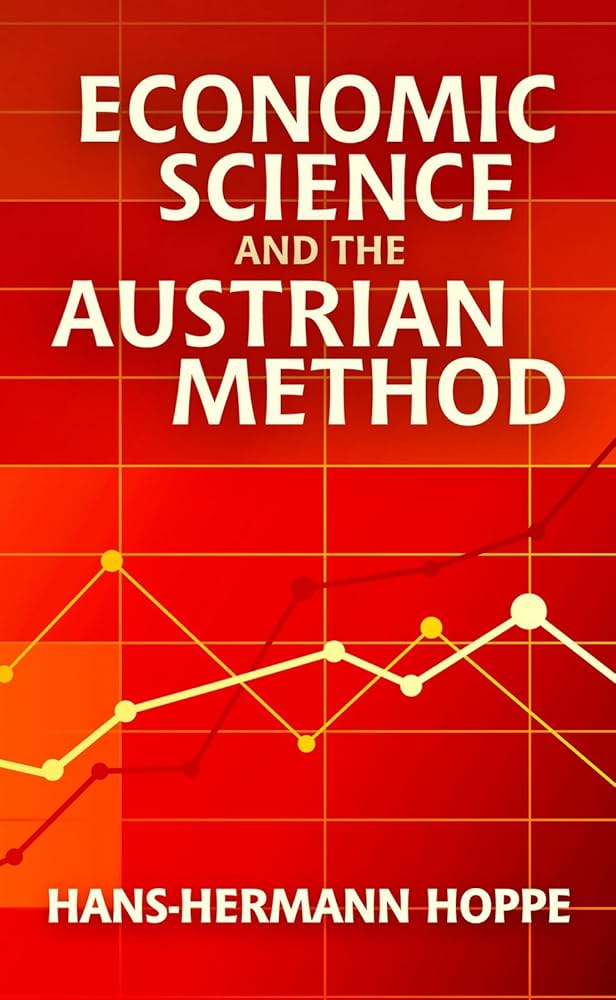
- Hans-Hermann Hoppe, Praxeology and Economic Science (1988), later included in idem, Economic Science and the Austrian Method (Auburn, Ala.: Mises Institute, 1995), at 45 n.14. See also Hoppe: My Discovery of Human Action and of Mises as a Philosopher; Stephan Kinsella, “The Undeniable Morality of Capitalism,” in Legal Foundations of a Free Society (Houston, Texas: Papinian Press, 2023), p. 604. [↩]
- p. 9. In this, and all succeeding quotations, the italics are in the text. [↩]
- In all fairness I must bring to the attention of the reader the fact that Miss Rand is not to be held responsible for thinking of these titles, only for accepting them. She tells us in a footnote that their author is Nathaniel Branden. [↩]
- p. 8. [↩]
- pp. 8-9. [↩]
- pp. 19-20. [↩]
- p. 21. [↩]
- pp. 29-30. A few other doctrines are also held to be Hume’s but their attribution to him is too silly to be worth comment. [↩]
- p. 30. [↩]
- Letter from Adam Smith to William Strahan. The entire text of the letter may be found in the Open Court Publishing Co. edition of Hume’s Enquiry Concerning Human Understanding or on p. 604 of Ernest Campbell Mossner’s The Life of David Hume (Thomas Nelson & Sons, 1954). [↩]
- p. 33. [↩]
- For those who are interested in what Kant really said, a scholarly and highly critical account is contained in H. J. Paton’s The Categorical Imperative (Hutchinson’s University Library, 1946). Paton discusses Miss Rand’s error (though not, of course, with reference to the fact that she made it) on pp. 48-50. [↩]
- p. 36. [↩]
- I suggest as a start that the reader identify the mystics of muscle in this section with the Attila-people of the introduction and the mystics of the spirit with the Witch Doctors. If this results in no increase in clarity it might be tried the other way round. [↩]
- pp. 149, 150, 151, 161. [↩]
- Indeed, on p. 216 Miss Rand assures us that the truth is true. [↩]
- pp. 176-78. “Your code” here is utilitarianism, my evidence being the last sentence of the preceding paragraph in which the author speaks of a code whose major principle is the greatest good for the greatest number. [↩]
- Both of these statements occur on page 224 [↩]
Discover more from The Property and Freedom Society
Subscribe to get the latest posts sent to your email.

















 Alessandro Fusillo
 Andreas Tögel
 David Dürr
 Doug French
 Fernando Chiocca
 Greg Morin
 Hans-Hermann Hoppe
 Jay Baykal
 Jayant Bhandari
 Jeff Deist
 Jeffrey Barr
 Juan Fernando Carpio
 Ken Yamarashi
 León Isidoro
 Martin Cabrera
 Nick Hoppe
 Oscar Grau
 Peter Wong
 PFS
PFS scholarium
 Saifedean Ammous
 Sean Gabb
 Sean Ring
 Stephan Kinsella
 Stéphane Geyres
 Thomas Jacob
 Tom DiLorenzo