From Ayn Rand, R.I.P. by William F. Buckley Jr.:
Miss Rand was going on about something or other at which point Mises told her to be quiet and that she was being very foolish. The lady who could account for all her emotions at that point burst out into tears and complained, “You are treating me like a poor, ignorant little Jewish girl!” Mr. Hazlitt, attempting to bring serenity to his table, leaned over and said: “There, there, Ayn, that isn’t at all what Ludwig was suggesting.” But this attempt at conciliation was ruined when Mises jumped up and said: “That iss eggsactly what you ahrr!” Since all three participants were Jewish, this was not a racist slur. This story was mortal to her reputation as the lady of total self-control.
AI tech is like all tech: whoever invents it, it ends up spreading around to the rest of the world and being used everywhere. So it really doesn’t matter where it “comes from.” This is the magic of and power of ideas and knowledge. It’s exactly why we keep getting richer—the accumulation of ideas, of technological “recipes”, Hayek’s “fund of experience”—despite state attempts to keep making us poorer—in part through evil and unnatural intellectual property laws, which Randians unfortunately support—their “Most Grievous Fault,” one might say—their mistaken belief that these state-granted monopoly privileges are part of a genuine “capitalist” system. They are not. Intellectual property is evil. IP is theft. IP is death.
***
Ayn Rand’s article on Monroe’s death, “Through Your Most Grievous Fault,” was published two weeks later. The title aptly fits Ayn Rand’s horrific, anti-life support of intellectual property law. It’s her worst mistake, worse even than her support of the state. The error of minarchism is understandable, forgivable even. Her error on the source and nature of rights, her libertarian/Lockean creationist neo-Marxist labor theory of property, corrupts and ruins her entire edifice of political thought, her understanding of what rights are. She had nerve to say “Patents are the heart and core of property rights.” and: “Intellectual property is the most important field of law.” She should have followed Rothbard’s advice: “It is no crime to be ignorant of economics, which is, after all, a specialized discipline and one that most people consider to be a “dismal science.” But it is totally irresponsible to have a loud and vociferous opinion on economic subjects while remaining in this state of ignorance.” Same applies to people ranting about things they know nothing about, namely intellectual property rights. So she was an author. So what. That gives her no right to talk as she does on these matters. Maybe Mises was right about her ignorance: “Miss Rand was going on about something or other at which point Mises told her to be quiet and that she was being very foolish. The lady who could account for all her emotions at that point burst out into tears and complained, “You are treating me like a poor, ignorant little Jewish girl!” Mr. Hazlitt, attempting to bring serenity to his table, leaned over and said: “There, there, Ayn, that isn’t at all what Ludwig was suggesting.” But this attempt at conciliation was ruined when Mises jumped up and said: “That iss eggsactly what you ahrr!””
***
And see Hoppe on Rand:
Among some followers of Austrianism, the Kant interpretation of Ayn Rand (see, for instance, her Introduction to Objectivist Epistemology [1979]; or For the New Intellectual [1961]) enjoys great popularity. Her interpretation, replete with sweeping denunciatory pronouncements, however, is characterized by a complete absence of any interpretive documentation whatsoever. On Rand’s arrogant ignorance regarding Kant, see B. Goldberg, “Ayn Rand’s ‘For the New Intellectual,’” New Individualist Rev., vol. 1, no. 3 (1961).1
Related
- French, Buckley’s Belligerent Obit
- William F. Buckley Jr., Murray Rothbard, RIP, National Review (Feb. 6, 1995)
- Kinsella, Disparaging Rothbard
- ——, Because of her error, Ayn Rand chose IP over real property rights, she chose death over life
- ——, The Patent Holocaust
- ——, Libertarian and Lockean Creationism: Creation As a Source of Wealth, not Property Rights; Hayek’s “Fund of Experience”; the Distinction Between Scarce Means and Knowledge as Guides to Action
- ——, The China Stealing IP Myth
- Through Your Most Grievous Fault by Ayn Rand | August 19, 1962
***
AI tech is like all tech: whoever invents it, it ends up spreading around to the rest of the world and being used everywhere. So it really doesn’t matter where it “comes from.” This is the magic of and power of ideas and knowledge. It’s exactly why we keep getting richer—the…
— Stephan Kinsella (@NSKinsella) July 23, 2026
Ayn Rand’s article on Monroe’s death, “Through Your Most Grievous Fault,” was published two weeks later.
The title aptly fits Ayn Rand’s horrific, anti-life support of intellectual property law. It’s her worst mistake, worse even than her support of the state. The error of…— Stephan Kinsella (@NSKinsella) July 23, 2026
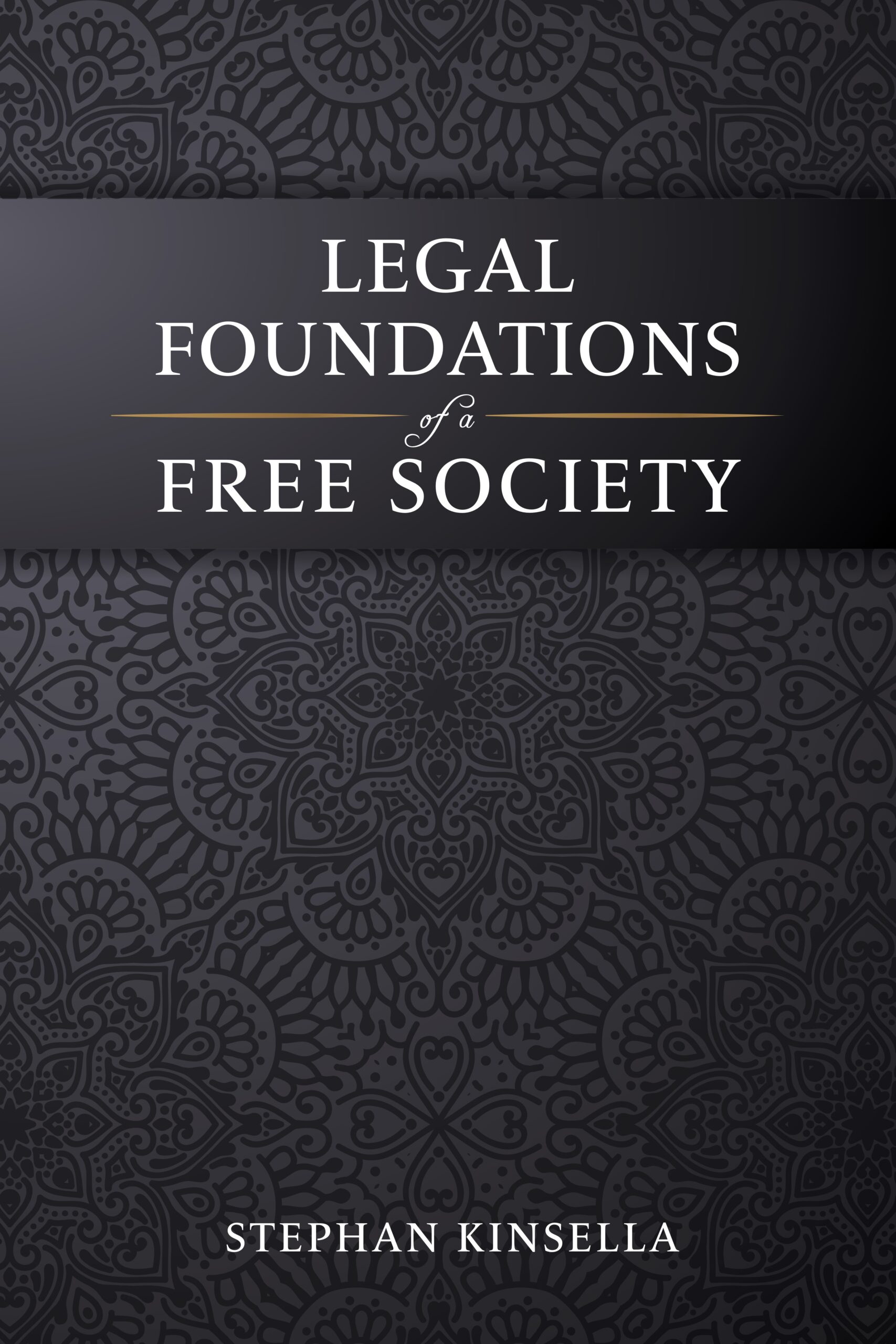
- Hans-Hermann Hoppe, Praxeology and Economic Science (1988), later included in idem, Economic Science and the Austrian Method (Auburn, Ala.: Mises Institute, 1995), at 45 n.14. See also Stephan Kinsella, “The Undeniable Morality of Capitalism,” in Legal Foundations of a Free Society (Houston, Texas: Papinian Press, 2023), p. 604. [↩]
Discover more from The Property and Freedom Society
Subscribe to get the latest posts sent to your email.















 Alessandro Fusillo
 Andreas Tögel
 David Dürr
 Doug French
 Fernando Chiocca
 Greg Morin
 Hans-Hermann Hoppe
 Jay Baykal
 Jayant Bhandari
 Jeff Deist
 Jeffrey Barr
 Juan Fernando Carpio
 Ken Yamarashi
 León Isidoro
 Martin Cabrera
 Nick Hoppe
 Oscar Grau
 Peter Wong
 PFS
PFS scholarium
 Saifedean Ammous
 Sean Gabb
 Sean Ring
 Stephan Kinsella
 Stéphane Geyres
 Thomas Jacob
 Tom DiLorenzo