Alessandro Fusillo, “What Is a Dictatorship? The Historical Evolution of VAT and Personal Income Tax in Spain and Italy, and of Public Spending as a Share of GDP,” Property and Freedom Journal (Aug. 6, 2026): A Comparative Study: From Francoism and Fascism to Democratic Tax Reforms, up to the Present Day (1922/1939–2026).
This article contends that Francoist Spain and Fascist Italy afforded citizens substantially greater economic freedom—gauged by tax structures and public spending as a share of GDP—than the democratic regimes that followed. Under Franco, Spain relied on older schedular product taxes and a limited turnover tax, with no modern progressive personal income tax or VAT; public spending stayed low at roughly 13–15% of GDP in 1960 and only about 22.5% in 1970. Italy under Fascism similarly featured a cascade-style general entry tax and real/product levies, keeping spending relatively contained outside wartime spikes. After the transitions, both countries introduced broad-based progressive income taxes (Spain’s IRPF in 1978 with 28 brackets up to 65.5%; Italy’s IRPEF in 1974 with 32 brackets up to 72%) and VAT (Spain 1986, Italy 1973, both starting at 12% and later rising to 21–22%). Public spending then expanded sharply—Spain to the mid-40s percent of GDP and Italy to around 50% or higher—while public debt soared, producing larger fiscal leviathans than under the prior dictatorships.
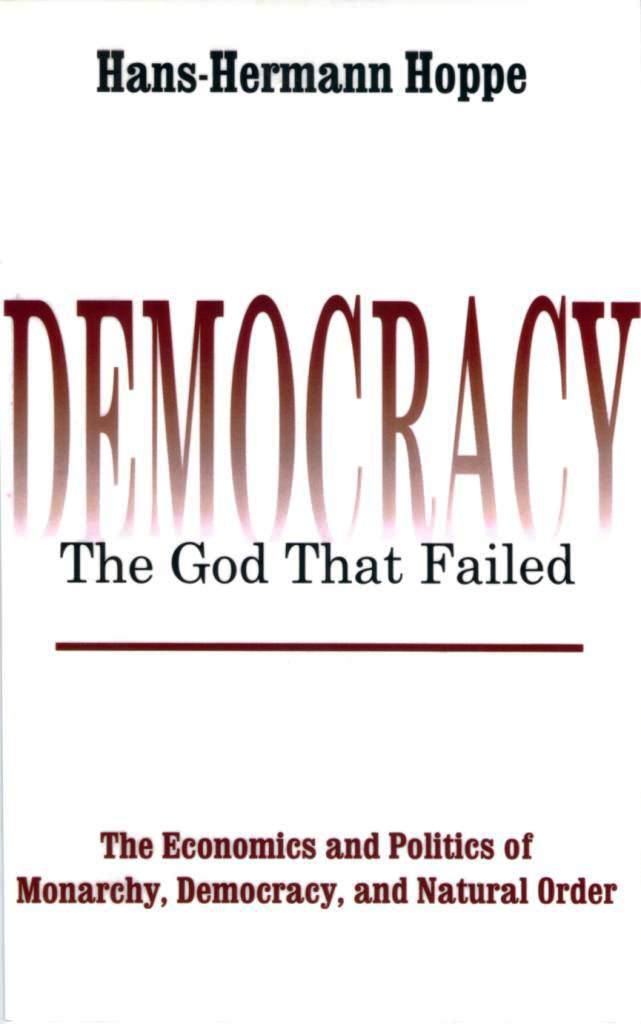
Both nations followed parallel paths of tax modernization under European pressure, followed by bracket simplification and sustained growth in the state’s claim on national output, with Italy consistently showing higher spending and debt ratios. The author attributes this expansion to the high time-preference of democratic politicians, who act as temporary usufructuaries rather than long-term owners of the state’s capital stock, drawing on Hoppe’s analysis in Democracy: The God That Failed and analogies to late-Roman fiscal overreach.






 Alessandro Fusillo
 Andreas Tögel
 David Dürr
 Doug French
 Fernando Chiocca
 Greg Morin
 Hans-Hermann Hoppe
 Jay Baykal
 Jayant Bhandari
 Jeff Deist
 Jeffrey Barr
 Juan Fernando Carpio
 Ken Yamarashi
 León Isidoro
 Martin Cabrera
 Nick Hoppe
 Oscar Grau
 Peter Wong
 PFS
PFS scholarium
 Saifedean Ammous
 Sean Gabb
 Sean Ring
 Stephan Kinsella
 Stéphane Geyres
 Thomas Jacob
 Tom DiLorenzo
Follow Us!