Related
- Hoppe, “The Socialism of Conservatism,” in A Theory of Socialism and Capitalism (Kluwer, 1989; Mises Institute reprint, 2007; Laissez Faire Books, 2013)
- Hoppe, Where the Right Goes Wrong (1997)
- Classic Hoppe on the Realistic Right vs. the Egalitarian Left
- Murray N. Rothbard, “Right Wing Populism: A Strategy for the Paleo Movement,” Rothbard-Rockwell Report (Jan. 1992), in Rothbard, The Irrepressible Rothbard
- idem, “A Strategy for the Right,” Rothbard-Rockwell Report (March 1992), included in Rothbard, The Irrepressible Rothbard, though the book erroneously indicates Jan. 1992 (instead of March 1992) and omits the first three paragraphs of the original essay for no reason
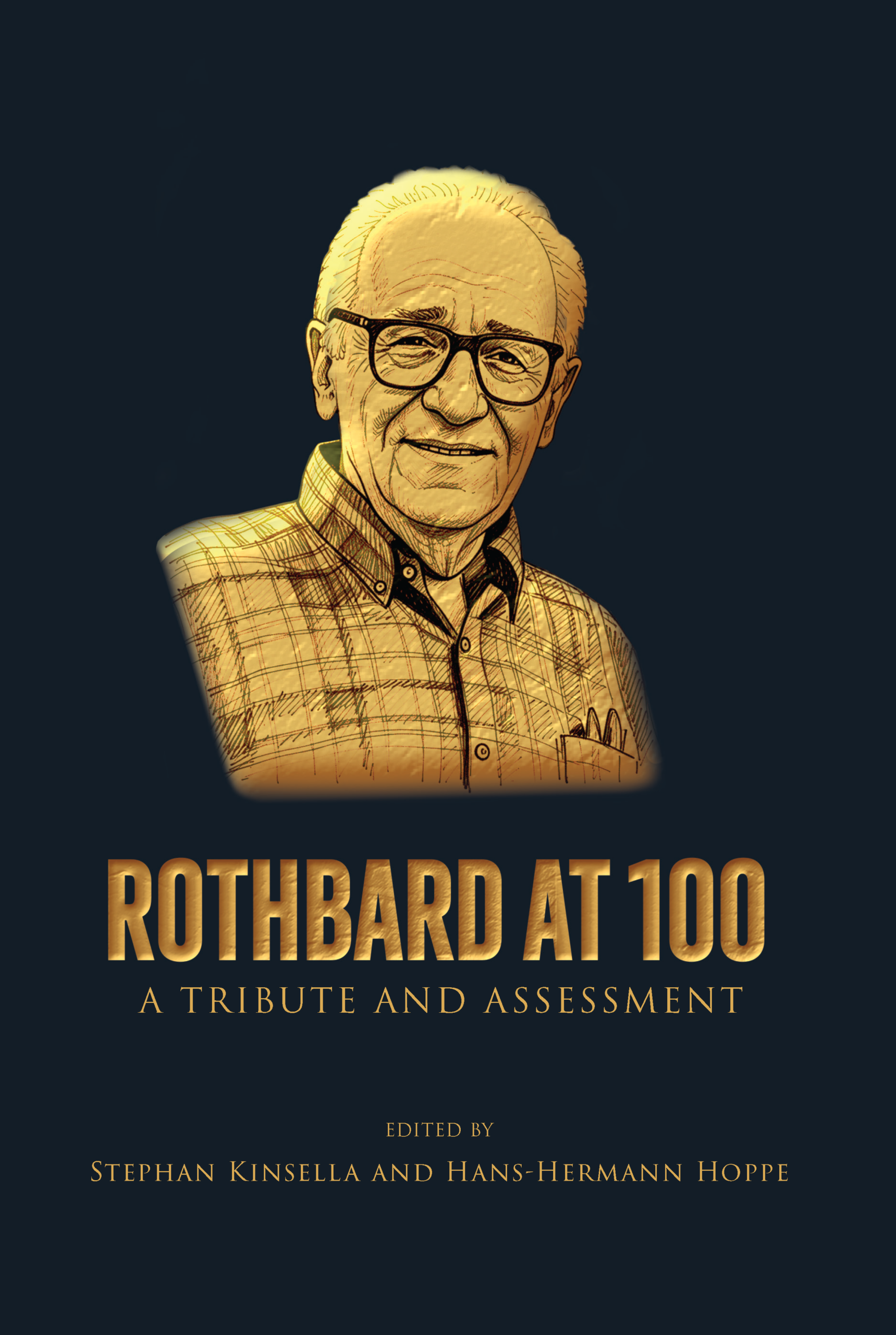
- Jeff Deist, “Appreciating Rothbard’s Political Genius,” Rothbard at 100: A Tribute and Assessment
- Fernando Chiocca, “Rothbardianism at Rothbard’s Centenary”—Rothbard at 100, Portugal
- Oscar Grau, On Applying Rothbardian Populism
Obvious truths are often the ones that need repetition, because we grow so accustomed to them, that we risk forgetting their importance. One such truth is this: Rothbardian cultural conservatism has nothing to do with political conservatism.
These are two very different things, hiding under the same name. This can lead, and indeed has led to, dangerous cases of idola theatri, where the usage of the same word hides the irreconcilable difference between two ideas. Hence, in order to avoid this idol, we must invest in definition.
In the “Rothbard at 100” event in Porto, Portugal, 2026, Fernando Chiocca gave a speech that can be called, without exaggeration, historic. In it, he distinguished between true and false Rothbardianism based on 6 systematically integrated points. These are the “dogmas” any Rothbardian should adhere to if they want to do more than empty talking. Of those 6 points, I want to focus on the fourth one, namely that For a Rothbardian, libertarianism is not enough for a free society, a stateless social order also requires cultural conservatism as a sociological presupposition.1 What is this “sociological presupposition”? Distilled into its essence, it is the reckoning that there is —and ever will be— a natural order of things, and that this order has been known and respected by the majority of human beings up to this point. In many ways, it is plain common sense: that men and women are different, human groups are different, and these differences are not just skin deep, excellence is a trait only a few possess, what is good and bad is not defined in a moment, but over centuries, and are ultimately eternal and absolute standards. It is to accept the rules of 99% over 1% of human history, the normal over the abnormal.
Now, what is political conservativism? It is an approach to politics opposite to Rothbard’s, and it is a political organization with goals antithetical to Rothbardians. It is difficult to define, because political conservatives themselves —intentionally— avoid defining it, so as to evade any rational critique of their doctrine. The best definition of this conservatism is that it is an approach to politics historically developed in response to the American and French Revolution, that intends to reform society without destroying what has already been gained in its long historical trajectory, based not on “abstract” rational principles but on experience and expediency —i.e., based on the principle of “whatever works best in practice.”
This means, following this definition, that conservativism is a grotesque amalgamation of three things: begging the question, straw-maning and, ultimately, ruthless opportunism (sometimes called “pragmatism”).
The best argument for such conservativism is the following: We should change the fence only when we know why it was there to begin with and we have a better alternative to replace it. In other words, it is the appeal that we should be careful, not reckless and destructive when we try to change society, that we should be, in one word, prudent. The problem with this is that it is not actually an argument for conservatism, but for plain ol’ common sense, that conservatives did not invent and do not hold a monopoly on. In what way is prudence unique to conservatives? Let us leave aside the fact that conservatives in power install policies that are anything but prudent; all human beings agree that reckless destruction is pointless, and that there is also no point of complaining if you have no alternative to offer. To claim this as your own is to claim what is common ground as your own philosophy, hence, begging the question in your favor. But to make this argument begs the question in a more fundamental manner. The whole point of a political philosophy is to give us principles by which to rationally order society today and tomorrow. The real problem is not to be careful when replacing the fence, but rather when we need to change the fence and how do we know we have found a better alternative? To know why a fence was there and how another one is better you need a criterion, and this criterion can never be extracted from raw experience. How does he know when reform is needed, and when not? How does the political conservative know he has found a better alternative? And how does he deal with the situations where the system is broken beyond repair, and the only prudent option is to replace it entirely, rather than reform it? This conservative reformist has no coherent answer to this, he simply falls into a petitio principii, he never gives reason why we should trust that he knows what is a good reform, as distinct from an evil revolution. As G.K. Chesterton said (paraphrasing), conservatives do not take care of the fence, they leave it to rot.
Conservativism is also characterized by straw-manning all systematic political philosophy. To the good conservative, what I just said is indistinguishable from marxist-leninism. Why? because I appealed to abstract principle, and that means I believe I can “abstractly” design the whole of society like a filthy Bolshevik. “Ridiculous!”, answers the good conservative, “do you not know how limited human reason is!?”, and —in Hayekianesque— “Do you not know that human reason is the product of social order, not its designer?”. And thus conservatives reply to their critics by elaborating a caricature of human reason as poor and bastardly, incapable of anything on its own. “Reason is… the slave of the passions.”2 as David Hume said or, more carefully Edmund Burke, “Politics ought to be adjusted, not to human reasonings, but to human nature; of which the reason is but a part; and by no means the greatest part.”3 The problem with these caricatures is that they were made with reason. How did Hume come to think that reason is the slave? How did Edmund Burke get to know what human nature was (and indeed, is not the inherited definition of man’s nature that he is the rational animal?)? Conservatives are skeptics and cynics in disguise, and with them they fall into the same insurmountable problem: They use reason to attack reason. And to do this is to, like Baron Munchausen, try to drag oneself out of the mud, by pulling one’s hair.
And conservatism is opportunism.4 When the mask is taken off, we discover that conservatism is just one dragged out speech instrumental to one aim: gaining power —and holding on to it—. Conservatism is often defined as the defense of the status quo, this is essentially true, with one caveat: Conservatism is the defense of the status quo desired by those who hold power. It is not a “philosophy in search of a policy”, but a political group in search of a philosophy, or rather, a cover for their criminal activity. Does this sound harsh? If it does, let me ask you a different question: What has conservatism “conserved” in, e.g., the United States? Has it conserved the constitution? Has it conserved healthy and strong families? Has it conserved Western values? But what are “western values” nowadays but warfare and pornography? Are not these what American conservatives spread around the world —besides Jewish supremacy—? When we go through the list, we find out that conservatives have only conserved one thing: The Republican party, and the war machine it serves.
Why all this? Why this attack on conservativism? Let me return to the beginning. Some truths are so obvious, to the point that we grow accustomed to them, and neglect their importance. These are the truths that often need repetition. We live in a world where figures such as Donald Trump, Javier Milei, Jair Bolsonaro et alius in one way or another attract libertarians to their side, or rather, absorb them into the conservative movement. They do so using the same language of Rothbard, they use the idola theatri, the limits of human language, to create the illusion that behind the usage of the same word lies the same idea. Thus, Philip Bagus can say that Javier Milei is a “populist”, and in this way argue that Milei is applying the populist strategy proposed by Rothbard.5 In this way, Angela McArdle (from the “Mises Caucus”) can claim that Trump is appointing libertarians to the administration, when he is only appointing more bureaucrats.6 This way, we can all pretend that a warmonger is our natural ally against “socialism”, and not a trojan horse waiting to destroy us from within —as Huerta de Soto has shown—. This way, William F. Buckley could call himself a “libertarian” (did you know about that one!?) because, why not? Words are just words, they mean whatever Umpty Dumptey says they mean. This way, we can all partake in one great farce to say that, if right libertarians are already cultural conservatives, why not also become political ones. And yes indeed, why not? Let us join in on the party!
No, we will not. Conservativism has nothing to offer to those who know the system is broken beyond repair, that it must be eradicated root and branch, that the state must be abolished, never reformed. In this centenary of Rothbard, we do well in remembering that he had nothing to do with conservative opportunism, but only with radical antistatism. We do well in remembering that his cultural conservatism has nothing to do with political conservatism.
- Fernando Chiocca, “‘Rothbardianism at Rothbard’s Centenary’ — Rothbard at 100, Portugal,” Property and Freedom Society, July 2026, https://propertyandfreedom.org/2026/07/chiocca-rothbardianism-at-rothbards-centenary/. [↩]
- “We speak not strictly and philosophically, when we talk of the combat of passion and of reason. Reason is, and ought only to be the slave of the passions, and can never pretend to any other office than to serve and obey them.” Hume, Treatise, 2.3.3.4. [↩]
- Edmund Burke, Reflections on the Revolution in France, ed. L. G. Mitchell (Oxford: Oxford University Press, 2009), 166. [↩]
- And as a policy, it is interventionism. Rothbard masterfully identified the specific type of intervention conservatives always promote: Triangular intervention. This is when C interferes with a voluntary exchange happening between A and B. At home, you get tariffs and war on drugs. Abroad, you get the Iraq war. Cf. Murray N. Rothbard, Man, Economy, and State with Power and Market, Scholar’s Edition, 2nd ed. (Auburn, AL: Ludwig von Mises Institute, 2009), 1075–1138. And, as Hans Hermann Hoppe explains: “…the characteristic mark of conservatism then is its preference for “triangular intervention”… for such interventions are uniquely suited, in accordance with the social psychology of conservatism, to helping “freeze” a given pattern of social exchanges. Hans-Hermann Hoppe, A Theory of Socialism and Capitalism: Economics, Politics, and Ethics (Auburn, AL: Ludwig von Mises Institute, 2010), 98–99. [↩]
- Bagus, P. (2023) ‘Javier’s Milei’s Populist Strategy in Argentina Is Working’, Mises Institute, 14 September. https://mises.org/power-market/javiers-mileis-populist-strategy-argentina-working. [↩]
- The Hill (2024) Trump APPOINTING Libertarians To Administration?! Interview with LP Chair Angela McArdle, YouTube, 12 November. https://www.youtube.com/watch?v=R4r1OaXBAyM. [↩]
Discover more from The Property and Freedom Society
Subscribe to get the latest posts sent to your email.














 Alessandro Fusillo
 Andreas Tögel
 David Dürr
 Doug French
 Fernando Chiocca
 Greg Morin
 Hans-Hermann Hoppe
 Jay Baykal
 Jayant Bhandari
 Jeff Deist
 Jeffrey Barr
 Juan Fernando Carpio
 Ken Yamarashi
 León Isidoro
 Martin Cabrera
 Nick Hoppe
 Oscar Grau
 Peter Wong
 PFS
PFS scholarium
 Saifedean Ammous
 Sean Gabb
 Sean Ring
 Stephan Kinsella
 Stéphane Geyres
 Thomas Jacob
 Tom DiLorenzo