What Is a Dictatorship? The Historical Evolution of VAT and Personal Income Tax in Spain and Italy, and of Public Spending as a Share of GDP
A Comparative Study: From Francoism and Fascism to Democratic Tax Reforms, up to the Present Day (1922/1939–2026)
Alessandro Fusillo1
August 6, 2026
Fascism in Italy and Francoism in Spain are regimes unanimously recognised as tyrannical or dictatorial, characterised by the suppression of fundamental freedoms; their end — traumatic and accompanied by military defeat in the Second World War for Italy, gradual and marked by a step-by-step restoration of the monarchy and representative democracy for Spain — is regarded as a stroke of fortune for the populations subjected to those regimes. The events of both Italian Fascism and Spanish Francoism are complex, and the official, accepted version of mainstream historiography fails to grasp the issues bound up with the birth of both regimes and their persistence, ending up offering a black-and-white account with good guys and bad guys painted in stark colours. In doing so, Fascism and Francoism are frequently lumped together with far more dangerous and destructive regimes such as National Socialism, and anyone who opposed the Italian and Spanish fascists ends up being glorified as a bearer of freedom — even when the opponents in question were the Soviet Russians or the Anglo-Americans, regimes that had their own interests at heart, certainly not the freedom of the Spaniards and Italians who, nevertheless, continue every 25 April to celebrate their liberation from themselves.
This study sets out to analyse the question of the two regimes — Fascist and Francoist — from another angle, namely the fiscal one, through a comparative analysis of two taxes in particular, value added tax and income tax, and through a statistical survey of the cost of the State in relation to gross domestic product. If the time that the subjects of any State devote to discharging their tax obligations measures the intrusiveness of the public apparatus into private life, and if, conversely, the time left to each person to pursue their own interests and to earn an income to be consumed on their own account, free from State interference, is a suitable metric for gauging the degree of freedom that the State organisation leaves to each individual, then how much freedom did the Fascists and the Francoists leave to private citizens, compared with what remains to the citizens of the modern Italian and Spanish democracies? The comparative analysis of the two systems leads to a conclusion that will surprise some: there was far more freedom under the Caudillo and under the Duce than remains today.
PART I — SPAIN
- The Franco-era Tax System (1939–1977)
During the Franco period there existed neither a value added tax nor an income tax in the modern sense. Indirect taxation rested on the Impuesto General sobre el Tráfico de Empresas, established in 1964 and remaining the main instrument of Spanish indirect taxation until 1985, when it was replaced by VAT in view of accession to the EEC.2
Direct taxation, for its part, was still anchored to the nineteenth-century model of the impuestos reales or de producto — sectoral, schedular levies, lacking any synthetic, progressive personal tax on overall income.
In quantitative terms, the Francoist State remained modest in size even by internal historical comparison: in 1960 public spending as a percentage of GDP was comparable to the levels of the Primo de Rivera dictatorship of the 1920s — evidence, according to some, of the relative backwardness of the Spanish public sector compared with the European average3 but in fact a demonstration of the modest intrusiveness of the Spanish Francoist State with respect to citizens’ incomes, which were left largely in Spaniards’ pockets. Only from the 1960s onward, with the expansion of compulsory social security (1967) and the economic growth of the “desarrollismo”, did public spending begin slowly to rise, although in 1970 it was still quantifiable at around 22.5% of GDP — more than fourteen percentage points below the average of the four largest European Community countries.4
- The Tax Reform of the Transition (1973–1978)
The attempt at an organic reform predates Franco’s death. In June 1973 Enrique Fuentes Quintana, then an adviser to the Ministry of Finance, presented a comprehensive tax reform project to the Head of State: the project, apparently well received, nevertheless triggered the immediate dismissal of the political official responsible for the operation and the destruction of the existing copies of the text — a sign of the structural incompatibility between the supposed dictatorship and a universal, progressive tax system5
or, according to another possible interpretation, a sign of the foresight of the Caudillo, who had glimpsed in the establishment of such a tax system the first step toward the destruction of the Spaniards’ economic freedom.
Only after the elections of June 1977 could the reform be carried out, through the Ley de Medidas Urgentes de Reforma Fiscal, with Fuentes Quintana as economic Vice-President of the Suárez Government and Francisco Fernández Ordóñez as the minister who implemented it. The law introduced the Impuesto sobre el Patrimonio as a tax ancillary to income taxation and, the following year, with the Ley 44/1978 of 8 September, the first unified, general, personal, synthetic and progressive tax on the income of natural persons in Spanish history.6 In its original version the IRPF provided for twenty-eight income brackets, with marginal rates ranging between 15% and 65.5%, and a filing obligation for incomes above 300,000 pesetas; the tax was levied on the family unit, an aspect that would prove to be the source of the tax’s first major reform.7
- The Evolution of the IRPF (1978–2026)
Since 1978 the IRPF has undergone three major organic reforms (1991, 1998, 2006-2007) and numerous minor interventions, with a steady trend toward reducing the number of brackets and narrowing the gap between the minimum and maximum rates.8
| Year / reform | Brackets | Rate min.–max. | Observations |
| 1978 (Ley 44/1978) | 28 | 15% – 65.5% | First synthetic, progressive tax; mandatory family-unit taxation; tax-free minimum applied as a deduction from the tax due (not from the tax base) |
| 1991 (first major reform) | 17 | 20% – 56% | Reform following judgment STC 45/1989 on mandatory joint taxation, declared unconstitutional |
| 1998 (second major reform) | 6 | 18% – 48% | Introduction of the “mínimo personal y familiar”; first framework of the dual income tax |
| 2001–2002 | 5 | 18% – 45% | Further simplification of the state schedule |
| 2006–2007 (Solbes reform) | 4 | 24% – 43% | Abolition of the lowest bracket; capital income (interest, dividends, insurance) made proportional at 18%, regardless of the recipient’s income level |
| 2012–2013 | 7 (temporary) | 24.75% – 52% | Anti-crisis “gravamen complementario” (Rajoy Government); partial, temporary recovery of progressivity |
| 2015 (Montoro reform) | 5 | 19% – 45% | General reduction of nominal rates |
| 2021–2026 | 6 (state) + regional (autonómico) tranche | 19% – 47% | New bracket on labour income above €300,000; capital income taxed up to 30% above €300,000; strong territorial dispersion owing to the transfer of regulatory powers to the Comunidades Autónomas since 1997 |
The most significant finding, for a reading in terms of the real tax burden, is that the nominal progressivity of 1978 — in which the top rate was more than four times the bottom one — is today nearly halved: after the 2006 reform, the ratio between the top and bottom bracket no longer even reaches two.9
Added to this is an empirically significant bracket creep effect: a recent study on the real tax burden shows that, at equal purchasing power, a taxpayer subject to the average rate in 1978 paid 16%, whereas the same real taxpayer in 2025 bears a burden almost eight percentage points higher, despite the nominal reductions in statutory rates introduced by subsequent reforms — a sign that the systematic failure to adjust brackets and exempt minimums for inflation has produced a hidden increase in the tax burden.10
- The Evolution of VAT (1986–2026)
VAT was introduced in Spain on 1 January 1986, alongside accession to the European Economic Community, replacing the Impuesto General sobre el Tráfico de Empresas, through Ley 30/1985 of 2 August — later replaced by the currently applicable Ley 37/1992 of 28 December, adopted as part of the harmonization of the European single market.11
| Year | Standard rate | Reduced rate | Super-reduced rate | Increased rate (luxury) |
| 1986 | 12% | 6% | — | 33% |
| 1992 | 13% | 6% | — | 28% |
| 1993 | 15% | 6% | 3% | abolished |
| 1995 | 16% | 7% | 4% | — |
| 2010 | 18% | 8% | 4% | — |
| 2012–present | 21% | 10% | 4% | — |
The increased rate on luxury goods, initially set at 33%, was reduced to 28% in 1992 and definitively abolished in 1993 as part of EU VAT harmonization, with the simultaneous introduction of the super-reduced rate at 3% (later 4%).12 The standard rate has almost doubled from 1986 to today, rising from 12% to 21%, an overall increase of nine percentage points in thirty-nine years; the last increase dates to 2012, at the height of the sovereign debt crisis under the Rajoy Government.13 The reduced rate of 10% currently applies to food products not covered by the lower rate and to certain recreational and cultural events, while the super-reduced rate of 4% covers basic necessities (bread, milk, eggs, books, medicines).14
- Public Spending as a Percentage of GDP (1960–2026)
The public spending-to-GDP indicator offers the most concise measure of the dimensional growth of the Spanish State in the second half of the twentieth century: from a level close to 15% in the 1950s–1960s, comparable to that of the Primo de Rivera dictatorship, Spain converges — with a historical lag of about two decades relative to its European partners — toward the oppressive levels of a continental welfare state, exceeding 45% of GDP from the 1990s onward. The relatively greater freedom still felt in Spain today is the legacy of a fiscal regime more respectful of liberty and property, the memory of which has been largely lost in other countries.15
| Year | Public spending / GDP | Context |
| 1960 | ≈ 13–15% | Level comparable to the Primo de Rivera dictatorship; Francoist autarky |
| 1970 | 22.5% | 14.2 points below the average of the 4 largest EC countries |
| 1975 | ≈ 25% | End of Francoism; social transfers at 17% of GDP |
| 1982 | ≈ 34–37% | Social transfers at 23% of GDP; start of the socialist governments |
| 1990 | 43.3% | Only 4.2 points below the average of the 4 largest EC countries (47.5%) |
| 1992–1993 | ≈ 45–48% | Pre-Maastricht convergence peak |
| 1995–2007 | 38–42% | Fiscal consolidation for euro entry; property boom |
| 2009–2012 | 46–48% | Global financial and sovereign debt crisis; automatic stabilisers |
| 2020 | > 52% | COVID-19 pandemic |
| 2024 | 45.5% | Public debt at 100.8% of GDP in 2025 (against the historic low of 16.6% in 1980) |
In the most recent European comparison, Spain stood in 2019 at 42% of GDP, slightly below the EU-28 (43%) and EU-15 (46%) averages, but above the figures for the United States (38%) and Japan (39%) — confirming a European welfare state model of intermediate intensity.16 The most recent data put Spanish public spending at 45.5% of GDP in the fourth quarter of 2024, with public debt that in 2025 reached 100.80% of GDP — against a historic low of 16.60% recorded in 1980, a legacy of the Franco administration in the immediate aftermath of the Transition.17
- Concluding Remarks
Spain’s fiscal trajectory from 1939 to today can be read as the transition from a minimal State to a continental-style welfare State, carried out in a compressed timeframe compared with its Western European partners. Under the dictator Franco, Spaniards devoted less than a fifth of their time and energy to sustaining the State apparatus; today they devote nearly half of their energy to paying for a bloated structure, on a par with those of other European States, in the general awareness that the money burned on the fiscal altar is largely wasted and given over to administrations that are largely corrupt, using tax revenue for their own advantage rather than for the benefit of citizens.18 The paradoxical conclusion is stark: the Francoist dictatorship left much more money in the pockets of its citizens. The modern, democratic Spanish State is a fiscal leviathan devouring ever more unbearable shares of Spaniards’ incomes.
PART II — ITALY
- The Tax System from Fascism to the Eve of the Reform (1922–1973)
Unlike the Spanish case, where the 1978-1986 watershed introduced income tax and VAT ex novo, in Italy the two levies arose from a radical replacement of pre-existing taxes, whose genealogy goes back to the liberal and Fascist period. On the front of indirect taxation on exchanges, the Fascist regime established in 1940, in the midst of the war economy, the Imposta Generale sull’Entrata (IGE) [General Tax on Revenue], a cumulative, multi-stage indirect levy (a “cascade” tax), instituted by R.D.L. 2/1940, converted into Law 762/1940, which struck every economic exchange — from imports to retail sales, including professional services — with no mechanism for deducting tax paid upstream.19 This “cascade” character — quite different from the so-called “neutrality” of the future VAT — made the tax onerous — though its extremely low rates compared with those of VAT should be borne in mind — for long production chains, encouraging the vertical integration of firms.
On the front of direct taxation, the Italian tax system remained until 1973 anchored to the nineteenth-century liberal model, later partly revised by the 1951 Vanoni reform: a plurality of real (or “product”) taxes — the tax on movable wealth, the tax on land, the tax on buildings, the tax on agricultural income — alongside a progressive personal supplementary tax on total income and the municipal family tax, in a schedular, source-based structure very similar, in its logic, to the pre-1978 Francoist system.20
- The 1971–1974 Tax Reform (Cosciani-Visentini Reform)
The great Italian tax reform, prepared by the work of the Cosciani Commission (1963-1966) and enacted through the enabling law of 9 October 1971, no. 825, under the political responsibility of the Minister of Finance Bruno Visentini, runs parallel — about seven years ahead — to the Spanish reform, and shares its Europeanist rationale: the supposed need to harmonize the national tax system with Community directives on turnover tax.21
With d.P.R. [Presidential Decree] of 26 October 1972, no. 633, VAT replaced the IGE with effect from 1 January 1973, implementing Community directives 67/227/EEC and 67/228/EEC on the harmonization of turnover taxes among EEC member States.22 The following year, on 1 January 1974, the delegated decrees on direct taxation came into force: the old real taxes (movable wealth, buildings, land, agricultural income) and personal taxes (the supplementary tax, the family tax) were replaced by the Imposta sul Reddito delle Persone Fisiche (IRPEF) [Personal Income Tax] and the Imposta sul Reddito delle Persone Giuridiche (IRPEG) [Corporate Income Tax], as well as the Imposta Locale sui Redditi (ILOR) [Local Income Tax], through d.P.R.s of 29 September 1973, nos. 597, 598 and 599 respectively.23


- The Evolution of the IRPEF (1974–2026)
In its original version the IRPEF provided for a strongly progressive framework: 32 marginal rates, ranging from 10% to 72%, applied to very closely spaced income brackets — a number of brackets almost identical to that of the contemporary Spanish IRPF (28 in 1978), confirming a shared continental European model of synthetic, strongly progressive taxation.24
| Year / reform | Brackets | Rate min.–max. | Observations |
| 1974 (d.P.R. 597/1973) | 32 | 10% – 72% | Replaces the real taxes (movable wealth, buildings, land) and the progressive supplementary tax; few taxpayers in the highest brackets |
| 1983 (Spadolini reform) | 9 | 18% – 65% | First major simplification: from 32 to 9 brackets; top threshold reduced to just over €800,000 in today’s terms |
| 1986 (Consolidated Act, d.P.R. 917/1986) | 9 | 12% – 62% | Merger of IRPEF and IRPEG (later IRES) into the TUIR [Income Tax Consolidated Act], replacing the 1973 decrees |
| 1989–1997 | 7 | 10% – 50% | Further reduction of brackets; 1990s: increased burden on middle-income classes for euro convergence |
| 1998–2001 (Visco reform) | 5 | 18.5% – 45.5% | Continued simplification; introduction of deductions for the “no tax area” |
| 2002–2021 | 5 | 23% – 43% | Minimum rate at 23%, top rate at 43% (above €75,000); top-rate threshold lowered several times, from €1 million to €75,000, in four successive steps during the 1990s |
| 2022–2023 | 4 | 23% – 43% | Merger of the second and third brackets (2022 Budget Law) |
| 2024–2026 | 3 | 23% – 43% | Further merger (first two brackets unified at 23% up to €28,000); optional “flat tax” regime for self-employment income (regime forfettario) and for high-income new residents |
The Italian path shares the same underlying dynamic as the Spanish one: a drastic reduction in the number of brackets — from 32 to 3 in fifty years, against 28 reduced to 4-6 in Spain — accompanied by a compression of the gap between the minimum and maximum rates. Unlike the Spanish case, however, the Italian compression came about chiefly through lowering the threshold of entry into the top marginal bracket rather than through a reduction of the rate itself: in the 1990s, faced with allegedly high levels of tax evasion and the revenue needs imposed by the constraints of euro convergence, the main lever used was the progressive reduction of the income threshold above which the top rate applied, lowered in four successive steps from one million to 75,000 of today’s euros.25
- The Evolution of VAT in Italy (1973–2026)
The Italian standard VAT rate has followed a more contained path than the Spanish one, starting from an already-higher initial level (12% in 1973, against Spain’s 12% in 1986, but starting fifteen years earlier) and reaching today’s 22%.
| Year | Standard rate | Reduced rate | Super-reduced rate | Notes |
| 1973 | 12% | 6% | — | Replacement of the IGE (d.P.R. 633/1972); multiple rates up to 30% for luxury goods |
| 1980 | 15% | 8–9% | — | First revision after the oil shocks |
| 1988 | 19% | 9% | 4% | Harmonisation ahead of the European Single Market (1993) |
| 1997 | 20% | 10% | 4% | Measure for euro entry (the “eurotax”) |
| 2011 | 21% | 10% | 4% | Tremonti anti-crisis measure (D.L. 138/2011) |
| 2013–present | 22% | 10% | 4% | D.L. 76/2013; standard rate unchanged since 2013 |
The rates currently in force are 22% (standard), 10% and 4%, the latter reserved for basic necessities.26 A structural feature common to both experiences should be noted: in both countries the last significant increase in the standard rate (2012 in Spain, 2011-2013 in Italy) came about in the context of the European sovereign debt crisis, confirming VAT’s function as a means of rapid fiscal extraction in situations of financial emergency — unlike the IRPF/IRPEF, whose reform requires longer political timescales.
- Public Spending as a Percentage of GDP in Italy (1930–2026)
The long-run Italian series are less fragmented than the Spanish ones, thanks to the continuity of accounting records even during the wartime and Fascist period, though with evident anomalies linked to the war economy and extraordinary expenditure. A summary figure commonly used in the comparative literature on the belligerent countries: in the countries most affected by the Second World War — France, Germany, Italy and the United Kingdom — public spending exceeded 25% of GDP already in the immediate post-war period, a level that in pre-war Fascist Italy was instead kept within narrower margins, typical of a State still oriented toward a balanced budget except for extraordinary spending on autarky and rearmament.27
| Year | Public spending / GDP | Context |
| 1930 (approx.) | ≈ 15–18% | Liberal/Fascist State with a contained budget, except for extraordinary war and autarkic spending |
| 1945–1950 | > 25% | Post-war reconstruction; first welfare programmes (Reconstruction, Cassa del Mezzogiorno from 1950) |
| 1960 | 29% | Economic boom; tax burden at 25.7% of GDP |
| 1973 | ≈ 33–35% | Oil shock; start of the Visentini tax reform |
| 1980 | ≈ 42% | Expansion of social spending; debt/GDP at 56.9% |
| 1985 | ≈ 48% | Tax burden at 34.6% of GDP (against the 41% EU average and 45% in France) |
| 1990 | 53.5% | Historic pre-consolidation peak; social spending on GDP doubled in thirty years |
| 1992–1997 | ≈ 50–53% | Consolidation measures for euro entry (the “eurotax” of 1997) |
| 2000–2007 | ≈ 46–48% | Consolidation within the euro area |
| 2009–2013 | ≈ 50–51% | Financial and sovereign debt crisis |
| 2020 | ≈ 57% | COVID-19 pandemic |
| 2024 | 50.6% | Tax burden 42.6% of GDP; public debt 135.3% of GDP |
Over the thirty years from 1960 to 1990, Italian public spending more than doubled relative to GDP, rising from 29% to 53.5%, as an effect of the gradual establishment, from the 1960s onward, of an extensive and pointless welfare state system and the adoption of harmful, deficit-financed expansionary Keynesian policies; over the same period “social” spending relative to GDP doubled.28 Significantly, this expansion of spending was not matched by a proportional increase in the tax burden: the latter in fact rose only from 25.7% in 1960 to 34.6% in 1985, against a European average of 41% and a French figure of 45%, generating the structural mismatch between revenue and expenditure that lies at the root of the abnormal growth of Italian public debt.29 In 2024, according to Istat data, total general government expenditure stood at 50.6% of GDP, against a tax burden of 42.6% and public debt risen to 135.3% of GDP.30
PART III — COMPARATIVE ANALYSIS SPAIN / ITALY
- Comparative Synoptic Overview
12.1 Personal Income Tax (IRPF / IRPEF)
| Profile | Spain (IRPF) | Italy (IRPEF) |
| Year of introduction | 1978 (Ley 44/1978) | 1974 (d.P.R. 597/1973, in force from 1.1.1974) |
| Preceding regime | Francoist real/product taxes, non-synthetic | Real taxes (movable wealth, buildings, land) + progressive supplementary tax |
| Original brackets | 28 (15% – 65.5%) | 32 (10% – 72%) |
| Current brackets | 6 state + regional (autonómico) tranche (19% – 47%) | 3 (23% – 43%) |
| “Turning-point” reform toward lower progressivity | 2006–2007 (Solbes reform): proportionalisation of capital income at 18% | 1983 (Spadolini reform): from 32 to 9 brackets; 1990s: lowering of the top-rate threshold from €1 million to €75,000 |
| Decentralisation | Extensive transfer of regulatory powers to the Comunidades Autónomas since 1997 (strong territorial dispersion) | Regional and municipal surcharges, but less autonomy over the base rate than in Spain |
| Distinctive feature | Separate, proportional taxation of capital income since 2006 (“dual income tax”) | Substitute/flat-rate regimes for self-employment and high-income new residents (optional flat tax) |
12.2 Value Added Tax (VAT)
| Profile | Spain | Italy |
| Year of introduction | 1986 (EEC entry) | 1973 (harmonisation ahead of accession) |
| Tax replaced | Impuesto General sobre el Tráfico de Empresas (ITE, 1964–1985) | Imposta Generale sull’Entrata (IGE, 1940–1972, a “cascade” tax) |
| Original standard rate | 12% | 12% |
| Current standard rate | 21% (since 2012) | 22% (since 2013) |
| Overall increase in the standard rate | +9 points in 40 years | +10 points in 53 years |
| Current reduced / super-reduced rates | 10% / 4% | 10% / 4% |
| Last major increase | 2012, sovereign debt crisis | 2011–2013, sovereign debt crisis |
12.3 Public Spending as a Percentage of GDP
| Year | Spain | Italy |
| 1960 | ≈ 13–15% | 29% |
| 1970/1975 | 22.5% (1970) / ≈ 25% (1975) | ≈ 33–35% (1973) |
| 1980–1985 | ≈ 34–37% | ≈ 42–48% |
| 1990 | 43.3% | 53.5% (historic peak) |
| 2000–2007 | 38–42% | ≈ 46–48% |
| 2009–2012 | 46–48% | ≈ 50–51% |
| 2020 (Covid) | > 52% | ≈ 57% |
| 2024 | 45.5% | 50.6% |
| Public debt 2024–2025 | 100.8% of GDP (2025) | 135.3% of GDP (2024) |
- Concluding Remarks
The comparison between the two Mediterranean fiscal trajectories yields, more than a divergence, a structural synchrony with chronological lag: republican Italy anticipates the Spanish reforms of the transition by about five years on the IRPEF front and by thirteen years on the VAT front — yet both respond to the same exogenous push, namely harmonization with the Community tax system and the growing extractive potential of the public apparatus relative to citizens’ wealth and incomes, and share an identical internal arc: the birth of a synthetic, strongly progressive income tax (over 28-32 brackets, top rates above 65%), followed by a long-run convergence toward 3-6 brackets and top rates between 43% and 47%.
On the front of indirect taxation, the convergence is even more marked: both countries start from a standard VAT rate of 12% and arrive, after the 2011-2012 sovereign debt crisis, at a rate between 21% and 22%, with identical reduced (10%) and super-reduced (4%) rates — proof, if any were needed, of the degree of harmonization achieved by the common European VAT system even between countries with very different starting fiscal histories (Italy’s “cascade” IGE against Spain’s single-stage ITE).
The most significant difference emerges instead on the front of the size of the State: Italy consistently reaches levels of public spending relative to GDP 5-8 percentage points higher than Spain at every comparable historical stage (53.5% against 43.3% in 1990; 50.6% against 45.5% in 2024), despite a relatively more contained increase in the tax burden compared with the growth in spending — hence the abysmal gap in the debt/GDP ratio (135.3% for Italy against 100.8% for Spain). From a comparative constitutional-economics perspective, the Italian case offers a paradigmatic illustration of the thesis that the expansion of public spending, when not matched by a corresponding tightening of the contemporaneous tax burden, structurally translates into an intergenerational transfer of the fiscal burden via public debt — a phenomenon far less pronounced in the Spanish trajectory, which came later but was better anchored to the budget constraint, save for the 2008-2012 interlude.
In the transition from the Francoist and Fascist dictatorships it is easy to recognize a trait common to both countries, namely the dramatic expansion of the extractive potential of the kleptocratic ruling classes, which saw in the progressive and decisive increase in the share of wealth taken from individuals and transferred to the public apparatus the distinctive mark of the fiscal evolution of both countries.
One of the most interesting terms of comparison with the question of the tax burden weighing on citizens is that of the economic assessment of the slave economy, and of the percentage of a slave’s daily labor devoted to their own upkeep as against the percentage appropriated by their masters.
Two studies are of major importance for the quantity of exploitation historically suffered by slaves: the controversial Time on the Cross by Robert Fogel and Stanley L. Engerman, and How the World Works by Paul Cockshott. Using different methodologies, the authors have attempted to calculate the exploitation rate of slaves, that is, the portion of servile labor devoted to the slave’s own upkeep and the portion appropriated by the master. These are, obviously, calculations that are very difficult if not impossible to carry out, but the authors offer reconstructions, nonetheless. In Fogel and Engerman’s view, the exploitation rate of slaves on Southern plantations was, all things considered, low, standing at around 10% of the income produced. Cockshott offers a far broader reconstruction, also analyzing medieval serfdom and modern capitalism. For English feudalism (Domesday Book, Essex, 1086) he calculates an exploitation rate between a lower bound of 3% (which he himself judges implausible) and an upper bound of 21.2%; for contemporary capitalism, applying the markup method, he identifies exploitation rates between 50% and over 100%, markedly higher than the feudal ones. On socialist economies, significantly, Cockshott provides no numerical figure at all, arguing that the extraction of surplus there occurs through the direct, planned allocation of labor rather than through a price mechanism. It will probably never be possible to reconstruct in exact terms the “rate” of exploitation that weighed on slaves, but if we assume, with Fogel and Engerman, a lower bound of around 10% and, with the more critical scholars of their thesis, considerably higher values, it is easy to conclude that the exploitation rate inflicted on their own citizens by countries hypothetically “free” such as Spain and Italy, when compared with what the dictatorships — Francoist and Fascist — did, leads to the obvious conclusion that the margin of autonomy and freedom left by the dictators to their own citizens was markedly greater than that left to them by democracies.
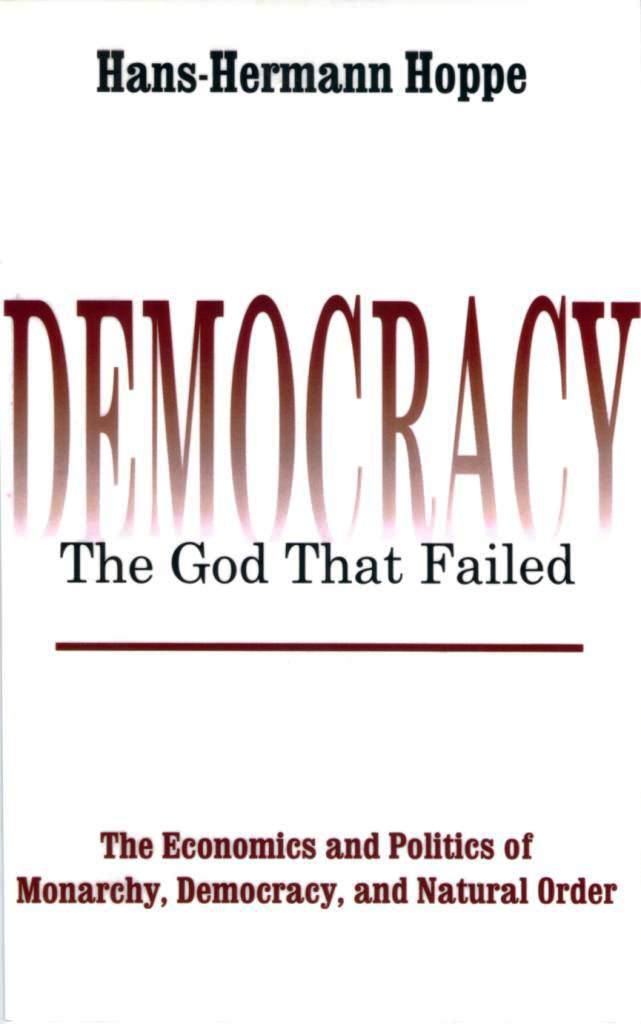
This is not a historical or statistical curiosity but corresponds to a necessary development in the progressive democratization of countries. As observed by Hans-Hermann Hoppe,31 the transition from monarchies to democracies is characterized by a fundamental change in the relationship between the sovereign and the State. The absolute king was the monopolist of fiscal extortion against his citizens, exactly as democratically elected parliaments and governments are today. But there was a substantial and fundamental difference: the king was the owner of the State and held it for himself and his heirs. This entailed a natural tendency of the monarch toward the prudent management of his own resources and, in particular, toward fiscal moderation, in the awareness that subjects excessively burdened by the tax yoke would attempt to evade the rules, thereby damaging the entire legal system, undermining its claim to represent justice and its uniform, impartial application, or would abandon the territory under the monarch’s control to make their lives in less oppressive countries. By contrast, a democratically elected president or prime minister is not the owner but merely the usufructuary of a country. They may appropriate the fruits of fiscal plunder but do not become owners of the capital represented by the State, nor can they pass it on to their successors. This produces a decisive increase in the time preference of rulers, who will tend to want to appropriate the largest possible share of resources in the shortest possible time and, in any case, within the time horizon set by the next elections. The only way to increase the political class’s income at citizens’ expense, and within the term set by the next elections, is the steady, decisive increase of tax rates. Moreover, in order to profit from the costs of running the State, democratic rulers will have a strong incentive to increase the functions of the State. Even assuming a caste of thoroughly honest rulers who exercise their functions with the utmost integrity — an obviously unrealistic hypothesis, and above all far removed from empirical experience — those who manage the functions assumed by the State will not perform them for free but will obtain remuneration for the work done. This not only inevitably makes those functions more costly than their direct production by private parties, but also creates a tendency toward the expansion and multiplication of the functions themselves. The very structure of democracies necessarily drives the expansion of States and of the tasks they progressively arrogate to themselves and, in step with this, the increase in the average tax burden and in the weight of the State on citizens’ lives and economic freedom.
This development inevitably tends toward an equilibrium point defined by the situation in which it is no longer worthwhile to work more or to start a business, since doing so would produce a net decrease in disposable income.32 Once this equilibrium point is exceeded, the obvious consequence is a reduction in the tax revenue available to the dominant kleptocracies. Citizens will choose tax evasion, business closure, or withdrawal from work as the more rational solution, with the resulting general impoverishment of the countries concerned and a consequent decline in tax revenue. Reaching this breaking point, and the prevailing incentive not to work and not to produce, brings about an ever more marked social conflict between net recipients of tax revenue (the political caste, subsidized entrepreneurs, public employees) and net taxpayers (private-sector employees and entrepreneurs).
If one wishes to draw a historical parallel, the middle and late Roman Empire experienced a substantially analogous development.33 Once the period of the adoptive emperors was over, from the beginning of the third century onward, uncertainty over the retention of power and over the reigning monarch’s ability to hand the Roman State down to his heirs led to a decisive increase in public spending accompanied by a net rise in taxation, producing a reaction analogous to the modern one: tax evasion, the abandonment of cities and economic activities, and the welcoming of the barbarian invaders — whose primitive state structures knew no taxation — as liberators from imperial fiscal oppression.
Returning to the Italian and Spanish cases, the breaking point is close at hand. Against a positive balance, in terms of growth in the absolute number of businesses, recent decades have seen a decline in individual and professional businesses and a corresponding growth of larger, more structured firms better equipped to withstand the fiscal onslaught.34 From another angle, an ever-growing number of Italian and Spanish citizens, especially among those with high skills and education levels, are choosing emigration as a solution to working conditions — self-employed or salaried — deemed too burdensome at home.35
The increasingly suffocating and unbearable weight of the public hand on citizens’ freedom is not confined to the tax burden alone. The withdrawal of citizens’ available time in favor of time necessarily devoted to the State’s bureaucratic apparatus is steadily increasing36 and produces an effect not dissimilar, in its consequences, from fiscal plunder. The sphere of freedom within which each person is able to shape their own life in line with their desires and aspirations keeps shrinking. Moreover, bureaucratization — which now affects the public sector and the so-called private sector alike37 — is one of States’ responses to the growing fiscal crisis produced by the insatiability of the public sector’s appetites and by the objective limitation of the resources that can be extracted from the productive class. The illusion of the monopolists of decision-making and violence is that revenue can be increased through ever more pervasive control of any human activity. Hence the multiplication of bureaucratic controls, reporting duties,
The Italian and Spanish case, not dissimilar from the analogous situation of many other Western countries, shows how the parabola of States is entering its final phase. Just as the Roman Empire collapsed not so much because of the barbarian invasions as because of the hypertrophy it took on from the third century onward, the so-called Western democracies are heading toward an ever more evident decline, aggravated by the very existence of welfare state programs which, besides being unsustainable even for their own native populations, exert an irresistible attraction on the inhabitants of regions, especially African and Asian ones, where productive capacity and accumulated wealth do not allow the creation of resources sufficient to subsidize those who produce nothing. It is no surprise that countries such as Spain or Italy, where it is possible to profit at taxpayers’ expense by becoming a recipient of the various forms of largesse organized by the public sector, are increasingly targeted by anyone who glimpses the chance of being supported.
The State, as Frédéric Bastiat wrote,38 is the great fiction by which everyone tries to live at the expense of everyone else. Until, as is happening right now before our eyes, resources are no longer sufficient.
Sources and Bibliographical References
Spain — Primary Legislative Sources
Ley 44/1978, de 8 de septiembre, del Impuesto sobre la Renta de las Personas Físicas, BOE núm. 217, de 11 de septiembre de 1978.
Ley 30/1985, de 2 de agosto, del Impuesto sobre el Valor Añadido, BOE núm. 190, de 9 de agosto de 1985.
Ley 37/1992, de 28 de diciembre, del Impuesto sobre el Valor Añadido, BOE núm. 312, de 29 de diciembre de 1992 (text currently in force).
Ley de Medidas Urgentes de Reforma Fiscal, de 14 de noviembre de 1977, BOE núm. 276, de 18 de noviembre de 1977.
Real Decreto-ley 20/2012, de 13 de julio, de medidas para garantizar la estabilidad presupuestaria y de fomento de la competitividad (increase of the standard VAT rate to 21%).
Spain — Secondary Sources and Statistics
Banco de España, El gasto público en España desde una perspectiva europea, Documentos Ocasionales no. 2217, 2022.
Comín, F., Historia de la Hacienda pública, II. España (1808–1995), Crítica, Barcelona, 1996.
Carreras, A. – Tafunell, X., Historia económica de la España contemporánea, Crítica, Barcelona, 2004 (2nd ed. 2010).
Domínguez Rodicio, J.R., «Análisis de cuarenta años del IRPF a través de las leyes aplicables», in 50 años de evolución impositiva, AEDAF.
Secretaría General de Presupuestos y Gastos (Ministerio de Hacienda), Comparación del gasto de las Administraciones Públicas de España con la CE, Documento de trabajo D-92009.
Trading Economics, Spain Government Debt to GDP, data updated 2025.
Italy — Primary Legislative Sources
R.D.L. of 9 January 1940, no. 2, converted into Law 762/1940 (establishing the Imposta Generale sulle Entrate).
Enabling Law of 9 October 1971, no. 825 (delegation for the tax reform).
D.P.R. of 26 October 1972, no. 633, establishing Value Added Tax (in force from 1 January 1973).
D.P.R. of 29 September 1973, no. 597, establishing the IRPEF (in force from 1 January 1974).
D.P.R. of 29 September 1973, no. 598 (IRPEG) and no. 599 (ILOR).
D.P.R. of 22 December 1986, no. 917, Testo Unico delle Imposte sui Redditi (TUIR).
Italy — Secondary Sources and Statistics
Corte dei Conti, «Settantacinque anni di IRPEF», Rivista della Corte dei Conti, no. 3/2025.
Panteghini, P.M. – Pellegrino, S., «Le riforme dell’IRPEF: uno sguardo attraverso 45 anni di storia», Società Italiana di Economia Pubblica.
Baldini, M. – Giannini, S. – Pellegrino, S., «Progressività dell’Irpef: non dipende dal numero di aliquote», lavoce.info, 14 January 2022.
Dipartimento delle Finanze (MEF), I tributi nella storia d’Italia — sections «1940-1973 IGE», «1973 IVA» and «Anni ’70 – La grande riforma tributaria».
ISTAT, Conti economici nazionali, 2023-2024 (press release, September 2025).
Ragioneria Generale dello Stato (MEF), La spesa dello Stato dall’Unità d’Italia, Studi e Documenti.
Osservatorio CPI — Università Cattolica del Sacro Cuore, Serie storiche di finanza pubblica dal 1861: un aggiornamento, 2025.
Endnotes
Note: see the PFS Blog announcement with further information about the article.
- Alessandro Fusillo is a libertarian attorney based in Italy, Spain, and Germany. [↩]
- Impuesto General sobre el Tráfico de Empresas (ITE): «fue el principal impuesto de carácter indirecto existente en España entre 1964 y 1985», in Evolución de los tipos de IVA desde 1986 hasta 2017, Grupo Belmar, https://www.grupobelmar.es/news/Year_2017/News_20170530.html. [↩]
- «En 1960, el gasto público en porcentaje del PIB era similar al existente en la dictadura de Primo de Rivera. Todos los expertos coinciden en señalar el atraso relativo del sector público español», in La evolución del sector público español en el periodo democrático, Dialnet, https://dialnet.unirioja.es/descarga/articulo/2975143.pdf. [↩]
- «En 1970, el Gasto Público en España representaba solamente el 22,5% del PIB, 14,2 puntos menos que en los cuatro principales países de la CE», in Comparación del gasto de las Administraciones Públicas de España con la CE, Secretaría General de Presupuestos y Gastos, https://www.sepg.pap.hacienda.gob.es/sitios/sepg/es-ES/Presupuestos/DocumentacionEstadisticas/Documentacion/Documents/DOCUMENTOS%20DE%20TRABAJO/D92009.pdf. [↩]
- «El 10 de junio de 1973, el ministro y Fuentes Quintana presentaron su proyecto al jefe del Estado, Francisco Franco… provocó el cese fulminante del Monreal Luque y la destrucción de los ejemplares existentes del proyecto de reforma. La dictadura de Franco se mostró incompatible con la existencia de un sistema fiscal universal y progresivo», in Reforma fiscal española de 1977, Wikipedia, https://es.wikipedia.org/wiki/Reforma_fiscal_espa%C3%B1ola_de_1977. [↩]
- «…introduce el Impuesto sobre el Patrimonio, con carácter accesorio a la imposición sobre la renta, y al año siguiente, en 1978, por primera vez, un impuesto único, general, personal, sintético y progresivo sobre la renta», in Evolución legislativa y estructura del impuesto, vLex España, https://vlex.es/vid/evolucion-legislativa-estructura-impuesto-334994718; cf. also José Ramón Domínguez Rodicio, «Análisis de cuarenta años del IRPF a través de las leyes aplicables», in 50 años de evolución impositiva, AEDAF, https://www.aedaf.es/es/documentos/descarga/44858/50-anos-de-evolucion-impositiva-avanzando-juntos-superando-barreras. [↩]
- «El primer IRPF tenía 28 tramos y tipos impositivos que iban del 15% al 65,5%… Tenía la obligación de realizar la declaración todo aquel que obtuviera ingresos superiores a 300.000 pesetas. Aunque era un impuesto sobre las personas físicas, el tributo se configuraba como un gravamen que recaía en la unidad familiar», in Evolución histórica del IRPF en España, Aston Dealers, https://astondealers.es/evolucion-historica-del-iprf-en-espana/. [↩]
- «Uno de los cambios más evidentes a lo largo del tiempo en el IRPF es la reducción de la tarifa y de los tramos. En 1978, el impuesto contaba con 28 escalones, en 1991 ya eran 17 y en 2001 se limitaban a cinco», in Evolución histórica del IRPF en España, Aston Dealers, cit. [↩]
- «Noten que si en 1978 el tipo más alto más que cuadruplicaba al más bajo, con esta reforma de Solbes ni duplica», in Historia de la progresividad del IRPF, blog Utópico terminando el prólogo, https://sagara1977.wordpress.com/2012/01/07/historia-de-la-progresividad-del-irpf/. [↩]
- «El contribuyente Real (mismo poder adquisitivo, salario ajustado año a año por IPC) partía en 1978 de una base liquidable de 3.542€ y un tipo medio del 16,00%. Su carga ha aumentado 7,88 puntos porcentuales, a pesar de que las sucesivas reformas han rebajado nominalmente los tipos», in Cuantificando el impuesto inflacionario: capital humano, Substack «sudapollismo», https://sudapollismo.substack.com/p/cuantificando-el-impuesto-inflacionario-capital-humano. [↩]
- «El IVA se implantó en España el 1 de enero de 1986, en sustitución del antiguo Impuesto sobre el Tráfico de Empresas (ITE)… Este impuesto (IVA) se reguló a través de la ley 30/1985 del 2 de agosto. Posteriormente fue modificado en 1992 para adaptarse a los parámetros de la Unión Europea», in IVA en España y Andorra: su evolución, Andorra Services, https://andorraservices.com/iva-en-espana-y-en-andorra-su-evolucion/; for the text in force cf. Ley 37/1992, de 28 de diciembre, del Impuesto sobre el Valor Añadido, BOE núm. 312, de 29 de diciembre de 1992. [↩]
- «Su andadura comenzó con una tasa del 33%… pero ya en 1992 bajó hasta el 28%… En 1993 este tipo elevado desapareció por completo. No obstante, apareció el tipo superreducido (3%)», in Breve historia del IVA en España, https://calculareliva.info/evolucion-iva-espana/. [↩]
- «El tipo general del IVA ha subido desde el 12% en 1986 hasta el 21% en 2025 (9,0 puntos porcentuales)», in Impuesto sobre el Valor Añadido en España: tipos, escalas e histórico, https://impuestosde.com/impuesto/iva; on the 2012 increase cf. Real Decreto-ley 20/2012, de 13 de julio. [↩]
- «El IVA reducido (10%) se aplica en los alimentos que no tienen reconocido un porcentaje inferior… y el IVA superreducido (4%) se centra en los productos de primerísima necesidad como sería el pan, la leche o los huevos», in Así ha sido la evolución del IVA en España, Newtral, https://www.newtral.es/historia-iva-espana-evolucion-impuesto/20200714/. [↩]
- It is no coincidence that only in a country such as Spain could a former director general of the tax agency write a book significantly titled “Impuestos o libertad” [Taxes or Freedom], directly setting out the alternative relationship between taxation and individual freedom: the higher the former, the more the latter shrinks, almost to the point of disappearing. Ignacio Ruiz-Jarabo Colomer, Impuestos o libertad. La hernia fiscal que estrangula a los españoles, Santa Cruz de Tenerife, Gaveta Ediciones, 2022. [↩]
- «En el caso español, el gasto público como porcentaje del PIB se situaba ligeramente por debajo del promedio de la UE-28 y de la UE-15: el 42%, frente al 43% y al 46%, respectivamente… superiores a los registrados en… Estados Unidos (38%) o Japón (39%)», in El gasto público en España desde una perspectiva europea, Banco de España, Documentos Ocasionales no. 2217, https://www.bde.es/f/webbde/SES/Secciones/Publicaciones/PublicacionesSeriadas/DocumentosOcasionales/22/Fich/do2217.pdf. [↩]
- «España registró una deuda pública del 100,80 por ciento del Producto Interno Bruto del país en 2025… alcanzando un máximo histórico del 119,30 por ciento del PIB en 2020 y un mínimo récord del 16,60 por ciento del PIB en 1980… Gasto Público en % del PIB 45,50», Trading Economics, https://es.tradingeconomics.com/spain/government-debt-to-gdp. [↩]
- The latest scandal is the Koldo case, in which the Tribunal Supremo sentenced former minister Ábalos to 24 years and 3 months’ imprisonment for corruption and embezzlement: https://www.lavanguardia.com/politica/20260622/11572064/supremo-condena-exministro-abalos-corrupcion-24-anos-carcel.html. [↩]
- «The imposta generale sull’entrata, also known by the acronym IGE, was an indirect tax introduced in Italy by R.D.L. 2/1940 (converted into Law 762/1940)… with the entry into force of the IGE, the notion of ‘exchange’ covers any economic activity», in Imposta generale sulle entrate, Wikipedia, https://it.wikipedia.org/wiki/Imposta_generale_sulle_entrate; cf. also Treccani, entry «Ige», https://www.treccani.it/enciclopedia/ige-imposta-generale-sulle-entrate_(Dizionario-di-Economia-e-Finanza)/. [↩]
- «The third historical period into which the Italian tax system can be divided runs from the 1951 Vanoni Reform to the first genuine reform of the system, carried out in 1971 through the so-called Visentini Reform», in Riforma fiscale: evoluzione e prospettive, LUISS thesis, https://tesi.luiss.it/8736/1/di_gialluca-tesi-2012.pdf. [↩]
- «THE 1973-74 REFORM… The reform was preceded by the work of the ‘Commissione Cosciani’ (1963-1966)», in Il sistema tributario italiano dalla riforma degli anni ’70 a oggi, University of Naples Federico II, https://www.docenti.unina.it/webdocenti-be/allegati/materiale-didattico/677404. [↩]
- «VAT (replacing the IGE, Imposta generale sulle entrate) was introduced into the Italian tax system by D.P.R. no. 633/1972 and entered into force on 1 January 1973, in order to align the Italian tax system with that of the other Member States of the European Community», Dipartimento delle Finanze — MEF, «1973 IVA, Imposta sul valore aggiunto», https://www.finanze.gov.it/it/il-dipartimento/fisco-e-storia/i-tributi-nella-storia-ditalia/1973-iva-imposta-sul-valore-aggiunto/. [↩]
- «…with the replacement of the old real taxes (movable wealth, buildings, land, agricultural income) and personal taxes (the supplementary income tax, the family tax) by the new personal income tax (IRPEF) and corporate income tax (IRPEG) (D.P.R. of 29 September 1973, nos. 597 and 598), as well as the local income tax (ILOR) (D.P.R. of 29 September 1973, no. 599)», Dipartimento delle Finanze — MEF, «Anni 70 – La grande riforma tributaria», https://www.finanze.gov.it/it/il-dipartimento/fisco-e-storia/i-tributi-nella-storia-ditalia/anni-70-la-grande-riforma-tributaria/. [↩]
- «Between 1974 and 1982, the Irpef had 32 rates ranging from 10 to 72 percent (the reduction in formal progressivity would only occur later, in 1983, when the rates went from 32 to 9)», M. Baldini, S. Giannini, S. Pellegrino, «Progressività dell’Irpef: non dipende dal numero di aliquote», lavoce.info, 14 January 2022, https://lavoce.info/archives/92521/progressivita-dellirpef-non-dipende-dal-numero-di-aliquote/. [↩]
- In the 1990s, the legislature, anxious to increase revenue — that is, the share of national income available to the political caste rather than to citizens … intervened with a series of reforms that produced a significant increase in the tax burden on the middle classes… the main lever used was the progressive reduction of the income threshold above which the top rate applied, which in four successive steps was lowered from 1 million to 75 thousand euros», Corte dei Conti, «Settantacinque anni di IRPEF», Rivista della Corte dei Conti no. 3/2025, https://www.corteconti.it/Download?id=168463b1-1d95-4b73-bb2d-0fdc1a625774. [↩]
- «…with rates varying between 4%, 10% and 22% depending on the goods», in I.V.A. – Storia, caratteri ed aspetti operativi, Skuola.net, https://www.skuola.net/economia-ragioneria/iva-storia-caratteri-aspetti-operativi.html. [↩]
- «In France, Germany, Italy and the United Kingdom, the countries most affected by the war, spending exceeded 25% of GDP», in La spesa pubblica nel XX secolo, Firenze University Press, https://media.fupress.com/files/pdf/24/650/650_19120. [↩]
- «Over the thirty years from 1960 to 1990, public spending rose progressively, going from 29% of GDP in 1960 to 53.5% in 1990… As a consequence, social-benefit spending relative to GDP doubled in thirty years», in Storia del debito pubblico italiano, Wikipedia, https://it.wikipedia.org/wiki/Storia_del_debito_pubblico_italiano. [↩]
- «If debt increased, however, there was no proportional increase in the tax burden, which, from 25.7% in 1960, still stood at only 34.6% of GDP in 1985, against a European average of 41% and 45% in France», in Storia del debito pubblico italiano, Wikipedia, cit. [↩]
- «In 2024 total general government expenditure (50.6% of GDP) fell by 3.6% compared with 2023… Public debt rose to 135.3% of GDP from 134.6% in 2023. The tax burden increased by more than a percentage point, to 42.6%», Il Sole 24 Ore, «Istat: nel 2024 Pil +0,7% e deficit al 3,4%. La pressione fiscale sale al 42,6%», 3 March 2025, https://www.ilsole24ore.com/art/istat-2024-pil-07percento-inferiore-stime-governo-AGaucgHD. [↩]
- Hans-Hermann Hoppe, Democracy: The God That Failed. The Economics and Politics of Monarchy, Democracy, and Natural Order, Transaction Publishers, New Brunswick (NJ), 2001. Italian trans.: Hans-Hermann Hoppe, Democrazia: il dio che ha fallito. Il senso economico-politico della transizione da monarchia a democrazia in Occidente, translated by Alberto Mingardi, preface by Raimondo Cubeddu, with a contribution by Alessandro Fusillo, Liberilibri, Macerata, “Oche del Campidoglio” series no. 59, 1st ed. 2006, 3rd ed. 2024, pp. XXXII-450, ISBN 9791280447166. [↩]
- Senato della Repubblica, Ufficio Valutazione Impatto, Fisco. La giungla delle aliquote marginali. Al contribuente conviene sempre lavorare (e guadagnare) di più?, Dossier no. 2135, XVII Leg., senato.it (accessed 6 August 2026); F. Di Nicola, M. Boschi, G. Mongelli, Le aliquote marginali effettive 2016 nel sistema italiano di imposte e benefici per persone e famiglie, paper presented at the SIEP Annual Meeting, Lecce, 23-24 September 2016, later in la Rivista delle Politiche Sociali / Italian Journal of Social Policy, 3-4/2016; L. Loiacono, L. Rizzo, R. Secomandi, Uno scossone all’IRPEF: detrazione unica per tutti ed imposta negativa, SIEP Working Paper no. 105, 2021, siepweb.it.
M. Pazos Morán, T. Pérez Barrasa, Imposición Efectiva sobre las Rentas Laborales en la Reforma del Impuesto sobre la Renta Personal (IRPF) de 2003 en España, Papeles de Trabajo del Instituto de Estudios Fiscales no. 14/2004, ief.es; D. Romero Jordán, J.F. Sanz Sanz, Imposición Marginal Efectiva sobre el Factor Trabajo: breve nota metodológica y comparación internacional, in Hacienda Pública Española, 159(4), 2001, pp. 143-166 (with comparative data for Italy as well); FEDEA, La reducción por rendimientos del trabajo y el tipo marginal efectivo del IRPF, Policy Blog, 13 November 2022, policy.fedea.net.
The phenomenon whereby, beyond a certain level, an increase in tax rates produces a reduction in revenue is the one studied by the so-called Laffer curve.
On the origin and empirical evidence of the Laffer curve, cf. Jude Wanniski, «Taxes, Revenues, and the ‘Laffer Curve’», The Public Interest, 50, 1978, pp. 3-16 (the article that coined the name); Mathias Trabandt, Harald Uhlig, «How Far Are We from the Slippery Slope? The Laffer Curve Revisited», NBER Working Paper no. 15343, 2009, later in Journal of Monetary Economics, 58(4), 2011, pp. 305-327 (quantitative empirical verification for the US and the EU-14 area); for the Spanish case, José Félix Sanz Sanz, «La Curva de Laffer: ¿Mito o realidad? Discusión, modelización y evidencias en el IRPF español», Papeles de Economía Española, no. 154, 2017, pp. 179-197; for Italy see Osservatorio CPI – Università Cattolica del Sacro Cuore, La curva di Laffer e la flat tax, 2018 (which reports, among other things, the IGM Forum survey of US economists, in which 71% declared themselves in disagreement or strong disagreement with the idea that a rate cut could be self-financing through higher revenue). [↩]
- Lactantius, De mortibus persecutorum, ch. VII, which states that, once the armies had been multiplied by the Diocletianic tetrarchy, taxpayers became fewer than those receiving salaries from the State, with the consequent abandonment of cultivated fields (agri deserti) under the weight of taxation. For the critical Latin text: J. Moreau (ed.), Lactance, De la mort des persécuteurs, Sources Chrétiennes 39, Paris, Cerf, 1954, 2 vols.; J.L. Creed (ed. and trans.), Lactantius, De Mortibus Persecutorum, Oxford Early Christian Texts, Clarendon Press, Oxford, 1984 (today’s reference edition, with facing Latin text). For the public-domain English translation: W. Fletcher (trans.), Of the Manner in Which the Persecutors Died, in Ante-Nicene Fathers, vol. VII, Buffalo, Christian Literature Publishing Co., 1886, ch. VII (available at ccel.org and newadvent.org/fathers/0705.htm). For the Italian edition: Lattanzio, Come muoiono i persecutori, ed. M. Spinelli, Città Nuova, Rome, 2004-2005.
L. von Mises, Human Action: A Treatise on Economics, Yale University Press, New Haven, 1949, ch. XXX, § 2 (“The Market’s Reaction to Government Interference”), pp. 767-769 of the Yale ed. — where Mises, while attributing the crisis chiefly to price controls and the monetary debasement of the third-fourth centuries rather than to fiscal pressure alone, describes the flight of the decuriones from the cities (relicta civitate rus habitare maluerit, Corpus Iuris Civilis, l. un. C. X. 37) and the collapse of the imperial division of labor, explicitly referring to M. Rostovtzeff, The Social and Economic History of the Roman Empire, Clarendon Press, Oxford, 1926, p. 187.
M. Rostovtzeff, The Social and Economic History of the Roman Empire, cit., in particular the chapters on the “Military Monarchy” and on the third-century crisis (vol. I), where the author — drawing on his own experience as an exile from revolutionary Russia — describes the intensification of the tax burden imposed by the army’s needs, its arbitrary collection from the urban elites (the curiales), and the resulting destruction of individual initiative and of the interregional trade network, with a progressive return to a self-sufficient manorial economy (full text in the public domain: archive.org/details/rostovtzeff-1926-sehre).
For the direct ancient source behind the theme of flight toward the barbarians to escape Roman taxation: Orosius, Historiarum adversum paganos libri VII, VII, 41 (c. 417 AD), who reports that some Romans preferred “poverty and freedom among the barbarians” to the duty of paying taxes among the Romans; and Salvian of Marseille, De gubernatione Dei, book V, who explicitly attributes the disintegration of the Western Roman State to the injustice of the tax system.
See also A.H.M. Jones, The Later Roman Empire, 284-602: A Social, Economic and Administrative Survey, Blackwell, Oxford, 1964 (on the increase in Diocletianic/Constantinian tax pressure, and the binding of the curiales to the curia and of the coloni to the land as the imperial response to fiscal flight).
For an explicitly Misesian treatment, useful as a link to the present analysis: H.F. Sennholz, Inflation and the Fall of the Roman Empire, Mises Institute, mises.org/mises-daily/inflation-and-fall-roman-empire, which draws on both Rostovtzeff and the passage from Salvian. [↩]
- Istat, Demografia d’impresa, historical series based on the Registro Asia, 2015-2024, available at istat.it/tavole-di-dati (birth, death and survival rates by cohort, sector and territorial breakdown); Unioncamere-InfoCamere, Movimprese, quarterly survey of the Chambers of Commerce Business Register, series available since 1995, infocamere.it/movimprese; InfoCamere, L’evoluzione del tessuto imprenditoriale italiano 2016-2025, produced for Il Sole 24 Ore, February 2026. INE, Directorio Central de Empresas (DIRCE), annual press releases, ine.es (series available since 1999, with a methodological break from 2022 following the adoption of EU Regulation 2019/2152 on European business statistics); INE, Demografía Armonizada de Empresas, ine.es; Funcas, El dinamismo empresarial después de las crisis recientes, 2024; Banco de España, La evolución de la solvencia y de la demografía empresarial en España desde el inicio de la pandemia, June 2022. [↩]
- Istat, Iscrizioni e cancellazioni anagrafiche per trasferimento di residenza all’estero (AIRE data for 2024: a net balance of -21,000 graduates aged 25-34; 10.4% of Italian PhD holders working abroad), and Fondazione Migrantes, Rapporto Italiani nel Mondo 2025; for Spain, INE, Padrón de Españoles Residentes en el Extranjero (3,045,966 Spanish citizens resident abroad as of January 2025, up 4.7% on 2024), and Banco de España, Los flujos migratorios en España durante la crisis, Boletín Económico, 2015. [↩]
- CGIA di Mestre (Ufficio Studi), estimates based on The European House-Ambrosetti and Istat data, Il costo della burocrazia sulle imprese, 2023-2025 (€57.2 billion/year, equal to about 3.3% of GDP on the more conservative estimate; broader CGIA estimates, also including the cost to households and the effects of slow justice, reach €184-225 billion/year, corresponding to about 11 points of GDP); Confartigianato, Rapporto sulla burocrazia 2025 (238-312 hours/year devoted to compliance by small-business owners, against a lower OECD average of 56 hours); Banca d’Italia, cited in a CNA analysis, on administrative burdens as a brake on SME growth, and an estimate that regulatory simplification could free up more than 1 point of GDP. ATA (Federación Nacional de Asociaciones de Trabajadores Autónomos), Barómetro ATA, December 2025 (200 hours/year and €3,000/year per self-employed worker devoted to bureaucratic chores, for an aggregate cost of €10 billion and more than 650 million hours/year for the 3.4-million-strong autónomo workforce); Instituto Juan de Mariana and CEU-CEFAS, Desenredar España, 2026 (aggregate costs of overregulation estimated at more than €90 billion/year, including administrative burdens, regulatory compliance and legal uncertainty; the cost of the “fragmentation of the national market” caused by divergent regional rules estimated at 7% of GDP); CEOE, Panorama Económico y Empresarial, and cited data on regulatory output (1,298,086 pages of official state and regional bulletins in 2024). [↩]
- David Graeber, Bullshit Jobs: A Theory, Simon & Schuster, New York, 2018. Italian trans.: David Graeber, Bullshit Jobs, translated by Albertine Cerutti, Garzanti, Milan, 2018. [↩]
- Frédéric Bastiat, L’État, in Journal des débats, 25 September 1848, later in Sophismes économiques, 2nd series, and in Oeuvres complètes de Frédéric Bastiat, 3rd ed., Guillaumin, Paris, 1873, vol. IV. Original text: «L’État, c’est la grande fiction à travers laquelle tout le monde s’efforce de vivre aux dépens de tout le monde». [↩]



















 Alessandro Fusillo
 Andreas Tögel
 David Dürr
 Doug French
 Fernando Chiocca
 Greg Morin
 Hans-Hermann Hoppe
 Jay Baykal
 Jayant Bhandari
 Jeff Deist
 Jeffrey Barr
 Juan Fernando Carpio
 Ken Yamarashi
 León Isidoro
 Martin Cabrera
 Nick Hoppe
 Oscar Grau
 Peter Wong
 PFS
PFS scholarium
 Saifedean Ammous
 Sean Gabb
 Sean Ring
 Stephan Kinsella
 Stéphane Geyres
 Thomas Jacob
 Tom DiLorenzo
Follow Us!