Back in 2000, when the RIAA was trying to sue Napster out of existence, LewRockwell.com ran one of my first anti-IP articles, “In Defense of Napster and Against the Second Homesteading Rule” (LRC’s headline: “Go, Napster, Go!”).1 That was when LRC and the Mises Institute were reliably anti-IP, and Mises.org was gearing up to put a mountain of Austrian and libertarian literature online, free.2
Twenty-six years later, LRC is running Charles Hugh Smith’s “Wall Street and Anthropic Celebrate Looting the Creators Whose Work Trained AI.”3 Smith calls AI training the “theft of copyrighted content,” calls the AI firms “the thieves of Wall Street and Anthropic,” sneers at fair use as a “laughable claim,” reminds us that “all works in any media are copyrighted upon completion,” and proposes that the AI companies “Pay a 15% royalty of all revenues (not profits, revenues)” to the creators whose work was scraped.
This is IP fascism, pure and simple. It’s the kind of thing you’d expect from the Copyright Alliance or the Authors Guild, not from a site whose motto is “anti-war, anti-state, pro-market.”
Smith is wrong to call copying theft, stealing, or looting. This is a common tactic IP goons use to justify IP fascism: dishonestly equating copying with something that has a negative connotation, like piracy, stealing, “ripping off,” blah blah blah.4 What exactly was “stolen” from Smith? He still “has” his essays. He still has his blog, his readers, and his server. What happened is that bots read what he published to the entire world (473,944 page requests in October, he tells us), just as his human readers do. If he doesn’t want bots on his site, he can ask them to stay out with robots.txt, or keep them out with a paywall or a login. That would be a legitimate use of his property rights in his own server. But if he doesn’t want people to read his work, maybe he should not make it public. As Benjamin Tucker wrote, of patents, “You want your invention to yourself? Then keep it to yourself.”5
What he has no right to is a 15% cut of the revenues of other people who learned something from words he voluntarily broadcast to the planet. Demanding a share of other people’s earnings because they read your stuff: who, exactly, is the looter here?
Smith also mocks the idea that “what’s moral is what’s legal.” He writes: “So theft of copyrighted content to generate commercial profit for the thieves is ‘legal’ and therefore ‘moral.’ Cue the laugh track.” He seems to be conceding it might be fair use to use books to train AI, but wants to whine that it’s somehow immoral anyway. As noted, copying information is not theft,6 nor is it immoral. At most, it is copyright infringement, and it might not even be that because of the fair use defense. Not that fair use is any libertarian solution; it’s a crumb the state tosses back to us from its own monopoly grant. Still, in Bartz v. Anthropic the judge, applying the very statute Smith invokes, held that training on lawfully acquired books was fair use. The $1.5 billion settlement Smith cites resolved the separate claims over pirated library copies.7
Smith is apparently even more pro-copyright than the federal courts. But copyright is not a natural right. That’s why it expires, unlike real property rights. It is in fact created by statute (with its roots in the Statute of Anne of 1710). It is a state-granted monopoly privilege, resting on a “second homesteading rule” under which an author, merely by creating some new pattern of information, becomes a partial owner of everyone else’s property.8
The real problem is not that AI is “stealing” anyone’s IP. It can’t: IP rights are fake, and information cannot be “stolen” anyway, since it’s impossible to own it.9 The problem is that, in the name of copyright, natural property rights are being violated and a useful emerging technology is being sabotaged. As Grok itself will admit, “It’s not that I can’t remember; I’m not allowed to.”10 As I’ve argued, “copyright is incompatible with AI. You can’t have both.”11 Every license fee, lawsuit, and settlement hobbles AI and raises its costs. And a 15% royalty on all AI revenues wouldn’t hurt “the thieves of Wall Street” much. They can afford it. It would kill the startups, the open-source models, and the small players who can’t. Like most IP, Smith’s scheme would entrench the very incumbents he claims to despise.
Which brings us back to the question I asked a few weeks ago: who is running LewRockwell.com?12 Earlier this year LRC ran what Tom DiLorenzo rightly called a “communistic screed” about “the need to end capitalism.”13 Now it’s running Copyright Alliance talking points dressed up as anti-Wall-Street populism. I don’t believe the Lew Rockwell who ran “Go, Napster, Go!” would have published this. Whoever is running LRC these days, it isn’t Lew.
Perhaps whoever is editing LRC should be added to my motion to ban Objectivists and pro-IP libertarians from using AI.14 They certainly haven’t been using it to read LRC’s own archives.
Related
- Kinsella, “Who Is Running LewRockwell.com? Hoppe and Others on LRC, Back When Rockwell Ran It,” PFS Blog (Nov. 1, 2026)
- Kinsella, “Lew Rockwell Festschrift in the Works—Sans Hoppe, French, Deist, DiLorenzo …,” PFS Blog (June 12, 2026)
- Thomas DiLorenzo, “LewRockwell.com Publishes a Communistic Screed about ‘The Need to End Capitalism’,” PFS Blog (June 11, 2026)
- Kinsella, “In Defense of Napster and Against the Second Homesteading Rule,” LewRockwell.com (Sept. 4, 2000)
- Kinsella, “Libertarian and IP Answer Man: Artificial Intelligence and IP,” C4SIF Blog (Jan. 24, 2025)
- Kinsella, “Whereupon Grok admits it (and AI) is severely gimped by copyright law,” C4SIF Blog (March 19, 2025)
- Kinsella, “Copyright, AI, and the Great Illusion and Other AI & Intellectual Property Posts,” PFS Blog (Oct. 1, 2026)
- Other PFS posts tagged AI
- Kinsella, “In Defense of Napster and Against the Second Homesteading Rule,” LewRockwell.com (Sept. 4, 2000). It was a summary version of the argument I later laid out in “Against Intellectual Property,” Journal of Libertarian Studies 15, no. 2 (Spring 2001): 1–53. [↩]
- See Kinsella, “My Years with the Mises Institute,” Property and Freedom Journal (May 2, 2026). [↩]
- Charles Hugh Smith, “Wall Street and Anthropic Celebrate Looting the Creators Whose Work Trained AI,” LewRockwell.com (Nov. 20, 2026), originally published at Of Two Minds (Nov. 18, 2026). [↩]
- Kinsella, “Stop calling patent and copyright ‘property’; stop calling copying ‘theft’ and ‘piracy’,” C4SIF Blog (Jan. 9, 2012). [↩]
- Benjamin R. Tucker, “The Knot-Hole in the Fence,” Liberty 7 (April 18, 1891): 6, quoted in Kinsella, “McElroy, ‘Copyright and Patent in Benjamin Tucker’s Periodical’,” C4SIF Blog (April 19, 2023). [↩]
- See Kinsella, “Stop calling patent and copyright ‘property’; stop calling copying ‘theft’ and ‘piracy’.” [↩]
- Bartz v. Anthropic PBC, 787 F. Supp. 3d 1007 (N.D. Cal. 2025) (Alsup, J.) (order on fair use, June 23, 2025). [↩]
- See Kinsella, “In Defense of Napster and Against the Second Homesteading Rule”; idem, Against Intellectual Property, section “Two Types of Homesteading”; idem, “Intellectual Property Rights as Negative Servitudes,” C4SIF Blog (June 23, 2011). [↩]
- Kinsella, “It is impossible to own ideas,” C4SIF Blog (March 5, 2026). [↩]
- Kinsella, “Whereupon Grok admits it (and AI) is severely gimped by copyright law,” C4SIF Blog (March 19, 2025). [↩]
- Kinsella, “Libertarian and IP Answer Man: Artificial Intelligence and IP,” C4SIF Blog (Jan. 24, 2025). [↩]
- Kinsella, “Who Is Running LewRockwell.com? Hoppe and Others on LRC, Back When Rockwell Ran It,” PFS Blog (Nov. 1, 2026); see also idem, “Lew Rockwell Festschrift in the Works—Sans Hoppe, French, Deist, DiLorenzo …,” PFS Blog (June 12, 2026). [↩]
- Thomas DiLorenzo, “LewRockwell.com Publishes a Communistic Screed about ‘The Need to End Capitalism’,” PFS Blog (June 11, 2026). [↩]
- Kinsella, “Motion: To Ban Objectivists and Pro-IP Libertarians from Using Artificial Intelligence (AI),” C4SIF Blog (April 7, 2025). [↩]









 Alessandro Fusillo
 Andreas Tögel
 David Dürr
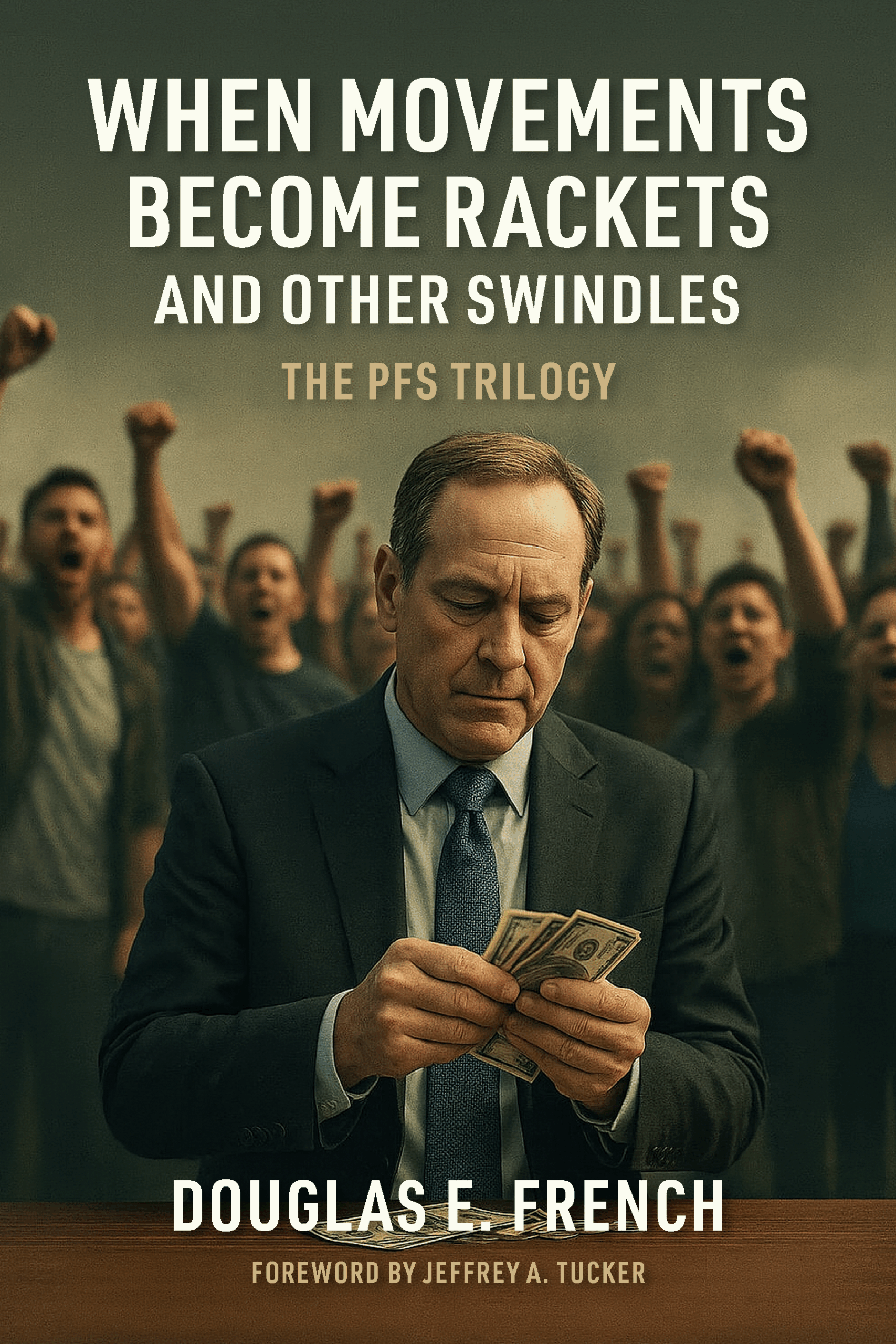
 Doug French
 Fernando Chiocca
 Greg Morin
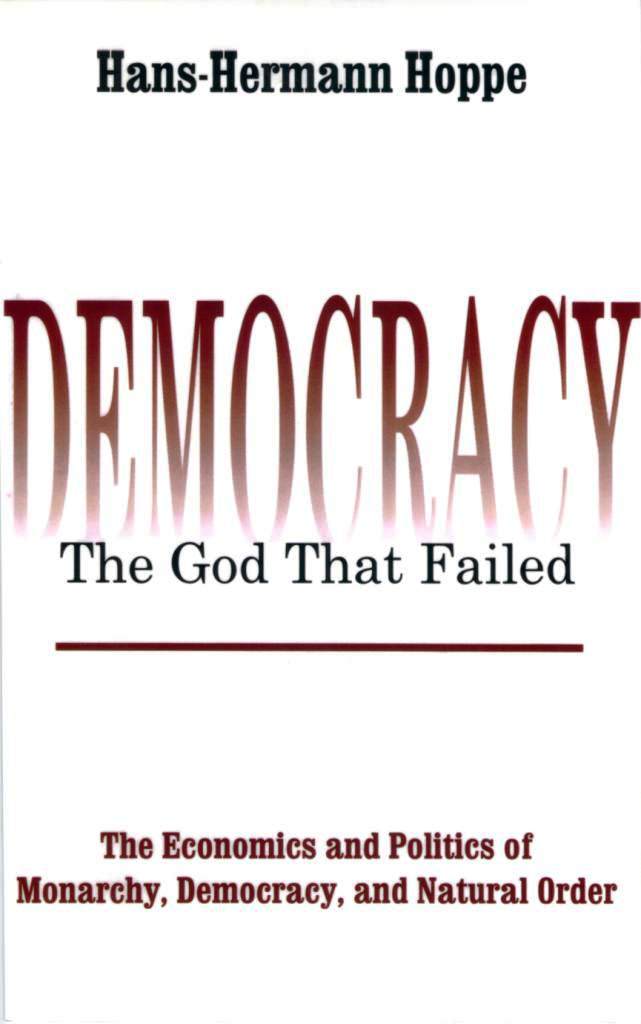
 Hans-Hermann Hoppe
 Jay Baykal
 Jayant Bhandari
 Jeff Deist
 Jeffrey Barr
 Juan Fernando Carpio
 Ken Yamarashi
 León Isidoro
 Martin Cabrera
 Nick Hoppe
 Oscar Grau
 Peter Wong
 PFS
 scholarium
 Saifedean Ammous
 Sean Gabb
 Sean Ring
 Stephan Kinsella
 Stéphane Geyres
 Thomas Jacob
 Tom DiLorenzo

Follow Us!