Hi, I’m Walter Castillo. I am writing to you to share Paul Villegas’ writings regarding his ‘proposal’ for the ‘axiom of contextual action’ and his ‘defense’ of Hayek. I would like to know your opinion, criticism, or refutation of his publications.
Martin, Milei having the … chutzpah … to attack Hoppe as economically illiterate (while later praising him yet again, like a schizo) reminds me of the time that Cato pest Tom Palmer had the temerity to attack Hans Hoppe for noting that on the free market, “unemployment” is “always voluntary.” When I defended Hoppe to Palmer, he wrote me:
[…] who could take a self-described economist seriously when he writes that unemployment is impossible in a free market? And when he claims that that’s somehow an implication of Austrian economics he adds insult to ignorance. […] The fact is that Mr. Hoppe is an embarrassment.
Javier Milei’s administration has recently announced a plan to inject pesos through Argentina’s central bank, with the declared objective of boosting consumption and thus “stimulating growth. This implies a reduction by 5 points in the banking system reserve requirements.”1[continue reading…]
The first two chapters—my “Preface” and Hans’s “Introduction”—were published the week of Rothbard’s birthday here on the Property and Freedom Podcast (PFP315 and PFP314). The other main chapters will be released sequentially weekly on Mondays. The next in the queue:
Lots of libertarians adore Congressman Thomas Massie. It’s not quite clear why; he never claims to be a libertarian.
“Massie describes himself as a constitutional conservative. He believes in intellectual property and thinks it is necessary for incentivizing innovation. Massie has remarked that this is one of the areas where he is not a libertarian.”https://t.co/SQY94D56ns
Massie describes himself as a constitutional conservative. He believes in intellectual property and thinks it is necessary for incentivizing innovation. Massie has remarked that this is one of the areas where he is not a libertarian.
Bloomberg reported last week that Turkey sold and swapped a total of nearly 60 tons of gold due to the US-Israel war on Iran which is putting a strain on “Turkey’s disinflation strategy, which relies heavily on maintaining a stable or steadily depreciating lira, including with hard-currency interventions, usually via state-run banks. Rising energy import costs and increased dollar demand since the conflict began have made that approach more challenging to maintain.” The Istanbul Post reports that the Lira is now trading 44.44 to the dollar. Back in 2022 one US dollar bought 18.3866 lira. [continue reading…]
When Israel and the US launched their war on Iran, they claimed it would last a few days. A few days later, they said it would last 3 to 4 weeks. As the fourth week ends, it is a good time to take stock of what has happened and the war’s scoreboard, and the political and economic implications. Military matters are unpredictable, and everything can change quickly in battlefields, so this analysis is tentative, but there are clear changes in the facts on the ground so far that indicate the US has suffered a significant setback with important ramifications, and if the US chooses to double down, it may exacerbate it, with momentous political, economic, and military implications for the Middle East, the US, and the world at large.
In a 2003 article on the American Enterprise Institute web site entitled “The Neoconservative Persuasion” the late Irving Kristol boasted of being the “godfather” of neoconservatism. Gaining political clout in the 1980s during the Reagan administration, the neocons have dominated American foreign policy ever since.
In his article Kristol explained that the original neocons like himself were all former communist “Trotskyists” who decided to temper their communistic impulses in light of all the failures of socialism. They remained foreign policy imperialists, statists, Zionists, and enemies of classical liberalism, however, as Kristol also explained in the article. [continue reading…]
The Property and Freedom Journal of the PFS serves as a more formal counterpart to the Property and Freedom Blog features in-depth articles and papers on topics of interest to PFS members and others, such as economics, history, and contemporary political issues, typically from authors writing in the Rothbardian/Misesian Austro-libertarian perspective.
Editor: Stephan Kinsella
Executive Editor: Hans-Hermann Hoppe
We will also add to the journal some previous articles previously published as stand-alone articles at the PFS site.
En el mundo anarcocapitalista y austriaco se habla de Hans-Hermann Hoppe, Murray Rothbard o Ludwig von Mises y está bien, pero el nombre de Thomas DiLorenzo queda sistemáticamente relegado. No es casualidad. pic.twitter.com/6tzkPRiJ4n
In the anarcho-capitalist and Austrian world, people talk about Hans-Hermann Hoppe, Murray Rothbard, or Ludwig von Mises, and that’s fine, but the name of Thomas DiLorenzo is systematically relegated. It’s no coincidence.
Mises Institute, 2019 Austrian Economics Research Conference (AERC), Mises Institute, Auburn, Alabama (March 22–23, 2019), Panel: The Significance of Hans-Hermann Hoppe, on the occasion of Professor Hoppe’s 70th birth year
My close, personal association with the Mises Institute goes back more than 40 years, to 1985, only three years after the Institute’s founding. In the course of the years I have given dozens upon dozens of lectures. I have been awarded its Schlarbaum Prize and the Rothbard Medal. For a decade, I served as editor of its Journal of Libertarian Studies. I am the MI’s only long standing Distinguished Senior Fellow. Only two years ago, in 2024, I was a featured speaker at the Institute’s Human Action Conference, and my 75th birthday was celebrated at the occasion. In the same year I sent this congratulatory note to Lew Rockwell at the occasion of the festivities organized in honor of his own 80th birthday:
Dear Lew, to your 80th birthday I send you my best wishes and want to say thanks for by now almost 40 years of friendship and intellectual camaraderie.
I know you are too humble to say this, but I can certainly do it: You rank among the most brilliant commentators and analysts of the present age and you are the world’s greatest living promoter of sound economics in the tradition of Ludwig von Mises and Murray N. Rothbard and, more generally, of liberty, peace, common sense, and reason.
The consequences of hosting Milei’s Spaniard propagandist, who stated from the Mises Institute podium that the most Zionist president in the world is the person who had done more than anyone before to spread the principles of the Austrian School and anarcho-capitalist ideas, came quickly.
On the same day, accounts promoting the Chabad-Lubavitch asset took advantage of this phrase to reaffirm, with the imprimatur of the Mises Institute, that the cryptoscammer Milei is the greatest Austro-libertarian who ever lived: [continue reading…]
The first two chapters—my “Preface” and Hans’s “Introduction”—were published the week of Rothbard’s birthday here on the Property and Freedom Podcast (PFP315 and PFP314). The other main chapters will be released sequentially weekly on Mondays. The next in the queue:
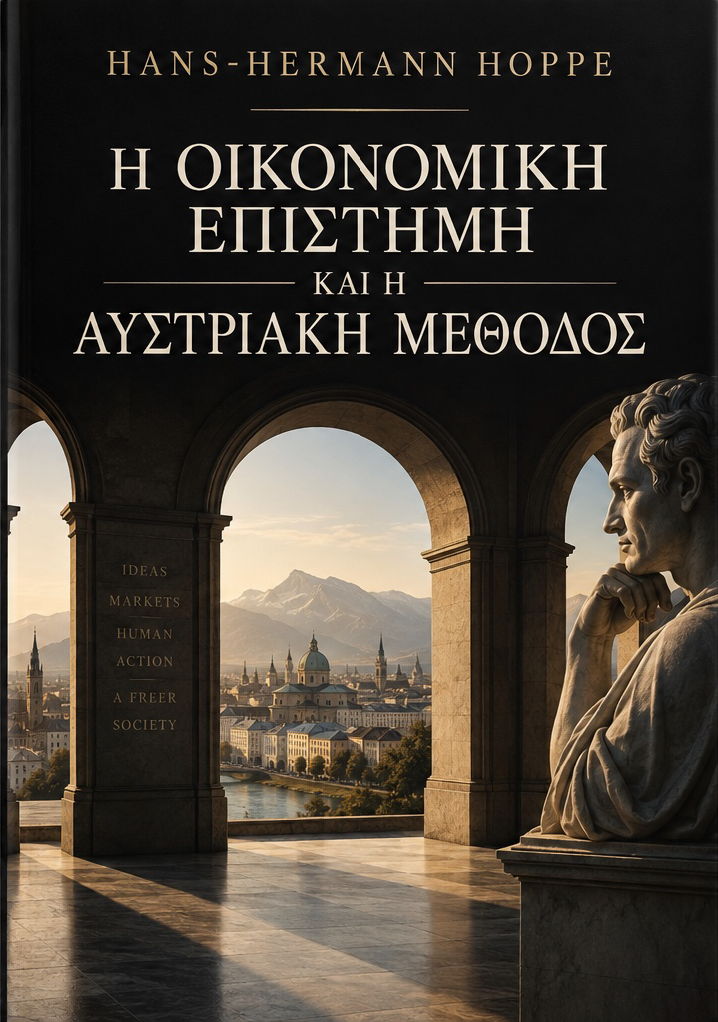
Professor Hoppe’s Economic Science and the Austrian Method (1995) has been translated into Greek as Η Οικονομική Επιστήμη και η Αυστριακή Μέθοδος. (pdf; .txt; docx; text below, from the .txt file; the translator notes that it is possible that some characters may not migrate properly to the Word file).
According to the translator, the aptly soi-disantPraxeologos,
Introducing this important work to a Greek audience that is largely unfamiliar with economics (and that includes Professors of Economics) would be of real value.
Many followers of the Austro-libertarian tradition in political and economic thought will, for some time, remain unable to grasp the shamefulness of this particular moment and the way in which it has dishonored the memory of Mises and Rothbard within the Mises Institute itself. pic.twitter.com/xH5IRxHkbe
So … the self-professed world’s greatest Zionist president, supporter of Natenyahu’s genocidal war in Gaza, Trump, and the USrael war against Iran is the greatest libertarian ever … What a joke. And, sadly, there is applause instead of boos.
The list of countries currently at war is staggering. Murray Rothbard, who would have been 100 on March 2, was always against war. He was dismayed by the cold war. He would be more than alarmed by the aforementioned list and the US’s and Israel’s invasion of Iran. “I am getting more and more convinced,” he wrote a libertarian associate in 1959,
that the war-peace question is the key to the whole libertarian business, and that we will never get anywhere in this great intellectual counter-revolution (or revolution) unless we can end this Verdamte cold war—a war for which I believe our ‘tough’ policy is largely responsible.
I’ve heard he has read my IP writing. He seems to be skeptical; see this tweet and Yumber Vera Rojas, “A decree by Javier Milei attacks copyright,” Página|12 (June 29, 2025) (“The regulations mean that hotels and party halls do not pay Sadaic … Musicians, managers, and directors of Sadaic oppose the measure, which could be brought to court in the coming days.”); “Milei government deregulates collection of author’s royalties“: “President Javier Milei government orders deregulation of the collection of authorship royalties in Argentina, whose processing was previously obliged to pass through a society for artists but can now be transmitted without intermediation.”
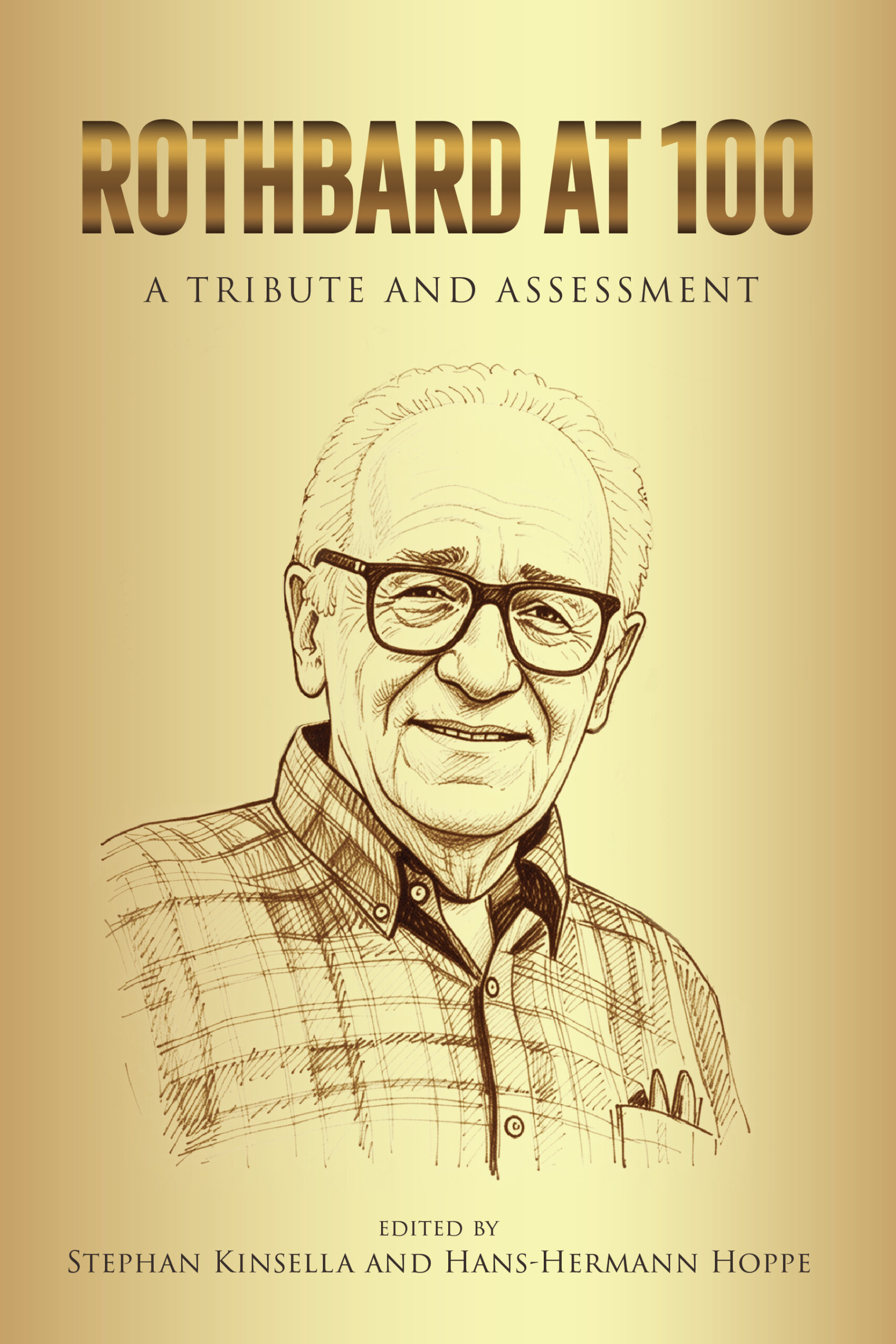
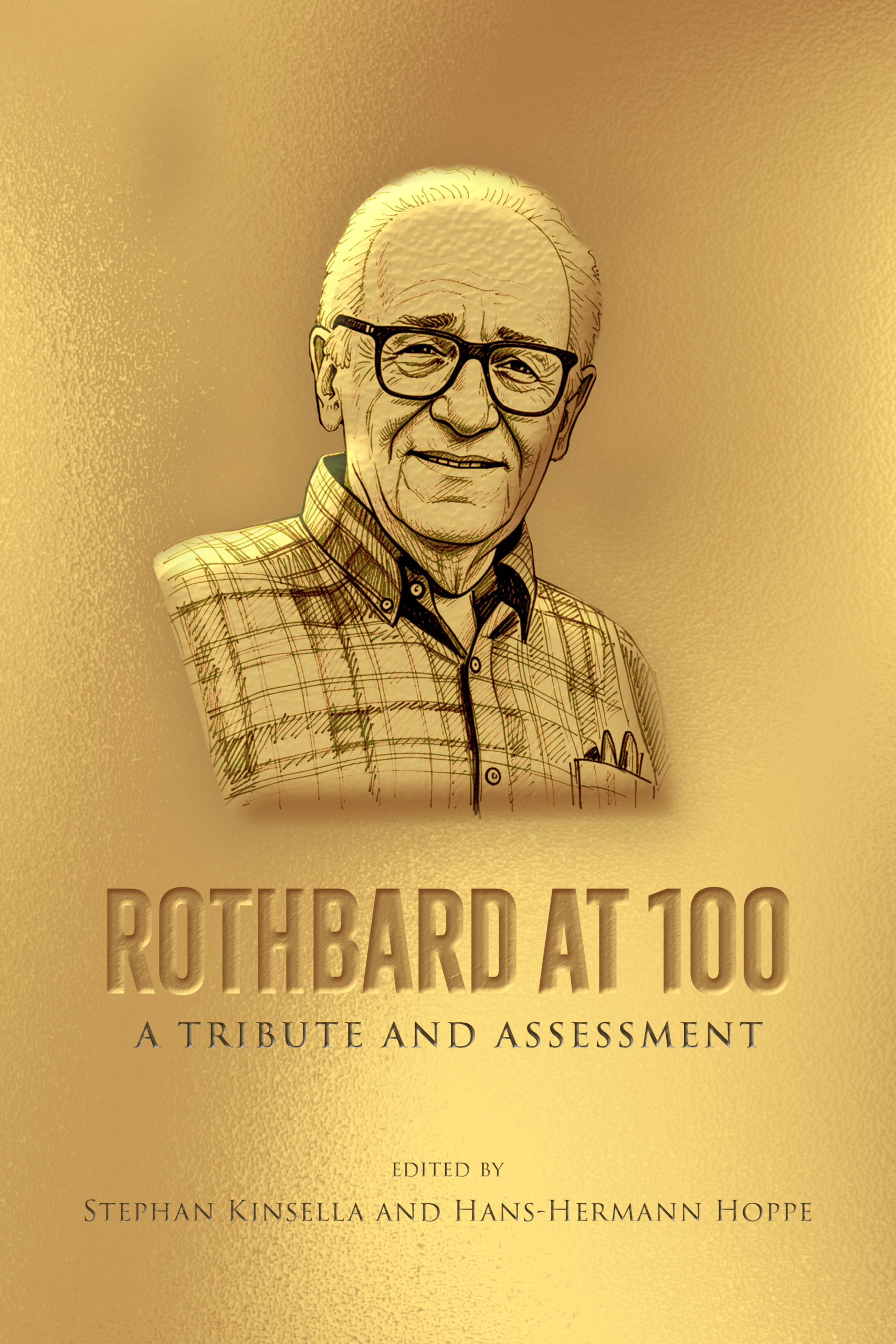
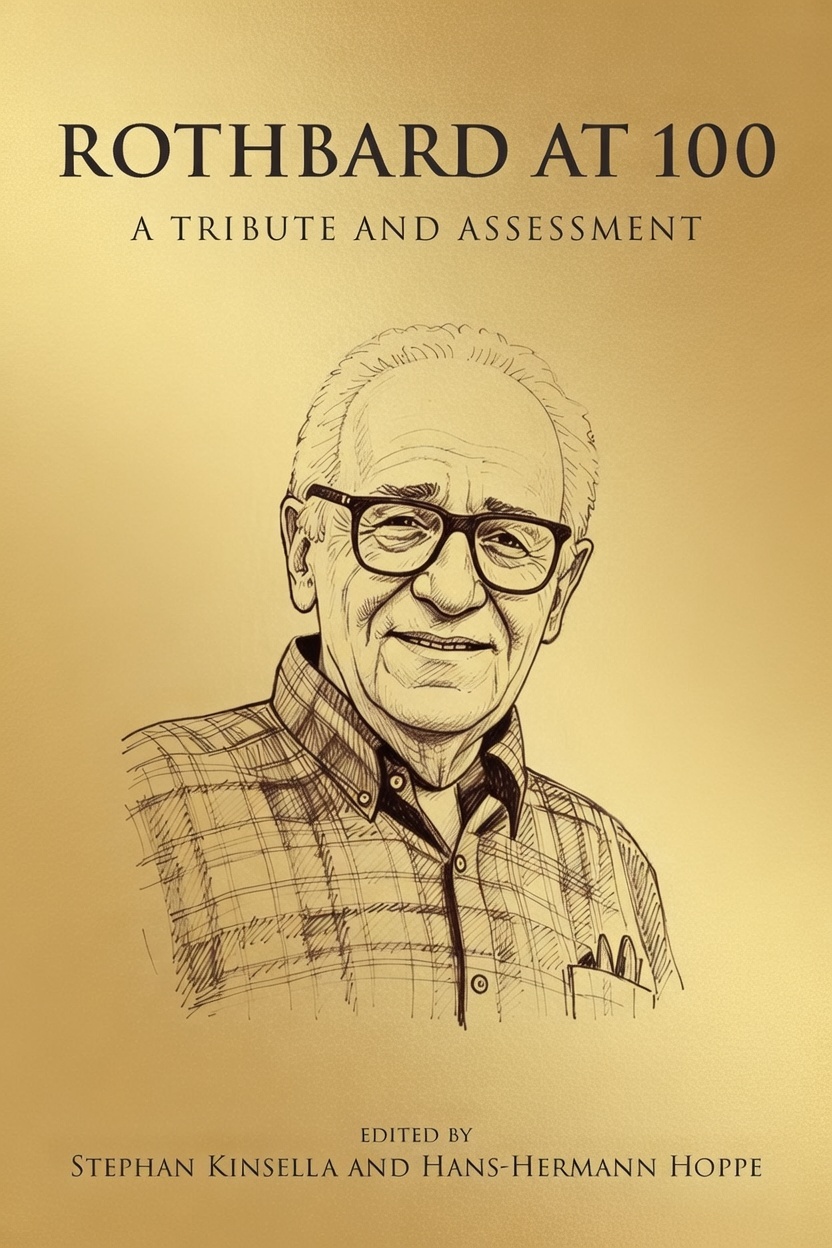
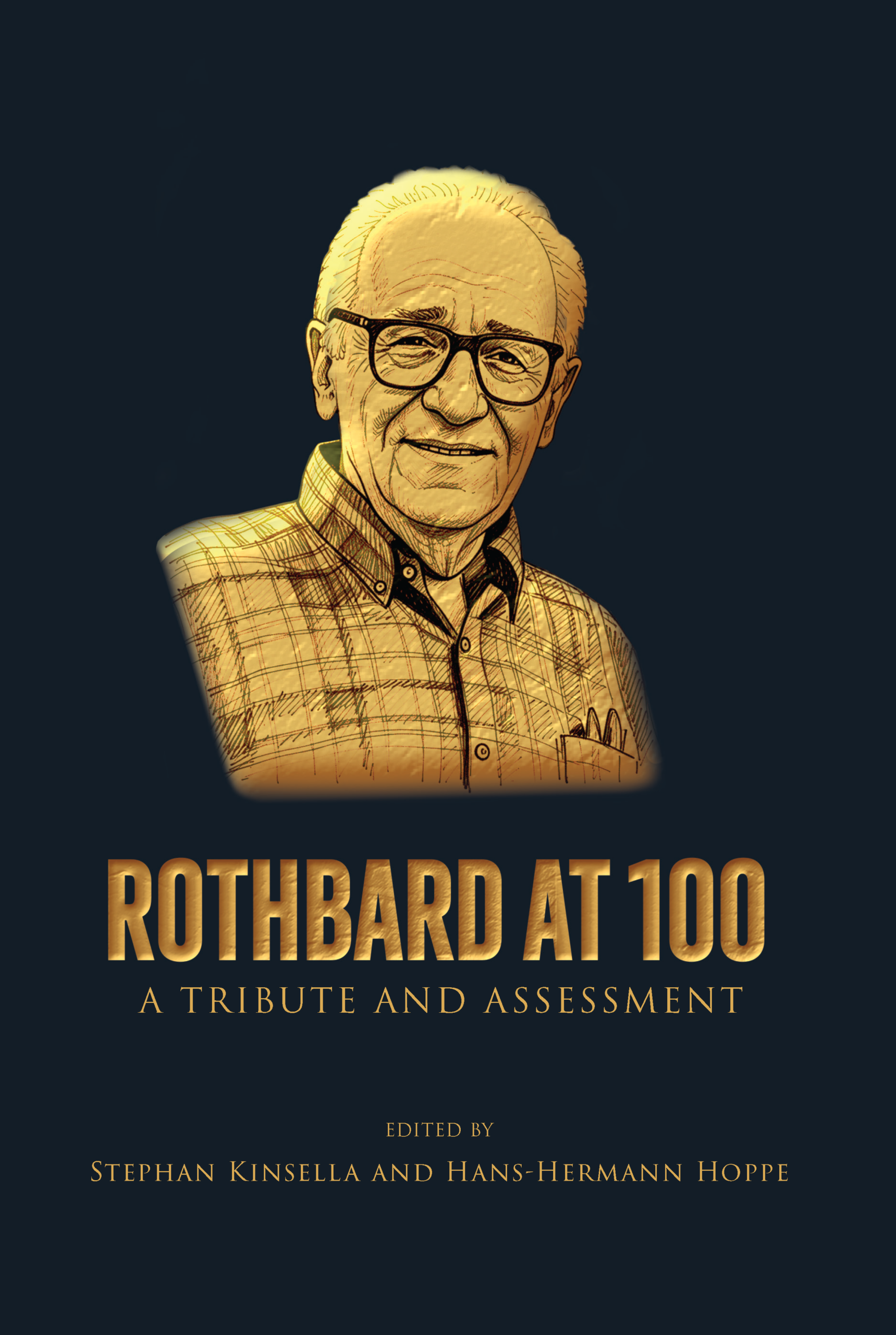
As PFS followers know by now, this month marks Murray Rothbard’s 100th birthday, which is precisely why we released Rothbard at 100: A Tribute and Assessment two weeks ago, on his birthday. Hans Hoppe realized only a couple months ago that this must be done, so we worked hard with our network of supporters and friends to make it happen in time for this occasion.
This month, and this year, is thus a special time of celebration for admirers of Rothbard and lovers of liberty around the world. A deluxe clothbound version of the book will be released soon, and the PFS will feature a panel on Murray and the book at the upcoming 2026 (and Twentieth Anniversary) Annual Meeting of the Property and Freedom Society in Turkey in September.
No doubt other groups and institutions are also celebrating and commemorating in their own way. For example, “100 Years of Rothbard” will be held in Porto, Portugal, on June 27, 2026, sponsored by several Portuguese libertarian groups: Mises Portugal, Catalaxia, Don’t Trust Verify (bitcoin podcast), Zugatv (libertarian podcast), and Golpe de Sstado Podcasto (ancap podcasters). Hans Hoppe and I plan to attend and speak about Rothbard. [continue reading…]
The first two chapters—my “Preface” and Hans’s “Introduction”—were published the week of Rothbard’s birthday here on the Property and Freedom Podcast (PFP315 and PFP314). The other main chapters will be released sequentially weekly on Mondays. The next in the queue:
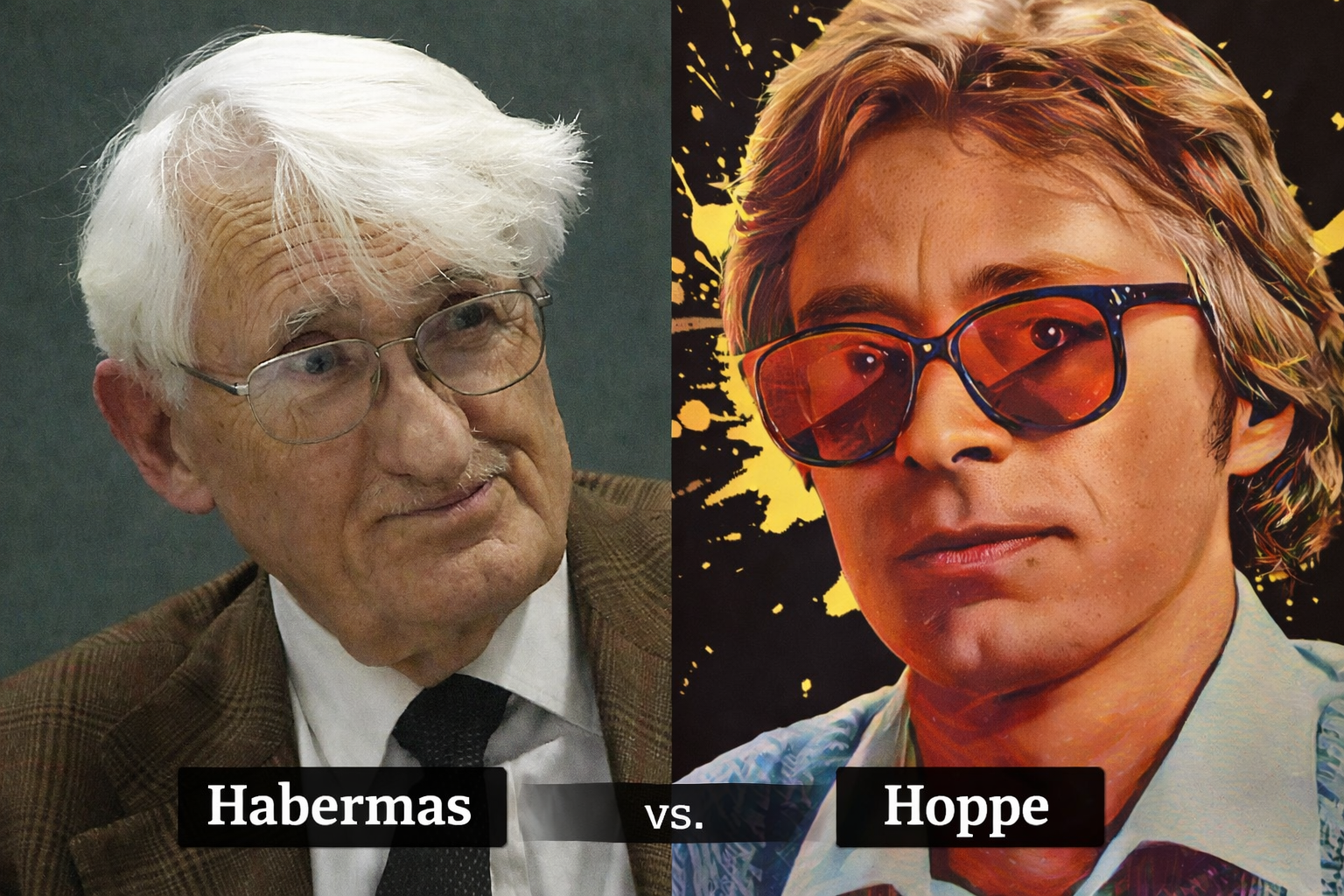
As admirers of Hans-Hermann Hoppe know, Habermas was one of Hoppe’s teachers and the principal advisor for his doctoral dissertation in Philosophy on David Hume and Immanuel Kant at Goethe-Universität, Frankfurt am Main from 1968–1974, Handeln und Erkennen [Action and Cognition] (Bern 1976) ). (At the time of time of his PhD dissertation, Hoppe was 24. He regards his “habilitation” thesis, written by the time he has reached intellectual maturity, and of course later work, as far more important than the PhD dissertation.)1 Hoppe soon abandoned the leftism of Habermas and the Frankfurt School and adopted Misesian Austrian economics and Rothbardian anarchist libertarianism. As Grok and ChatGPT recognize, Hoppe is Habermas’s most famous but politically most distant student (other prominent students of Habermas including more aligned figures like Axel Honneth, Rainer Forst, Claus Offe, and Hans Joas). [continue reading…]
As noted here, the 2026 Twentieth Annual Meeting of the Property and Freedom Society was recently held from Thursday, September 17, 2026 to Tuesday, September 22, 2026. Information on the 2027 meeting will be released in early 2027.
Rothbard at 100 is in production! As you can see, the books are printed in premium hardcover with gold foil stamping, and then they will be covered with a dust jacket. Also available as an audiobook and eBook. Preorder your copy now: https://t.co/iaEh0bk5G0pic.twitter.com/bapPGmhFHb
To donate with BITCOIN please use the address below. If you would like us to credit your payment (for dues, conference fees, etc.) please email Stephan Kinsella ([email protected]) when you make the bitcoin payment.
17M9V6m5X5Da4vNM5wWLjzcHz9qF36FPk6
“Property does not exist because there are laws, but laws exist because there is property.” — FrédéricBastiat
“Because the concept of property, for instance, is so basic that everyone seems to have some immediate understanding of it, most people never think about it carefully and can, as a consequence, produce at best a very vague definition. But starting from imprecisely stated or assumed definitions and building a complex network of thought upon them can lead only to intellectual disaster. For the original imprecisions and loopholes will then pervade and distort everything derived from them. To avoid this, the concept of property must first be clarified.” —Hans-Hermann Hoppe, TSC, ch. 2
The Property and Freedom Society (PFS; Facebook) stands for an uncompromising intellectual radicalism: for justly acquired private property, freedom of contract, freedom of association—which logically implies the right to not associate with, or to discriminate against—anyone in one's personal and business relations—and unconditional free trade. It condemns imperialism and militarism and their fomenters, and champions peace. It rejects positivism, relativism, and egalitarianism in any form, whether of "outcome" or "opportunity," and it has an outspoken distaste for politics and politicians. As such it seeks to avoid any association with the policies and proponents of interventionism, which Ludwig von Mises identified in 1946 as the fatal flaw in the plan of the many earlier and contemporary attempts by intellectuals alarmed by the rising tide of socialism and totalitarianism to found an anti-socialist ideological movement. Mises wrote: "What these frightened intellectuals did not comprehend was that all those measures of government interference with business which they advocated are abortive. ... There is no middle way. Either the consumers are supreme or the government."
(A more complete statement of our Principles can be found here.)



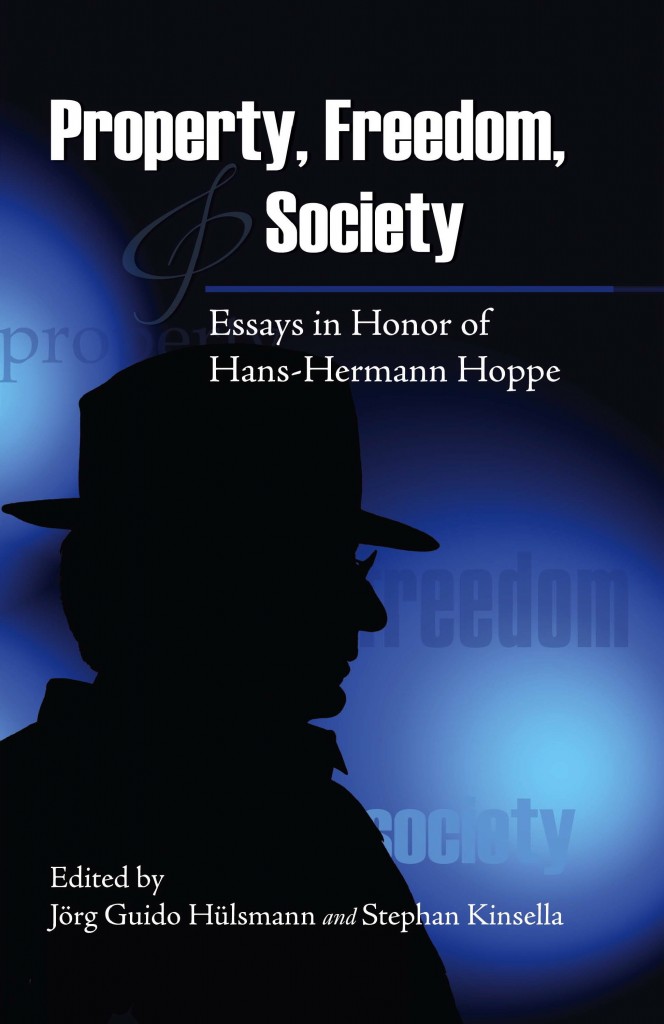
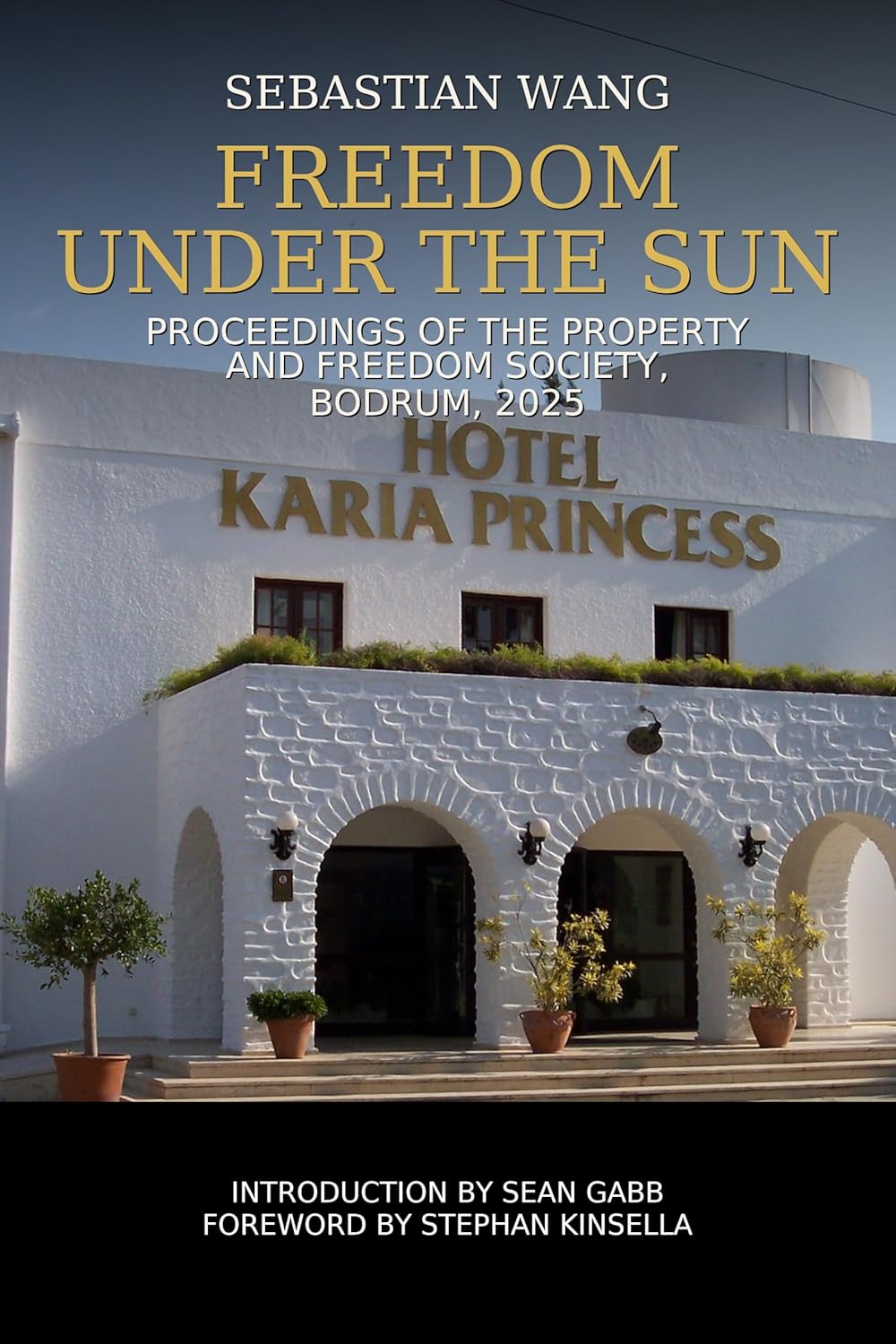





 Alessandro Fusillo
 Andreas Tögel
 David Dürr
 Doug French
 Fernando Chiocca
 Greg Morin
 Hans-Hermann Hoppe
 Jay Baykal
 Jayant Bhandari
 Jeff Deist
 Jeffrey Barr
 Juan Fernando Carpio
 Ken Yamarashi
 León Isidoro
 Martin Cabrera
 Nick Hoppe
 Oscar Grau
 Peter Wong
 PFS
PFS scholarium
 Saifedean Ammous
 Sean Gabb
 Sean Ring
 Stephan Kinsella
 Stéphane Geyres
 Thomas Jacob
 Tom DiLorenzo
Follow Us!