Mises Institute: Quo Vadis?
Postscript
Hans-Hermann Hoppe
April 17, 2026
Following my original article1 there has been no official reaction from the Mises Institute, except the two-sentence announcement by its two new executive directors that I would be stripped of my long held title as the institute’s only Distinguished Senior Fellow.2
If anything, then, this reaction and what came to pass in the meantime further confirmed my concerns, criticisms and suspicions, as shall be briefly noted in the following.
For one, and most importantly, I had noted that, as the result of his rapidly and shockingly deteriorating health, control of the MI had been wrested away from Lew Rockwell and taken over by others, most importantly by Joe Salerno, and that the public at large and in particular the Institute’s donors had been systematically deceived about this very fact. Fundraising letters allegedly signed by Lew had still been sent out and articles been published in his name that were not actually his. Indeed, it was in doubt if any of “his” decisions were truly his. This shameful practice suddenly stopped after I had pointed it out. Confirmed!
Staying on the topic of Lew Rockwell: I had received my title as Distinguished Senior Fellow based on my scholarly achievements, and the only legitimate reason for the MI to strip me of that title, then, would have been if I had betrayed the intellectual legacy of the institute’s two patron saints, Mises and Rothbard. Yet quite apart from the curious fact that the two executive directors informing me of my demotion had no scholarly qualification whatsoever, no one ever claimed that to be the case. Most revealingly, if anyone at all, the only two people conceivably entitled to make such a claim, Lew Rockwell and Joe Salerno, did not do so! Lew, because he had lost control of the MI and did no longer make any decisions regarding its operations (and, based on his own words, as I will demonstrate shortly, he never would or could have done so). And as for Salerno, without whose approval the two executive directors never would have dared to announce my titular demotion, he chickened out from putting his own name on the line, sensing the likely embarrassment that this might cause.
Rather, following my ouster, the MI, by means of two designated employees, took some special effort to muddy the waters and to promote Salerno as the new great leader of the institute. David Gordon published a glowing review of Salerno’s genuinely excellent (yet only) book, Money: Sound and Unsound,3 originally published a decade and a half before, and Ryan McMaken, in a recent article “Rothbard, the Mises Institute, and the Battle of Ideas,”4 followed up in the same vein by recounting an anecdote and some praise offered by Lew Rockwell in his Foreword to Salerno’s Festschrift of 2015:
After Joey Rothbard’s death, I flew to New York to organize the disposal of Murray and Joey’s goods according to their wills. Books and papers went to the Mises Institute, of course, where they are the center of our library and archives. But my strongest memory, aside from ineffable sadness, was the printed document on the small table next to Murray’s reading chair in the living room. It was Joe Salerno’s doctoral dissertation. … How appropriate that [Salerno] is also Murray’s successor as our academic vice president.5
In my original article I had leveled some severe criticism against Salerno (and I will come to that soon), but I had not uttered a single word against his scholarship. Indeed, I had considered Salerno and still consider him the foremost contemporary monetary theorist in the Austrian tradition. But it was effectively he, who stripped me of my title, and it was he, who made sure that the MI never made an official announcement about my ouster. Of course, the news still got out, but because it allegedly had been the two administrative executives, not he, who had made the decision, he never had to explain himself, which would have been a rather difficult task. For then, he would have had to stack up his own oeuvre against all of mine (and that in “The Year of Rothbard”) and that would have yielded a somewhat embarrassing result. Just ask Grok who is Murray Rothbard’s most prominent student and intellectual heir.
As well, Salerno would have had to get around this praise of Rockwell’s in my honor:
My first full exposure to the brilliance of Hans-Hermann Hoppe came at an early Mises University in which he gave the main lecture on methodology. Here he offered a new take on Mises’s Kantian method. Hoppe explained Kant’s typology of propositions, and showed how Mises had appropriated them but with a new twist.
Instead of categories of thinking and categories of the mind, Mises went further than Kant to delineate categories of action, which is the foundation of economic reasoning. In this lecture, we all discovered something about Mises we had not known, something bigger and grander than we knew, and it caused us to think differently about a subject that we thought we knew well.
This same Hoppean effect—that sense of having been profoundly enlightened by a completely new way of understanding something—has happened many times over the years. He has made contributions to ethics, to international political economy, to the theory of the origin of the state, to comparative systems, to culture and its economic relation, to anthropology and the theory and practice of war. Even on a subject that everyone thinks about but no one really seems to understand—the system of democracy—he clarified matters in a way that helps you see the functioning of the world in a completely new light. There aren’t that many thinkers who have this kind of effect. Mises was one. Rothbard was another. Hoppe certainly fits in that line. He is the kind of thinker who reminds you that ideas are real things that shape how we understand the world around us. I dare say that no one can read works like Democracy—The God that Failed, A Theory of Socialism and Capitalism, and The Economics and Ethics of Private Property and come away unchanged.6
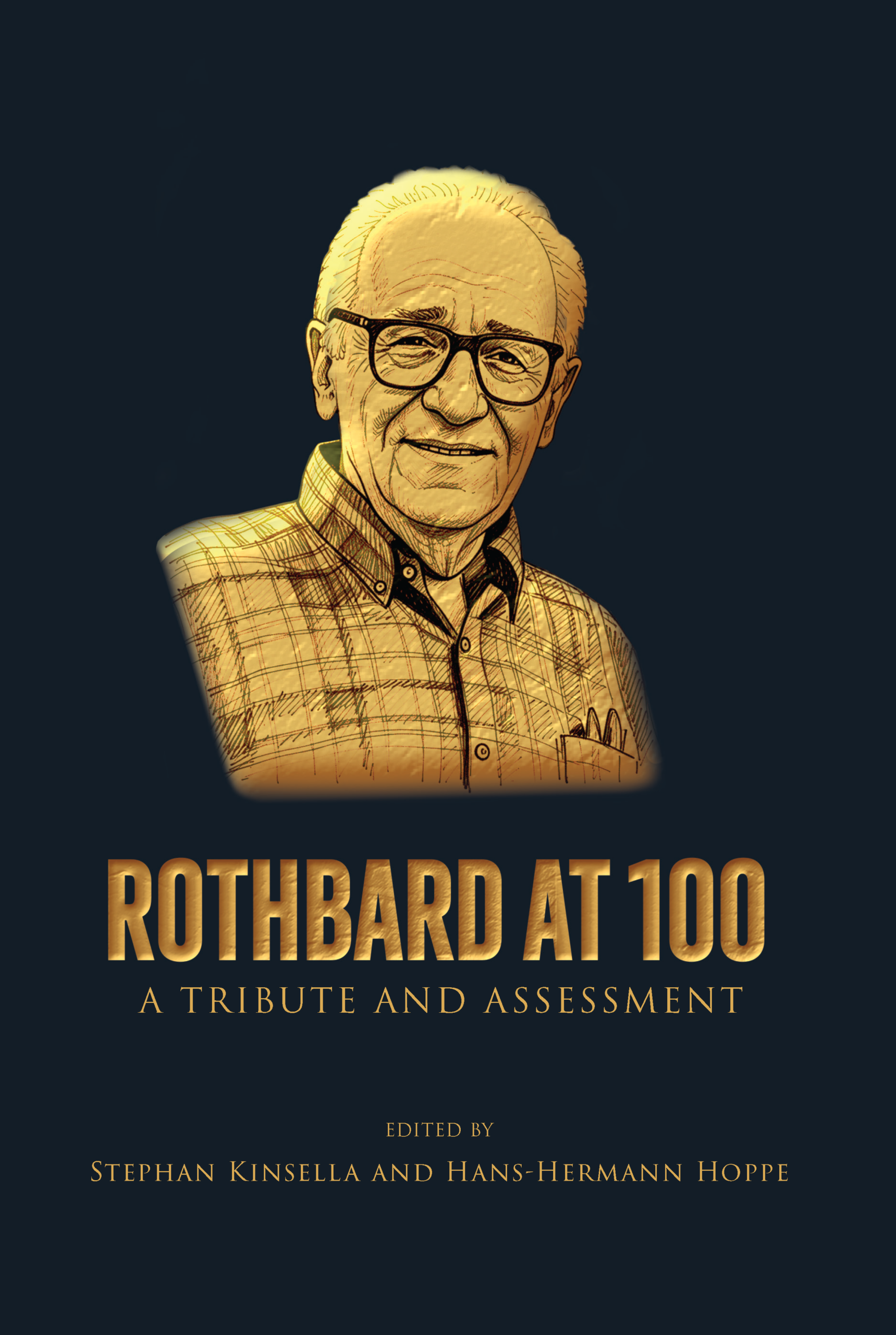
If anything, all this adds further confirmation to my concerns, criticisms and suspicions. Yet more is still to come. As unanimously confirmed by all three previous MI presidents, I had mentioned that Salerno, all the while drawing a significant salary and spending long parts of the year away from Auburn, is lazy and unproductive and that this attitude had affected much of the entire institute staff. Most of the organizational work for the various conferences held in the course of the year is done by Salerno’s numerous assistants. The two annual main conferences, the Mises University and the Rothbard Graduate Seminar, offer essentially the same program with the same speakers every year. Not much work involved there. The Austrian Economic Research Conference brings in a handful of featured speakers and a large number of presenters largely pre-screened by other faculty. Not much work involved here either. And in 2026, the “Year of Rothbard,” the MI managed to reissue the 38 year old Festschrift for Rothbard (while willfully ignoring Rothbard at 100, the Gedenkschrift published by Kinsella and myself on March 2nd, Murray’s hundredth birthday),7 they are raising funds for a so-called special 2-day Rothbard University conference, offering essentially, except for the case of Wanjiru Njoya, old, canned lectures from the Mises University of this or yester-year. And for the Fall they are raising still more funds for a 3-day special Seminar on Rothbard’s Ethics of Liberty (for which yours dearly has written an extensive introduction).8 Not very impressive.
Moreover, as for low productivity, almost two years ago by now, the MI held a special Human Action Conference, organized by then president Tom DiLorenzo.9 Funds were raised and special sponsors for each conference speaker solicited. The result of the conference, promised to the donors, sponsors and conference attendees was a book. To this day there has been no book, and even if it should appear in the near future, two years to produce a book with the assistance of plenty of helping hands does not impress. Quite similarly, one year ago Tom DiLorenzo had organized a conference on Revisionist War History that was to likewise culminate in a following book publication. I had turned in my contribution to this project in December of last year.10 Until today, almost 6 months later, I still have not even received the proofs of my article. Low productivity again.
Finally a few words about the shenanigans of Ryan McMaken’s, most likely committed in close cooperation with Salerno. McMaken had refused to publish my introduction11 to the above mentioned Gedenkschrift in honor of Murray Rothbard on the ground that the MI was about to specialize in the publication of articles narrowly confined to purely economic matters rather than the broader range of Austro-Libertarianism, and that my article did not fit into this scheme. To anyone who has followed the articles published on mises.org, whether before or since, after McMaken’s decision regarding my piece, it should be obvious that his justification given was a blatant lie. The true reason for his decision was this: For one, the MI did not want to be up-staged by Kinsella and Hoppe at the occasion of Rothbard’s birthday, all the while they, with a staff of 30 or so, had nothing to show for on the same day. But even more importantly, my article contained some rather outspoken critique of the self-proclaimed “world’s greatest Zionist president,” Javier Milei, of Argentina, and laid out in some detail why Milei’s (and his many fans’) claim to be a “philosophical” anarcho-capitalist in the Rothbardian tradition is simply ridiculous and completely outlandish; why Rothbard would never have endorsed this very “best friend” of Netanyahu’s and Trump’s and enthusiastic supporter of the USrael wars in Gaza and in Iran, but would have vigorously condemned him instead.12 And here, then, was the rub: the MI, or more specifically Joe Salerno, had invited Jesus Huerta de Soto, the most prominent intellectual propagandist of Milei’s, to present the Ludwig von Mises Memorial lecture. To publish my article just one week before the JHS show would surely have made some waves and likely caused some disturbance. So better to shut me up and forget about principle.
Salerno knew about Rothbard’s views of Israel, of Zionism and of the Neocons, he knew that Rockwell shared these views, he knew about Milei’s Zionism and his fake Rothbardianism, he knew about JHS’s role as Milei’s propagandist, and he knew that what I had written in my article was true. Why, in spite of all this he decided to sell out and thus betray Rothbard’s and Rockwell’s legacy remains a mystery to me.
Needless to say that nothing has changed in the meantime regarding the rather curious, if not to say strange or even suspicious, organizational structure and composition of the MI’s Board. Indeed, with Lew essentially out of commission, the situation looks even more curious now than before. Nor, to the best of my knowledge, is there any new president in sight.
Istanbul
April 16, 2026
HHH
- Hans-Hermann Hoppe, “Mises Institute: Quo Vadis?”, Property and Freedom Journal (March 25, 2026). [↩]
- Stephan Kinsella, “Hoppe Removed as Mises Institute Senior Distinguished Fellow,” Property and Freedom Blog (April 1, 2026). [↩]
- Joseph T. Salerno, Money: Sound and Unsound (Auburn, Ala.: Mises Institute, 2010). [↩]
- Ryan McMaken, “Rothbard, the Mises Institute, and the Battle of Ideas,” Mises Wire (04/08/2026). [↩]
- Llewellyn H. Rockwell, Jr., “Foreword,” in The Next Generation of Austrian Economics: Essays in Honor of Joseph T. Salerno, Per Bylund and David Howden, eds. (Auburn, Ala.: Mises Institute, 2015). [↩]
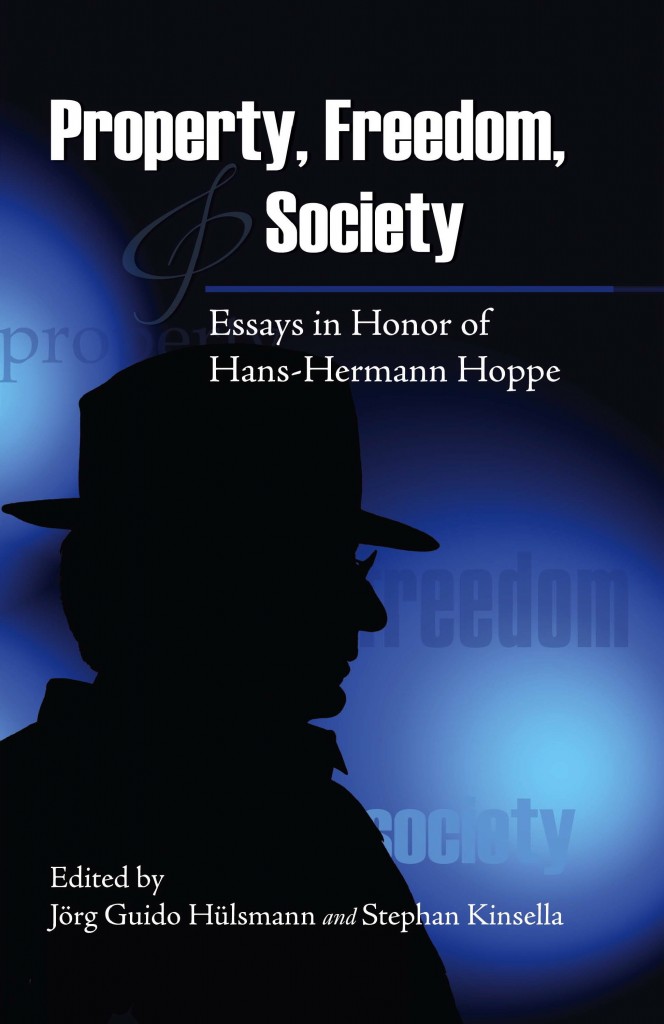
- Llewellyn H. Rockwell, “A Life of Ideas,” in Property, Freedom, and Society: Essays in Honor of Hans-Hermann Hoppe, Jörg Guido Hülsmann and Stephan Kinsella, eds. (Auburn, Ala.: Mises Institute, 2009); see also Rockwell, “In Honor of Hans Hoppe,” in A Life in Liberty: Liber Amicorum in Honor of Hans-Hermann Hoppe, Jörg Guido Hülsmann and Stephan Kinsella, eds. (Houston, Texas: Papinian Press, 2024). [↩]
- Rothbard at 100: A Tribute and Assessment, Stephan Kinsella and Hans-Hermann Hoppe, eds. (Papinian Press and The Saif House, 2026). [↩]
- Hoppe, Murray N. Rothbard and the Ethics of Liberty, Introduction to the new edition of Murray N. Rothbard, The Ethics of Liberty (New York: New York University Press, 1998). [↩]
- My piece was “My Discovery of Human Action and of Mises as a Philosopher,” presented at the Human Action Conference, Ludwig von Mises Institute, Auburn, AL, May 16, 2024 [update May 9, 2026: now in The Influence and Significance of Human Action After 75 Years, Joseph T. Salerno, ed. (Auburn, Ala.: Mises Institute, 2026)]. [↩]
- Hoppe, “On War, Democratic Peace, and Reeducation: The “German Experience” in Reactionary Perspective,” allegedly forthcoming in a book based on the Mises Institute’s Revisionist History of War Conference (May 15, 2025—May 17, 2025). [↩]
- Hoppe, “Introduction,” in Rothbard at 100: A Tribute and Assessment. [↩]
- See commentary on Milei at HansHoppe.com and Propertyandfreedom.org. As noted in Hoppe, “Mises Institute: Quo Vadis?”, “Tom DiLorenzo would not have invited him.” See references in n.7. [↩]















 Alessandro Fusillo
 Andreas Tögel
 David Dürr
 Doug French
 Fernando Chiocca
 Greg Morin
 Hans-Hermann Hoppe
 Jay Baykal
 Jayant Bhandari
 Jeff Deist
 Jeffrey Barr
 Juan Fernando Carpio
 Ken Yamarashi
 León Isidoro
 Martin Cabrera
 Nick Hoppe
 Oscar Grau
 Peter Wong
 PFS
PFS scholarium
 Saifedean Ammous
 Sean Gabb
 Sean Ring
 Stephan Kinsella
 Stéphane Geyres
 Thomas Jacob
 Tom DiLorenzo