From PFSer John Leask,”Midterm Elections in America, Then and Now,” Madness of Crowds (Nov. 4, 2026).
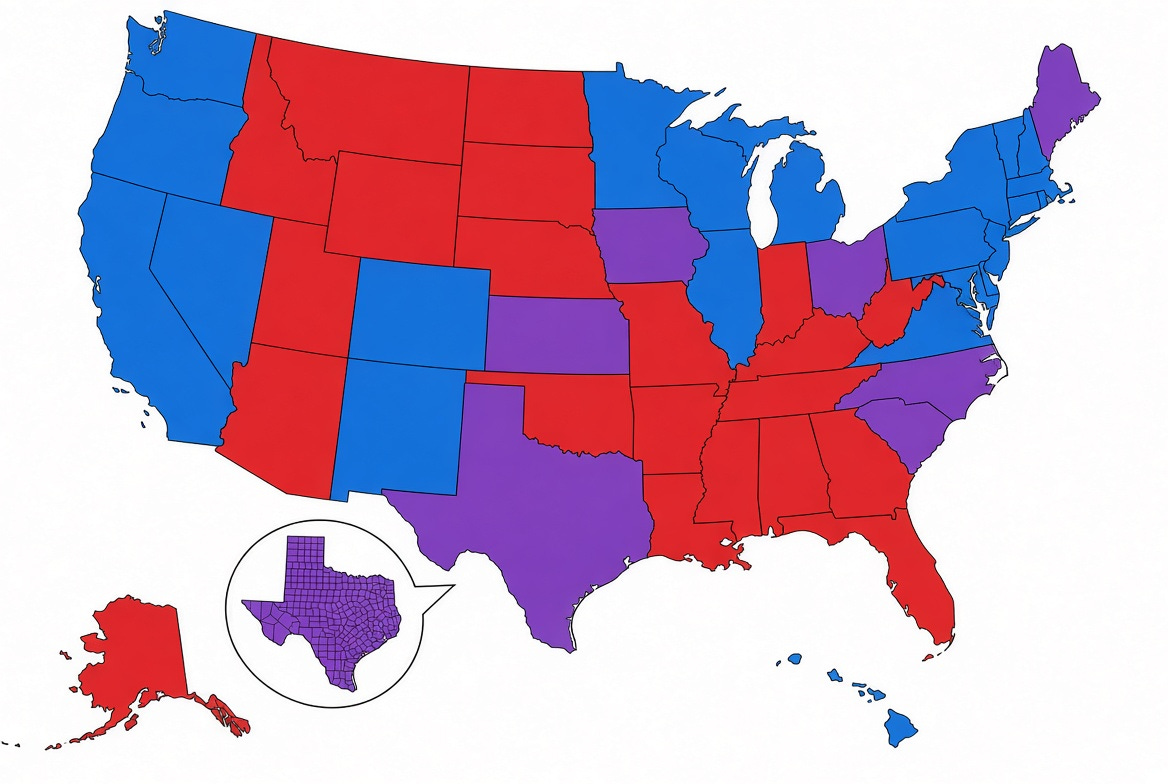
Well, the midterms in the United States are finally done. And as predicted by many, the “midterm penalty” or “midterm curse” played out once again.
Even though I follow politics pretty closely, I’ve never cared much about the midterms, particularly since I became aware that libertarian politics (free market capitalism, peace, and liberty) would remain inconsequential in the short-term, mid-term, and perhaps long-term. This year, however, the barrage of intrusive ads and other communications really did force me to pay a little attention. On top of that, the ever-so-disappointing 2nd Trump term had me curious enough to wonder just how widespread that view has become. Before getting to the 2026 results, though, it’s worth covering the history of midterm elections.
U.S. Midterm Elections since 1842
Out of 45 midterm elections between 1842 (during President John Tyler’s term, following William Henry Harrison’s short-lived 31-day presidential term) and 2022 (the last midterm election year prior to the still ongoing 2026 elections), 41 of them have resulted in the ruling party (the party of the then-current president) losing seats in the House of Representatives. That means that 90% of the time the president does not get his way. An interesting factor here is that midterm elections typically have between 15% and 20% lower voter turnout than elections in the offset years, or the presidential election years. This helps explain — somewhat — why 90% of midterm elections result in lost seats for the ruling party; the non-ruling party is more prone to “get out the vote” in order to have some semblance of influence in Washington, even without having a president from the same party. On top of that, the non-ruling party is aware of this historically consistent statistic of lesser turnout, so they are excellent about showing up.
Another interesting datapoint is the resulting control of the House in midterm years. When the president’s party has also held the House in those years, it has actually lost control 50% of the time.
So what’s the point? The point is that the midterm curse is real. This time, though, it was particularly real, and it’s worth delving in to understand just how unpopular Trump is, and it’s not for the same old platitudes as usual.

The 2026 Results
The House AND Senate flipping from Republican majority to Democrat majority can be interpreted many different ways, of course. I’ve read a few outrageous mainstream analyses already, so I’m going to share my own view on what I believe to be true. My purpose, as always, is to explain how this works, not how we may wish it to work nor to ignore uncomfortable truths.



















 Alessandro Fusillo
 Andreas Tögel
 David Dürr
 Doug French
 Fernando Chiocca
 Greg Morin
 Hans-Hermann Hoppe
 Jay Baykal
 Jayant Bhandari
 Jeff Deist
 Jeffrey Barr
 Juan Fernando Carpio
 Ken Yamarashi
 León Isidoro
 Martin Cabrera
 Nick Hoppe
 Oscar Grau
 Peter Wong
 PFS
 scholarium
 Saifedean Ammous
 Sean Gabb
 Sean Ring
 Stephan Kinsella
 Stéphane Geyres
 Thomas Jacob
 Tom DiLorenzo

Follow Us!