[StephanKinsella.com cross-post]
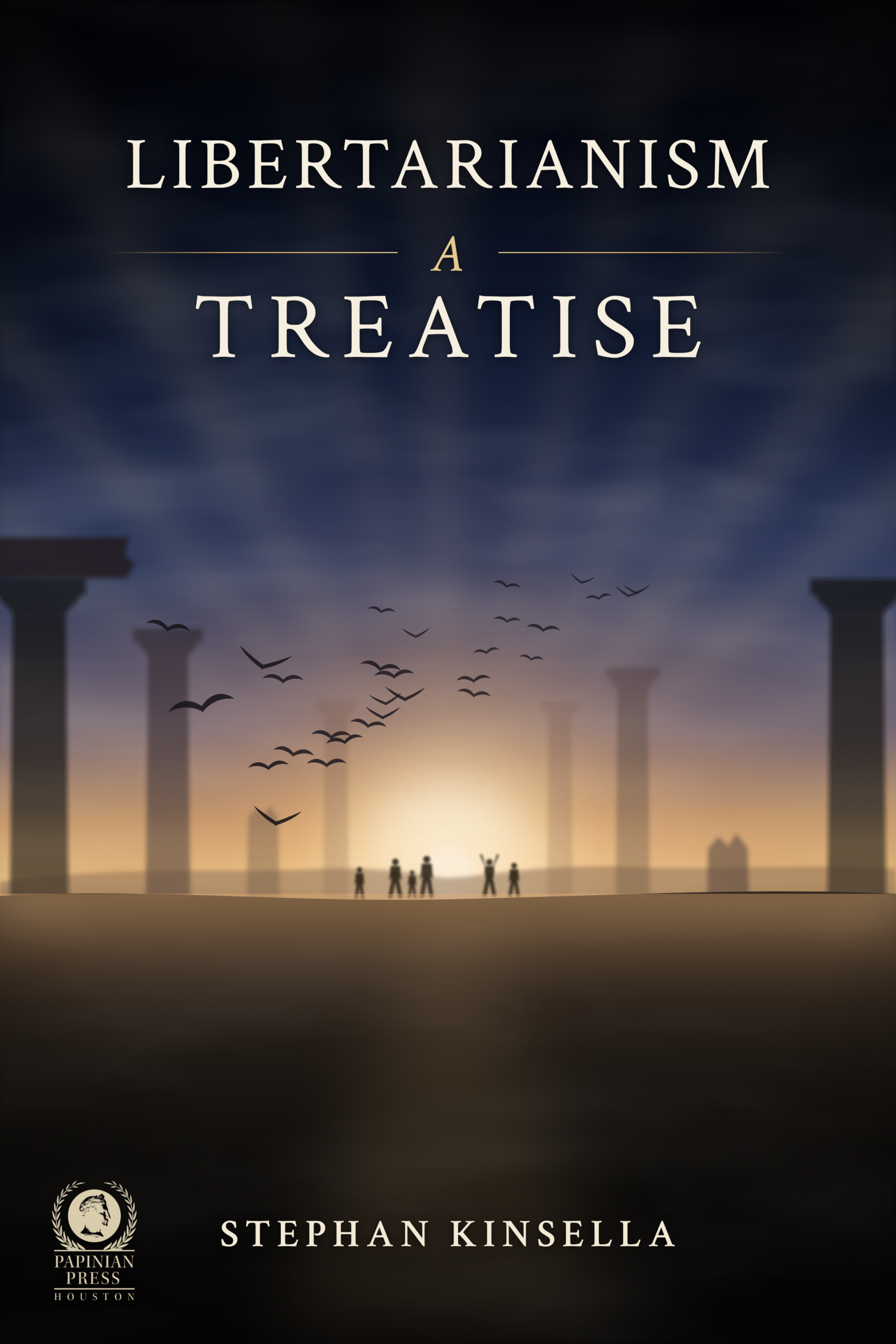 The other day I was telling a friend what I would do if I didn’t have so many other projects to get to first: take on a project I toyed with about twenty years ago. Libertarianism: An Encyclopedia, or Libertarianism: A Treatise: a systematic, regularly updated guide to all things libertarian. A multivolume work. Not “Kinsella’s libertarianism,” but all of it: the arguments for rights, the rival foundations, the disputes, the applications, who said what and where.
Then I went digging through my old files and found that my memory was off by a decade. I first sketched the idea in June 1994, when I was a young patent associate at a Philadelphia law firm, just beginning to write on libertarian theory, and floated it by email to Tibor Machan and Jan Narveson that July.1 So this is a thirty-two-year-old dream, not a twenty-year-old one.
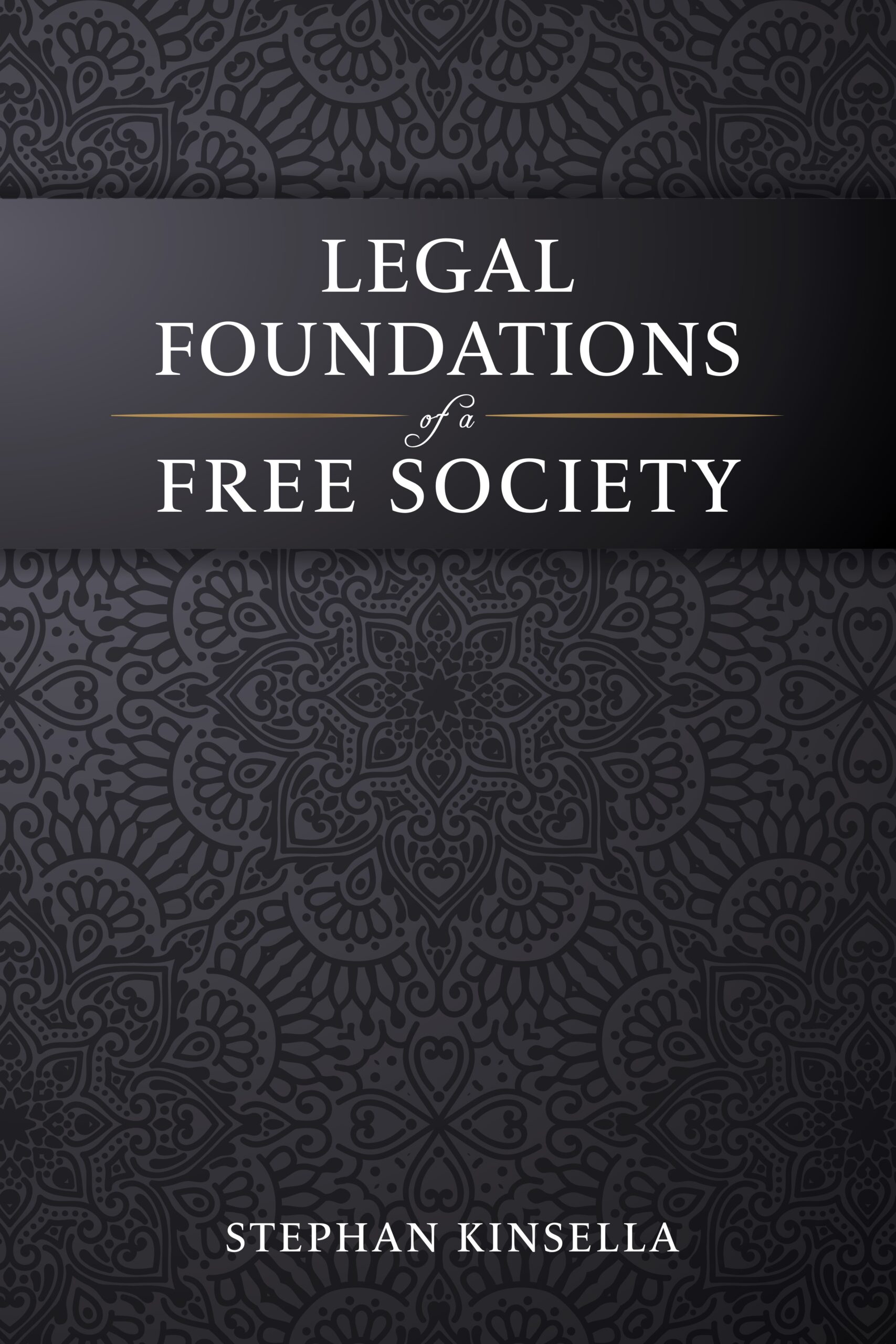
I suppose I sensed even then that I would keep writing and developing my own theories. I had already started, with the estoppel theory of rights I first laid out in a 1992 article,2 and I kept at it over the next three decades, culminating in my 2023 book Legal Foundations of a Free Society.3 But stating my own views is one thing; objectively stating others’ views, and the general state of libertarian thought, is another. LFFS is the former, and doesn’t pretend to be anything else. The Universal Principles of Liberty, which I published in 2025 with input from several like-minded colleagues, was an attempt at the latter: a concise statement of core libertarian principles—“something that can be built on” by others—rather than a restatement of my own take. Of course, the Principles are phrased in my own way and rest on my own views. But they try to state objectively the principles implicit in most libertarian thinking, even where others use different concepts or terminology. That’s why the Principles avoid areas “where there is still significant disagreement among libertarians,” such as abortion, as well as more detailed applications, and why they contemplate supplemental principles and scholarly commentary. I’m now working on both: my own annotated commentary on the Principles, and proposed supplemental principles—both clearly in my own name, not presented as speaking for libertarianism as a whole.4
What I envisioned in 1994 was that second kind of work on a much grander scale: a comprehensive, regularly updated treatise or guide to libertarianism, covering all the significant literature—treatises, theories, approaches, books, and articles—modeled on the commercial legal treatises I used in practice, such as Harmon’s Patents and the Federal Circuit, Texas Jurisprudence, and the Louisiana Civil Law Treatise series (and later the Digest of Commercial Laws of the World, which I would go on to edit; more on all of these below). There was already a sizable libertarian literature then, larger than it had been even in the late 1980s. But modern libertarianism was only a few decades old, and the corpus was far smaller than it is today.5 I was also inspired by earlier efforts to survey that literature, such as Literature of Liberty, with its bibliographical essays and short reviews of books and journal articles. That inspiration led me, a couple of years later, to start a short-lived “Literature Review” section in the Journal of Libertarian Studies, which Hans-Hermann Hoppe had recently taken over as editor. It gave short descriptions of recent scholarly articles of libertarian interest, drawn from non-libertarian journals: a sort of pocket part without the treatise.6 Today the field of libertarian scholarship is vastly larger, and the ways of publishing it have changed completely.
Below is the story: the original idea, what the treatise would look like, why I think it may finally be feasible, and why I’m still not going to start it any time soon (if ever).
- My first scholarly article appeared in Reason Papers in 1992. See Kinsella, “Estoppel: A New Justification for Individual Rights,” Reason Papers No. 17 (Fall 1992): 61–74. See also Kinsella, “Preface and Acknowledgments to Legal Foundations of a Free Society,” StephanKinsella.com (Sept. 11, 2024) (“I first wrote on rights and punishment theory in the early 1990s”). [↩]
- Kinsella, “Estoppel: A New Justification for Individual Rights,” supra; see also idem, “Punishment and Proportionality: The Estoppel Approach,” Journal of Libertarian Studies 12, no. 1 (Spring 1996): 51–73; and see LFFS, chs. 5, “A Libertarian Theory of Punishment and Rights” [originally in Loyola of Los Angeles Law Review 30, no. 2 (Jan. 1997): 607–45], and 6, “Dialogical Arguments for Libertarian Rights” [originally in The Dialectics of Liberty: Exploring the Context of Human Freedom, Roger E. Bissell, Chris Matthew Sciabarra, and Edward W. Younkins, eds. (Lanham, Md.: Lexington Books, 2019)]. On how the estoppel idea came about, see Kinsella, “The Genesis of Estoppel: My Libertarian Rights Theory,” StephanKinsella.com (March 22, 2016). [↩]
- Kinsella, Legal Foundations of a Free Society (Houston: Papinian Press, 2023) [LFFS]. [↩]
- Kinsella et al., The Universal Principles of Liberty (Aug. 14, 2025); Kinsella, “Announcing The Universal Principles of Liberty,” StephanKinsella.com (Aug. 18, 2025); “Supplemental Principles to The Universal Principles of Liberty.” [↩]
- As I noted in a 2014 talk, “the modern libertarian movement is only about five or six decades old”; or, as I put it in 2011, modern libertarianism “really did not originate until the 1950s.” Kinsella, “Libertarianism After Fifty Years: What Have We Learned?,” StephanKinsella.com (Oct. 21, 2014), revised as LFFS, ch. 25; idem, “Libertarian Controversies,” Mises Daily (Aug. 26, 2011). [↩]
- Literature of Liberty: A Review of Contemporary Liberal Thought, Leonard P. Liggio, ed., was published by the Cato Institute (1978–1979) and then the Institute for Humane Studies (1980–1982); it is available at the Online Library of Liberty. The JLS sections are N. Stephan Kinsella, comp. and ed., “Literature Review,” Journal of Libertarian Studies 12, no. 2 (Fall 1996): 367–87, and idem, “Libertarian Literature Review,” Journal of Libertarian Studies 13, no. 1 (Summer 1997): 121–33. Hoppe became JLS editor after Rothbard’s death in 1995, and later made me the JLS book review editor (2000–2004). See Kinsella, “My Years with the Mises Institute,” Property and Freedom Journal (May 2, 2026), section “First Contact”; idem, “My Failed Libertarian Speaking Hiatus; Memories of Mises Institute and Other Events, 1988–2026,” StephanKinsella.com (Feb. 29, 2016). The 1996 Literature Review also pointed readers to the Federalist Society’s Conservative & Libertarian Legal Scholarship: An Annotated Bibliography, another useful survey, which later moved online and is updated periodically; see Kinsella, “Anti-IP Material Needed in the IP Section of the Federalist Society’s ‘Conservative & Libertarian Legal Scholarship: Annotated Bibliography’,” C4SIF.org (Oct. 29, 2012). [↩]













 Alessandro Fusillo
 Andreas Tögel
 David Dürr
 Doug French
 Fernando Chiocca
 Greg Morin
 Hans-Hermann Hoppe
 Jay Baykal
 Jayant Bhandari
 Jeff Deist
 Jeffrey Barr
 Juan Fernando Carpio
 Ken Yamarashi
 León Isidoro
 Martin Cabrera
 Nick Hoppe
 Oscar Grau
 Peter Wong
 PFS
 scholarium
 Saifedean Ammous
 Sean Gabb
 Sean Ring
 Stephan Kinsella
 Stéphane Geyres
 Thomas Jacob
 Tom DiLorenzo

Follow Us!