Arctotherium, “The Closure of the Internet: The Most Important Social Phenomenon of the Late 2010s,” Not With a Bang (Aug. 9, 2026).
Grok Summary:
Arctotherium’s long essay argues that the “closure of the Internet” in the late 2010s was the most important social phenomenon of the period. Until roughly 2015, major platforms operated with minimal rules beyond real-world crimes (illegal goods, child exploitation, direct threats, etc.). This open environment was backed by institutions such as the UN, EU, U.S. State Department, and mainstream outlets that treated online speech as continuous with offline liberty and expected it to liberalize closed societies.
That changed rapidly in two phases:
- 2015–2019, linked to the migrant crisis, Brexit, Trump’s election, and the online right;
- 2020–2022, intensified by COVID policies and the 2020 U.S. election.
Platforms built large human and machine-learning moderation systems, invented or radically expanded concepts such as “disinformation,” “misinformation,” “malinformation,” “hate speech,” “toxicity,” and “online safety,” and applied them opaquely and selectively. Network analysis was used to map and suppress clusters of accounts; demonetization, shadowbans, algorithmic downranking, and outright bans became routine. The essay details the process platform by platform (YouTube’s post-2017 “adpocalypse” and policy expansions, Reddit’s successive subreddit purges and quarantine regime, Twitter’s evolving rules and later Twitter Files revelations of government/FBI coordination, Amazon’s book removals, etc.). Offline enforcement (firings, street violence, institutional purges) closed the remaining avenues. The result, in the author’s view, was a shift from a relatively open frontier to “closely monitored playpens,” with tens of millions of accounts affected and heterodox (especially anti-woke or right-leaning) discourse largely driven offline or into smaller, lower-capacity spaces. The piece frames this as a classic slippery-slope case with no stable limiting principle once the conceptual and technical apparatus existed.
Arctotherium, “The Closure of the Internet: The Most Important Social Phenomenon of the Late 2010s,” Not With a Bang (Aug. 9, 2026)
Introduction
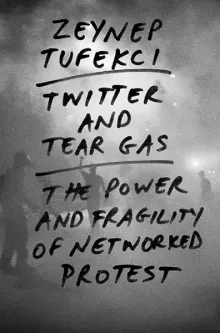
The last gasp of the former left-wing institutional view that freedom of the Internet was a good thing might have been New York Times journalist Zeynep Tufekci’s Twitter and Tear Gas, which I read when it was published back in 2017.
In July 2012, the UN Human Rights Council (UNHRC) unanimously adopted a landmark resolution affirming a simple proposition: “The same rights that people have offline must also be protected online, in particular freedom of expression, which is applicable regardless of frontiers and through any media of one’s choice.” Writing in The New York Times, Carl Bildt, Sweden’s foreign minister [at the time], hailed the vote as a “breakthrough of fundamental importance,” insisting that “the free flow of information on the Internet is a global call and not something pushed only by a few Western states.” For a brief moment, it seemed as if the world’s democracies had accepted that the open Internet would be the nervous system of modern liberty. (The End of the Open Internet)
Until 2015, an optimistic and liberal (in the best sense) ethos pervaded the Internet. Major Internet platforms were open and had little content policy beyond bans on real-life criminal activity (stalking, selling illegal goods, child pornography, etc). Aside from these narrow and reasonable explicit exceptions, anyone could go online and converse with interested people around the world about whatever they wanted in public. These platforms had no real means to control what people talked about on them even if they wanted to, which they didn’t; to the extent an organization can have views all believed in free1 and open online discourse, which promised to make censorship impossible and end the hegemony of 20th century broadcast media.
The last gasp of the former left-wing institutional view that freedom of the Internet was a good thing might have been New York Times journalist Zeynep Tufekci’s Twitter and Tear Gas, which I read when it was published back in 2017.
In this, they were backed up by major non-tech institutions, such as the UN, the EU, the US State Department, and the New York Times2, all of which saw Internet freedom as a corollary of offline freedom, and one which would liberalize the world’s remaining non-democratic states in time. These institutions both supported Internet freedom rhetorically3 and spent hundreds of millions of dollars creating and disseminating technical tools to evade Internet censorship and preserve online anonymity.
Discover more from The Property and Freedom Society
Subscribe to get the latest posts sent to your email.










 Alessandro Fusillo
 Andreas Tögel
 David Dürr
 Doug French
 Fernando Chiocca
 Greg Morin
 Hans-Hermann Hoppe
 Jay Baykal
 Jayant Bhandari
 Jeff Deist
 Jeffrey Barr
 Juan Fernando Carpio
 Ken Yamarashi
 León Isidoro
 Martin Cabrera
 Nick Hoppe
 Oscar Grau
 Peter Wong
 PFS
PFS scholarium
 Saifedean Ammous
 Sean Gabb
 Sean Ring
 Stephan Kinsella
 Stéphane Geyres
 Thomas Jacob
 Tom DiLorenzo