Oscar Grau, “The Rise, Failure, and Relevancy of Paleolibertarianism,” Libertarian Institute (Oct 13, 2026). Reprinted below, with permission of the author, since The Libertarian Institute unfortunately employs a closed copyright model.
Related
- PFS posts tagged at paleolibertarianism and fusionism
- Other pieces on paleoism in Murray N. Rothbard Bibliography: 1940–2019
- Hans-Hermann Hoppe, “Libertarianism and the Alt-Right: In Search of a Libertarian Strategy for Social Change,” The Libertarian Alliance (UK) (20 Oct. 2017)
- ——, “A Realistic Libertarianism,” LewRockwell.com (Sept. 30, 2013)
- ——, “Where the Right Goes Wrong,” Rothbard-Rockwell Report (April 1997): 7–14
- ——, From Nation to Household: The Middle American Illusions of Sam Francis (and Pat Buchanan) (unpublished, 1996)
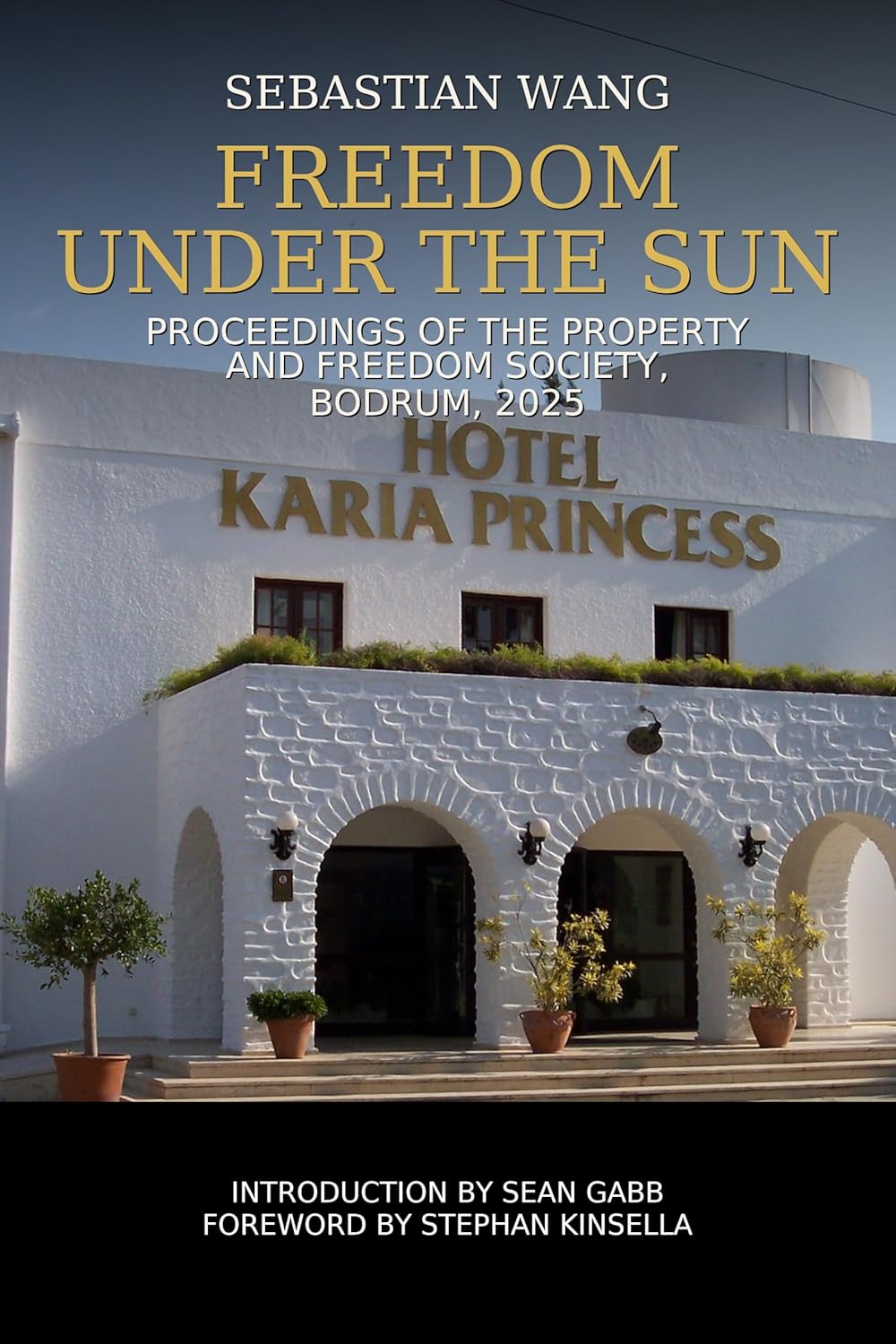
- ——, The Property And Freedom Society—Reflections After Five Years, The Libertarian Standard (June 10, 2010); also published at VDare and as ch. 24 in The Great Fiction; video
- ——, Libertarianism and the Alt-Right: In Search of a Libertarian Strategy for Social Change (2017) (on Richard Spencer etc.)
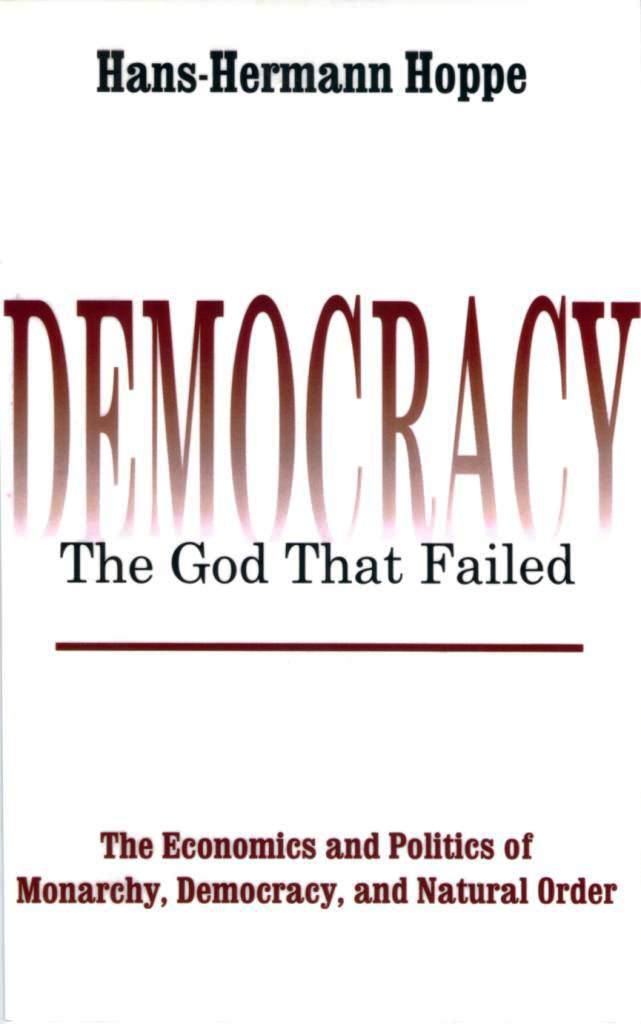
- ——, Discussions of conservatism vs. libertarianism in Democracy: The God That Failed (Transaction, 2001)
- ——, and in “The Socialism of Conservatism,” in A Theory of Socialism and Capitalism (Kluwer, 1989; Mises Institute reprint, 2007; Laissez Faire Books, 2013)
- ——, Hoppe vs. the Alt-Right
- Llewellyn H. Rockwell, Jr., “The Case for Paleolibertarianism,” Liberty (January 1990): 34–38 (response by R.W. Bradford, “Make Sense, Not War,” Liberty (May 1990): 16)
- ——, “Realignment on the Right?,” Conservative Review, vol. 1, no. 3 (May 1990)
- Jeffrey A. Tucker and Llewellyn H. Rockwell, Jr., “Ayn Rand is Dead,” National Review (May 28, 1990)
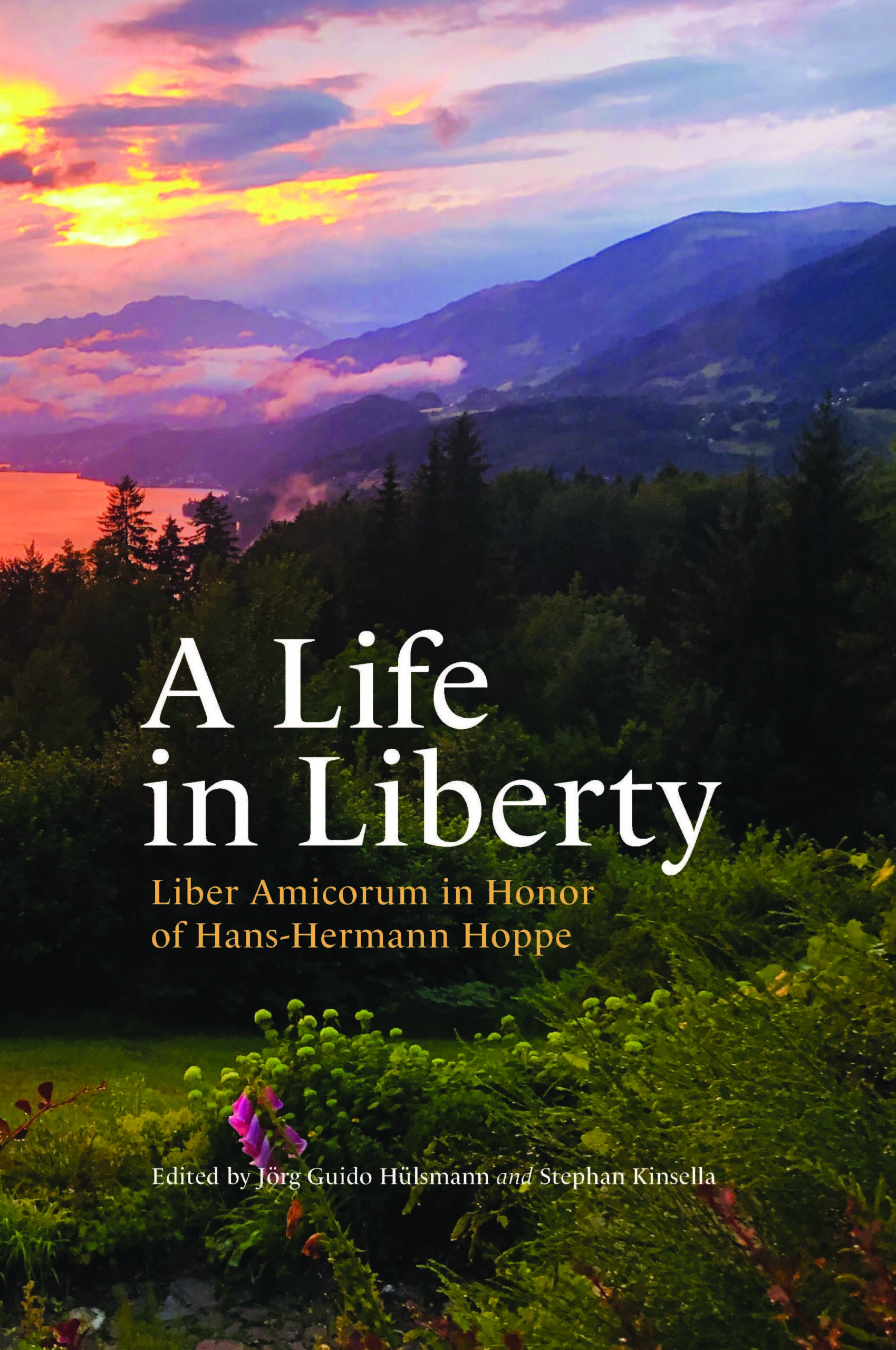
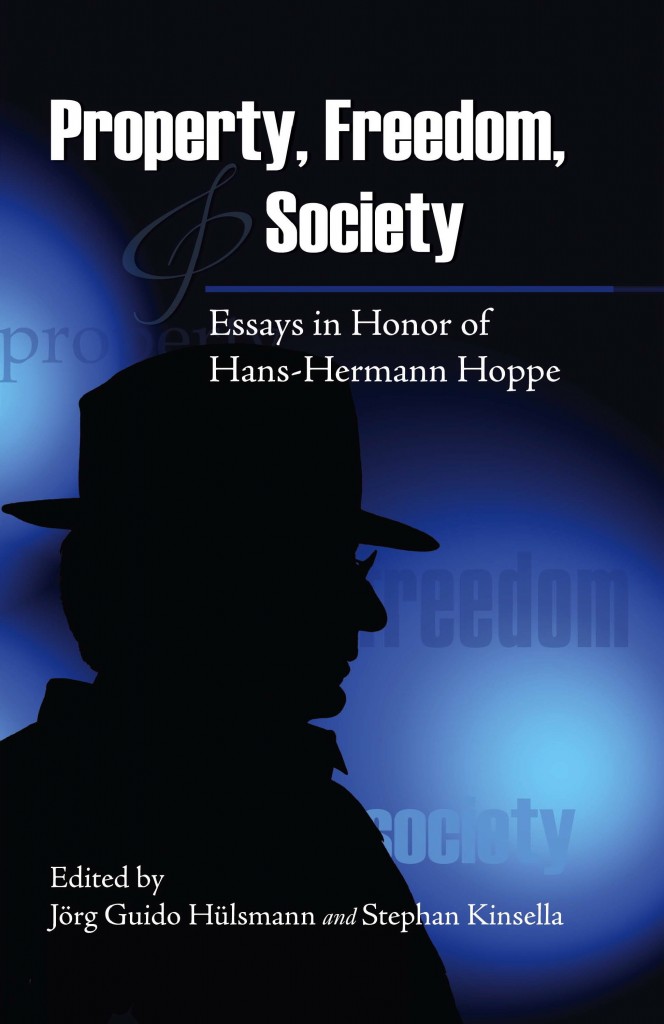
- Lew Rockwell Festschrift in the Works—Sans Hoppe, French, Deist, DiLorenzo …
- Rothbard on lifestyle and “modal” libertarians:
- Rothbard, The Libertarian family and entrepreneurship and other Reflections (Liberty, July 1988)
- Rothbard, Purity and Libertarian Politics (1990)
- Rothbard, Libertarians In a State-Run World (Liberty, December 1987)
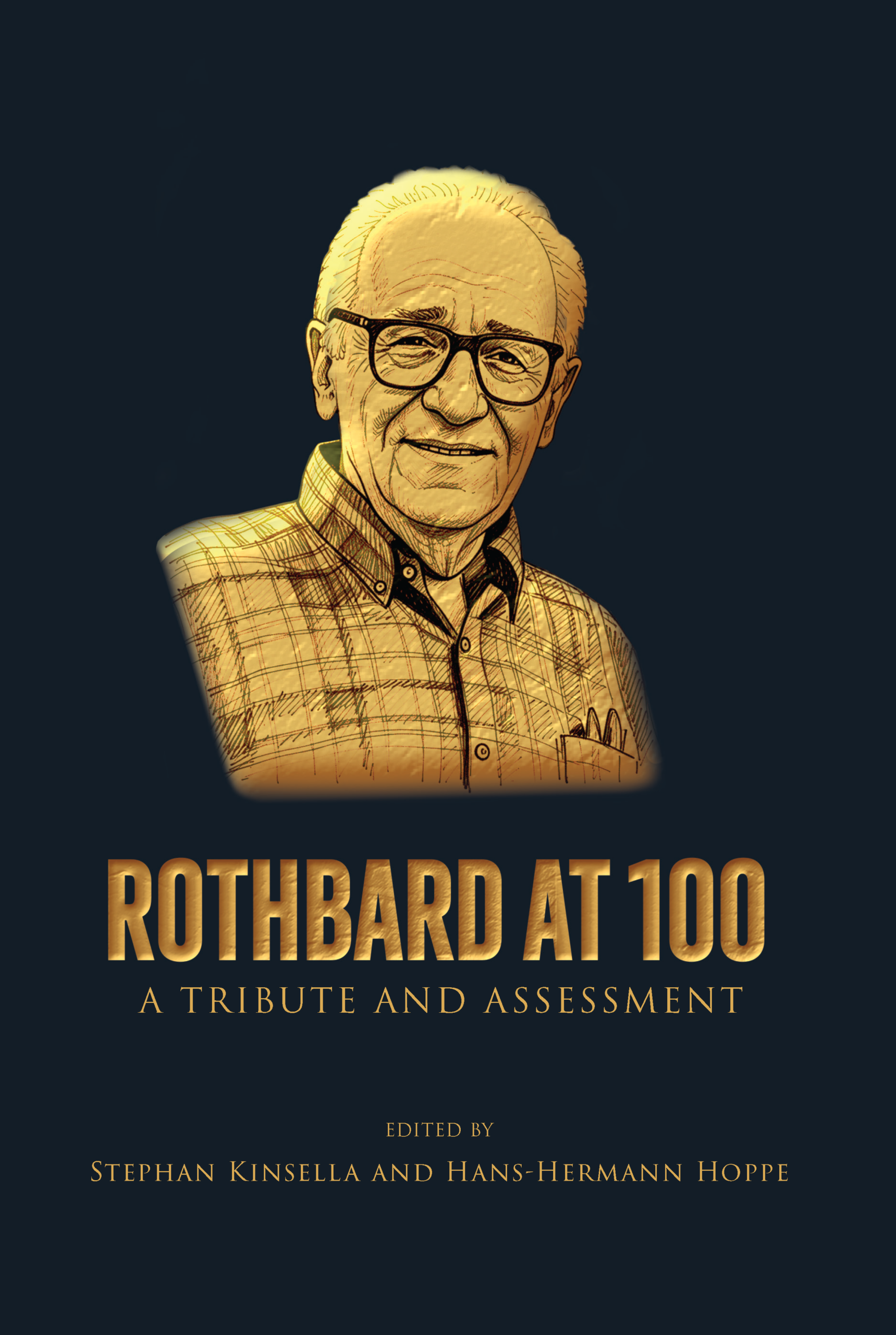
- Jeff Deist, “Appreciating Rothbard’s Political Genius,” in Rothbard at 100: A Tribute and Assessment
- On “modal” libertarians, see various mentions in Murray N. Rothbard, The Irrepressible Rothbard: The Rothbard-Rockwell Report Essays of Murray N. Rothbard (Center for Libertarian Studies, 2000)
- PFP017 | Justin Raimondo: Ron Paul and the Prospects of PaleoLibertarianism in the U.S. (PFS 2008); Print version: “Libertarianism’s Divergent Roads,” Taki’s Magazine, June 11, 2008
- Jeff Deist, “Rothbard and the Paleo Right,” Property and Freedom Journal (Sept. 27, 2026)
- Stephanie Slade on Fusionism and Frank Meyer
- Kinsella, The Three Fusionisms: Old, New, and Cautious (Jan. 16, 2022) (on paleolibertarianism etc.)
- ——, Limited Liability, Paleo-libertarianism, Left-Libertarianism: Recent Posts and Debates
- Rothbard, Rothbard, Purity and Libertarian Politics (1990)
- ——, “The ‘New Fusionism’: A Movement For Our Time,” Rothbard-Rockwell Report, Vol. II, no. 1, pp. 1, 3–10 (Jan. 1991), in particular pp. 1 & 3; similar to his “Fusionism”, Rothbard-Rockwell Report, Vol. VI, no. 8, pp. 1–5 (Aug. 1995), pp. 1 &3. Both in The Irrepressible Rothbard: The Rothbard-Rockwell Report Essays of Murray N. Rothbard (2000).
- ——, Frank S. Meyer: The Fusionist as Libertarian Manqué, Modern Age, pp. 352–63 (Fall 1981)
- ——, “The ‘New Fusionism’: A Movement For Our Time,” Rothbard-Rockwell Report, Vol. II, no. 1, pp. 1, 3–10 (Jan. 1991), and his similar “Fusionism”, Rothbard-Rockwell Report, Vol. VI, no. 8, pp. 1–5 (Aug. 1995)
The Rise, Failure, and Relevancy of Paleolibertarianism
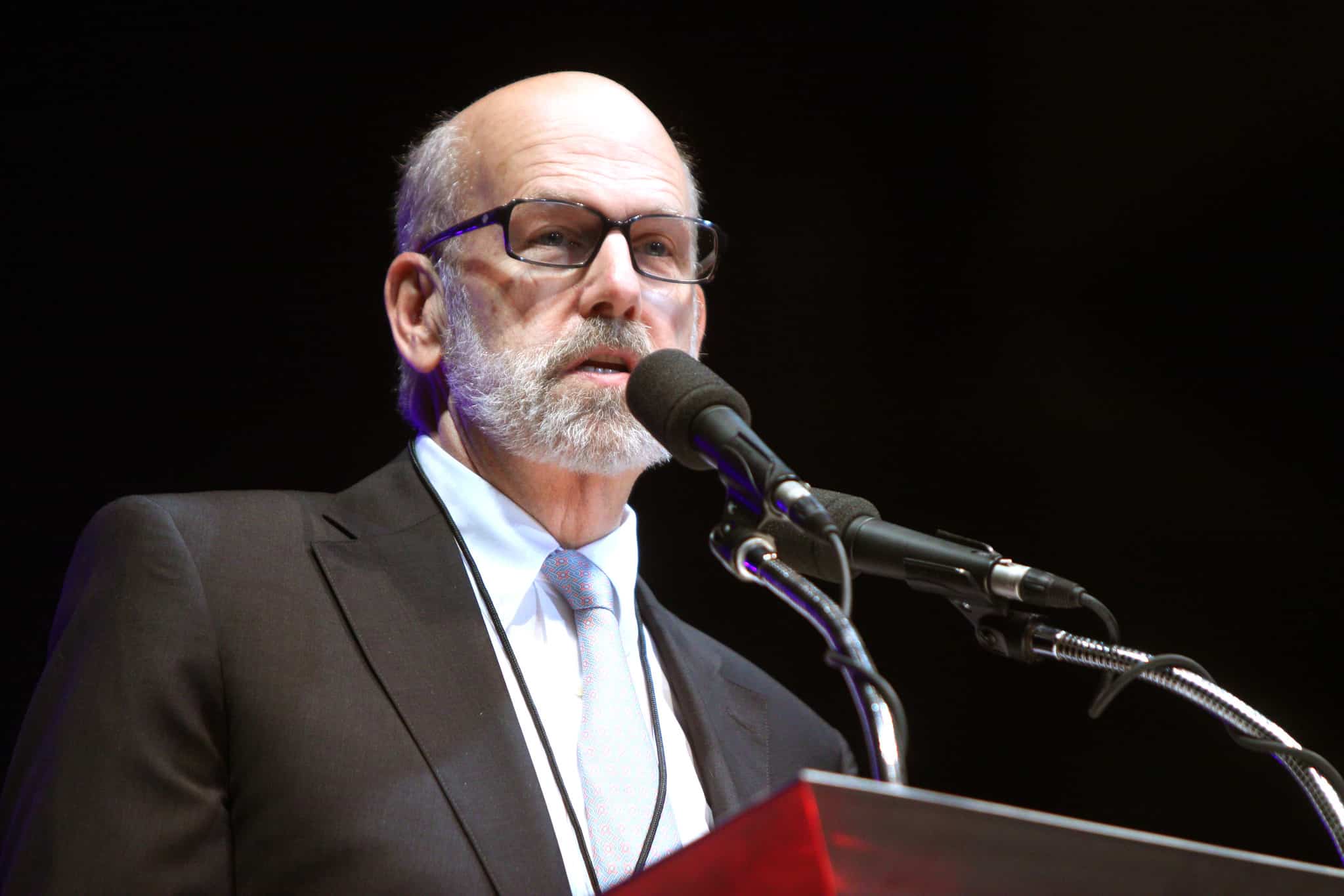
In the 1990s, Pat Buchanan came to embody, politically speaking, a movement that Lew Rockwell would later call “paleoism”—a movement of paleolibertarians and paleoconservatives against the statist status quo. On the one hand, paleoconservatives were characterized by their non-interventionism and defense of localism. On the other hand, there were the paleolibertarians, a term coined by Rockwell to identify the libertarians who opposed other “libertarians” that did not care enough about curbing federal power and U.S. imperialism. Back then, Rockwell used “paleolibertarian” not as a new libertarian creed, but in the same way that some conservatives used the prefix “paleo” to distinguish themselves from neoconservatives. In this sense, paleolibertarians rivaled left-libertarians, who were described by Murray Rothbard, the paleolibertarians’ greatest intellectual leader, as follows:
“…the profile of the Modal left-libertarian…applies to the comfortable D.C. thinktank analyst as well as to the scruffiest libertarian nomad… What he hates and reviles is not so much the State as all external social pressures that prevent or discourage him from “doing his thing,” from his pursuit of hedonic goodies: drugs, all forms of sex, and generally leading a sporadic and dissolute life. The Modal libertarian identifies these external pressures with various social institutions: the State indeed, but more deeply, his bourgeois neighbors, his family, and the Christian Church. Scratch any Modal Libertarian and you will find the exclamation that the “State” and the “Church” are twin co-oppressors of the individual, with family and neighbors not far behind. The Modal libertarian, in short, is…in permanent rebellion against institutions and moral principles that he sees as a check rein on his wayward appetites.”
The paleolibertarians reclaimed the same old-fashioned anti-statism of libertarianism, but also wanted to bring it closer to the average citizen, especially rightists. By doing so, they placed themselves at odds with the broad conservative movement of predominantly interventionist inspiration (internally and externally), which had become heavily influenced by the neocon lobby. And to counter statists of all sides, the periodical publication of The Rothbard-Rockwell Report (the Triple R) magazine was, according to Rockwell, “the driving force behind the intellectual and political anti-government movement of the mid-1990s.” Thus, the Triple R became “the ideological inspiration for a mass movement that swept the right and then the country, and arguably had much to do with the Republican takeover of Congress in 1994.” About the nature of the Triple R, Rockwell wrote:
“The Triple R combined libertarian anti-government economics, decentralist local patriotism, anti-war isolation, and a reactionary cultural outlook that saw government as the key to the loss of the Old Republic. As its reputation spread and its loyal subscriber base grew, the publication developed into a leading forum in defense of the issues and groups that had been excluded (both as a matter of habit and policy) from conventional publications on the right. Its pages defended land-rights groups against environmentalists, citizen militias against gun grabbers, isolationists against imperialists, paleoconservatives against neoconservatives, populists against party regulars, anti-New World Order conspiracy theorists against the establishment, nationalists against internationalists, states righters against libertarian centralists, the Christian right against its own leadership, and much more.”
Sadly, Buchanan did not share Rothbard’s free-market thinking. Nonetheless, Rothbard was enthusiastic about Buchanan’s speeches and calls for the return of U.S. troops from overseas, expecting him to lead a break from conservatism. In Rothbard’s view, Buchanan was a genuine rightist spokesman that managed to evade the neoconservative anathema. Rothbard had come to see a renaissance of the original right but opposed the use of the term “conservative”; the term amounted to a defense of the status quo against the revolutionary tendencies on the left, and not choosing it served to separate libertarians from the conservative movement that had been taken over by the enemies of libertarianism. For example, President Ronald Reagan, under whose administration the neocons came to be fused with the conservative movement.
Following Rockwell, the paleolibertarian strategy was centered on a “culturally effective libertarianism for America,” while trying to vindicate a radical libertarianism deeply rooted in the Old Right. In a 1999 interview, Rockwell stressed that the purpose was to recapture the political edge, as well as the intellectual rigor and radicalism of the pre-war libertarian right:
“There was no change in core ideology but a reapplication of fundamental principles in ways that corrected the obvious failures of the Reason and National Review crowd.”
The paleos opposed the welfare state and the warmongering foreign policy led by the neocon-liberal establishment. They supported Buchanan for the presidency in the 1992 Republican primary and then supported incumbent George H. W. Bush against Bill Clinton after Buchanan’s defeat. But Rothbard did not support Bush in an absolute sense. As a matter of fact, Rothbard denounced Bush’s wars and increases in federal power. He supported Bush only as a better alternative. Here, a change in strategy was not a change in principle—Rothbard’s core views were the same. And yet, eventually, Rothbard had enough, as Rockwell recalled:
“By 1995, however, Murray had had enough, and issued a warning that Pat’s commitment to protectionism was mutating into an all-round faith in economic planning and the nation state. In other words, in the age-old battle between power and market, Pat was increasingly on the side of power (as most of his later writings have shown). We had come a long way from 1992. It was time to move on.”
And to clear up any confusion surrounding the term “paleolibertarian,” Rockwell said in 2007:
“This term was designed to address a very serious problem that libertarians in Washington had come to see themselves as a pleading pressure group hoping to find “market-based” solutions to public policy problems but within public policy, and thus do they support school vouchers, limited wars, managed trade, forced savings as an alternative to social security…Unfortunately, the term paleolibertarian became confused because of its association with paleoconservative, so it came to mean some sort of socially conservative libertarian, which wasn’t the point at all—though the attempted definition of libertarian as necessarily socially leftist is a problem too.”
In 2010, economist Hans-Hermann Hoppe took his time to comment on paleoism. As Hoppe recounts, for paleolibertarians, the cooperation was motivated by the idea that, sociologically, libertarianism required a bourgeois and conservative core culture. The alliance meant breaking with the “libertarian” establishment represented by organizations such as the Cato Institute and the Libertarian Party. And for paleoconservatives, it meant breaking with the neocons that had come to dominate organized conservatism in the United States, represented by organizations such as the American Enterprise Institute and the Heritage Foundation. The paleolibertarians generally learned from the paleoconservatives regarding the cultural requirements of a free and prosperous society, but the paleoconservatives, who had the chance to learn Austrian economics—with few exceptions—did not measure up. From this, Hoppe conveys two lessons:
“First…Do not put your trust in politicians and do not get distracted by politics. Buchanan, notwithstanding his many appealing personal qualities, was still at heart a politician who believed in government, above all, as a means of effecting social change. Second…it is impossible to have a lasting intellectual association with people who are either unwilling or incapable of grasping the principles of economics. Economics—the logic of action—is the queen of the social sciences. It is by no means sufficient for an understanding of social reality, but it is necessary and indispensable…”
Without a solid understanding of economic principles, Hoppe explains, people are bound to commit blunders of historical interpretation. On a further note, Hoppe played a prominent role in the breakup of the paleo alliance shortly after Rothbard’s death, resulting in the departure of the paleolibertarians. In this regard, Rockwell expressed:
…Those who hadn’t signed onto the establishment agenda of DC sellouts and trade imperialism were rethinking the very merit of capitalism itself under Pat’s influence. Murray died in 1995, leaving us with no major voice to counter this false choice. Fortunately, Hans-Hermann Hoppe swung into action with a series of brilliant papers explaining what was wrong with both left-libertarianism and paleoconservatism…Hans’s constant theme was the moral urgency to keep focused on the real enemy, which is the state and nothing else, and to remember that the forces of good are inseparable from the right of private property.”
Contrary to popular conception, Rothbard went through no real periods as a libertarian; he altered his strategies, emphases, and associations based on what the circumstances required, but his goal was always a principled promotion of liberty. Hence, paleo-libertarianism was simply Rothbard’s libertarianism applied to the circumstances of the 1990s, and his wisdom continued as a paleolibertarian. A good deal of his teachings on politics during this stage of his activism are compiled in the book The Irrepressible Rothbard, edited by Rockwell. Nevertheless, as the originator of the term “paleolibertarian” reflected on the lessons of paleoism:
“…the paleo movement had been devastated through a combination of political seduction, ideological confusion, and personal bitterness. In the years that followed, some paleocons took up their old habits of denouncing chain stores, TV dinners, and dead Austrian economists. Others have gone on to productive scholarly work and serious engagement of neoconservative tendencies. Still others have specialized in Civil War studies. Paleolibs, now the only real libertarians, regrouped and refocused their energies on education, writing, and research, and, with the growth of the web and the expansion of the Mises Institute, systematically rebuilt and revivified the ranks of serious libertarians. The edifice is stronger now—far stronger—than it was when we first began to confront the ideological demands of the post-Cold War world. And thank goodness, for never has the principled voice for liberty been more needed.”
While paleo-libertarianism—in its proper context—is over, the need for real libertarians is not. And although the edifice for serious libertarianism has expanded, as the Libertarian Institute and Hoppe’s Property and Freedom Society have come to prove, statism, too, has become stronger, making Rothbard’s libertarianism even more needed than in the 1990s. Meanwhile, the ideological battle of today still resonates with what Rockwell stated in his 2002 reflection:
“The friends of liberty on the left and right have decried this war on terror from the day it began, on grounds that it has given the state a blank check to crush civil liberty, permanently harm the prospects for international peace, and smash every good American tradition. The friends of despotism on the left and right—naively, knowingly, cynically, or just opportunistically—are positively in love with this war because their hearts are ultimately with the state and its power. Watching the ideological antics of the official right and its abiding affection for weapons of mass destruction raises questions about whether they have any classical liberal impulses remaining at all.”
Discover more from The Property and Freedom Society
Subscribe to get the latest posts sent to your email.











 Alessandro Fusillo
 Andreas Tögel
 David Dürr
 Doug French
 Fernando Chiocca
 Greg Morin
 Hans-Hermann Hoppe
 Jay Baykal
 Jayant Bhandari
 Jeff Deist
 Jeffrey Barr
 Juan Fernando Carpio
 Ken Yamarashi
 León Isidoro
 Martin Cabrera
 Nick Hoppe
 Oscar Grau
 Peter Wong
 PFS
PFS scholarium
 Saifedean Ammous
 Sean Gabb
 Sean Ring
 Stephan Kinsella
 Stéphane Geyres
 Thomas Jacob
 Tom DiLorenzo