Before the Hoppening—when the Mises Institute removed Hoppe as its Senior Distinguished Fellow—1 the MI displayed playful life-sized cardboard cutouts of Hoppe, Rothbard, Hoppe and Gülçin Imre Hoppe, for attendees to use for photos. [continue reading…]
In Loving Memory ★ 22/02/1948 † 24/05/2026 Death Notice With deep sorrow we announce the passing of Anton Peter Müller. He was a beloved man who leaves behind memories that will remain forever in our hearts. May God grant strength and comfort to his family members and friends in this time of grief. The funeral service will take place on the 25th at 07:00 in the OSAF – R. Itaporanga, 436. The family thanks you for your participation and loving support.
We are saddened to announce the passing of our friend and fellow PFS member Antony Müller (Feb. 22, 1948–May 24, 2026), an economist from Germany and professor of economics at the Federal University of Sergipe (Brazil) (more detail at Rest in peace, Antony Mueller).
Antony P. Mueller holds a doctorate in economics from the Friedrich-Alexander-University of Erlangen and Nürnberg (FAU) and teaches currently at the Mises Academy in São Paulo, Brazil.
The ruling model of the liberal democracy is in crisis. In the United States and many European countries, confidence in the political system is in decline. There have been many attempts to explain this disenchantment with politics and the state. Few, however, consider the role of political parties. For the public in general but also for most political theorists, a social order without politics and thus without political parties seems inconceivable. In this article, we investigate the proposition, eloquently put forth in the early 1940s by Simone Weil, that political parties should be banned. [continue reading…]
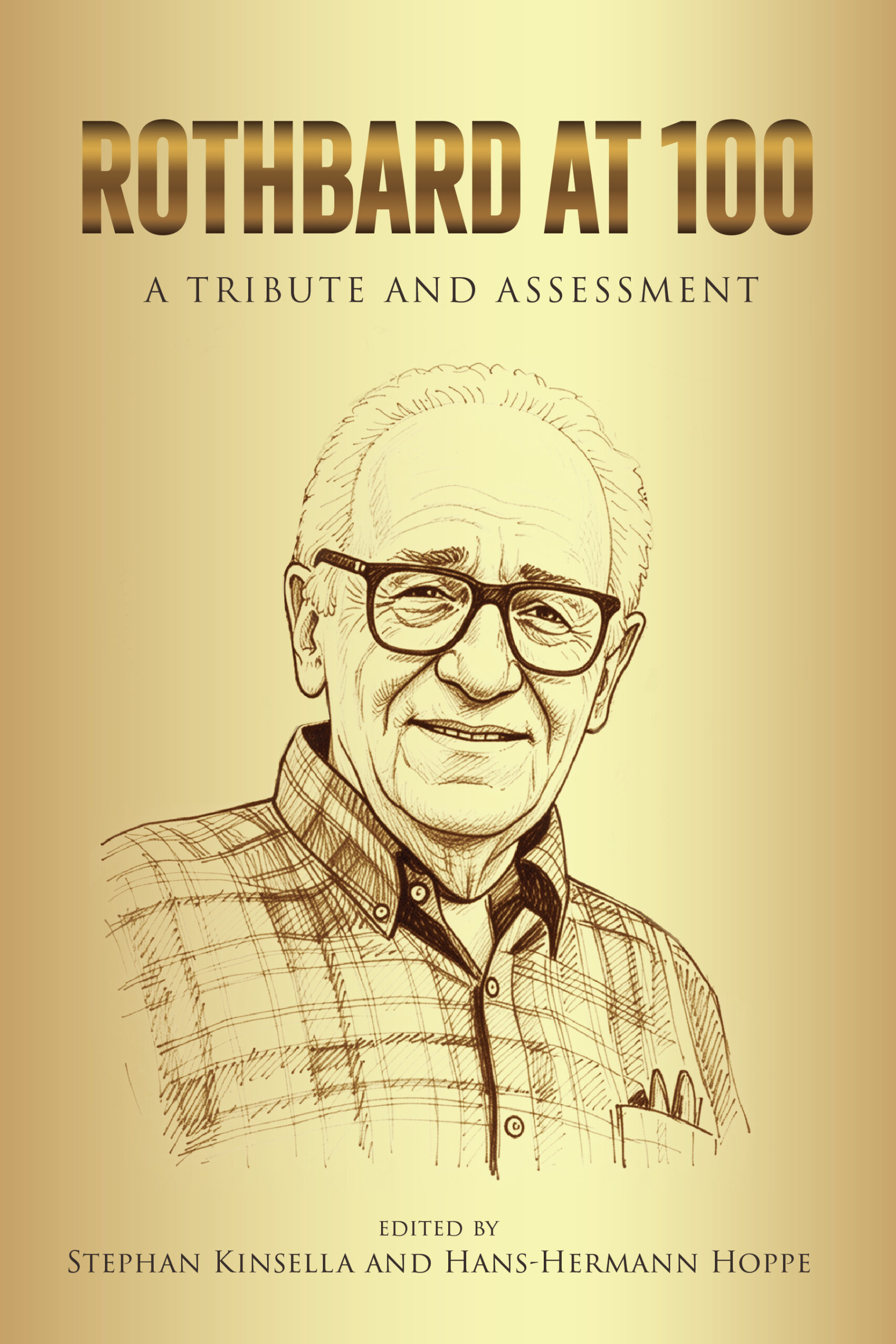
The first two chapters—my “Preface” and Hans’s “Introduction”—were published the week of Rothbard’s birthday here on the Property and Freedom Podcast (PFP315 and PFP314). The other main chapters will be released sequentially weekly on Mondays. The next in the queue:
Tom, Hans’s comments here also remind me of other point he has made about it is typically those states with large economies and relatively liberal internal policies that tend to be more aggressive and imperialistic. From Hoppe on Liberal Economies and War:
Hans’s comments about how “bad people” rise to the top in “large” democracies reminded me of the sentences following Lord Acton’s famous “power corrupts” quote. The full quote is as follows:
Power tends to corrupt, and absolute power corrupts absolutely. Great men are almost always bad men, even when they exercise influence and not authority; still more when you superadd the tendency of the certainty of corruption by authority.
This was from an April 3, 1887 letter to Biship Mandell Creighton. In that letter Lord Acton also wrote that “There is no worse heresy than that the office sanctifies the holder of it.” I would argue that ever since Lincoln the office of American president has been “sanctified” by the state and its minions in the media, a politicized clergy, and popular culture in general. That in turn led to a “sanctification” of the state in general.
Here is a source for this and other Lord Acton quotes.
From The Editorial Board, “Old McDonald Had a Race Preference: A lawsuit settlement helps end discrimination at the USDA,” Wall Street Journal (May 22, 2026):
One of the worst sources of race preferences has been the federal government, so cheers to the news that some discriminatory programs have been sent out to pasture. The Agriculture Department recently settled a lawsuit and agreed to end race and sex preferences in federal farm programs.
Adam Faust is a Wisconsin dairy farmer who found his Holstein milking operation harmed by USDA programs that used race or sex preferences to allocate financial benefits. The Dairy Margin Coverage Program, which farmers use to cover fluctuations in milk prices, charged him a fee that wasn’t paid by farmers USDA designated as “socially disadvantaged.”
Grok: In this 2012 interview, Doug French, then-President of the Ludwig von Mises Institute, joins Scott B. to discuss the enduring relevance of Austrian economics. French explores the Institute’s mission, his studies under Murray Rothbard, and why the 2008 financial crisis validated the Austrian theory of business cycles. He warns of the massive bubble in U.S. government debt, explains why Wall Street listens while Washington doesn’t, and makes the case for gold and silver as protections against monetary expansion. French also highlights the Mises Institute’s educational programs and emphasizes that real change comes through long-term education in sound economics rather than politics. A compelling discussion on economic freedom, financial reality, and the power of ideas.
Dr. Scott Beaulier, of the Manuel Johnson Center for Political Economy, hosts EconVersation, a program that explores the role of free markets in promoting prosperity through conversations with Manuel Johnson Center faculty and guests. In this episode, Dr. Beaulier interviews the president of the Mises Institute, Doug French
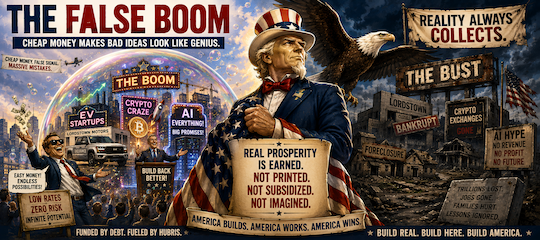
In the summer of 2021, Lordstown Motors held a ceremony.
Cameras. Executives in hard hats. A gleaming electric pickup truck rolling off the line in rural Ohio. Politicians gave speeches about the future of American manufacturing. CNBC ran the footage on a loop.
Eighteen months later, Lordstown Motors filed for bankruptcy. [continue reading…]
The current stock market volatility is testing investor meddle once again. The second Trump administration’s “Liberation Day” tariff announcement and the Iran invasion have produced selloffs that have punctuated what has been a constant bull market in stocks. The Great Financial Crisis seems like a long time ago. The crash of 1929 is largely forgotten, let alone previous panics.
Andrew Ross Sorkin has brought the great crash back to life with another bestseller, 1929: Inside the Greatest Crash in History—And How It Shattered a Nation. Sorkin’s telling of the financial debacle focuses on a few individual stories As he writes, A Night to Remember about the sinking of the Titanic was his “narrative touchstone.”
Ralph Raico (1936-2016) presented this informal session at Mises University in Auburn, Alabama, on August 11, 2005.
Professor Raico (Mises.org/Raico) was Professor Emeritus in European history at Buffalo State College and a senior fellow of the Mises Institute. He was a specialist on the history of liberty, the liberal tradition in Europe, and the relationship between war and the rise of the state. [Mises media]
I was reminded of this in a recent tweet by David Beito:
I never played Risk with Rothbard but I did play Trivial Pursuit with Raico and Ron Hamowy (who matched Raico’s wry wit).
In one game, Raico kept missing questions in the history category which were all about soap operas and old TV shows. Finally, Hamowy looked at him and… https://t.co/p5kZ4OV3fq
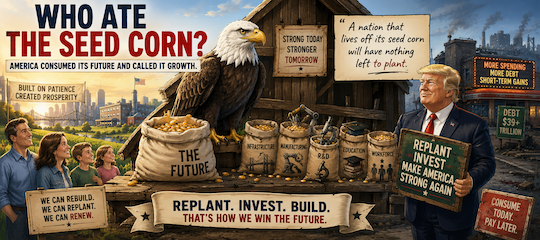
We’ve named time preference and interventionism so far. Here’s the next important step on our map: capital consumption.
This is what Donald Trump is trying to prevent in the United States, in his own way… with mixed results so far.
Why?
Because he knows it’s the one thing most responsible for America’s manufacturing decline. It’s one thing for a better team to beat you. It’s another thing entirely for your team to give the game away to foreigners. [continue reading…]
Kyle Platt speaks with Doug French, Executive Editor or Agora Financial and former President of the Ludwig von Mises Institute, about Clarence Darrow‘s almost forgotten book, Resist Not Evil, and the the implications of this scathing critique of the American justice system.
Kentucky Congressman Thomas Massie is the closest thing to a libertarian in the U.S. Congress. He opposes the American-Israeli genocide in Gaza and the unprovoked invasion of Iran. He voted against Trump’s explosive spending bill that he said will only spawn inflation and economic decline. He authored legislation to make the Epstein Files public. Perhaps his biggest “crime,” in the eyes of the Washington establishment, was to go on the Tucker Carlson podcast and reveal to the world that every member of the U.S. Congress except himself had an AIPAC (American Israel Public Affairs Committee) “handler” whose job was to assure that all members of Congress always vote in Israel’s interest even if it is against the interests of the average American. The genocide in Gaza and the invasion of Iran would be two examples. And oh yes, he offered a bill that would eliminate the Israeli exemption from U.S. foreign influence lobbying law. In addition to being the closest thing to a libertarian in Congress, he is also the closest thing in Washington to an America First politician.
Well. For that the Israeli First lobby got three left-wing Jewish billionaires (who are not from Kentucky) to “donate” tens of millions to defeat Massie in his primary election. They picked an “Israel-First Neoconservative” nobody named “Ed Gallrein” who used to be a Democrat and who refused to debate Massie as his opponent. Trump himself hurled his usual juvenile insults at Massie and his thousands of Kentucky voters. Naturally, he lost.
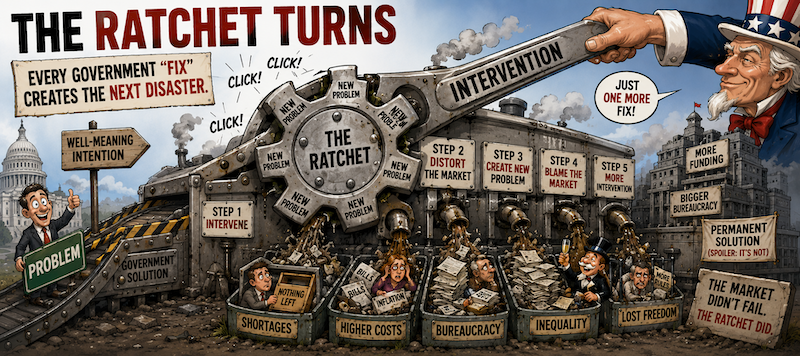
Welcome to the second article in this series of developing your economic map. Today, we’ll talk about the government’s interference in the markets. To start, I give you this priceless quote from none other than Ringo Starr:
Everything government touches turns to crap.
With that in mind, let us begin.
There’s a tool in every mechanic’s box called a ratchet.
What inflation actually costs the American family.
The Consumer Price Index gets the cheap stuff right and the expensive stuff wrong. The Reality Index measures the gap between what the government reports and what families actually pay.
The Reality Index argues that official CPI inflation understates the real cost increases for American families by a lot — especially on big expenses like housing and healthcare, while overstating rises in cheap stuff like food.[continue reading…]
I’m perfectly fine with receiving feedback from subscribers who disagree with my view. After all, reasonable people disagree all the time. And since I live in a different part of the world and hold a different perspective, inevitably, readers will sometimes wonder what I’m getting at.
After writing Uncle Sam’s Invisible Hand for the Daily Reckoning last week, I received what I’ll politely call the most misguided criticism I’ve ever received. It was positively inane and missed my point by what Elaine from Airplane! would call “a tad.” I won’t print it for those reasons. [continue reading…]
Corporate America didn’t “go woke” because its executives suddenly discovered compassion or equality. They danced with the left because that’s where the power and protection rackets live.
How Corporate America Went Full Left – And Why It Was Never About Woke
This isn’t idealism, it’s the oldest scam in the book: the powerful using government to rig the game against the stateless rest of us. Let’s rip the mask off with some real history.
The Socialist Razor Baron
Back in 1924, King Camp Gillette — the guy who made his fortune with disposable razor blades — teamed up with Upton Sinclair, the muckraker who wrote The Jungle. Together they pushed a book promoting Gillette’s longtime obsession: a single, gigantic, vertically integrated socialist corporation that would run everything from mines to your dinner table, enforcing equality through central planning. [continue reading…]
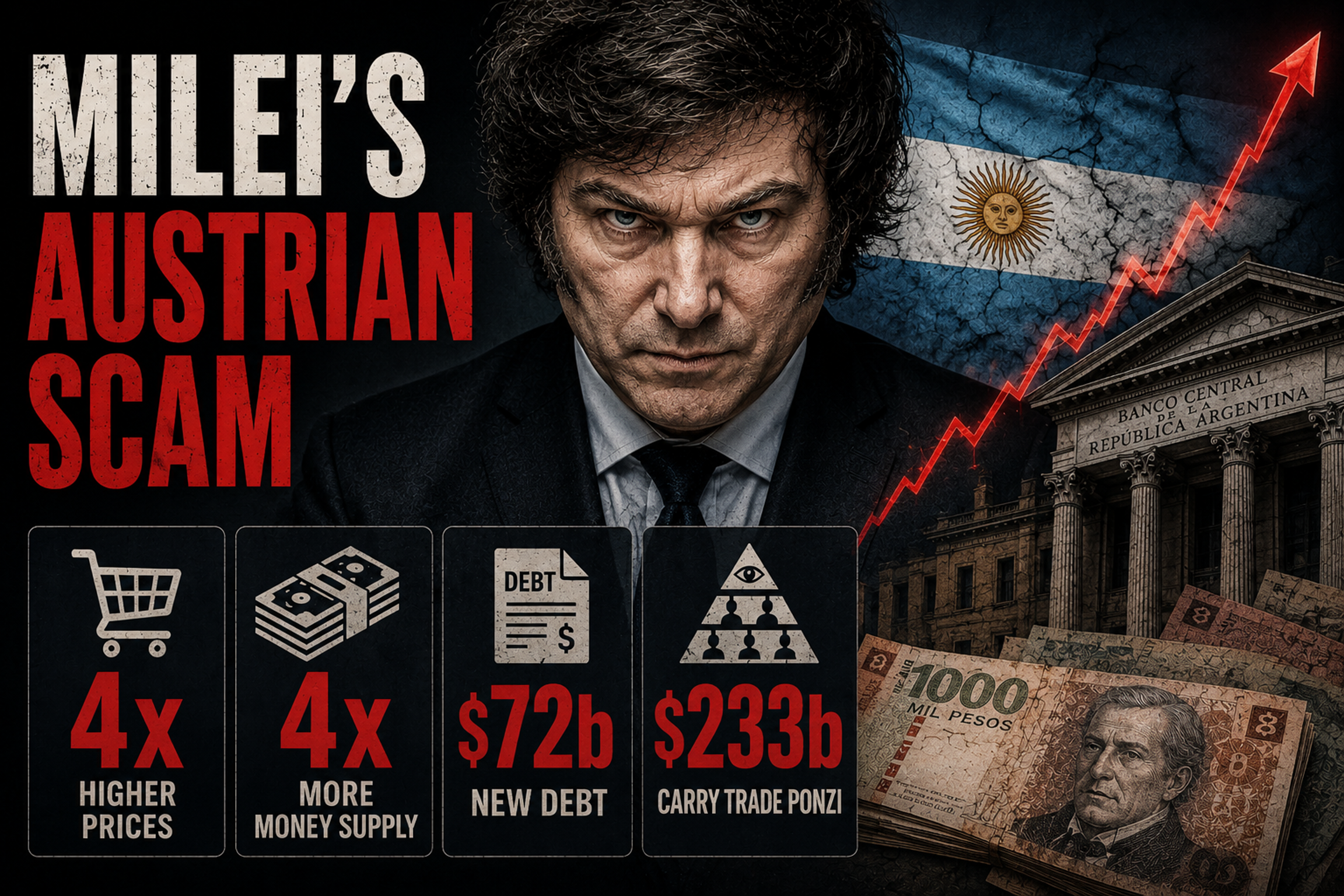
As a libertarian anarchist and Austrian school economist, I was interested in following the election of the first president in the world who professed to share my ideas. He said a lot of the right things on TV, and his radical policies seemed similar to what I would want implemented. After 30 months of close observation, I can confidently say Javier Milei’s policies bear no resemblance to what an Austrian economist would do, and he has used Austrian economics as a cover to run one of the most inflationary presidencies in Argentina’s highly inflationary history. Predictably, and in light of the most recent inflation and growth data, it is now safe to call Milei’s presidency a failure on all the important questions. Ignoring inconsequential rhetoric, Milei has been just another Latin American inflationist demagogue, selling his citizens pipe-dreams financed through inflation and debt that will burden and impoverish them for generations. In the 30th month of his presidency, when the seed of economic recovery planted early in the term should be bearing fruit, prices continue to rise, economic activity is declining, and the unsustainable government debt ponzi is larger than ever, suggesting much more pain to come.
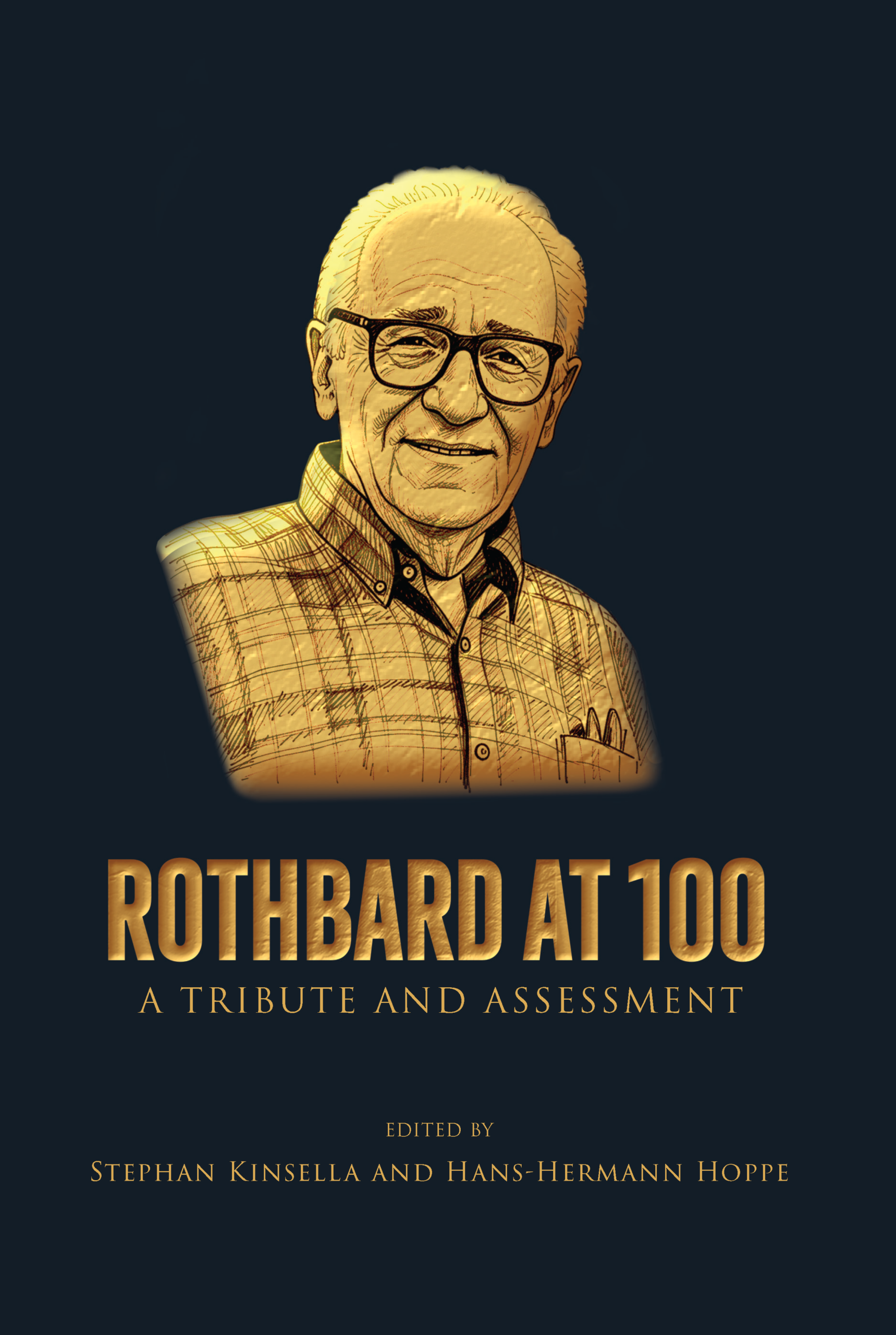
The first two chapters—my “Preface” and Hans’s “Introduction”—were published the week of Rothbard’s birthday here on the Property and Freedom Podcast (PFP315 and PFP314). The other main chapters will be released sequentially weekly on Mondays. The next in the queue:
Editor’s note: We are pleased to present a comprehensive bibliography of the works of Murray N. Rothbard by Tyler Kubik. Kubik sent it to me after he noticed some various information about Rothbard posted on the PFS page for Rothbard at 100: A Tribute and Assessment (2026)2 including David Gordon’s bibliography, “Murray N. Rothbard: Chronological Bibliography (1949–1995),”3 a 54-page bibliography compiling work published between 1949 and 2005; and an Italian Bibliography, from Rothbard.it, which purports to cover Rothbard publications from 1947 to 1996. Kubik’s contains far more entries than these and covers a larger time period, from the early 1940s to 2019. [continue reading…]
The traditional English defence of freedom of speech did not begin with modern liberalism. It emerged instead from a long and uneven struggle against authority. The medieval Church wished to supervise doctrine. The Tudor and Stuart monarchies wished to supervise printing. The political nation, when it slowly emerged from the seventeenth century, discovered by painful experience that censorship is not merely an inconvenience, but an instrument by which every other liberty may be dissolved.
[This article, first published in Modern Age 24, no. 1 (Winter 1980): 9–15 (pdf; Mises Daily) is based on a paper presented at the April 1979 national meeting of the Philadelphia Society in Chicago. The theme of the meeting was “Conservatism and Libertarianism.”]
Libertarianism is the fastest growing political creed in America today. Before judging and evaluating libertarianism, it is vitally important to find out precisely what that doctrine is, and, more particularly, what it is not. It is especially important to clear up a number of misconceptions about libertarianism that are held by most people, and particularly by conservatives. In this essay I shall enumerate and critically analyze the most common myths that are held about libertarianism. When these are cleared away, people will then be able to discuss libertarianism free of egregious myths and misconceptions, and to deal with it as it should be on its very own merits or demerits. [continue reading…]
As noted here, the 2026 Twentieth Annual Meeting of the Property and Freedom Society was recently held from Thursday, September 17, 2026 to Tuesday, September 22, 2026. Information on the 2027 meeting will be released in early 2027.
Rothbard at 100 is in production! As you can see, the books are printed in premium hardcover with gold foil stamping, and then they will be covered with a dust jacket. Also available as an audiobook and eBook. Preorder your copy now: https://t.co/iaEh0bk5G0pic.twitter.com/bapPGmhFHb
To donate with BITCOIN please use the address below. If you would like us to credit your payment (for dues, conference fees, etc.) please email Stephan Kinsella ([email protected]) when you make the bitcoin payment.
17M9V6m5X5Da4vNM5wWLjzcHz9qF36FPk6
“Property does not exist because there are laws, but laws exist because there is property.” — FrédéricBastiat
“Because the concept of property, for instance, is so basic that everyone seems to have some immediate understanding of it, most people never think about it carefully and can, as a consequence, produce at best a very vague definition. But starting from imprecisely stated or assumed definitions and building a complex network of thought upon them can lead only to intellectual disaster. For the original imprecisions and loopholes will then pervade and distort everything derived from them. To avoid this, the concept of property must first be clarified.” —Hans-Hermann Hoppe, TSC, ch. 2
The Property and Freedom Society (PFS; Facebook) stands for an uncompromising intellectual radicalism: for justly acquired private property, freedom of contract, freedom of association—which logically implies the right to not associate with, or to discriminate against—anyone in one's personal and business relations—and unconditional free trade. It condemns imperialism and militarism and their fomenters, and champions peace. It rejects positivism, relativism, and egalitarianism in any form, whether of "outcome" or "opportunity," and it has an outspoken distaste for politics and politicians. As such it seeks to avoid any association with the policies and proponents of interventionism, which Ludwig von Mises identified in 1946 as the fatal flaw in the plan of the many earlier and contemporary attempts by intellectuals alarmed by the rising tide of socialism and totalitarianism to found an anti-socialist ideological movement. Mises wrote: "What these frightened intellectuals did not comprehend was that all those measures of government interference with business which they advocated are abortive. ... There is no middle way. Either the consumers are supreme or the government."
(A more complete statement of our Principles can be found here.)


 In the summer of 2021, Lordstown Motors held a ceremony.













 Alessandro Fusillo
 Andreas Tögel
 David Dürr
 Doug French
 Fernando Chiocca
 Greg Morin
 Hans-Hermann Hoppe
 Jay Baykal
 Jayant Bhandari
 Jeff Deist
 Jeffrey Barr
 Juan Fernando Carpio
 Ken Yamarashi
 León Isidoro
 Martin Cabrera
 Nick Hoppe
 Oscar Grau
 Peter Wong
 PFS
PFS scholarium
 Saifedean Ammous
 Sean Gabb
 Sean Ring
 Stephan Kinsella
 Stéphane Geyres
 Thomas Jacob
 Tom DiLorenzo
Follow Us!