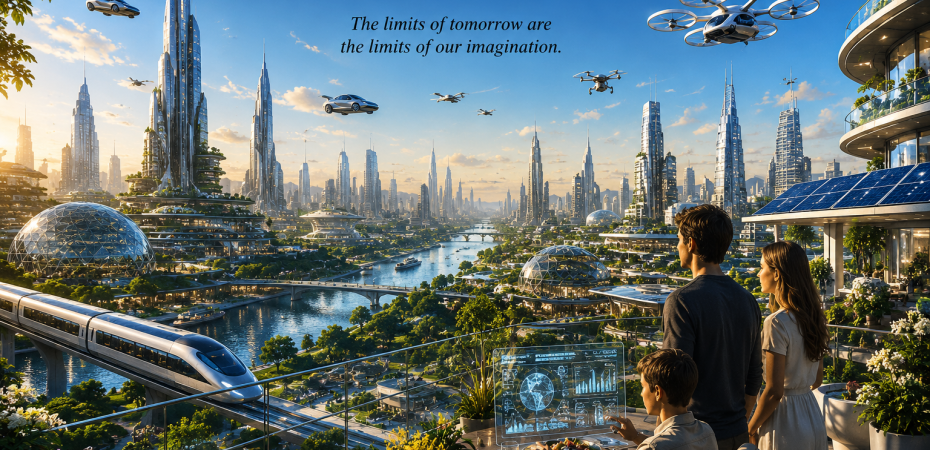
From Libertarian Alliance (UK):
The Pessimists Have Been Wrong for Two Hundred Years
Paul Craig Roberts has written another of his gloomy essays about artificial intelligence and the digital age. There is much in it that deserves agreement. Wikipedia is politically biased. Governments and large corporations increasingly try to control what people read and think. Digital information can disappear more easily than printed books locked away in forgotten libraries. These are genuine concerns, and intelligent people ought to discuss them seriously.
What disappoints me is what Roberts builds on these observations. Instead of criticising the abuse of technology, he condemns the technology itself. This is a familiar mistake. Every great technological advance has produced a class of intelligent men who noticed its defects and confidently predicted disaster. Their predictions have almost always been wrong.
The Industrial Revolution provides the obvious example. Mechanisation destroyed occupations that had existed for centuries. Handloom weavers disappeared. Skilled craftsmen found themselves replaced by machines that could produce more cheaply and more quickly than they could manage by hand. Contemporary observers looked at the disruption and concluded that industrial civilisation would create nothing but misery. Yet the longer view is rather different. The descendants of those supposedly ruined workers live longer, eat better, travel further, possess greater comforts, enjoy better medical care and have access to more knowledge than kings possessed before the nineteenth century. Industrialisation did not only increase wealth, but also transformed what ordinary people could reasonably expect from life.
The same pattern repeated itself with electrification, mass production, aviation and computing. Every innovation brought dislocation. Every innovation made certain occupations redundant. Every innovation also generated new industries that nobody had anticipated beforehand. There are now millions of people employed in occupations that would have been incomprehensible even fifty years ago. Those who confidently predicted permanent technological unemployment never asked themselves the obvious question. If human wants are unlimited, why should increased productivity ever lead permanently to reduced employment? It simply shifts labour towards activities that were previously too expensive to undertake.
Artificial intelligence is following the same trajectory. Roberts treats it principally as an engine of deception and surveillance. Certainly it can be used for those purposes. Every powerful technology can. The printing press gives us both Cicero and woke propaganda. Radio broadcast Churchill’s drunken ramblings and Stalin’s lies. The internet allows access both to the world’s greatest libraries and to crap social media. Technology does not possess moral agency. It magnifies whatever intentions already exist.
That distinction matters because Roberts repeatedly attributes political failures to technological causes. He complains that Wikipedia has become ideologically captured. Quite so. But the fault lies with the editors, not with the software. An encyclopaedia compiled by politically motivated people will inevitably reflect their prejudices whether it appears on paper or on a screen. Roberts also laments that artificial intelligence systems increasingly rely on Wikipedia. Again, this is not an indictment of artificial intelligence as such. It is an argument for building better models trained on better sources. If one tool proves inadequate, the answer is generally to construct a better one rather than to abandon the entire enterprise.
The same confusion appears in Roberts’ discussion of disappearing information. He writes movingly about the ease with which online sources vanish after publication. They can. Anyone who has conducted serious research on the internet knows the irritation of finding that a valuable article has quietly disappeared since it was first cited. Yet this inconvenience should not blind us to the gains that digitisation has delivered. I can now obtain, within minutes, scanned books and journals that previously required expensive journeys to specialist libraries. I possess electronic copies of works that would once have occupied several rooms. Researchers today enjoy access to more material than any previous generation in history. The occasional dead hyperlink is a modest price to pay for that revolution in accessibility.
Nor should we romanticise the analogue world. Roberts writes as though printed information enjoyed a permanence that digital information lacks. It never did. Libraries burn. Publishers destroy unsold stock. Newspapers decay. Manuscripts disappear through neglect. What digital technology has done is to make duplication almost costless. A book preserved on one shelf may perish forever. A document copied onto ten thousand independent computers becomes hard to eradicate. The danger therefore lies not in digitisation itself but in excessive centralisation. The solution is more decentralisation, more local storage and more private ownership of data, not less technology.
This points towards a wider disagreement. Roberts often writes as though technology possesses an independent direction of travel towards tyranny. I see no evidence for this. Tyranny is an old human habit. Ancient empires suppressed inconvenient opinions and rewrote history without requiring computers. Modern governments employ digital methods because digital methods happen to exist. Had they governed in the eighteenth century, they would simply have employed the printing press more aggressively. The enemy is not artificial intelligence. It is political power.
Indeed, one of the most remarkable features of the present technological revolution is the extent to which it has distributed intellectual power downwards. I now possess, on a desktop computer in my study, computational abilities that would have astonished the world’s greatest universities twenty years ago. I can search enormous collections of books, translate from languages like Syriac, organise research, generate illustrations and analyse large quantities of text within minutes. These capabilities would once have belonged only to governments and multinational corporations. They are now available to schoolboys with sufficient curiosity to install the appropriate software. This does not weaken the individual. It strengthens him.
Artificial intelligence, in particular, represents an enormous expansion of individual capability. Used intelligently, it does not replace thought but amplifies it. I ask it to locate sources, test arguments, suggest objections and organise material. Sometimes it produces nonsense. Sometimes it produces genuine insights that had not occurred to me. The important point is that it allows one reasonably intelligent person to undertake work that previously required a small team of assistants. That is precisely what technological progress has always done. Steam engines multiplied physical strength. Computers multiplied calculation. Artificial intelligence multiplies certain forms of reasoning.
There will certainly be casualties. There always are. Many occupations that presently exist will disappear. I see no disaster in this. Humanity did not become poorer because we no longer require thousands of men to clean horse manure from city streets. We became richer because those men found more productive work. I suspect that future generations will look back on many present-day administrative and clerical occupations with much the same incomprehension. Their disappearance will not represent economic decline but economic advance.
The real danger is therefore not that artificial intelligence will become too capable, but that governments will succeed in regulating it until only large corporations are permitted to use it. That would indeed produce the concentration of intellectual power Roberts fears. The answer, however, is not to denounce artificial intelligence itself. It is to ensure that these systems become cheaper, more open, more decentralised and available to anyone with the intelligence to make use of them.
I see no reason for technological pessimism. Again and again, thoughtful observers have mistaken temporary disruption for permanent decline. They have underestimated the ingenuity with which free individuals exploit new tools to create wealth, knowledge and opportunities that nobody had previously imagined. There is no reason to suppose that artificial intelligence will prove the first exception to this pattern. It will create problems. Every transformative technology has done so. It will also solve problems that we cannot yet clearly perceive. On the evidence of the past two centuries, that is much the safer prediction.
Discover more from The Property and Freedom Society
Subscribe to get the latest posts sent to your email.

















 Alessandro Fusillo
 Andreas Tögel
 David Dürr
 Doug French
 Fernando Chiocca
 Greg Morin
 Hans-Hermann Hoppe
 Jay Baykal
 Jayant Bhandari
 Jeff Deist
 Jeffrey Barr
 Juan Fernando Carpio
 Ken Yamarashi
 León Isidoro
 Martin Cabrera
 Nick Hoppe
 Oscar Grau
 Peter Wong
 PFS
PFS scholarium
 Saifedean Ammous
 Sean Gabb
 Sean Ring
 Stephan Kinsella
 Stéphane Geyres
 Thomas Jacob
 Tom DiLorenzo