≡ Menu

Another recent publication by long-time PFS member Saifedean Ammous, Property Rights: The Root Cause of the Palestinian-Israeli Conflict, Saifedean Substack (Nov 10, 2025). This paper was the basis of his talk of the same name presented at the PFS 2025 Annual Meeting (Sep. 18–23, 2025, Bodrum, Turkey). It will be podcast later on the Property and Freedom Podcast; the Youtube video is below, along with the slides. It was also podcast at The Bitcoin Standard Podcast, Ep. 299: “In this lecture delivered at the Property and Freedom Society, Saifedean explains why the root cause of the Palestinian-Israeli conflict is the denial of property rights. Religious and racial conflict are not destined in Palestine; they are historically rare occurrences, but this system of property rights would create violent conflict anywhere.”

It was also discussed in the panel “Fusillo, Ammous, Hoppe, Gabb, DiLorenzo, Open Discussion, Q&A,” also to be podcast later; video below. 


[continue reading…]

{ 0 comments }

Recent publications by PFS members: Jozef Martiniak, “DeLiecht – Decentralized Liechtensteins,” AusEkon (27 July 2025). (Note: Part 2 appended below) Grok summary:

DeLiecht envisions a decentralized governance model inspired by economist Hans-Hermann Hoppe’s praise for micro-states like Liechtenstein, where self-governing administrative units emerge spontaneously through Bitcoin-funded contributions linked to geographic residency, sidestepping rigid national borders to achieve optimal scales of neutrality and minimize war risks. Participants generate open-source wallets using SHA-256 hashes of city names and GPS coordinates (e.g., New York’s yielding a specific address), funding them with location-verified satoshi payments that build value amid fiat currency collapse; spending requires multisig consensus with 51% approval, enhanced by tenure-based voting power, reputation incentives, family continuity, and neighbor approvals to promote cooperation and deter disputes. The system unfolds in phases—from early adopters in unstable regions to institutional involvement—potentially enabling a city like New York, with 4.5 million residents contributing 1,000 sats monthly, to fully transition by 2040 as Bitcoin appreciates and fiat taxes wane. Ultimately, DeLiecht leverages Bitcoin’s bottom-up ethos via the “location principle,” rendering invasions obsolete since value is blockchain-secured, fostering peaceful self-rule for minorities, and allowing consensual expansions or mergers to create a network of resilient, Liechtenstein-like enclaves.

[continue reading…]

{ 0 comments }
Play

Property and Freedom Podcast, Episode 297.

This talk is from the recently-concluded 19th annual PFS 2025 Annual Meeting (Sep. 18–23, 2025, Bodrum, Turkey).

Stephan Kinsella (USA): “Where The Common Law Goes Wrong.” Also podcast at KOL474 | Where The Common Law Goes Wrong (PFS 2025), which contains the transcript and shownotes. See also Sebastian Wang, “Stephan Kinsella on the Common Law: Lessons from Bodrum 2025,” Libertarian Alliance [UK] Blog (Sep. 19, 2025).

Other talks appear on the Property and Freedom Podcast. Other videos may also be found at the PFS 2025 Youtube Playlist.

{ 0 comments }

Videos for the PFS 2025 Annual Meeting (Sep. 18–23, 2025, Bodrum, Turkey) have now been uploaded to the PFS 2025 Youtube Playlist. This includes  the speeches and panel discussions as well as a few extras.

As in previous years, audio versions of each presentation will also be released weekly on the Property and Freedom Podcast, each Monday, which already started with PFP295 | Gülçin Imre Hoppe & Hans-Hermann Hoppe, Welcome and Introductions (PFS 2025) on Nov. 1, 2025.

Photos from the 2025 Meeting may be found at: [continue reading…]

{ 0 comments }
Play

Property and Freedom Podcast, Episode 296.

This talk is from the recently-concluded 19th annual PFS 2025 Annual Meeting (Sep. 18–23, 2025, Bodrum, Turkey).

Sean Gabb (England): Roman Law and Contractual Slavery [Sebastian Wang, “Roman Slavery: Horror and Paradox – Sean Gabb in Bodrum,” Libertarian Alliance [UK] Blog (Sep. 20, 2025)] Transcript and shownotes below.

[continue reading…]

{ 0 comments }
Play

Property and Freedom Podcast, Episode 295.

These introductory remarks are from the recently-concluded 19th annual PFS 2025 Annual Meeting (Sep. 18–23, 2025, Bodrum, Turkey).

Gülçin Imre Hoppe (Turkey) & Hans-Hermann Hoppe (Germany/Turkey): Welcome and Introductions. Transcript and shownotes below. [continue reading…]

{ 0 comments }

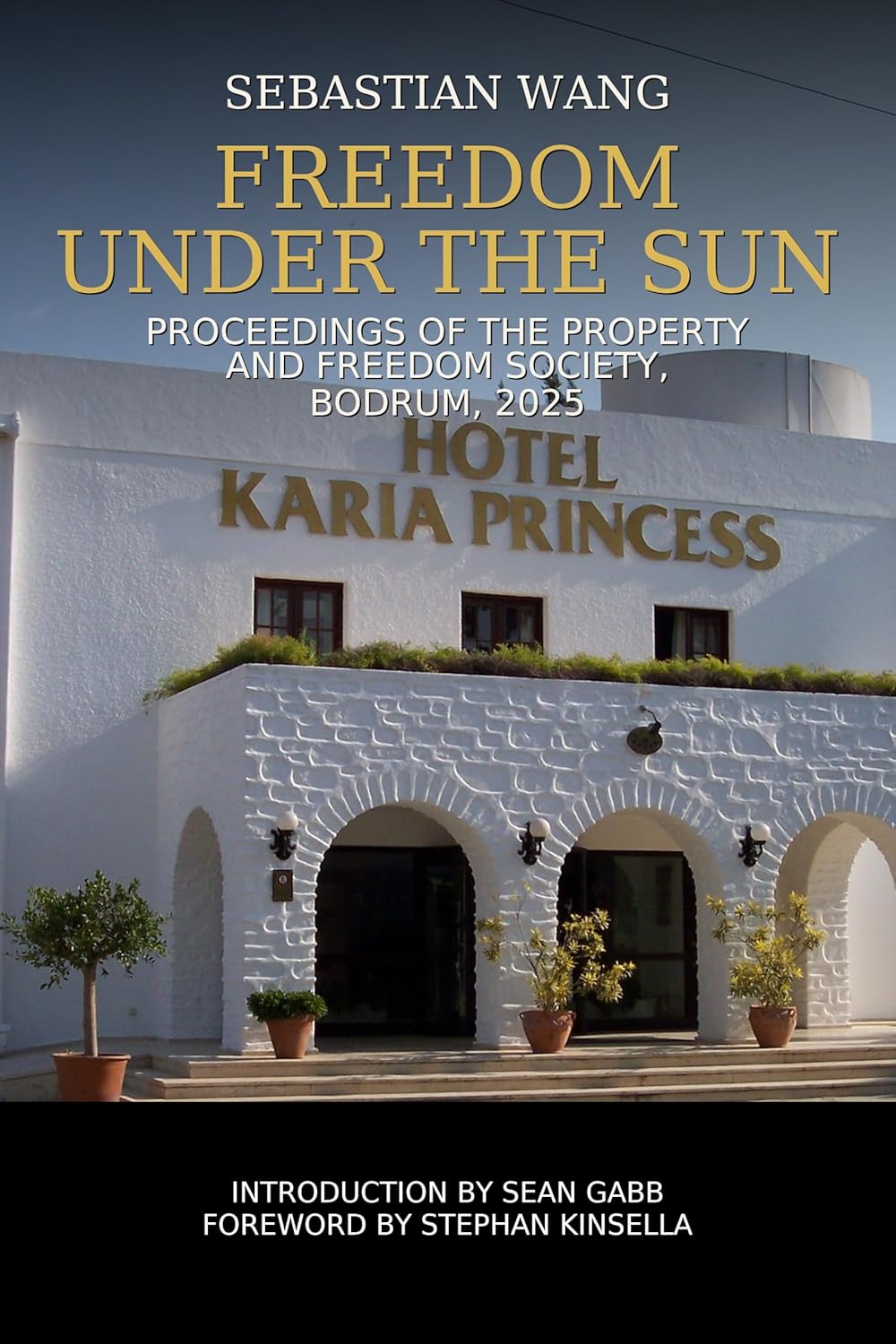
In the azure seaside town of Bodrum, Turkey, the 2025 Annual Meeting of the Property and Freedom Society unfolded as a distinctive gathering of radical thinkers, economists, historians and libertarian intellectuals. Against the leafy gardens and poolside calm of the Hotel Karia Princess, participants came together for five days of lectures, informal conversations and excursions, blending serious scholarship with relaxed settings.

Note: Other photos available at:

[continue reading…]

{ 6 comments }

Guest post by Martín Cabrera y Marisa Jarquin, adapted from “First Guatemalans at the PFS,” Guate Libre (Oct. 15, 2025) (Spanish version)

Related:

Other photos available at:

First Guatemalans at the PFS

Members of Guate Libre at the PFS

Martín Cabrera y Marisa Jarquin

The Property and Freedom Society is an organization founded in 2006 by the libertarian philosopher and Austrian School economist Hans-Hermann Hoppe. Every year, Hans Hoppe and his wife Gulçin Imre Hoppe are the excellent hosts of a meeting held at the Hotel Karia Princess in Bodrum, Turkey. This event, highly restrictive and somewhat small, has an enormous impact, and its importance surpasses that of any other event of its kind, as it brings together the best and most radical Austro-libertarians from around the world. In fact, it is precisely because the event is closed that it maintains its essence, and it is thanks to its uncompromising radicalism (frequently criticized by those who do not understand the ideas, for whom these are subsidiary to their economic and political interests) that long-term victory is possible. An organization as radical and uncompromising as this is indispensable in a context of constant threats posed to the libertarian movement by classical liberal groups and left-libertarians.

[continue reading…]

{ 3 comments }

From HansHoppe.com:

Hoppe’s Habilitation Thesis: Critique of Causal Scientific Social Research

hoppe, kritik der kausalwProfessor Hoppe’s monograph Kritik der kausalwissenschaftlichen Sozialforschung: Untersuchungen zur Grundlegung von Soziologie und Ökonomie [Critique of Causal Scientific Social Research: Studies on the Foundation of Sociology and Economics] (Opladen: Westdeutscher Verlag, 1983) has been  translated into English by Andreas Tank. This monograph based is the published version of his “Habilitation” thesis, in Sociology and Economics, 1981, from the Goethe-Universität, Frankfurt am Main.

It is available here (pdf; word) and pasted below.

Read more>>

{ 0 comments }

Long time PFS member Frank Van Dun‘s work Het Fundamenteel Rechtsbeginsel (originally published 1983 and 2008)1 has been translated into English as The Fundamental Principle of Right/Law: An Essay on the Foundations of Right/Law, trans. Rembert Moesick (pdf). (Grok suggests the following title: The Fundamental Principle of Right: Foundations of Justice and Law, but we are going with the translator’s title for now.)2 It may be published more formally later and a list of referenced works by author is being prepared by the translator, which I will upload when it is available. For now, enjoy. [continue reading…]

  1. See here; 2007 pdf here. []
  2. I asked the translator about the translation of the title. In his reply, he said that it refers to one principle, which can be simplified to “to each their own,” and that the translation for the concept “right/law” “speaks to a more fundamental issue that I have not been able to resolve. … “Beginsel” means “fundamental principle”, “Recht” has no direct translation. I am not sure on how to best deal with this, so I opted for the “law/right” approach, and addressed the issue in the introduction. Another option would be to run a find and replace on “law/right” => “recht.”  []
{ 0 comments }

From StephanKinsella.com:

Fusillo on the Universal Principles of Liberty and Liberland

Related

Alessandro Fusillo recently appeared on LA NOSTRA LIBERTÀ [OUR FREEDOM] – FUSILLO live – Puntata 156 (01-10-2025).

A summary and translation of the transcript are provided below. [continue reading…]

{ 0 comments }

Sebastian Wang has written an excellent review of his experience at the PFS 2025 Annual Meeting: “Bodrum 2025: Reflections on a Journey,” Libertarian Alliance [UK] Blog (Sep. 24, 2025). See also other Press & Offsite Material.

For other pieces by Wang summarizing many of the talks from PFS 2025, see PFS 2025 Annual Meeting—Speakers and Topics.

Note: Photos available at:

[continue reading…]

{ 3 comments }

From StephanKinsella.com:

I’m pleased to announce the results of a project I’ve been working on with other libertarians for some time: The Universal Principles of Liberty (finalized and published Aug. 14, 2025).

I’d like to explain here how this came about.

I’ve been a libertarian since I was in high school and increasingly involved over the years learning about liberty and have devoted a lot of time to developing libertarian ideas, by my speaking and writing,1 and even in various forms of activism. Yes, despite my regular criticisms of activists and activism, I of course have participated in activism of various types—debating with family and friends and others, voting, participating in various groups; joining the Libertarian Party years ago and now serving on its Judicial Committee.2

Read more>>

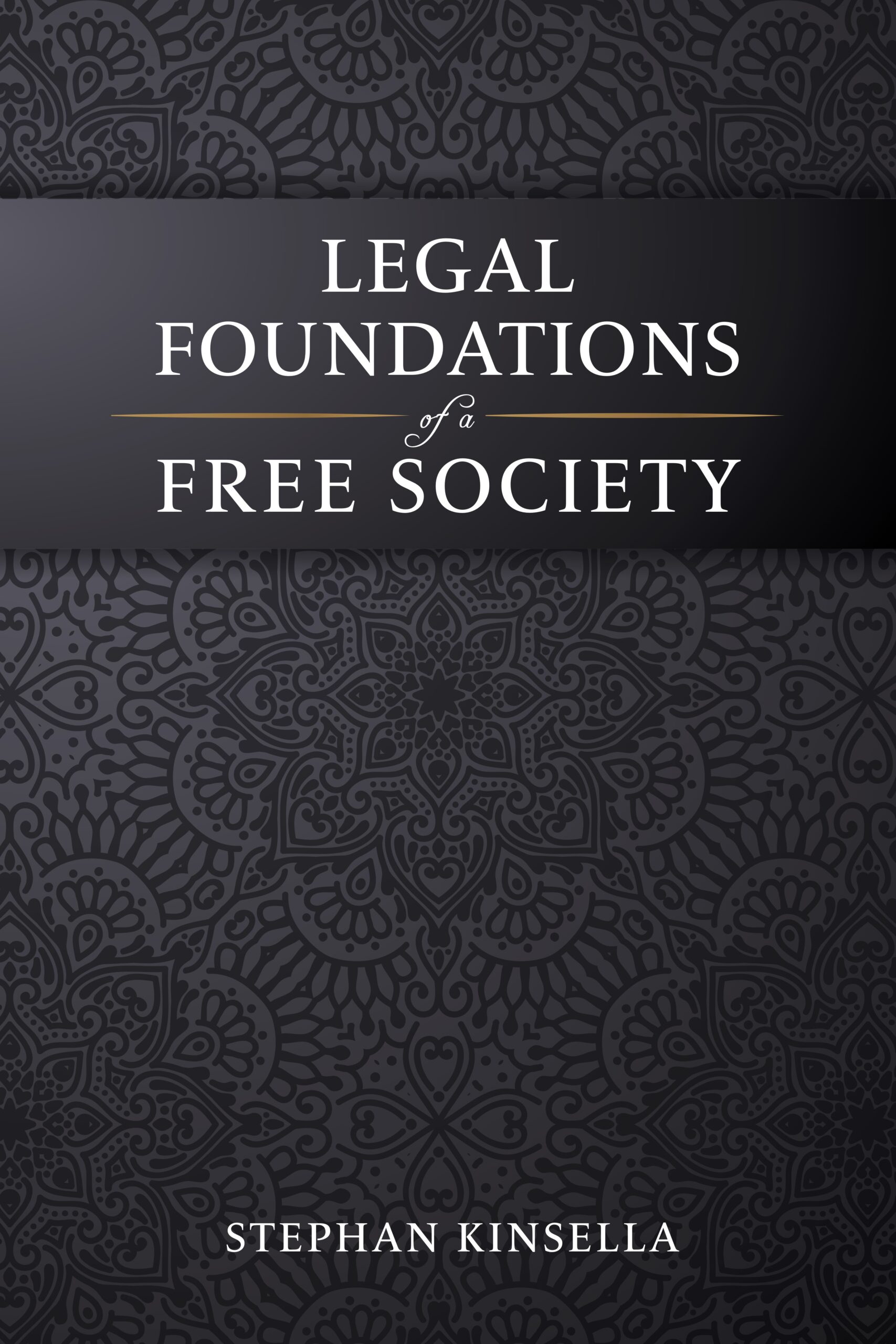
  1. See biographical pieces here and bio here; Stephan Kinsella, Legal Foundations of a Free Society (Houston, Texas: Papinian Press, 2023) [LFFS]; Kinsella on Liberty Podcast. []
  2. Member of the Judicial Committee of the Libertarian Party (2022–2026; Chair Jan. 1, 2023–July 31, 2023). []
{ 1 comment }

From HansHoppe.com:

Resignation from the Scientific Advisory Board of the Ludwig von Mises Institute Germany

On 13 July 2025, Prof. Dr. Rolf W. Puster, Prof. Dr. Jörg Guido Hülsmann and Prof. Dr. Hans-Hermann Hoppe declared their resignation from the Scientific Advisory Board of the Ludwig von Mises Institute Germany. Only two of the original five members remain on that Board.

Below, Puster, Hülsmann and Hoppe explain the reasons for their resignation.

Read more>>

{ 1 comment }

Longtime PFS speaker1 Italian legal scholar Alessandro Fusillo (@AlessandroFusi9) appeared on the youtube show below, El Niño Speaks, with very interesting comments about Italy’s Populist Right and also touching on Javier Milei near the end.

The Youtube transcript as cleaned up by Grok is below, as well as a summary. Note Professor Hoppe and others at PFS have also been critical of Milei or debated his performance.2 [continue reading…]

  1. PFP226 | Alessandro Fusillo, State-Making as War-Making: The Case of Italy (PFS 2021); PFP229 | Schwarz, Fusillo, Taghizadegan, Deist, Discussion, Q&A (PFS 2021)PFP244 | Alessandro Fusillo, “Roman Law Reconsidered” (PFS 2022)PFP246 | Hülsmann, Fusillo, Israel, Polleit, Kinsella, Discussion, Q&A (PFS 2022)PFP255 | Alessandro Fusillo, “The State of Emergency: The Government’s Illegal Tool of Domination” (PFS 2023)PFP258 | Hoppe, Fusillo, Daniels, “Discussion, Q&A” (PFS 2023)PFP274 | Alessandro Fusillo: “Liberalism, Anarchism, Fascism: A Brief Look at the Modern History of Italy” (PFS 2024)PFP276 | Bhandari, Fusillo, Taghizadegan, Gabb, Bagus: Discussion, Q&A (PFS 2024)PFP279 | Dürr, Müller, Fusillo, Bagus, Hoppe, Roundtable: What to Make of Milei (PFS 2024). His forthcoming talk at PFS 2025 is “The Pirates of the Caribbean as Forebears of the Libertarians and of the American Revolution.”  []
  2. Hoppe, A “Great Thinker” at Work; Considerations and Reflections of a Veteran Reactionary Libertarian (AERC 2025); Freedom and Property: Hans-Hermann Hoppe Talks About the Essence of Anarcho-capitalism; also Hans-Hermann Hoppe, “Javier Milei” (PFS 2024);
    Antony Müller, “Milei after Nine Months: A Critical Update” (PFS 2024); Dürr, Müller, Fusillo, Bagus, Hoppe, Roundtable: What to Make of Milei (PFS 2024); PFP278 | Antony Müller: “Milei after Nine Months: A Critical Update” (PFS 2024); PFP279 | Dürr, Müller, Fusillo, Bagus, Hoppe, Roundtable: What to Make of Milei (PFS 2024); PFP280 | Special: Hans-Hermann Hoppe, “Javier Milei” (PFS 2024). []
{ 1 comment }
Play

Property and Freedom Podcast, Episode 294.

Hans-Hermann Hoppe, Concluding Remarks, Tributes, and Announcements.

This lecture is from the 2012 meeting of the Property and Freedom Society. PFS 2012 Playlist.

It was not included previously in the podcast since the video had been lost and I had assumed the audio had also been lost. However, I recently discovered the audio files for two of the speeches as well as Professor Hoppe’s Introductory and Concluding remarks had been preserved, namely those listed below. They are podcast here for the first time.

  • Hans-Hermann Hoppe (Germany/Turkey), Welcome and Introductions
  • Karl-Peter Schwarz (Austria), Between Restitution and Re-Expropriation: Desocialization in Eastern Europe
  • Benjamin Marks (Australia), On H.L. Mencken as a Libertarian Model
  • Hans-Hermann Hoppe, Concluding Remarks, Tributes, and Announcements


{ 0 comments }
Play

Property and Freedom Podcast, Episode 293.

Benjamin Marks (Australia), On H.L. Mencken as a Libertarian Model.

This lecture is from the 2012 meeting of the Property and Freedom Society. PFS 2012 Playlist. Text of article on which the speech was based is below; docx; pdf. Speech. Transcript also below.

Grok summary of article: H.L. Mencken’s conservatism, as explored in Benjamin Marks’ essay, is a defining trait that sets him apart as a libertarian thinker who held low expectations for societal reform. Unlike typical conservatism, Mencken’s brand is rooted in a deep skepticism of government and religion, viewing them as historically optimistic overreaches that clash with true conservative doubt. He saw many societal problems as insoluble or unlikely to be addressed due to human folly, yet found entertainment in the pretentiousness of events and the futility of reform efforts. His libertarianism was not driven by a desire to convert others but by a commitment to truth, expressed through sharp, clear prose that prioritized self-expression over activism.

Mencken’s approach was neither nihilistic nor despairing; he embraced the world’s flaws with a light-hearted cynicism, finding joy in critiquing its absurdities without expecting change. He believed people’s gullibility and resistance to reason made libertarian ideals unattainable in the near term, a view reinforced by his observations of failed revolutions and reforms that often worsened conditions. Marks argues that Mencken’s consistent, principled stance—free of moral indignation—offers libertarians a radical perspective: not as a competing utopianism, but as a clear-eyed rejection of romantic solutions. His influence, though significant in literature and culture, never popularized libertarianism, underscoring his realism about human nature and societal inertia.
Grok summary of transcript:
Two-Paragraph Summary for Show Notes
0:00–9:00The speaker begins by expressing gratitude for being invited to the Property and Freedom Society conference, acknowledging the late Neville Kennard, fervent supporter who passed away in June. Kennard, despite his frail condition, remained passionate about libertarianism, wearing Rothbard “Enemy of the State” shirt during the speaker’s visit. The speaker introduces the topic, “H.L. Mencken as Libertarian Model,” contrasting Mencken’s approach with Murray Rothbard’s. Mencken, unlike Rothbard, had no expectations of influencing society, viewing politics as entertainment and government as pathetic yet amusing. His pessimism, rooted in reason, led him to describe himself as “specialist in human depravity,” focusing on diagnosing societal flaws rather than proposing solutions. This perspective, the speaker argues, is more realistic than Rothbard’s optimistic belief in long-term libertarian revolution, as outlined in Rothbard’s 1965 essay, which the speaker dismisses as clichéd romanticism.
9:01–19:38The speaker critiques libertarian optimism by addressing common arguments, such as the internet’s role in spreading libertarian ideas or the belief that economic crises will awaken people to libertarianism. Mencken’s responses, as interpreted by the speaker, highlight counterpoints: easy access to statist propaganda negates the internet’s benefits, and crises often lead to more government intervention. The speaker also challenges the romanticism of Albert J. Nock’s concept of the “remnant,” quoting Nock to show his own pessimism about societal change. Marcus Aurelius is cited to underscore the futility of expecting posthumous recognition. The speaker concludes by suggesting that libertarians can still find joy in critiquing government absurdities, as evidenced by the lively PFS speakers. For optimists, the speaker humorously recommends following Gina Rinehart, wealthy Australian secessionist, as potential catalyst for libertarian progress, while emphasizing Mencken’s view that libertarianism is about personal enjoyment, not necessarily societal change.

[continue reading…]

{ 0 comments }
Play

Property and Freedom Podcast, Episode 292.

Karl-Peter Schwarz (Austria), Between Restitution and Re-Expropriation: Desocialization in Eastern Europe.

This lecture is from the 2012 meeting of the Property and Freedom SocietyPFS 2012 Playlist.

Transcript and Grok shownotes/summary below.

Two-Paragraph Summary for Show Notes
0:01–15:00: The speaker, invited by Professor Hoppe to the Property and Freedom Society, opens with a reflection on speaking in a “temple of knowledge and liberty,” humorously referencing Roman customs of covering one’s head in temples, except for Kronos, the god of time, who reveals all truths. The talk focuses on historical crimes of expropriation and restitution in post-communist Eastern Europe, challenging the misconception that nationalization was exclusive to communism. The speaker outlines three forms of governmental theft—inflation, taxation, and mass expropriation—emphasizing the latter’s violence and prevalence across the 20th century, from the Balkan Wars to post-World War II population transfers. Specific examples include the expulsion of 3 million Germans from Czechoslovakia under President Beneš’s decrees, which nationalized 80% of the economy by 1948, and the broader displacement of millions across Europe, highlighting that democratic and totalitarian regimes alike engaged in these practices.
15:01–37:12: The speaker critiques the flawed restitution processes in post-communist states, particularly the Czech Republic and Slovenia, where arbitrary time limits (e.g., February 25, 1948, in Czechoslovakia) excluded many legitimate claims. Quoting Murray Rothbard’s Ethics of Liberty, the speaker argues that only restitution to original owners or their heirs upholds justice, yet privatization often benefited former communist elites, fostering oligarchic power structures. Cases like Elisa Fabriova and Prince Kinsky illustrate systemic barriers, with Czech courts and government manipulating legal processes to block aristocratic claims. In Slovenia, Luboš Šeš’s 20-year struggle for restitution yielded minimal recovery, hampered by retroactive laws and biased courts. The speaker concludes that these failures undermine the rule of law, perpetuate corruption, and pose security risks, urging moral clarity despite the unlikelihood of full redress, as time (Kronos) may not deliver justice.

[continue reading…]

{ 0 comments }
Play

Property and Freedom Podcast, Episode 291.

Hans-Hermann Hoppe (Germany/Turkey), Welcome and Introductions.

This lecture is from the 2012 meeting of the Property and Freedom SocietyPFS 2012 Playlist.

It was not included previously in the podcast since the video had been lost and I had assumed the audio had also been lost. However, I recently discovered the audio files for two of the speeches as well as Professor Hoppe’s Introductory and Concluding remarks had been preserved, namely those listed below. They are podcast here for the first time.

  • Hans-Hermann Hoppe (Germany/Turkey), Welcome and Introductions
  • Karl-Peter Schwarz (Austria), Between Restitution and Re-Expropriation: Desocialization in Eastern Europe
  • Benjamin Marks (Australia), On H.L. Mencken as a Libertarian Model
  • Hans-Hermann Hoppe, Concluding Remarks, Tributes, and Announcements
{ 0 comments }

The feed for the Property and Freedom Podcast for lectures from the 2012 meeting of the Property and Freedom Society (PFS 2012 Youtube Playlist) omitted two talks and Professor Hoppe’s Introductory and Concluding remarks since the video had been been corrupted. However, I recently discovered the audio files for these had been preserved, namely those listed below. I have just released them on the Property and Freedom Podcast.


{ 0 comments }

Some outfit known as Million Podcasts has produced a list of the Best 100 Libertarian Podcasts, with Property and Freedom Podcast ranking as #32, right after Kinsella on Liberty.

{ 0 comments }
Play

Property and Freedom Podcast, Episode 290.

Bonus podcast episode: Professor Hoppe’s speech, The Ludwig von Mises Memorial Lecture presented at the Mises Institute’s Austrian Economics Research Conference (Fri., March 21, 2025; see Considerations and Reflections of a Veteran Reactionary Libertarian). The transcript is available at Hoppe, Considerations and Reflections of a Veteran Reactionary Libertarian (AERC 2025). In this speech, Professor Hoppe also talked a bit about what he was planning to do in in his PFS 2025 talk later in the year, “Democratic Peace and Re-Education: the German Experience,” 2025 Annual Meeting, Property and Freedom Society, Bodrum, Turkey (Sep. 20, 2025).

Note Professor Hoppe extensively comments on the reaction to his previous criticism of Milei; see Hans-Hermann Hoppe, “Javier Milei” (PFS 2024); Hoppe, “What To Make of Milei,” LewRockwell.com (Oct. 3, 2024); and Kristoffer Mousten Hansen, “Hoppe versus Milei on Central Banking: Breaking Down the Differences,” Mises Wire (Feb. 6, 2025).

He also discusses various other matters, such as the funding of the Frankfurt School by Felix Weil and its influence on Western Europe and on America (and its connection to “wokeism”); US worldwide hegemony since WWII and NATO provocations of Russia after the fall of the USSR, and its role in provoking the Russia-Ukraine conflict; the US role in the Israel-Hamas conflict and the influence of Israel over US policy and the dangerous alliance of the US and American “exceptionalism” paired with Israel’s “Chosen People” image.


{ 0 comments }

A Chinese translation of The Great Fiction: Property, Economy, Society, and the Politics of Decline (Laissez Faire Books, 2012; second revised edition, Mises Institute, 2021), is now available in a Chinese translation as 自由社会的法律根基 (Feb. 2025) (pdf).

The book was translated by Li San (李三) of the Mises Translation and Compilation Society (米塞斯编译社译丛), a group dedicated to translating and editing the classic works of the Austrian School.

Read more>>

{ 0 comments }

Stephan Kinsella, Legal Foundations of a Free Society (Houston, Texas: Papinian Press, 2023) is now available in a Chinese translation as 自由社会的法律根基 (Feb. 2025) (pdf) (previous draft mentioned here).

The book was translated by Li San (李三) of the Mises Translation and Compilation Society (米塞斯编译社译丛), a group dedicated to translating and editing the classic works of the Austrian School.

Read more>>

{ 0 comments }
Play

Property and Freedom Podcast, Episode 289.

This panel discussion is from the 18th annual 2024 Annual Meeting of the PFS (Sept. 19–24, 2024, Bodrum, Turkey).

Ammous, Polleit, Hoppe, Kinsella, Hülsmann, Discussion, Q&A.

See also Ammous, Polleit, Hoppe, Kinsella, Hülsmann, Discussion, Q&A.

Other talks appear on the Property and Freedom Podcast. Other videos may also be found at the PFS 2024 Youtube Playlist.

{ 0 comments }
Play

Property and Freedom Podcast, Episode 288.

This talk is from the 18th annual 2024 Annual Meeting of the PFS (Sept. 19–24, 2024, Bodrum, Turkey).

Hans-Hermann Hoppe (Germany/Turkey): “About Natural Order and its Destruction”.

See also  “About Natural Order and its Destruction

Other talks to follow in due course here on the Property and Freedom Podcast. Other videos may also be found at the PFS 2024 Youtube Playlist.

{ 0 comments }

The Property and Freedom Society

Uncompromising Intellectual Radicalism

Skip to content ↓

Subscribe

Creative Commons License
Except where otherwise noted, the content on this site is licensed under a Creative Commons Attribution 4.0 International License.