Two stories out of New York City this month raise the question we asked about the 44-acre shakedown: in what sense do you “own” property if the state decides how you may use it, and to whom you may sell it?
First, rent control for dogs. Christian Britschgi reports in Reason that City Councilmember Shirley Aldebol has introduced a “Pet Rent Limit Act” that would cap monthly pet rent at 1 percent of a unit’s rent and ban upfront pet deposits, and that a bill from Councilmember Christopher Marte, which Aldebol co-sponsors, would forbid landlords from enforcing blanket no-pet policies. Washington, D.C.’s similar “Roscoe’s Law” took effect in October, and Seattle’s ban on pet rent takes effect next year.1
Second, the city now picks your buyer. On October 22 the City Council passed the Community Opportunity to Purchase Act (COPA, Intro 905-A), which Mayor Zohran Mamdani has reportedly signed. It covers about 2,100 smaller multifamily buildings that face in rem foreclosure and carry a threshold number of serious housing-code violations. An owner who wants to sell must first offer the building to city-approved nonprofits (or their joint ventures with developers), which then have 145 days to close. In the New York Law Journal, Jennifer Polovetsky of Greenberg Traurig asks whether COPA, together with a proposed fee hike under the city’s Alternative Enforcement Program and its revived Third-Party Transfer Program, could amount to a regulatory taking under Penn Central. She leaves the answer to the courts.2
Takings doctrine aside, both measures strip away pieces of what ownership means.3 To own something is to have the exclusive right to control it: to decide who may use it, on what terms, and to whom and when to transfer it. Capping pet rent and outlawing pet-free buildings takes the first two from the landlord; COPA takes the third. The city can say its nonprofits may only match an open-market price, not undercut it, so owners lose nothing. But an owner who must wait up to 145 days on the city’s favorites, and whose other bidders know they can be preempted, has lost something real, and buyers will discount for it.
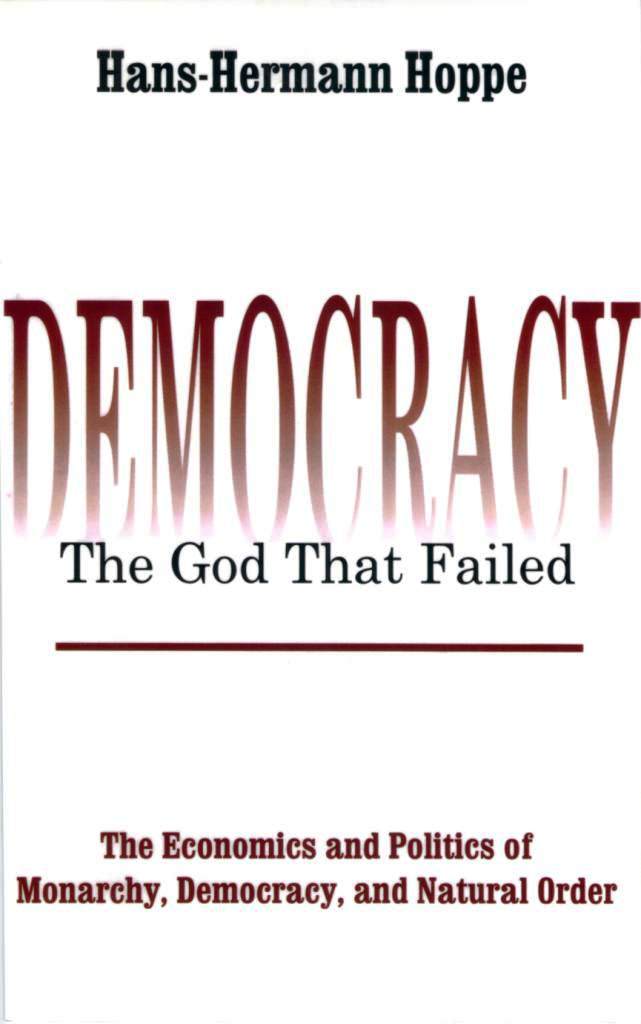
The pet rules are anti-choice in both directions, as Britschgi notes: some tenants want dogs, others want to live without them, and only owners free to set their own terms can serve both. A pet-free building is a private covenant like any other. Hoppe has long defended the owner’s right to exclude, and the covenant community built on it, as the basis of peaceful and varied communities (see Democracy: The God That Failed).
The usual consequences will follow. If landlords can’t charge for pet wear and tear, base rents rise for everyone. If a distressed building can’t be sold quickly to whoever offers the most, the capital needed to fix it stays away. And it is worth asking how many of these buildings became “distressed” under decades of rent regulation that made them uneconomic to maintain. A building whose tenants the Council chooses, and whose buyer the city chooses, is owned in name only: the “owner” keeps the taxes, the liability and the repair bills, and the city keeps the control.
Related
- Stephan Kinsella, “Lehto on the 44-Acre Shakedown; or, In What Sense Do You ‘Own’ Land You Can’t Build On?,” PFS Blog (Nov. 16, 2026)
- Sean Ring, “Gentleman’s Price Control,” PFS Blog (Aug. 27, 2026) (on Mamdani’s rent freeze)
- Hans-Hermann Hoppe, Democracy: The God That Failed (2001)
- Christian Britschgi, “More and More Cities Consider Rent Control for Dogs,” Reason (Nov. 25, 2026). [↩]
- Jennifer Polovetsky, “Could New York City’s Expanding Housing Enforcement Programs Raise Eminent Domain Concerns?,” New York Law Journal (Nov. 16, 2026), reposted as “Guest Post: Is Prohibiting Sale Of Residential Rental Property Unless A Govt-Certified Nonprofit Gets First Dibs A Taking? Jennifer Polovetsky Analyzes,” Inverse Condemnation (Nov. 27, 2026). [↩]
- We set takings doctrine aside because it concedes too much: it assumes the state may take property so long as it pays “just compensation.” Richard Epstein built an entire theory of “limited government” on this takings power, under which the state may force exchanges to overcome holdout and free-rider problems and other supposed “market failures.” See Richard A. Epstein, Takings: Private Property and the Power of Eminent Domain (Cambridge, Mass.: Harvard University Press, 1985). But the framework rests on Chicago-school law-and-economics, with its utilitarian wealth maximization and its notion of market failure, the same reasoning used to justify patent, copyright, and antitrust law. See Stephan Kinsella, “Richard Epstein’s Takings Theory of the State,” StephanKinsella.com (July 6, 2025); idem, “Libertarianism, Minarchists, International Law, and Eminent Domain,” StephanKinsella.com (July 27, 2026); idem, “Richard Epstein’s Takings Political Theory versus Epstein’s Intellectual Property Views,” C4SIF (Nov. 4, 2011); idem, “Email to Richard Epstein: Tension Between Takings Framework and IP Views,” C4SIF (March 28, 2026); and idem, “KOL364 | Soho Forum Debate vs. Richard Epstein: Patent and Copyright Law Should Be Abolished,” Kinsella on Liberty Podcast (Nov. 24, 2021). On the Chicago approach more generally, see Hans-Hermann Hoppe, “The Ethics and Economics of Private Property,” in Enrico Colombatto, ed., The Elgar Companion to the Economics of Property Rights (Cheltenham, UK: Edward Elgar, 2004), reprinted in The Great Fiction: Property, Economy, Society, and the Politics of Decline, 2d exp. ed. (Auburn, Ala.: Mises Institute, 2021), § VI, “Chicago Diversions” (criticizing Coasean law-and-economics); Kinsella, “On the Non Liquet in Libertarian Theory and Armchair Theorizing,” StephanKinsella.com (July 20, 2025), n.24; and idem, “David Friedman on Copyright,” C4SIF (June 15, 2011). On “market failure” as the basis for IP, see idem, “IP Law and ‘Market Failure’,” C4SIF (June 28, 2022); and idem, “IP Rights as Monopolistic Grants to Overcome the Public Goods Problem,” C4SIF (Dec. 4, 2010). [↩]






 Alessandro Fusillo
 Andreas Tögel
 David Dürr
 Doug French
 Fernando Chiocca
 Greg Morin
 Hans-Hermann Hoppe
 Jay Baykal
 Jayant Bhandari
 Jeff Deist
 Jeffrey Barr
 Juan Fernando Carpio
 Ken Yamarashi
 León Isidoro
 Martin Cabrera
 Nick Hoppe
 Oscar Grau
 Peter Wong
 PFS
 scholarium
 Saifedean Ammous
 Sean Gabb
 Sean Ring
 Stephan Kinsella
 Stéphane Geyres
 Thomas Jacob
 Tom DiLorenzo

Follow Us!