 Note: This article was originally published in Chinese on Nov. 17, 2026, days before Nvidia’s board reinstated Jensen Huang as CEO on Nov. 23.1 English version by the author.
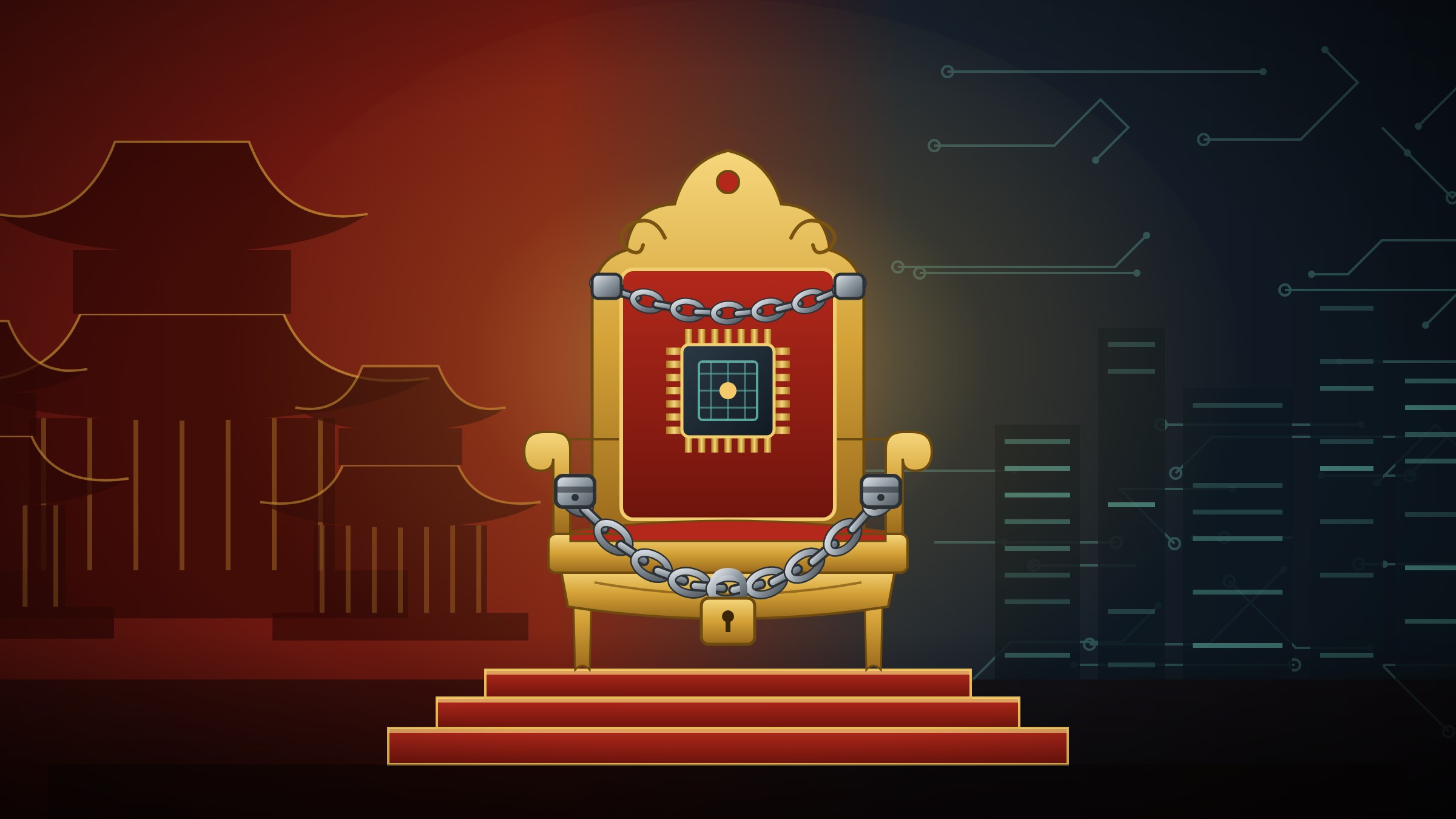
The market is currently buzzing with hopes of a “restoration” for Jensen Huang. To understand why such a comeback might happen—and why it would never restore his old absolute power—it helps to look at a famous succession crisis from 18th-century China.
In 1708, the Kangxi Emperor—China’s longest-reigning monarch and a towering contemporary of France’s Louis XIV—abruptly fired his longtime heir apparent, Crown Prince Yinreng, over erratic and corrupt behavior. Kangxi thought pulling out a single rotten tooth would solve the problem. Instead, it loosened the entire jaw: removing the heir triggered a Succession-style free-for-all among his other sons and senior cabinet ministers.
Within months, the Emperor stunned the court by reinstating the very son he had just disgraced. He was not being sentimental; he was buying time to execute three ruthless maneuvers. Most urgently, he needed to freeze out a rival coup. When Kangxi had asked his top ministers to nominate a new heir, they almost unanimously backed his ambitious eighth son (Prince Yunsi), revealing that a shadow coalition had quietly captured his own cabinet. Crushing them outright would have sparked a civil war, while crowning Prince Yunsi would have reduced Kangxi to a figurehead. Reinstating the original Crown Prince acted as an immediate circuit breaker, stripping Prince Yunsi’s faction of any legal pretext to campaign for the throne and giving Kangxi breathing room to purge the ringleaders one by one.
At the same time, Kangxi used the reinstated heir as a human shield to vet true replacements. Crown Prince Yinreng never regained his father’s actual trust; he was placed back on the front lines to draw political fire. Over the next three years, from 1709 to 1712, Kangxi watched how his other sons behaved under intense pressure. While Prince Yunsi overplayed his hand, the quiet fourth son (Prince Yunzheng) [Note: The fourth son was Prince Yinzhen, the future Yongzheng Emperor (r. 1722–35). —Ed.] projected the image of a loyal, selfless statesman—earning the trust that would eventually make him the next emperor. To hold the court together during this buffer period, Kangxi also crafted a face-saving public relations narrative. Abruptly deposing an heir had shaken confidence in the dynasty, so the Emperor spun the reinstatement by claiming the Crown Prince had been acting erratically due to a palace hex and had now been “cured.” Overnight, an ugly power struggle was repackaged as a heartwarming story of a merciful father and a recovered son. Kangxi’s 1709 reinstatement was a textbook tactical retreat, using a lame-duck heir to dismantle a rival faction and reassert total control before deposing him for good in 1712.
Fast-forward to Silicon Valley in November 2026, and the parallel is uncanny. Just days after his shock departure, reports surfaced in the Financial Times that Jensen Huang is already sounding out close allies about a possible comeback. If we view NVIDIA as a $4 trillion empire, a Huang restoration would be driven by the exact same structural pressures that forced Kangxi’s hand—and would ultimately be bound by the ruthless rules of modern capital markets.
Why a “Restoration” Could Happen
On November 12, 2026, Huang resigned amid a scandal involving an extramarital affair and national security intelligence scrutiny. CFO Colette Kress stepped in as interim CEO, while the board appointed its first-ever independent chairman and launched an external search. The ouster was an emergency stop-loss move designed to insulate NVIDIA’s share price and brand from personal fallout. If Huang does stage a comeback, it will not be because his personal missteps have been forgiven, but because the cost of running NVIDIA without him spiraled out of control within days.
The first pressure is the sheer power vacuum left by an ultra-flat empire. Huang ran NVIDIA with extreme centralization, maintaining roughly 60 direct reports and cultivating no clear “number two” or succession bench. By abruptly removing him, the board created an immediate leadership void in which neither internal lieutenants nor rumored external candidates—from Arm CEO Rene Haas to Tim Cook, whom Donald Trump publicly floated for the job—can easily command the company’s loyalty overnight.
That vacuum immediately triggered a revolt in both the “inner court” and on Wall Street. Roughly half of NVIDIA’s valuation rests on Huang’s strategic intuition and the multi-hundred-billion-dollar capacity deals he personally brokered with TSMC and memory suppliers. Following his exit, the stock tumbled, analysts warned that NVIDIA would grow overly cautious and cede foundry capacity, and employees began circulating petitions demanding his reinstatement and the board’s ouster—a script straight out of Sam Altman’s 2023 return to OpenAI. Should independent counsel Wachtell Lipton conclude that Huang neither leaked core intellectual property nor breached export controls, an embattled board—watching the stock bleed while AMD and hyperscalers’ custom chips circle—may treat a restoration as a pragmatic truce to steady morale, secure next-generation chip rollouts, and buy time to build a real succession pipeline.
What a Restored Reign Would Actually Look Like
In 18th-century Beijing, the reinstated Crown Prince grew reckless out of insecurity, hastening his final downfall. Under modern corporate governance, a restored Jensen Huang would not return to the unchallenged “founder-king” era. Even if he reclaims the CEO title, he would return as a monarch in shackles. The days of ruling without a board chair and directly managing 60 executives are over; with veteran director Harvey Jones now installed as Chairman and compliance committees reinforced, Huang would govern as a constitutional monarch subject to strict institutional guardrails on budgets, geopolitics, and China-related negotiations.
Furthermore, any comeback would be strictly a transitional second act. Wall Street and Washington—where Senate subpoenas and national security reviews loom—have near-zero tolerance for governance risk at mega-cap companies. Much like Kangxi’s 1709 maneuver, the board would use Huang’s clout to anchor supply chains and customer confidence through fiscal 2027 while grooming a COO or external successor behind the scenes. Once that new leadership team is ready, Huang would face a dignified, permanent exit into an advisory or honorary role.
Ultimately, whether Huang returns or not, the November 12 crisis marks the permanent end of NVIDIA’s frontier-style expansion. Institutional investors will no longer tolerate single-founder bets on the scale of his early CUDA gamble or massive, unhedged supply commitments. NVIDIA is transitioning from a founder-driven offensive juggernaut into an institutionalized tech giant defined by compliance, capital returns, and predictable execution. History’s lesson is clear: when an organization binds its entire identity and operational nervous system to a single leader without building a succession plan, removing that leader triggers a systemic shock that often forces the institution to bring them back just to stop the bleeding. Yet whether in an 18th-century imperial palace or a 21st-century Silicon Valley boardroom, once a ruler has been deposed, absolute authority never truly returns.
Related
- Peter Wong, “Why Indians Are Conquering Silicon Valley’s CEO Suites While Chinese Elites Build Empires and Principalities Instead,” PFS Blog (June 26, 2026)
- Snowdrift, “Jensen Huang Should Not Have Come Back Like This,” PFS Blog (Nov. 24, 2026)
- “Lao Gu on Who Jensen Huang Has Really Pissed Off,” PFS Blog (Nov. 20, 2026)
- Snowdrift, “The Jensen Huang Affair,” Ludwig von Mises Substack (Nov. 12, 2026)
- “Lao Gu: Why Is the Austrian School Anti-Democratic?” PFS Blog (Nov. 26, 2026)
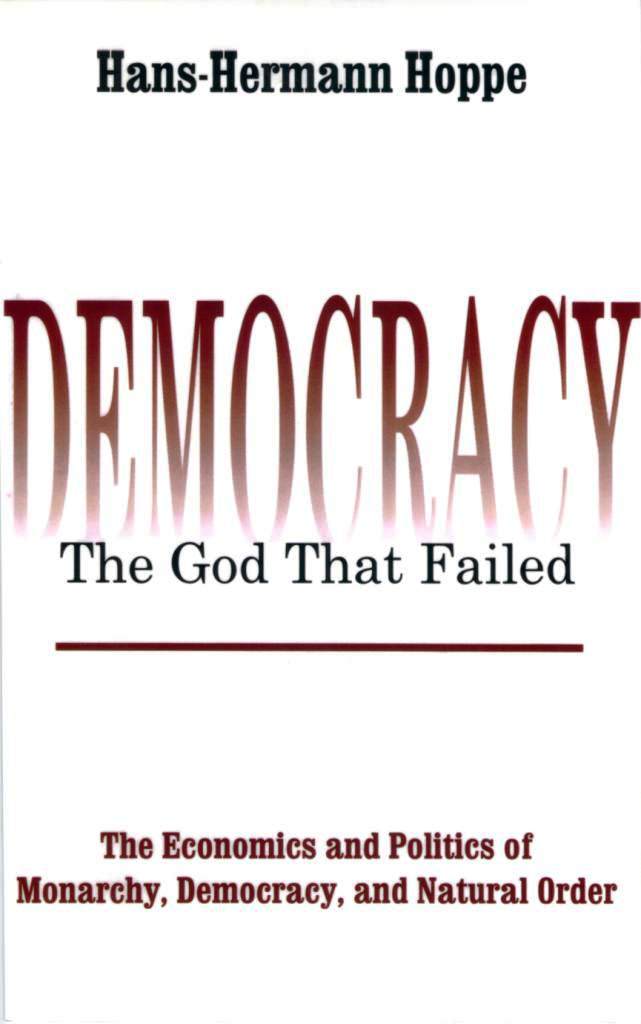
- Hans-Hermann Hoppe, Democracy—The God That Failed: The Economics and Politics of Monarchy, Democracy, and Natural Order (New Brunswick, NJ: Transaction Publishers, 2001)
- See “Nvidia board reinstates Jensen Huang as CEO,” Axios (Nov. 23, 2026). [↩]










 Alessandro Fusillo
 Andreas Tögel
 David Dürr
 Doug French
 Fernando Chiocca
 Greg Morin
 Hans-Hermann Hoppe
 Jay Baykal
 Jayant Bhandari
 Jeff Deist
 Jeffrey Barr
 Juan Fernando Carpio
 Ken Yamarashi
 León Isidoro
 Martin Cabrera
 Nick Hoppe
 Oscar Grau
 Peter Wong
 PFS
 scholarium
 Saifedean Ammous
 Sean Gabb
 Sean Ring
 Stephan Kinsella
 Stéphane Geyres
 Thomas Jacob
 Tom DiLorenzo

Follow Us!