Austrian School Lao Gu, “Relieving Poverty Is the Sharpest Tool for Cementing Class,” Ludwig von Mises Substack (Nov. 27, 2026), translated from the Chinese original (Nov. 27, 2026).1
Following his tally of the welfare state’s “whopping loss,” Lao Gu argues that means-tested relief does worse than waste labor: it cements the class structure. Because aid is withdrawn the moment a claimant earns his way past the poverty line, the system punishes the very effort it claims to encourage, demands permanent surveillance of every claimant’s income, and traps families on the dole for generations. He points to the American “benefits cliff” and to Germany’s Hartz IV reforms, which, he says, merely moved people from unemployed-on-relief to employed-on-relief. (Compare Rothbard and Hazlitt on the perverse incentives of state welfare, in the Related list below.)
Relieving Poverty Is the Sharpest Tool for Cementing Class
Austrian School Lao Gu • Ludwig von Mises Substack • Nov. 27, 2026
Written by Austrian School Lao Gu in Guangdong Province, China at 10:41 a.m. on 27 November 2026.
When the state steps in to relieve hardship, what it is really running is a distribution-by-need model.
The whole thing turns on one question: does this person need it?
Well, everyone needs money. Hand them as much as you like, they’ll spend it.
So you have to draw a line. The dole has an income threshold, a means test, a standard of living below which you are officially declared “in need.”
And that line is arbitrary. Because “poor” is a relative word — it’s a rank in the income table, not a measure of actual wealth. No standard on earth can objectively define somebody as poor.
Here’s the signal this system sends to every single claimant, loud and clear: don’t you dare get richer, or we’ll claw back every penny we ever gave you.
Set a poverty line. Pay out. Cross the line, lose the lot. That’s state charity as an instrument for freezing people in place.
Yes, you read that right.
A policy that advertises itself as rescuing the poor ends up manufacturing the poor — and locking the class structure in behind them.
And of course it needs a surveillance apparatus to run. Claimants’ spending, their income, their comings and goings — all monitored. On the system’s own logic, that’s non-negotiable. Otherwise some bloke earning $1 million a year puts in a claim and says he’s hard up.
Once you’ve drawn the line, you must police the line. Every household gets checked, forever, in case they’ve crept above it. Because if you don’t, everybody and his dog will swear they’re skint.
Look at what the big Western welfare states actually do: they monitor every claimant’s income in real time. And here’s what that produces.
A girl in a benefit household decides to go out on the bike — Deliveroo, Uber Eats, whatever — and grafts her guts out for $4,000 a month. The state twigs. Every benefit the family was getting is pulled. The high-percentage healthcare reimbursement goes. The household loses several thousand dollars of income it didn’t have to lift a finger for.
So what does she do? She stops. She stays in.
Because working got her punished.
Now someone will say, well, just don’t punish them. Don’t punish them?
Then the paradox bites. Relief is conditional on being poor enough — so any attempt to be less poor trips the withdrawal switch. The system precisely penalises, in the very person it claims to help, the behaviour it claims to encourage.
This isn’t some local cock-up in implementation. It’s structural, baked into distribution-by-need relief.
Americans have a name for it: the benefits cliff. A small rise in earnings triggers several benefits dropping at once, and the household’s net resources go down. When the value of the withdrawn benefits equals or exceeds the extra earnings, the effective marginal tax rate hits 100% — or worse. Earn an extra dollar, end up more than a dollar worse off.
And it’s not one programme doing this. It’s TANF, SNAP, Medicaid, childcare subsidies — each with its own taper, its own cutoff — stacking into one systemic cliff.
The pain is real. Sit on your hands, take $2,000. Go out and graft, earn $2,500, hand back $1,000 in tax and lose the benefits on top. The gap between “stay idle” and “go to work clean” is enormous.
The Germans have a phrase for the types this produces: they lie in the sozialer Hängematte — the social hammock.
To shift them out of it, Germany pushed through the Hartz IV reforms. The toolkit was surveillance, conditionality and sanctions.
Unemployment fell, sure. But alongside it came a visible expansion of the low-wage sector and a rise in income poverty. German poverty was 12% in 1996; by 2016 it was 16%. Over the same stretch, low-wage employment went from 14% to 19%.
In other words, the system moved people from “unemployed on relief” to “employed on relief.” Wherever you draw the condition, that’s the condition people will aim at.
If zero hours gets you nothing, you’ll do a tiny bit of work. Just enough.
The claimant’s objective becomes: maximum benefit income for minimum effort. Full stop.
And the well-meaning welfarists — the ones who go on about conscience and compassion — haven’t got the first clue about incentives. They’ve mistaken a means-tested poverty machine for something decent. Under this arrangement, huge numbers of German “poor” have never worked, never taught their kids to study or to hold a job, and whole families have been flat on their backs on the benefit for generations, turned into a clutch of parasites the rest of society has quietly walled off.
That’s when full class calcification arrives. No learning capacity, no skills, no notion of what a household is even for — just endless leisure funded by the state. Where’s the ladder out of that?
Under the system’s own pressure, they stay poor. They, their kids, their grandkids. Forever.
Not by accident. Because it suits the system.
And now look at Europe and America: millions on food relief, living on the state’s cheque. In a developing country that would be unthinkable. Where did all these “unemployable” people come from?
Europeans complain that the classes have frozen solid. Ask why. The biggest reason is staring them in the face: government relief.
Related
- “Lao Gu on the Welfare State’s Whopping Loss,” PFS Blog (Nov. 26, 2026)
- “Lao Gu: Why Is the Austrian School Anti-Democratic?,” PFS Blog (Nov. 26, 2026)
- “Proof Without Purpose: AI, the Riemann Proof, and Human Action,” PFS Blog (Nov. 23, 2026)
- “Lao Gu: Asset Disclosure for Officials—Where’s the Problem?,” PFS Blog (Nov. 20, 2026)
- Austrian School Lao Gu, “Where Wealth and Poverty Divide,” Ludwig von Mises Substack (Nov. 10, 2026)
- Austrian School Lao Gu, “There Are No Poor People in China, No ‘Bottom’, No ‘Vulnerable Groups’,” Ludwig von Mises Substack (Nov. 9, 2026)
- Murray N. Rothbard, For a New Liberty: The Libertarian Manifesto, 2nd ed. (Auburn, Ala.: Mises Institute, 2006), ch. 8, “Welfare and the Welfare State”
- Henry Hazlitt, The Conquest of Poverty (New Rochelle, N.Y.: Arlington House, 1973)
- Hans-Hermann Hoppe, A Theory of Socialism and Capitalism (Boston: Kluwer Academic Publishers, 1989), ch. 4, “Socialism Social-Democratic Style”
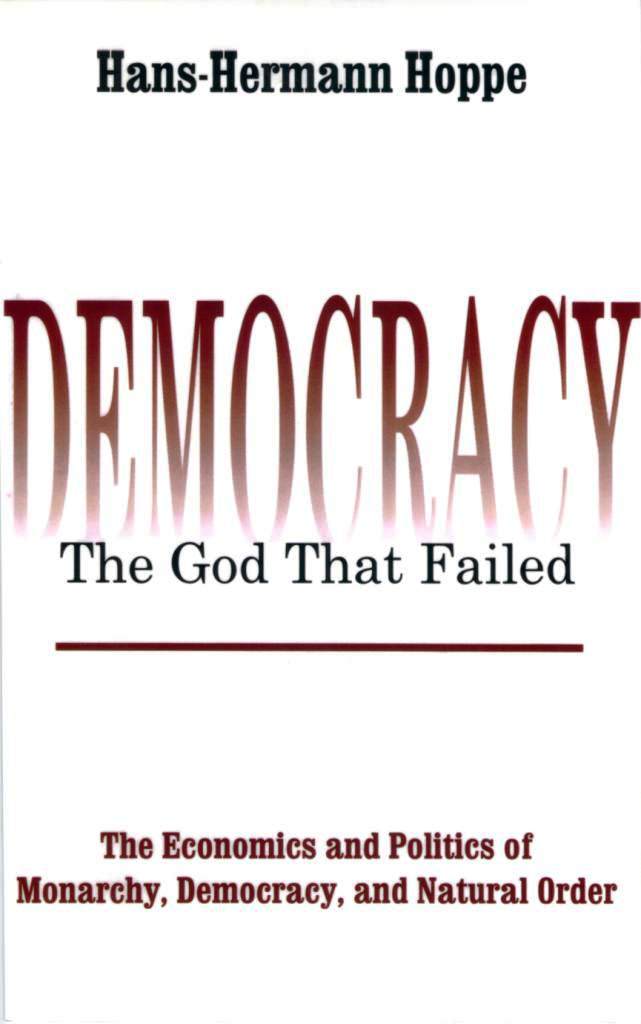
- Hans-Hermann Hoppe, Democracy: The God That Failed (New Brunswick, N.J.: Transaction Publishers, 2001)
- Republished under the Creative Commons Attribution 4.0 International License, per the Ludwig von Mises Substack’s notice. [↩]












 Alessandro Fusillo
 Andreas Tögel
 David Dürr
 Doug French
 Fernando Chiocca
 Greg Morin
 Hans-Hermann Hoppe
 Jay Baykal
 Jayant Bhandari
 Jeff Deist
 Jeffrey Barr
 Juan Fernando Carpio
 Ken Yamarashi
 León Isidoro
 Martin Cabrera
 Nick Hoppe
 Oscar Grau
 Peter Wong
 PFS
 scholarium
 Saifedean Ammous
 Sean Gabb
 Sean Ring
 Stephan Kinsella
 Stéphane Geyres
 Thomas Jacob
 Tom DiLorenzo

Follow Us!