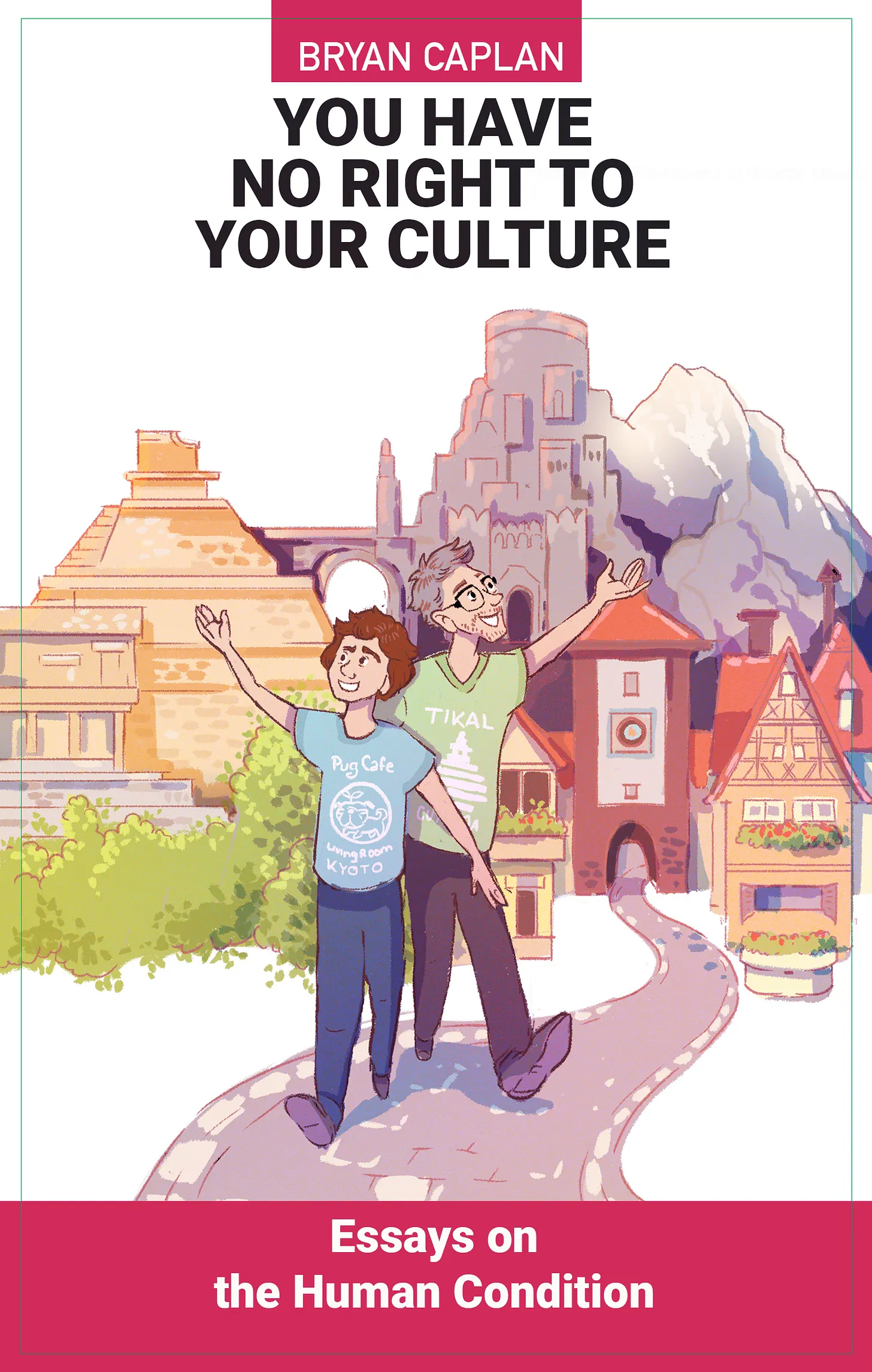
 Bryan Caplan, “Embrace Cultural Creative Destruction: You Have No Right to Your Culture: Essays on the Human Condition is now on sale,” Bet On It (Jan 26, 2026). h/t @Jeff Deist.
Uhhh …. yeah. I mean… there’s libertarian macho flash1 and then there’s libertarian macho flash. WTF? Tell that to the poor French right now. Even if they sort of asked for it. Doesn’t mean we ought to cheer it on.
As Deist wrote me:
Obnoxiously, in an obvious and broad sense, he’s right: culture coalesces and cannot be mandated or maintained without effort. But he means it in the manner of endless “creative destruction” via tech and of course open borders.”2
As I said to him, of course there is no property right in culture any more than in value.3 But this does not mean culture does not matter4 or that the natural cultures that work or that exist ought to be artificially eroded by state policies like mass immigration nor that we ought to turn a blind eye to it, or that Western culture is not superior or important.5
On Sun, Oct 25, 2026 at 11:47 AM Jeff Deist <[email protected]> wrote:
.
Embrace Cultural Creative Destruction
*You Have No Right to Your Culture: Essays on the Human Condition* is now on sale
Almost everyone embraces “cultural” critiques of capitalism. The left has “cultural studies“; the right has the mantra, “We’re a country, not an economy.” The upshot, in both cases, is that government ought to do something about culture. Freeze it in place? Force it to progress? Turn back the clock?
My latest book of essays, You Have No Right to Your Culture: Essays on the Human Condition, flips this narrative. All of these demands for “reshaping culture” are thinly-veiled calls for coercing humans. As the title essay explains:
[C]ulture is… other people! Culture is who other people want to date and marry. Culture is how other people raise their kids. Culture is the movies other people want to see. Culture is the hobbies other people value. Culture is the sports other people play. Culture is the food other people cook and eat. Culture is the religion other people choose to practice. To have a “right to your culture” is to have a right to rule all of these choices — and more.
What’s the alternative? Instead of treating capitalism as the root of cultural decay, the world should embrace capitalist cultural competition. Actions speak louder than words; instead of using government to “shape” culture, let’s see what practices, beliefs, styles, and flavors pass the market test. Which in practice, as I explain elsewhere in the book, largely means the global triumph of Western culture, infused with an array of glorious culinary, musical, and literary imports. Nativists who bemoan immigrants’ failure to assimilate are truly blind; the truth is that even non-immigrants are pre-assimilating at a staggering pace.
After exploring the glories of cultural competition, the second part of You Have No Right to Your Culture explores the commonalities of human nature. While my critics often accuse me of econo-autism, at least I’m wise enough to see through humanity’s ubiquitous lip service. Anyone who actually “puts their culture first” would take drastic steps to avoid other cultures. Since almost no one takes such drastic steps, we can safely infer that actual cultural preferences are much cosmopolitan than expressed cultural preferences.
The third and lengthiest part of the book is a collection of economically- and philosophically-informed travelogues. Before finishing my Ph.D., the only foreign countries I ever saw were Canada and Bermuda. Now, I’ve been to over forty. A low count compared to Tyler Cowen or Christoph Heuermann, but more than enough to appreciate the universal values of free markets, cosmopolitanism, and managerial talent.
You Have No Right to Your Culture ends with essays on what I call “GMU econoculture.” Since I arrived at George Mason University’s economics department in 1997, my colleagues and I have carved out a unique perspective on what we really know, what really matters in life, how to push the research frontier forward, and how to have great conversations. Since I believe in cultural competition, this is my effort to sell the value of our cultural niche to the wider world.
Four years ago, I hatched a plan to publish eight books of my collected blog essays. I sifted through thousands of old blog posts, selected the top 5%, and organized them by theme. There was Labor Econ Versus the World on labor econ, How Evil Are Politicians on demagoguery, Don’t Be a Feminist on wokeness, Voters as Mad Scientists on behavioral political economy, You Will Not Stampede Me on non-conformism, Self-Help Is Like a Vaccine on self-improvement, and Pro-Market and Pro-Business on free-market economics. Now, with the publication of You Have No Right to Your Culture, I’ve finally completed the project.
As usual, you’re free to just search the Bet On It archives to read the whole book for gratis. But in exchange for just $15 for the paperback or $9.99 for the e-book, you get a pretty and curated package. Since I start blogging 22 years ago, I’ve striven to write pieces of lasting value, not trite and emotional commentary on current events. If you’ve read this far, I think you’ll agree.
P.S. I’m happy to do podcasts, interviews, and other promotions of the new book. Just email me to set something up. 😉
P.P.S. AMA on all things cultural tomorrow!
- See Michael Cloud, “The Late, Great Libertarian Macho Flash” (1978; preserved at https://perma.cc/KY9P-V7K7 and here). See also Jeff Wood, “The Triumphant Return of Libertarian Macho Flash,” (March 8, 2017; https://perma.cc/KE6W-WQK4). [↩]
- Bryan Caplan and Zach Weinersmith, Open Borders: The Science and Ethics of Immigration (New York: First Second, 2019; reissued by Libertarianism.org, 2025); Bryan Caplan, “Why Should We Restrict Immigration?,” Cato Journal 32, no. 1 (2012): 5–24; Bryan Caplan, “Open Borders Are a Trillion-Dollar Idea,” Foreign Policy, November 1, 2019; Bryan Caplan, “America Should Open Its Borders: My Opening Statement for the Reason Immigration Debate,” EconLog, April 23, 2014; Bryan Caplan, interviewed by Dylan Matthews, “The Case for Open Borders,” Vox, September 13, 2014. [↩]
- Kinsella, Hoppe on Property Rights in Physical Integrity vs Value, StephanKinsella.com (June 12, 2011). [↩]
-
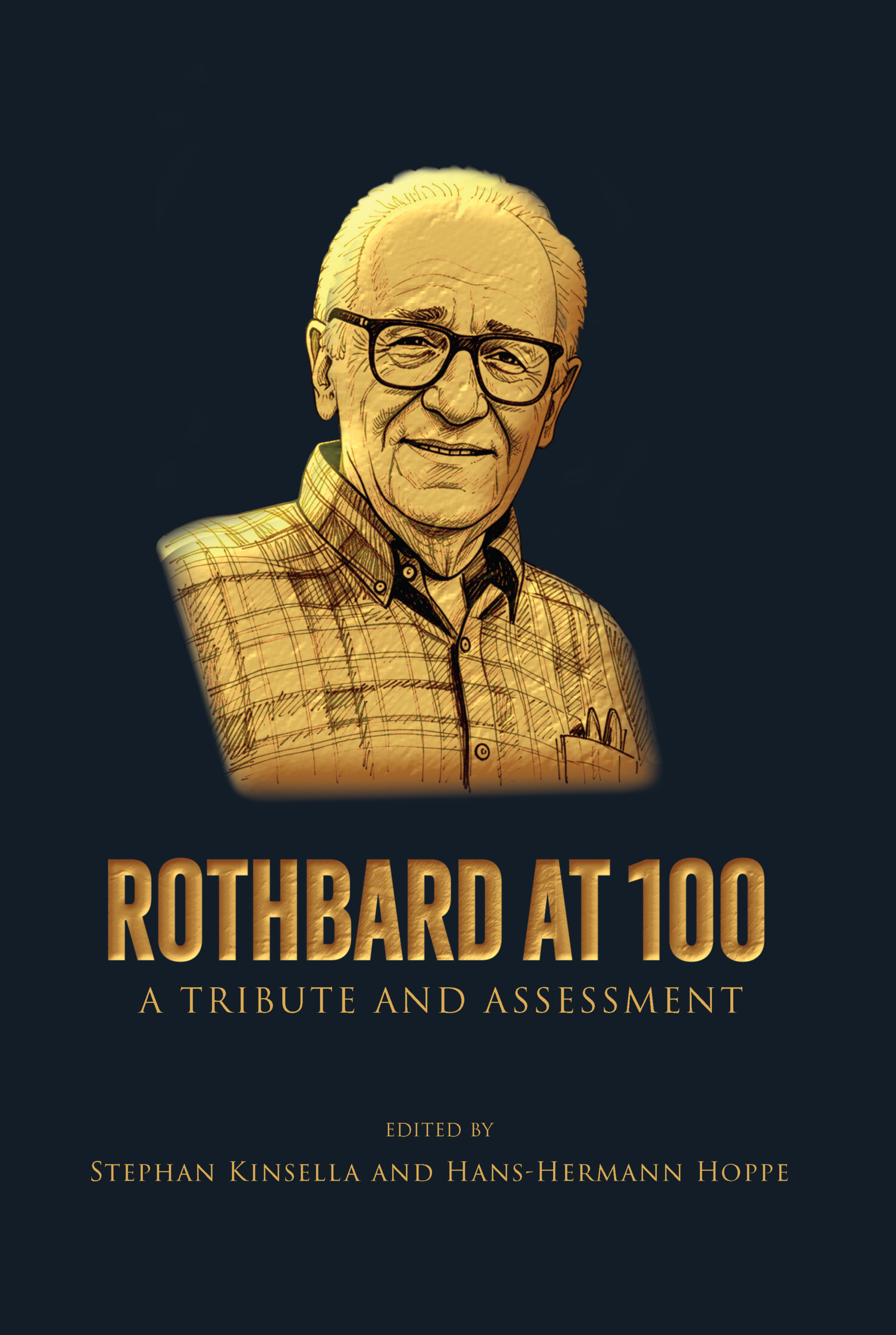
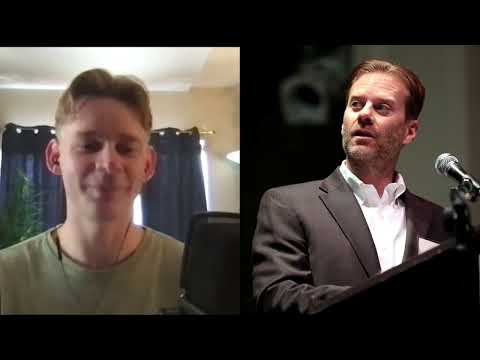 Jeff Deist (interviewed by Matthew Geiger), “Menger Institute Interview with Jeff Deist: Austrian Economics, Nonprofits, Populism, and Maintaining Relevance,” Property and Freedom Society (Aug. 2, 2026). Deist stresses that culture and economics cannot be separated, that people’s political and economic views flow from culture, and that culture wars are essential rather than “right-wing crankery.”; Jeff Deist, “Appreciating Rothbard’s Political Genius,” in Rothbard at 100: A Tribute and Assessment, Stephan Kinsella and Hans-Hermann Hoppe, eds. (Houston: Papinian Press and Property and Freedom Society, 2026). Deist highlights Rothbard’s recognition that politics is downstream from culture and that libertarians must engage culture wars against the left’s institutional capture; Jeff Deist, “Rothbard and the Paleo Right,” Property and Freedom Journal (Sept. 27, 2026). Discusses Rothbard’s paleo turn, the cultural requirements of a free society, and the need for a right-wing populist coalition rooted in traditional and bourgeois culture; “The Rise, Failure, and Relevancy of Paleolibertarianism,” Property and Freedom Society (Oct. 13, 2026). Surveys the paleolibertarian emphasis (Rothbard, Rockwell, Hoppe, Deist) that a free society sociologically requires a bourgeois and conservative core culture; Jeff Deist, “A New Approach to Hoppe’s ‘Open Border Critics’” (PFS 2024 / PFP282). Addresses Hoppe’s critics on immigration while underscoring cultural cohesion, property-based exclusion, and the limits of abstract open-borders advocacy. [↩]
- The Leftist Assault on Western Thought; Louis Rougier, The Genius of the West (Los Angeles: Nash Publishing / Principles of Freedom Committee, 1971). Abridged English translation of Le Génie de l’Occident (Paris: Robert Laffont, 1969), with an introduction by F. A. Hayek; Available scans: Internet Archive and another edition. [↩]












 Alessandro Fusillo
 Andreas Tögel
 David Dürr
 Doug French
 Fernando Chiocca
 Greg Morin
 Hans-Hermann Hoppe
 Jay Baykal
 Jayant Bhandari
 Jeff Deist
 Jeffrey Barr
 Juan Fernando Carpio
 Ken Yamarashi
 León Isidoro
 Martin Cabrera
 Nick Hoppe
 Oscar Grau
 Peter Wong
 PFS
 scholarium
 Saifedean Ammous
 Sean Gabb
 Sean Ring
 Stephan Kinsella
 Stéphane Geyres
 Thomas Jacob
 Tom DiLorenzo

Follow Us!