Reginald Godwyn, “The Jury’s Ancient Power: Why Every Englishman Should Know About Jury Nullification,” Libertarian Alliance (UK) (July 29, 2026).
Related
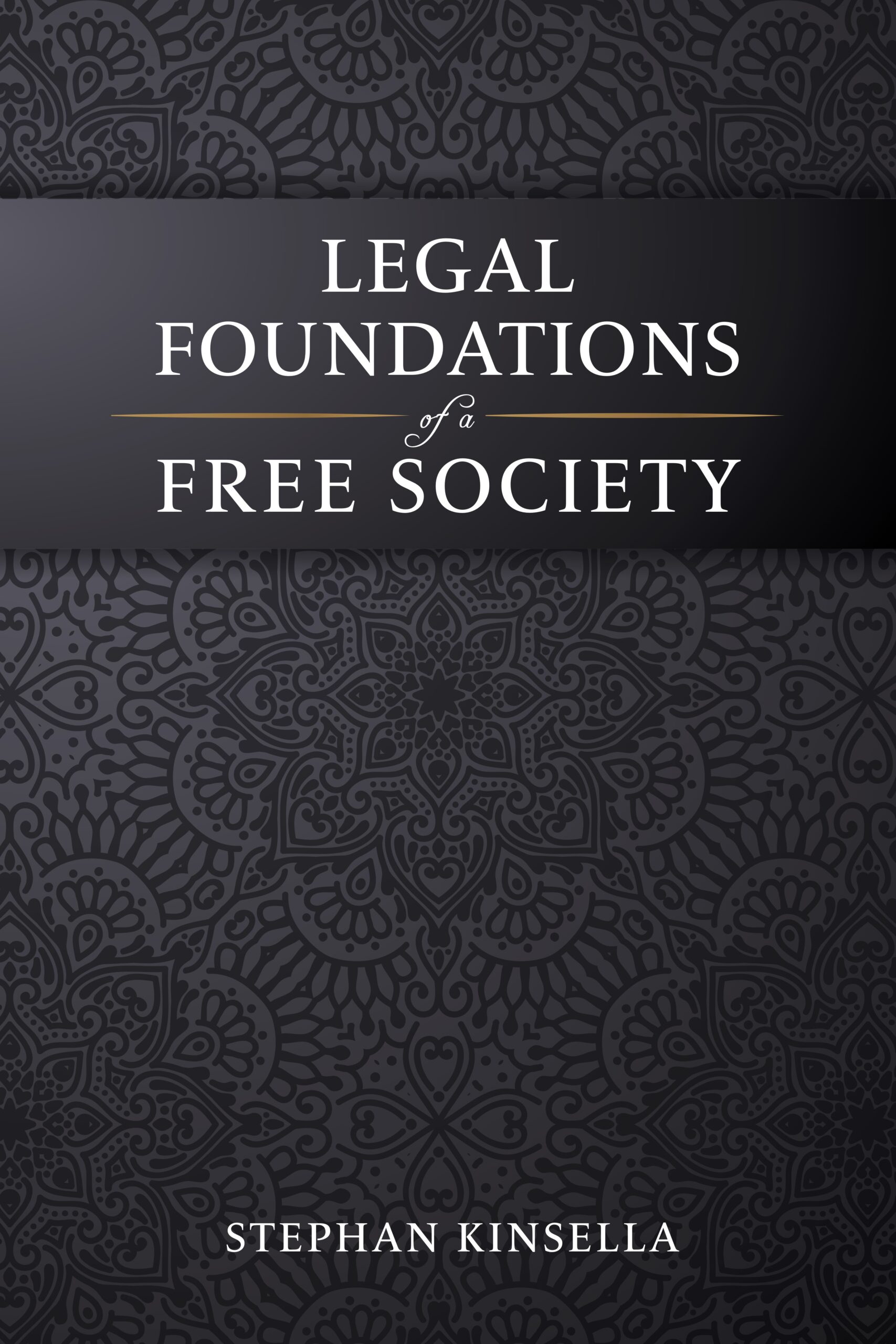
- On jury nullification and the Fully-Informed Jury Amendment, or FIJA, see: Stephan Kinsella, “Legislation and the Discovery of Law in a Free Society,” Legal Foundations of a Free Society (Houston, Texas: Papinian Press, 2023), n. 139
- Don Doig, “New Hope for Freedom: Fully Informed Juries” (pdf), pamphlet published by the International Society for International Liberty
- Comment, “The Changing Role of the Jury in the Nineteenth Century,” Yale L.J. 74 (1964): 170–92 (2)
- Lysander Spooner, “An Essay on Trial by Jury,” in The Lysander Spooner Reader (San Francisco: Fox & Wilkes, 1992; version available online at http://www.lysanderspooner.org/works), at 122
- FIJA-and-Militia-Nut-material (StephanKinsella.com)
- Fun fact: I was raised on Penn Blvd. in Prairieville, Louisiana, and lived in Pennsylvania for a while. Coincidence? I think not!
The Jury’s Ancient Power: Why Every Englishman Should Know About Jury Nullification
Reginald Godwyn • July 29, 2026
This article is concerned exclusively with the constitutional history and legal status of trial by jury in England and Wales. It is not intended to influence the outcome of any criminal proceedings currently before the courts, nor to encourage any juror in any pending case to reach a verdict other than in accordance with his oath and his own conscientious assessment of the evidence. The discussion is directed solely to matters of constitutional principle and to the proper scope of public debate concerning the future of jury trial.
 There are few institutions in England older than trial by jury. There are fewer still that continue to exercise a genuine restraint on the power of the State. Parliament may pass whatever laws it pleases. Governments may prosecute whom they choose. Judges may explain the law in whatever terms they consider correct. Yet in every Crown Court where a jury is empanelled, twelve ordinary citizens retain the power to refuse conviction—even where the evidence appears overwhelming and the judge has directed that the law points only one way.
This is not a loophole. It is not an accident. It is one of the oldest liberties possessed by Englishmen. Yet those who possess this power are almost never told they have it. The legal system goes to considerable lengths to ensure they remain ignorant. Judges do not explain it. Barristers are forbidden to mention it. Jurors are repeatedly instructed that they must decide according to the evidence and according to the judge’s directions on the law. Strictly speaking, that is how every conscientious jury ought to approach its task. Equally true, however, is that no judge may compel obedience and no court may punish disagreement. No authority may enquire why a jury has returned a verdict of Not Guilty.
The constitutional position is therefore curious. Every jury possesses an ancient power whose existence the legal system acknowledges while doing almost everything possible to ensure that the people entrusted with it never become consciously aware of it.
This state of affairs cannot be defended. Constitutional rights survive only so long as ordinary people understand them well enough to exercise them. Magna Carta mattered because generations of Englishmen knew what it stood for. Habeas corpus survived because lawyers and judges insisted on it through successive political crises. Trial by jury has endured for eight centuries because each generation accepted that the conscience of ordinary citizens should stand between the accused and the State. A right concealed from those who possess it is a right already half surrendered.
Trial by jury did not arise because medieval lawyers thought it the most efficient method of resolving disputed facts. Efficiency has never been the guiding principle of the English constitution. If it had been, kings would long ago have abolished juries altogether and entrusted criminal justice to professional judges acting under royal authority. England chose another path because Englishmen developed an instinctive distrust of concentrated power. Clause 39 of Magna Carta declared that no free man should be imprisoned or otherwise punished except by the lawful judgment of his equals or by the law of the land. Whatever the precise meaning of those words in 1215, for centuries afterwards they were understood as recognising that the Crown could not become judge in its own cause. A prosecution became not an administrative process but a contest in which the Government had to persuade ordinary members of the community that punishment was justified. The jury represented society sitting in judgment on the accusations of the Crown. The State could prosecute. It could not convict.
Governments naturally regard prosecutions as evidence of criminality. Police officers, prosecutors and judges necessarily spend their professional lives examining criminal conduct and develop habits of mind that differ from those of ordinary citizens. The genius of the English jury was to introduce an independent body of laymen who had no institutional interest in conviction. They were not paid according to the number of guilty verdicts returned. They sought no promotion within the judicial hierarchy. They answered to no ministers. Their temporary independence was their greatest constitutional virtue.
The constitutional settlement might nevertheless have failed had judges retained the power to punish juries for returning verdicts they disliked. That issue came to a head in September 1670. William Penn and William Mead, both Quakers, were prosecuted under the Conventicle Act for preaching outside the established Church. The facts were not substantially disputed. The legal question was whether the gathering amounted to the unlawful assembly alleged by the prosecution. The jury refused to convict.
The Recorder of London, Sir John Howell, reacted with fury. The jurors were imprisoned overnight without food, water or fire and told they would remain imprisoned until they delivered the verdict the court required. When they again refused, they were fined and committed to Newgate until payment. One juror, Edward Bushell, refused to submit.
His appeal reached the Court of Common Pleas before Chief Justice Sir John Vaughan. In the judgment now known as Bushell’s Case (1670), Vaughan held that jurors could not be punished for the verdicts they returned. They exercised an independent judicial function. If judges could imprison jurors merely because they disagreed with the verdict, trial by jury would become a meaningless ceremony.
The decision established more than a technical rule of criminal procedure. It affirmed that the final decision on criminal guilt belongs to the jury alone. More than three and a half centuries later that principle has never been overturned. A commemorative plaque within the Old Bailey expressly acknowledges that Bushell’s Case established the right of juries to return verdicts according to their convictions.
The modern legal profession prefers not to describe the position so plainly. Students are taught that judges decide the law while juries determine disputed facts. That description is useful so far as it goes. It is not the whole truth. The House of Lords reaffirmed in R v Wang [2005] UKHL 9 that there are no circumstances in which a judge is entitled to direct a jury to return a verdict of guilty. However overwhelming the evidence may appear, the verdict remains entirely the jury’s. The judge may direct an acquittal where the prosecution has failed to establish any case. He possesses no corresponding authority to compel conviction. Why not? Because the jury remains constitutionally independent.
Here the legal profession becomes uncomfortable. Barristers are forbidden from telling juries that they possess this ancient constitutional authority. Judges never mention it in their summings-up. When members of the public have displayed notices outside court buildings informing jurors of their right to acquit according to conscience, the authorities have occasionally attempted to prosecute them for contempt—though with increasingly limited success, as the High Court confirmed in HM Solicitor General v Warner [2024] EWHC 918 (KB).
If jury independence is indeed part of our constitution, why should the people entrusted with exercising it be kept in ignorance? Knowledge changes behaviour. A juror who understands that he possesses the final constitutional authority is less likely to regard himself as merely assisting the judge. He begins instead to understand that the judge is assisting him.
If the criminal law had remained substantially what it was until the twentieth century, the question of jury independence might today be little more than an interesting constitutional curiosity. For most of our history, Parliament confined itself to criminalising conduct that almost everyone recognised as criminal—murder, robbery, burglary, rape, fraud and violence. Under those circumstances, the constitutional function of the jury was exercised with restraint. I say with restraint. A point worth emphasising is that, until Peel’s humanising of the penal code in 1824, Juries were expected to use their right to acquit, or to undervalue property, into order to save petty criminals from the gallows who did not deserve to hang. But my point stands. Though the severity of punishment was often disputed, and called on to be disputed, there were few criminal laws that shocked the conscience of the community.
Modern government has fundamentally altered that relationship. The criminal law now extends far beyond the traditional protection of life and property. Parliament has created thousands of statutory offences, many of them regulatory rather than inherently criminal. Others concern speech, public order, protest, environmental regulation, licensing, financial reporting and an ever-expanding range of administrative obligations. Many require no dishonest intention and no violence.
When governments begin using the criminal law to enforce disputed political or administrative objectives, ordinary citizens may conclude that prosecution itself has become unreasonable. They may believe that the defendant has technically broken the law while nevertheless deserving acquittal. Whether they are right or wrong is beside the point. The essential constitutional question is whether they possess the authority to reach that conclusion. The answer given by the English constitution has always been yes. A jury cannot repeal an Act of Parliament. It cannot prevent future prosecutions. It cannot bind another jury. Its decision applies only to the particular defendant before it. It merely refuses to allow the coercive power of the State to be exercised in one individual case. That is a different—and more modest—proposition.
No legal system can long survive without public confidence. The jury contributes directly to maintaining that confidence. When ordinary citizens participate in criminal justice, they bring into the courtroom the moral assumptions of the society from which they come. Where those assumptions diverge sharply from legislation, acquittal signals that the distance between the law and public opinion has become dangerously wide.
Governments naturally dislike receiving such signals. Officials tend to assume that criticism demonstrates misunderstanding. From the standpoint of efficient administration, the uncertainty introduced by an independent jury is inconvenient. From the standpoint of constitutional liberty, it is indispensable.
Every juror who takes his place in a Crown Court is required to swear or affirm that he will “faithfully try the defendant and give a true verdict according to the evidence.” There is nothing objectionable in this oath. Evidence should be heard carefully. Witnesses should be judged fairly. Sympathy, prejudice and idle speculation should play no part in deliberation. After the oath has been administered, the jurors are carefully instructed in what they must do. They are told that the judge will explain the law and that they must apply that law to the evidence they have heard. They are repeatedly reminded that they are judges of fact, not judges of law.
What they are not told is equally striking. No one explains that if they unanimously refuse to convict, their decision is final. No one explains that the judge possesses no authority whatever to substitute a guilty verdict. No one explains that they cannot be questioned about their reasoning or punished for the conclusion they reach. Above all, no one explains why this constitutional arrangement exists. The omission is not accidental. Every criminal practitioner understands that counsel may not invite jurors to acquit because the law itself is unjust or because its application would produce an unjust result. The existence of that independence is quietly acknowledged by everyone professionally concerned with the administration of justice, while the people temporarily entrusted with exercising it are expected to remain unaware of its constitutional significance.
It would be wrong to accuse judges of deception. They faithfully state the ordinary duties resting on jurors. The difficulty is that the ordinary duties of a juror are not the whole of his constitutional position. Ordinarily, a jury should follow the evidence and the law. Exceptional circumstances, however, are why constitutional safeguards exist. It is impossible to explain the history of trial by jury without recognising that the jury retains the ultimate responsibility for deciding whether the State shall be permitted to punish a particular citizen. That responsibility necessarily includes the possibility of refusing permission.
The constitution has never asserted that conscience should routinely override law. It has asserted something subtler and much wiser: that no government should ever possess an entirely unchecked power to imprison its subjects. The jury exists not because ordinary citizens invariably exercise better judgment than professional judges, but because no professional class, however enlightened, ought to possess the final word whenever the liberty of another human being is at stake.
That proposition has become more rather than less important as the powers of the modern State have expanded. The danger feared by our ancestors was arbitrary royal government. The danger we face is arbitrary managerial government. Both possess the same natural inclination to enlarge their own powers. Both regard institutional resistance as unnecessary friction. Both prefer predictable obedience to independent judgment. It is no surprise, therefore, that the jury should increasingly appear an inconvenient relic.
It is often said that jury nullification is a “right.” That description is convenient. It is also incomplete. Rights generally belong to the person protected by them. The independence of the jury belongs to no individual defendant. It belongs to the constitution itself.
Most citizens summoned for jury service regard it as an inconvenience. Once sworn, they naturally assume that their function is to assist the judge in reaching the legally correct conclusion. The visual symbolism of the modern courtroom encourages that assumption. The judge occupies the highest seat. Counsel address him with elaborate courtesy. The jurors sit silently at one side.
The visual symbolism is powerful. It is also constitutionally misleading. The judge is not the superior of the jury. Neither is the jury subordinate to the judge. They are separate constitutional authorities whose concurrence is required before the liberty of an Englishman may lawfully be taken away. The judge determines the law. The jury determines whether the State has established a case deserving conviction. Neither function is complete without the other. This is why no judge may ever direct a guilty verdict. It is not because jurors possess greater legal learning than judges. It is because Parliament has never entrusted judges alone with the final responsibility for criminal conviction. That responsibility remains divided.
No constitutional safeguard exists for ordinary cases. Ordinary cases require none. They exist for exceptional cases—where official enthusiasm outruns justice, where legislation extends beyond common morality, where political passions infect prosecution, or where punishment, though legally authorised, strikes ordinary citizens as oppressive or absurd.
Our history provides abundant examples: religious dissenters prosecuted for unlawful worship; political reformers prosecuted for sedition; trade unionists prosecuted under laws now forgotten; publishers prosecuted for opinions later regarded as commonplace. Each generation confidently assures itself that such abuses belong safely in the past. Each generation is eventually surprised to discover that governments remain governments and that official confidence in the wisdom of official decisions has not noticeably diminished. Against the immense concentration of modern administrative authority, the independent jury remains almost unique. Its members arrive as private citizens. They deliberate in secret. They answer to no minister. Their verdict cannot be revised because it displeases the Government.
Nor should this independence be exercised timidly. There exists an unfortunate tendency to describe acquittals contrary to judicial expectation as constitutional safety valves that ought to be used only in the rarest imaginable circumstances. This reverses the constitutional position. The jury should not seek opportunities to frustrate the law. It should approach every case with scrupulous fairness and close attention to the evidence. That is what its oath requires. But when, having discharged those duties honestly, twelve citizens conclude that conviction would itself be unjust, the constitution expects courage rather than submission.
The question is not whether the judge would convict. The question is whether justice requires conviction. If the honest answer is no, acquittal becomes not an abuse of constitutional power but its proper exercise. Were Parliament to intend judges always to have the final word, there would be no constitutional purpose in maintaining juries at all. We could safely imitate those continental systems in which professional judges determine both law and fact. Trials would become shorter. Public expenditure would fall. Conviction rates would become more predictable. Ministers would undoubtedly congratulate themselves on increased efficiency. They would also have removed one of the oldest restraints on governmental power known to English constitutional history.
This brings us to the present. The Government has already announced its intention to curtail trial by jury for large categories of criminal cases. The justification is administrative convenience. Crown Court backlogs are intolerable. Jury trials consume time and money. Professional judges, we are assured, can perform the task more efficiently. Perhaps they can. The argument misses the point. Trial by jury was never designed to maximise administrative efficiency. It was designed to restrain administrative power. Judged by the standards of bureaucracy, it will always appear defective. It is slower than official decision-making because liberty takes time. It is less predictable because free citizens cannot be managed like civil servants. It occasionally produces acquittals that ministers dislike because constitutional safeguards exist to frustrate governments when governments deserve frustration.
This is why every Englishman ought to understand the true nature of jury service before the opportunity disappears. He should know that he is not merely deciding facts. He should know that he occupies, for a few days, one of the oldest constitutional offices in England. He should know that neither judge nor minister possesses authority to dictate his verdict. Above all, he should know why this responsibility has been entrusted to him. It is not because the State trusts him. It is because the English constitution has never trusted the State. That, ultimately, is the lesson of Bushell’s Case. It is also the lesson of eight centuries of English constitutional development. Governments come and go. Statutes multiply. Bureaucracies expand. Ministers assure us that every increase in official power is necessary and exercised only for the public good. The jury stands outside that perpetual argument. It asks only one question. Has the Government persuaded twelve independent citizens that it ought to punish this fellow Englishman? If the answer is yes, the law takes its course. If the answer is no, the prosecution ends there.
So it has been since the seventeenth century. So it ought to remain—unless and until the authorities finally succeed in abolishing the jury altogether. When that day comes, England will lose not merely an ancient legal procedure, but one of the last practical reminders that, in a free country, justice is not something governments administer to the people. It is something that the people, through the jury, administer to their governments.
Discover more from The Property and Freedom Society
Subscribe to get the latest posts sent to your email.















 Alessandro Fusillo
 Andreas Tögel
 David Dürr
 Doug French
 Fernando Chiocca
 Greg Morin
 Hans-Hermann Hoppe
 Jay Baykal
 Jayant Bhandari
 Jeff Deist
 Jeffrey Barr
 Juan Fernando Carpio
 Ken Yamarashi
 León Isidoro
 Martin Cabrera
 Nick Hoppe
 Oscar Grau
 Peter Wong
 PFS
PFS scholarium
 Saifedean Ammous
 Sean Gabb
 Sean Ring
 Stephan Kinsella
 Stéphane Geyres
 Thomas Jacob
 Tom DiLorenzo