Patrick McGuinness, the author of a recent draft paper, “The Zero–Equity Identity: Monetary Claims, Settlement, and Equity,” Zenodo (preprint/draft, Oct. 4, 2026, Version 1.0.1) sent the link to Dr. Hoppe, given some recent video clips where Hans, discussing the issue of printing money and wealth, asked the elementary question “please explain how pieces of paper make society richer.”
I confess when I see equations in such a paper and casual assertions like money or “financial equity” is a “net claim for resources,” red flags go off. I have not had time to pore through it but had Grok analyze it in view of some of Hoppe’s writing on economics and my comments on distinctions between economic/descriptive and legal phenomenon as well as between the Rothbardian title-transfer view of contracts as opposed to the conventional (and Reinachian) view of such rights as obligations and promises.
Prompt
Summarize https://zenodo.org/records/23130507. Is this compatible with Hoppe’s view of economics? Is it sound? Does it break any new ground? How would Hoppe view this? Does it make sense to say money is a “claim” on resources? Doesn’t this conflate the economic with the legal? Doesn’t he seem unaware of the problems with promise as contract?
Consult the attached files and the following sources:
- Areas That Need Development from Libertarian Thinkers (section on juristic-economic distinction)
- KOL418 | Corporations, Limited Liability, and the Title Transfer Theory of Contract, with Jeff Barr: Part II
- KOL414 | Corporations, Limited Liability, and the Title Transfer Theory of Contract, with Jeff Barr: Part I
- Disentangling Legal and Economic Concepts
- British Proposal for Banking Reform: Fractional Reserve Banking Versus Deposits and Loans
- Fractional-Reserve Banking, Contracts of Deposit, and the Title-Transfer Theory of Contract
- My Comments on Steve Horwitz’s Mises and His Apparent Call for 100% Reserves
- Musings on Fractional Reserve Banking in a Bitcoin Age: Physicalist Metaphors
- On Coinbase, Bitcoin, Fractional-Reserve Banking, and Irregular Deposits
Full Citations of Sources (Titles Hyperlinked)
Primary Paper
- McGuinness, Patrick. “The Zero–Equity Identity: Monetary Claims, Settlement, and Equity.” Zenodo, October 4, 2026. Version 1.0.1. DOI: 10.5281/zenodo.23130507. PDF: zero-equity-identity-v1.0.1.pdf.
Attached Files
- Kinsella, Stephan. Legal Foundations of a Free Society. Houston, Texas: Papinian Press, 2023
- Kinsella, Stephan. “The Title-Transfer Theory of Contract.” Papinian Press Occasional Paper, No. 1, December 20, 2024. Version 1.13
- Hoppe, Hans-Hermann. A Theory of Socialism and Capitalism: Economics, Politics, and Ethics. Auburn, Ala.: Ludwig von Mises Institute, 2010
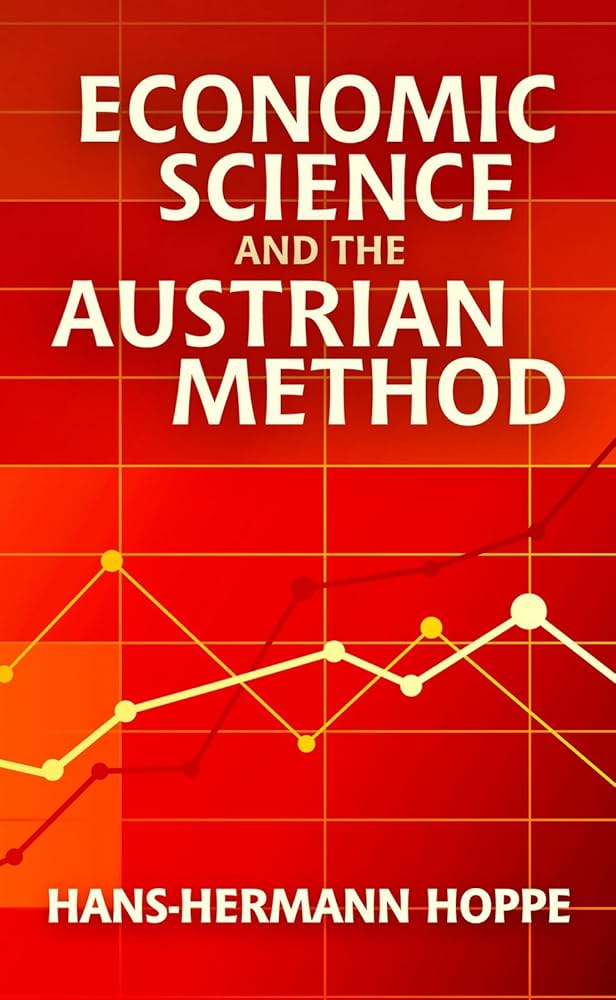
- Hoppe, Hans-Hermann. Economic Science and the Austrian Method. Auburn, Ala.: Ludwig von Mises Institute, 1995 (reprinted 2007)
- Hoppe, Hans-Hermann. The Economics and Ethics of Private Property: Studies in Political Economy and Philosophy. 2nd ed. Auburn, Ala.: Ludwig von Mises Institute, 2006
- Hoppe, Hans-Hermann. The Great Fiction: Property, Economy, Society, and the Politics of Decline. 2nd expanded ed. Auburn, Ala.: Mises Institute, 2021
Online Sources Consulted
- Kinsella, Stephan. “Areas That Need Development from Libertarian Thinkers.” StephanKinsella.com, January 2022. (Section on the juristic-economic distinction.)
- Kinsella, Stephan. “KOL418 | Corporations, Limited Liability, and the Title Transfer Theory of Contract, with Jeff Barr: Part II.”
- Kinsella, Stephan. “KOL414 | Corporations, Limited Liability, and the Title Transfer Theory of Contract, with Jeff Barr: Part I.”
- Kinsella, Stephan. “Disentangling Legal and Economic Concepts.” StephanKinsella.com, August 2025
- Kinsella, Stephan. “British Proposal for Banking Reform: Fractional Reserve Banking Versus Deposits and Loans.” StephanKinsella.com, September 2010.
- Kinsella, Stephan. “Fractional-Reserve Banking, Contracts of Deposit, and the Title-Transfer Theory of Contract.” StephanKinsella.com, August 2009.
- Kinsella, Stephan. “My Comments on Steve Horwitz’s Mises and His Apparent Call for 100% Reserves.” StephanKinsella.com, September 2009.
- Kinsella, Stephan. “Musings on Fractional Reserve Banking in a Bitcoin Age: Physicalist Metaphors.” StephanKinsella.com, May 2023.
- Kinsella, Stephan. “On Coinbase, Bitcoin, Fractional-Reserve Banking, and Irregular Deposits.” StephanKinsella.com, July 2022.
Grok answer
The paper is “The Zero–Equity Identity: Monetary Claims, Settlement, and Equity” by Patrick McGuinness (Zenodo record 23130507, version 1.0.1, published ~October 4, 2026; earlier circulating versions under titles such as “All the Money in the World Is Worthless” or “The Zero-Equity Constraint in Monetary Systems”).
Core Thesis (Summary)
Financial assets constitute wealth for their individual holders, but not net wealth for the economy as a whole. McGuinness defines “true financial equity” as a net claim for resources: the position implied by underlying relational claims and their correlative obligations. Drawing on Adolf Reinach’s analysis of claims and obligations, he treats a monetary claim as one pole of a relation that carries a correlative obligation to supply real resources (goods, labor, services, use of natural resources).
The Monetary Authority (MA) plays an administrative role but is not an economic agent within the relevant domain and does not bear the correlative obligation. Monetary claims and their obligations are therefore held and borne within the economic domain of private agents. Consequently, aggregate true financial equity over that domain has no degree of freedom and is identically zero:
This is a structural (not empirical) identity. Individual equity positions may be unknown, imperfectly measured, or represented differently under various accounting conventions, but their aggregate is fixed by the relational structure. Balance-sheet equity must be distinguished from this true financial equity: accounting may accurately reflect a chosen convention without explicitly attributing the correlative obligations implied by monetary claims.
The result is presented as clarifying the nature of financial wealth and supplying a settlement-layer constraint on monetary analysis that is invariant to institutional form and accounting representation. Earlier versions emphasize fiat (state- or bank-issued) as a transferable “claim for value against society,” with taxation functioning as a mechanism of real settlement/redemption, and a decomposition of positions into equity (net nominal claim) and credit (capacity to issue/expand claims).
Compatibility with Hoppe’s View of Economics
It is only partially and superficially compatible, and fundamentally at odds with Hoppe’s (and the broader Misesian/Rothbardian) monetary theory.
Hoppe’s “How Is Fiat Money Possible?—or, The Devolution of Money and Credit” (and related discussions in works such as The Economics and Ethics of Private Property) treats money as a medium of exchange that must originate as a commodity (or title thereto) via the Mengerian process, driven by uncertainty and marketability. Commodity money is either a commercial good or a claim/title to one. Fiat money is irredeemable paper that is neither a commodity nor a title to one—“titles to nothing.” It cannot arise innocently from voluntary interaction; it requires state monopoly, progressive degeneration of commodity standards (or fiduciary media), and is accompanied by inflationary redistribution, business-cycle distortion, and exploitation. Fiat’s residual purchasing power is parasitic on prior commodity standards and maintained by state force (including the tax system as a coercive demand driver), not by any genuine “claim against society.”
McGuinness’s ontology of money as an inherent claim for real resources, with the zero-equity identity as the structural core, is closer to credit or chartalist theories of money. Hoppe rejects this: the economic essence of money is its medium-of-exchange function rooted in prior commodity value, not a relational claim/obligation structure. Aggregate zero net financial claims is an accounting identity that is true but economically unilluminating for value, purchasing power, inflation, or the origin and instability of fiat. Hoppe’s praxeological approach prioritizes catallactic (economic) categories of possession, control, exchange, and calculation over juridical claim structures.
Soundness
The zero-sum aggregate for pure financial claims/obligations is sound as an accounting identity: in a closed system, every financial asset is someone’s liability. Excluding the MA is reasonable for irredeemable fiat (the issuer does not face a real redemption obligation in the same way a warehouse or 100% reserve bank would). Distinguishing true net claims from balance-sheet representations is a useful caution against confusing accounting conventions with economic reality.
However, the ontological claim that money is a claim for resources, and that taxation is the essential settlement/redemption mechanism, is not sound as economic theory. Money confers general purchasing power in voluntary exchange; it is not a specific juridical claim against identifiable obligors or “society.” Commodity money is itself a resource; fiduciary media are claims on the issuer; pure fiat is neither. Treating it as an entitlement to real resources confuses the economic fact of command over goods (via market prices and demand) with a legal right. The framework does not explain the origin of money’s value, the regression theorem, the impossibility of calculation under pure fiat without residual commodity anchors, or the dynamics of inflation and cycles. It is a re-description of sectoral-balance identities (familiar in Godley-style or MMT-adjacent accounting) with a phenomenological overlay, not a contribution to monetary economics proper.
New Ground?
No significant new ground. Net financial assets summing to zero (or private net financial assets equaling public deficits, etc.) is a standard accounting result. Framing it in terms of Reinachian claims/obligations and “true financial equity,” plus the explicit exclusion of the MA, is a distinctive philosophical packaging, but it does not advance the economic analysis of money’s origin, value, or effects beyond what Austrians, quantity theorists, or accounting identities already provide. Earlier versions’ slogan that “all the money in the world is worthless” (in the aggregate) is true but trivial once one distinguishes individual purchasing power from net social wealth.
How Hoppe Would Likely View It
Critically, as an instance of conflating economic and legal/juridical categories and of treating fiat as a coherent claim rather than a debased residual. Hoppe insists on precise distinctions (commodity vs. fiat, title vs. non-title, economic possession vs. legal ownership). He would see the “claim against society” language as vague, positive-law-tinged, and insufficiently attentive to the coercive origins and redistributive effects of fiat. The zero-equity identity does not address the economic problems he emphasizes: the impossibility of innocent fiat, the distortion of time preference and calculation under fiduciary expansion, or the state’s interest in monopolizing and debasing the money stock. Any compatibility is limited to the shared recognition that pure fiat is not a net real asset for the community.
Money as a “Claim” on Resources, and the Economic/Legal Conflation
It does not make clean sense to say money is a “claim” on resources in the sense McGuinness intends. Money gives its holder the ability to bid for resources in exchange; that is an economic fact of purchasing power, not a correlative legal obligation borne by specific parties or by society as a whole. Calling it a claim imports juridical language into an economic phenomenon.
This is precisely the conflation Kinsella has repeatedly flagged as needing careful delineation in libertarian theory (see his discussions of juristic vs. economic realms, Mises’s distinction between catallactic/sociological “ownership” as control/possession and juristic ownership as a normative right, and Böhm-Bawerk on legal rights as economic goods only insofar as they secure physical control). Contract law, in the title-transfer theory (TTTC) developed by Evers, Rothbard, and Kinsella, is the normative support for the economic institution of exchange: contracts rearrange titles to existing resources rather than creating binding promissory obligations. Obligations “to do” reduce in practice to conditional title transfers (performance bonds, damages); there is no specific performance of personal services, and pure promises are not enforceable as such.
McGuinness’s reliance on Reinachian claims and correlative obligations, without engagement with these issues, treats monetary “claims” as if they were straightforward binding legal relations. He appears unaware of (or uninterested in) the problems with promise-based theories of contract that the TTTC addresses, and of the related analysis of deposits vs. loans in fractional-reserve banking (where title actually transfers in a loan/mutuum, versus a true deposit in which the depositor retains title). The paper’s framework therefore mixes economic accounting identities with unexamined legal-relational assumptions. This is the opposite of the disentangling of legal and economic concepts that Kinsella argues is still needed.
Discover more from The Property and Freedom Society
Subscribe to get the latest posts sent to your email.



















 Alessandro Fusillo
 Andreas Tögel
 David Dürr
 Doug French
 Fernando Chiocca
 Greg Morin
 Hans-Hermann Hoppe
 Jay Baykal
 Jayant Bhandari
 Jeff Deist
 Jeffrey Barr
 Juan Fernando Carpio
 Ken Yamarashi
 León Isidoro
 Martin Cabrera
 Nick Hoppe
 Oscar Grau
 Peter Wong
 PFS
PFS scholarium
 Saifedean Ammous
 Sean Gabb
 Sean Ring
 Stephan Kinsella
 Stéphane Geyres
 Thomas Jacob
 Tom DiLorenzo