From Projeto Liberin — @projetoliberin; https://www.youtube.com/@a-liberin; https://www.facebook.com/estudio92fm; Live on Rádio Estúdio 92.3 FM Cascavel (program Independência). An interview of António Xavier, one of the organizers of Rothbard 100 there, by: Emerson Bitencourt, Host, TERÇA LIBERTÁRIA on Liberin; Osmar Junior — interviewer; Priscila “Pria” Merisio (aka “Priscila do Liberin”), co-host/interviewer. The transcript below probably has some names wrong.
Re:
- Kinsella, Rothbard Takes Portugal: 100 Years with Rothbard: A Personal Account
- 100 Years with Rothbard (Porto, Portugal, June 27, 2026)
English transcript and summary below. And a bonus video:
Summary
One-Paragraph Summary In this episode of Terça Libertária on Rádio Estúdio 92.3 FM (Liberin), host Emerson welcomed Priscila Merisio (who had just returned from Portugal) and António Xavier, one of the main organizers of the Rothbard 100 libertarian event held in Porto on June 27, 2026. They discussed the event’s resounding success — exceeding 400 attendees from many countries — its excellent organization, international networking, book launches (including works by Stephan Kinsella and Hans-Hermann Hoppe), and standout lectures. Priscila highlighted the warm reception, cultural exchanges, and details like gifts and cigars, while António emphasized the standing ovation for Hoppe and Kinsella, the broad range of topics (property, Bitcoin, state intervention in art, history, etc.), and the importance of both external pressure and internal work within politics to advance liberty. The conversation also touched on Brazilian politics, the role of libertarians in elections, competition against the state, and future collaborations, ending with mutual appreciation and reflections on liberty in Brazil and Portugal.
Detailed Summary The discussion begins with technical checks and introductions. Priscila, fresh from Portugal, shares her positive experience representing Liberin and the radio at the event. She describes the packed auditorium, the international crowd (Turks, Norwegians, French, Italians, Americans, Spaniards, Portuguese, and Brazilians), the linguistic chaos in English, and the meticulous care taken by organizers Manuel and António with speakers, audience, and media guests. She notes new friendships, fun moments, and souvenirs, then invites António to summarize the lectures and highlights.
António thanks the Brazilian support and recounts how the event far surpassed expectations (aiming for 150, reaching over 400). He praises the program for foreign guests, the standing ovation for Hoppe and Kinsella as the emotional peak, and the diversity of topics: currency/Bitcoin, art and state intervention, property rights (including a notable talk on the Israel-Palestine conflict through a property lens), free markets, competition, justice, and historical revisionism (especially family stories from defeated perspectives). He highlights excellent Brazilian contributions, such as Panaríba’s question about Rothbard’s legacy and Chiocca’s strong critique of state power.
Priscila then asks about libertarian strategy in party politics amid Brazil’s election year. António, drawing on Rothbard, outlines a dual approach: long-term goal of ending the state as a conditioner of life, and short-term efforts to reduce state power by introducing libertarian values from within (e.g., via candidates like Paulo Kogos) while maintaining external criticism and education to foster public understanding of monopoly inefficiencies. He stresses promoting competition (e.g., private education vs. state) to make the state both more efficient and weaker.
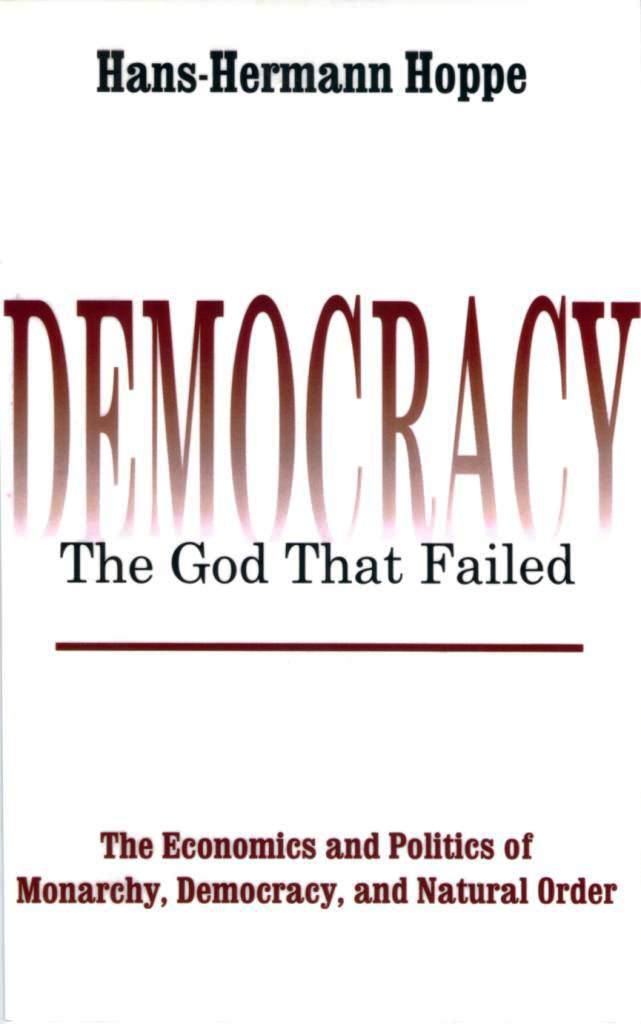
Priscila discusses positive outcomes like increased visibility for Liberin and the radio, plans for English subtitles on future episodes to reach European and American audiences, and book launches at the event (Rothbard at 100 anthology, works by Adriano Paranaíba, Sérgio Albiac, Democracy: The God That Failed, and Kinsella’s Legal Foundations of a Free Society). She details thoughtful touches like World Cup stickers featuring libertarians, chocolates, and cigars.
António offers full uncut recordings of lectures for Liberin and the radio to broadcast exclusively in Brazil. He also recounts organizational challenges in Portugal (state skepticism and monitoring) and praises Priscila’s help in keeping the event peaceful. The conversation closes with mutual thanks, reflections on shared Brazilian-Portuguese cultural ties (including football), critiques of political mismanagement and nepotism in both countries, and optimism for future libertarian collaboration and events in Brazil. The hosts note the engaging discussion flew by and plan continued coverage.
Transcript (Grok)
[Forgive errors; I made some assumptions. —SK]
Translation of the Transcript: Rothbard 100 Event in Porto, Portugal (Libertarian Conference)
Introduction and Technical Setup
0:00
Host: Well, friends, we will return to this topic shortly. Why? Because we already have our noble libertarian partners here.
0:09
Priscila, can you hear us well? Good morning.
0:12
Priscila: I can hear you very well. Can you hear me well now?
0:15
Host: OK. Everything’s fine. Now the contact with Priscila, who is in Curitiba, has just returned from Portugal. And we are also with Portugal there, right? We have with us António Xavier, one of the organizers of Rothbard 100 there. Xavier, can you hear us well? Good morning.
0:32
António Xavier: Hello, good morning. I can hear perfectly well.
0:36
Here we are again to talk about our event with Priscila, who was an exceptional companion in the struggle. First of all, here where I am, there is a construction site and from time to time the machines start working. I hope there is no coincidence that it will disturb the sound, but anyway, this is already the warning and I apologize because I am not the one in charge of the works. OK, we are ready.
Event Overview and Initial Impressions
1:15
Host: OK, very good. Thank you to the guests here for accepting our contact so we can debate a little, get to know a little more about everything, learn a little more about everything that happened on June 27 in Portugal. So, Priscila, please, you are invited from now on to tell us, together with António, about everything that happened there in Porto. It was in Porto, right? Yes, yes. In Porto. Exactly. So, please, feel free.
1:48
Priscila: Thank you, Emerson. Good morning, Emerson. Good morning, Ismar. Good morning, Gilson. Osmar. Good morning. Ah, I thought I would get it right today. Sorry.
1:59
Host: It’s becoming a characteristic already, right? Priscila confuses Osmar with Ismar.
2:06
Priscila: Sorry, okay? Eh, sorry, I’m very bad with names. So, today I am — the audience listening on the radio via radio, not watching us — will not be able to see, but I have a souvenir that I brought from Portugal, with the colors of Portuguese tiles, white and blue, very pretty, a pashmina here, because you have to bring souvenirs from Portugal, right, but mainly the memories are in the heart.
It was wonderful to be there representing Liberin and radio 92.3 FM. I also confess to you that besides a lot of work, a lot of work, I also had a lot of fun, made new friendships, met António in person, who was a wonderful host. On behalf of the radio, on behalf of Liberin, thank you very much, António, for the reception you gave me. You were a wonderful host, you and your wife Miúcha.
The event was a success, it exceeded expectations, the auditorium was packed. There were participants from various parts of the world in the audience and among the speakers. So, Hoppe came from Turkey, we had Leon from Norway, some friendships I made. We had Norwegians, French, Italians, Americans, Spaniards, besides the Portuguese and Brazilians.
It was crazy, everyone trying to understand each other, various accents speaking in English. My own English was very heavy, that English of someone who is not fluent. And it was delightful, it was really delicious to be in that environment.
The organization was very careful. Manuel and António thought of every detail of the event. It was beautiful to be there and see this in person, you know? Emerson, Osmars, Gilson, it was beautiful to see this, the care with the speakers, with the public, with me who was from the media, each little gift, you know? It was all very well thought out.
And the lectures, of course, were essential for us in the libertarian milieu. And I would like our guest António to comment a little on the lectures, a synthesis, the speakers, the most striking moments and what are the impressions that remain now in these few days after Rothbard 100.
António Xavier on Event Success and Key Highlights
4:57
António Xavier: OK. First of all, I want to thank the Radio and Priscila for your presence. It was extraordinary to feel that we had the support of Brazil at this event. And for that reason I would like to leave here a word of appreciation, because we felt warmer and happier because of it.
The event was indeed a success in terms of the number of participants. We managed to exceed 400 participants when we started a project that we thought that if there were 150 people there it would be an excellent result. We exceeded 400, we tried to do our best, we tried to accommodate all the people.
We tried to make a program for the invited foreigners, where Pila also had that program during the days before and after to show a little of Portugal and the beauty of Porto. I think we managed that too.
Regarding the event itself, the great idols or the great heroes of the event were not us, nor were they the speakers. They were all the 400 people who were there who gave a standing ovation to Hoppe and Kinsella. And that was extraordinary because without the public everything would be little.
As for the lectures, what can I say? I will say the following, that Rodpar united several valences there that day. We talked about currency, we talked about Bitcoin, we talked about art, we talked about the harm that the State does to art through interventionism and the way it conditions the artist to the will of the State.
We talked about property and the excellent one was Saifedean Ammous, who for the first time someone spoke about the Israeli-Palestinian conflict, not the concept of who is right, which is important, but rather of who owns the property and how if property were respected, probably these conflicts would not have existed.
We talked about competition, we talked about free markets, we talked about freedom, we talked about justice, we talked about the restoration of history, especially Hoppe, when he mentions his family history. Which also, contrary to what we are usually accustomed to, was the voice of a defeated people and which was also in a way conditioned by the victor when the people in no way represented the power that was created in Germany.
And therefore, a lot was talked about here, always related to freedom. It started punctually at 9 in the morning. The event ended almost at 8 at night with extraordinary lectures. The Brazilians were extraordinary. I really liked two interventions in particular.
One was Panaríba’s when he asked a very simple question. If there were no Rodb, what would become of freedom and libertarianism? And the truth is that no one can answer if Rock was that, it was the legacy he left us, it was being able to say that today we are here celebrating and fighting for freedom.
And then also Chiocca, who made a harsh intervention, criticizing the current situation of State power and that is why I will say that Brazil was very well represented by all of them. It was a Brazilian who opened the hosts in the morning and for that reason we gave them that primacy, but we had the pleasure of having the Brazilians with us.
I can also say that we had Brazilians in the audience who were headliners. There was Trajeitão and Paulo Kogos, who today Kogos is also going to be in Lisbon giving a lecture. And so, it was extraordinary. We did not expect such dimension, especially the international dimension.
And for that, thank you very much to all of you, thank you very much to Liberin, thank you very much to radio 92.3. I got it right. And 92.3 FM. Without them and without you we certainly would not have had the success we had.
Political Strategy and Libertarian Action
11:15
Priscila: Professor, thank you António. Ah, no, sorry. You can, you can ask freely. OK. Professor António Xavier, good morning. Good morning, Priscila. Eh, good morning. The state is an idea that libertarianism is against, especially an interventionist state. However, we have in all countries of the world, unfortunately, the state taking over all regions of the entire world.
And in what way, and this year here especially in Brazil, professor, we have an election year. We will define in October who will be our representatives, both in the Legislative Assembly in each state, as well as in the Federal Chamber, in the Federal Senate. We will change our President of the Republic, our governors. And I would like to know what is your idea regarding the dissemination of libertarianism within this structure of party politics?
12:20
António Xavier: Well, I follow RB closely and therefore I will try to make my words the words of RB. In his manifesto and in the political analysis, he divided the issue into two strands, a long-term strand and a short-term strand. The long-term strand is easy to understand, it is the end of the State as an element conditioning people’s lives.
And the short-term one is how the State can reduce its strength, so that in the long term we can have that freedom. And then what a good libertarian should do is try within the State to remove from that same state this condition of monopoly.
What I mean by this is that, for example, a Paulo Kogos who says he is libertarian and is running in São Paulo, he can be a very useful man if when he is there everything that is state before the people, he takes a contrary position and manages to introduce those values within the state itself.
Of course a libertarian knows that it is not enough to have that attitude, because the State itself will not hand over power to anyone. So we will always have to have an external force from those who are claimants, those who can always be criticizing, always disseminating knowledge so that in the future, the long term, the people themselves understand that it is the lack of freedom.
Professor Miguel Aixo Bastos in his intervention at the event spoke clearly about this. We have to understand that the State is a monopoly system, that is, no one can do it, no, no one lets someone do that service for the State, that other things are done. It is a monopoly and like any monopoly, the service is bad. It is bad because there is no competition.
Therefore, we must always be in this position. On one hand, try to make the state change, on the other try to make it understood that only with competition against the State will the State be able to improve. And it is here that we have to act to provide information that, for example, education does not need to be state education. Education can be private education, it can even be the education of the families themselves for their own children.
That is, encourage people to understand that with competition against the State, the State will become more efficient and, at the same time, weaker.
Future Collaboration and Event Souvenirs
16:13
Host: Very good, 9:51 here with us, happening, returning, right, after a brief pause, returning to our Terça Libertária. And today we are here with Priscila, who was there in Porto, together with António Xavier and so many other special guests at this great event on libertarianism. Please continue, Priscila.
16:39
Priscila: Something very positive about Liberin and 92.3 FM going there was the dissemination of libertarian work, not only of Liberin, but also of 92.3. And talking to several speakers and also members of the audience, the spectators of the event, I was able to talk about 92.3.
And from today on, every Terça Libertária will have English subtitles when it goes to the Liberin YouTube channel, because our libertarian friends from Europe, mainly, and also some from the United States, want to have access to the libertarian content of the radio. I already ask the public for patience, because this subtitling process takes a few days, a little longer.
But this interview of ours, this participation of António will already be subtitled, as well as the Minuto Liberirinhos, which I will start producing from now on together with the radio. I will also try to put English subtitles so we can do this international partnership now of 92.3 of Liberin, with these wonderful contacts that António and Manuel, who could not be present today, who is also one of the organizers, were able to provide for us.
So, thank you very much also for this networking, António, and for helping us disseminate our trench work, ant work here in Brazil. I want to highlight that book launches were made during the Rothbard 100 event. So here I don’t know if it will appear backwards on the screen. We arrived, I brought my little souvenir.
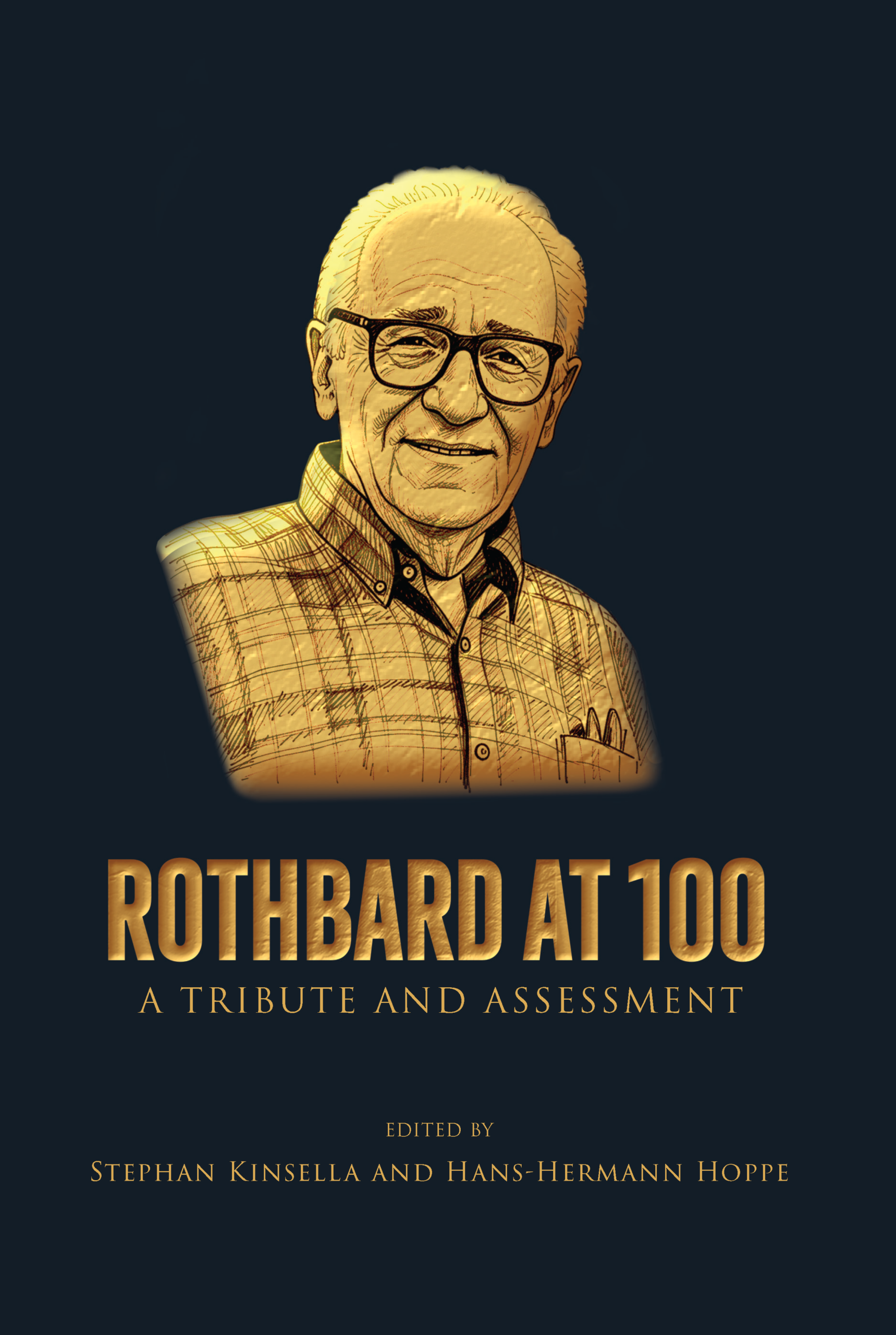
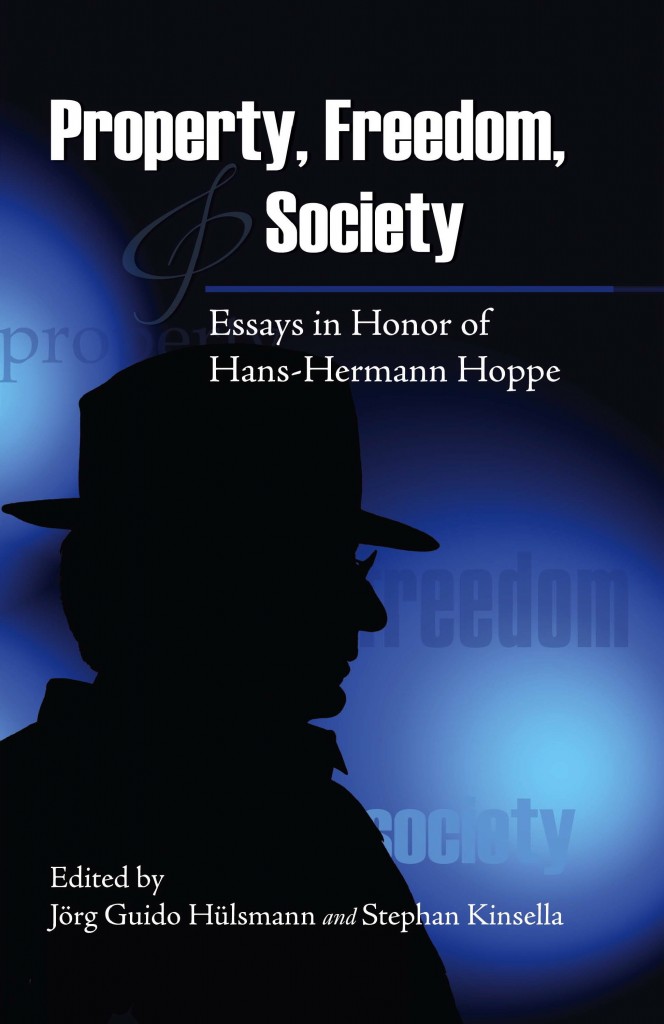
So, the book Rothbard at 100 was launched, which was organized by Stephan Kinsella and Professor Hans-Hermann Hoppe, duly autographed by Pinc and Hoppe, my copy here. So, that book was launched, Adriano Paranaíba’s book was also launched. António mentioned Adriano Paranaíba, he is vice-president of the Mises Brazil Institute and also Sérgio, I never remember his last name, president of Alberic, right? Sérgio Alberic. Sérgio Alberique. The president of the Mises Brazil Institute also spoke at the event, he was there too.
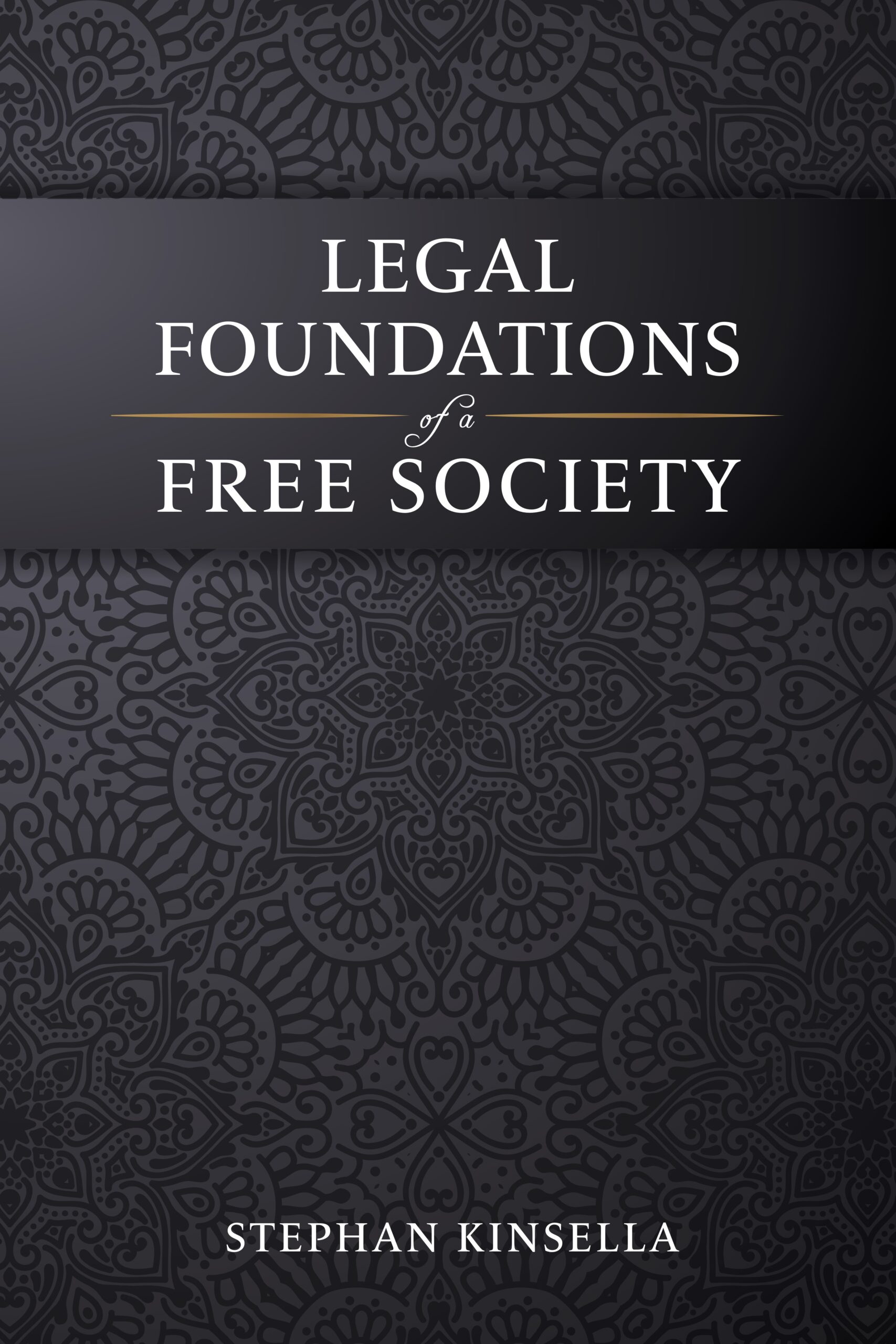
This is Adriano Paranaíba’s book, which is part of the kit. And we also have more books Democracy: The God That Failed, launched in Portuguese from Portugal by the Cataláxia publisher, all by Manuel Ogando’s Cataláxia publisher, who is also president of the Mises Portugal Institute. And the Portuguese version of the Legal Foundations of a Free Society by Professor and lawyer Stephan Kinsella was also launched. All duly autographed and there were several gifts.
The event had cigars from Murray Rothbard, because people smoke a lot in Europe, it’s a difference, right? People smoke a lot, but the cigarette there is better. Even the cigarette is better than in Brazil. Even the smell is better, people, incredibly. No, there isn’t that stench here from Brazilian cigarettes. They launched World Cup stickers, several World Cup stickers. So, this is the Mises. They launched World Cup stickers with Stephan Kinsella.
It was details. They were extremely careful. I think Emerson would love to see these details. Emerson is good-humored, fun, he would like it. Look, Professor Miguel Ancho Bastos on the World Cup sticker. So, several other libertarians here as stickers. There were also little chocolates from Murray Rothbard, little chocolates distributed along with the cigar, every detail, you know? It really was an event from the intellectual stuffing to the little gifts, to the published books.
I myself also came back with a book from Cataláxia which is Abundance, Generosity and the State by Hulsman. George Guid Hulsman. There were many books for sale, promotional prices. Look, it was a super event. I would like there to be a Rothbard 100 event here in Brazil, I don’t know, it would have to have another name here in Brazil, because in partnership with this group, with António and Manuel, they were really sensational, really.
Recordings Offer and Organizational Challenges
21:17
António Xavier: I would also like, since you talked so much about us, we are now finishing the editions of the editing of all the interventions and I would like to offer both to the radio and to PSA the power to disseminate these recordings and use them as you wish for your benefit together with your spectators so they can also hear or see the interventions in their entirety, without cuts, everything completely free.
And therefore you and both the radio and Liberin will have this exclusive in Brazil to be able to make these editions that we will send whatever you want for your benefit and for the benefit of the libertarian community.
22:31
Priscila: Yes, we will be very happy to deliver this to you first hand. Independence 92. Thank you very much. You saw what a privilege. Here in Brazil we will be the only ones, at least at the start in this first moment, to broadcast the lectures in full. Bibirinha 92.3. There, whoever wants the materials, get them with us, get them from our channel. Wow, António, thank you very much. You are very very dear, so dear.
23:09
António Xavier: Well, you created a problem for me. You said it was the first time you left Brazil, heading to the continent. We could not, as good Portuguese and good brothers that we are, that I consider myself and the brotherly people, and without any doubt, we could not leave the Brazilian who visits us in the hands of strangers. Therefore, all our, it was a pleasure to receive all the Brazilians, even those who were a little more anarchic and tried to create some disturbances there, but even those were welcome and I hope they come back.
There is also one thing that I have to say that I think Priscila’s role was important, not only as a reporter, but also as our helper in the organization, because we know that libertarianism in Portugal is not well seen by the authorities. We had problems organizing the event, we had a boycott by the State regarding our organization. We had to find last-minute solutions and within the event we knew there would be people checking if that event was a peaceful event, if it was a non-peaceful event, if it was an event that could cause problems or not.
And in fact Priscila every time she felt that there might be someone inside who was outside the environment, outside the happy will of being there listening, she would come to me right away and say: “Look, attention that that one there is causing problems. And the other one too.” And so we managed to have an event that was extraordinary.
I would even say we managed and I think now the city hall, I will say city hall, here in Portugal it is Câmara Municipal, the city hall will receive a proposal from a politician to give us an honorable mention for the work we did. I don’t know if the social-democratic municipality will approve or not this mention, but if the fact of there being recognition by people from Porto that we deserve this mention is a victory and in fact freedom was lived there and it was a great international moment. I hope now that more can be done from now on, but I don’t know how much.
Closing Reflections on Brazil and Portugal
26:26
Host: OK, friends. 10 here 10:2, I don’t know there in Portugal. Priscila, eh, we want to thank once again the brilliant participation of yours and of our Portuguese guest there, eh, Brazilians and Portuguese and Portuguese, right, hugged and left practically together from the World Cup, right? We are partners even in that, right? But that was good. That was good. The event. It was good like that, right? This World Cup thing was good because thus our prime minister has already stopped traveling at the expense of taxes to go see football. He no longer has reason to go to Canada, nor to go to the United States spending stolen tax money to enjoy football. So, bad for bad, it is better that our politicians stay in Portugal than go around with the people’s money.
27:34
António Xavier: Exactly. Exactly. And here, especially in Brazil, for Brazil it was also good, eh, here in, at least in my conception, even talking to some friends, because thus the Brazilian stops partying and focuses on the problems of Brazil, which are much bigger. I believe that those of Portugal, right? Yes, yes, they are bigger because Brazil is another dimension and Brazil has a lot of potential that it doesn’t know, that it is not knowing how to use.
We, our problems as a small country are smaller. We still have the support of the European Union that keeps putting a lot of money here to support our bad management. But in fact I have, I was once in Brazil, only once in my life and it was the country, perhaps, where I felt the most frustration, because you have wealth everywhere. You are a rich people, you have natural wealth, you have beauty, you have you are a good people and one feels that if there were good political management, Brazil would be a world power to compete with any other, whether from Europe, from North America or from Asia.
And it is a shame because you suffer from an evil that I think we also suffer from, which is the nepotism of the ruler, who thinks that the money belongs to them, that the money is for them, that it is to enrich themselves instead of thinking about the people and how they can give to the people the fruit of the work that the people do, that the people develop. And therefore I think that Brazil can be and I hope one day that it changes just as I hope that Portugal changes regarding freedoms and the guarantee that we ourselves as individuals are the ones capable of solving our problems and not the politician who sees governance as a way to enrich themselves and live with luxuries.
30:14
Priscila: You are absolutely right, Professor Xavier. And so we close this chat that was very nice. When the chat is good, right? You see that time doesn’t pass, it’s already 10:05 here. But there will be no lack of opportunity, without a doubt, to return to this subject with the professor, right? Priscila, for sure. We will continue with the post-Rothbard 100 coverage for a few more days, right, for a few more weeks here on 92.3 FM bringing space, who knows bringing some speakers, the Brazilians, right, especially because of the translation issue, which is more complicated because of our short time.
So, it is difficult to bring an interpreter, but we continue like this because there is still a lot to reverberate and contextualize with the Brazilian scenario, bring to here for Brazil. I’m kidding. Eh, bring to Brazil important points that were discussed there in Portugal at the Rothbard 100 event. There is a lot to contextualize here with us, including the motto of Professor Hans-Hermann Hoppe, that history is told by the victors.
And we have a lot of history here in Brazil of those who are not the victors, which is us, the Brazilians, who every day work, are honest and are swallowed up from all sides, corrupt rulers and a society that rewards delinquency and banditry.
31:58
Host: That’s right. The omissive society is what we have here in Brazil, without a doubt. Hug, partners, and until the next opportunity.
32:08
Priscila: Until the next. Thank you, okay?
32:10
António Xavier: Thank you very much. Thank you very much. Until the next. OK. Big hug. 10:08. You are seeing? You heard, right? The Portuguese there spoke, spoke the reality, he said, the world is seeing what is happening here in Brazil.
Discover more from The Property and Freedom Society
Subscribe to get the latest posts sent to your email.











 Alessandro Fusillo
 Andreas Tögel
 David Dürr
 Doug French
 Fernando Chiocca
 Greg Morin
 Hans-Hermann Hoppe
 Jay Baykal
 Jayant Bhandari
 Jeff Deist
 Jeffrey Barr
 Juan Fernando Carpio
 Ken Yamarashi
 León Isidoro
 Martin Cabrera
 Nick Hoppe
 Oscar Grau
 Peter Wong
 PFS
PFS scholarium
 Saifedean Ammous
 Sean Gabb
 Sean Ring
 Stephan Kinsella
 Stéphane Geyres
 Thomas Jacob
 Tom DiLorenzo