I came across this talk by Murray Rothbard when I was writing a post about Brexic (Why I Was Against Brexit): The Current State of World Affairs | Murray N. Rothbard (1989):
Murray N. Rothbard delivers a sweeping analysis of world affairs at the 1989 Texas State Libertarian Conference, recorded at the Embassy Suites in Austin, Texas (most likely Saturday, June 17, 1989). Speaking just days after the Tiananmen Square massacre, the death of Ayatollah Khomeini, and Poland’s landmark elections, Rothbard surveys the accelerating collapse of communism in Eastern Europe, the crisis of the welfare-warfare state in the West, hyperinflation in Argentina, the S&L bailout scandal, and the internal politics of the Libertarian Party — including the upcoming Philadelphia national convention. The lecture is followed by a Q&A session..
He covers, inter alia: the Current State of World Affairs, Texas State Libertarian Conference (Austin, 1989): Collapse of Socialism and Communism, Technology Undermines Totalitarianism, Destatization Problem, End of the Cold War, War on Drugs as New Statism, Libertarian Opportunities Under Bush, LP Leadership Failures, and More. For example, he covers:
- Collapse of Socialism / Communism (core theme from the opening through Eastern Europe and the Soviet bloc)
- Technology vs. Totalitarianism (copy centers, personal computers, typewriters ending sealed totalitarian systems)
- Destatization / “How Do You Destatize?” (his pointed complaint about the lack of serious work on privatizing after communism)
- End of the Cold War (and the resulting pressure on the military-industrial / foreign-policy complex)
- Libertarian Party Failures (or opportunities under Bush) — the practical, insider critique that closes the main lecture
Some of these themes are present in Rothbard’s article “The Freedom Revolution,” The Free Market 7, no. 8 (August 1989; pdf).
Transcript, related links, and further shownotes below.
Related
- Rothbard on Conspiracy Theories
- Rothbard, “The Freedom Revolution,” The Free Market 7, no. 8 (August 1989)
- Rothbard, The End of Socialism and the Calculation Debate Revisited, RAE, Vol. 5, No. 2 (1991), in Economic Controversies
- Kinsella, “The Great Mises-Hayek Dehomogenization/Economic Calculation Debate.” StephanKinsella.com
- Kinsella, The Prophetic Dr. Hoppe on the Rise of the Phoenix
- Hoppe, “Banking, Nation States and International Politics: A Sociological Reconstruction of the Present Economic Order,” Rev. Austrian Econ. 4 no. 1 (1990), also in EEPP)), including his prediction of a U.S.-dominated world paper currency (the “Phoenix”)
- Hoppe, Why Socialism Must Fail (The Free Market, 1988)
- Hoppe, “De-Socialization in a United Germany,” Rev. Austrian Econ. 5, no. 2 (1991): 77–104
- Kinsella, Why I Was Against Brexit
Shownotes
🎞️ RESTORATION NOTES This video has been restored from the original low-quality recording using AI-assisted tools:
- Video: Topaz Video AI (upscaling to 1080p) + DaVinci Resolve (color correction)
- Audio: Adobe Podcast (voice isolation & cleanup)
The original unrestored version is available on the LibertyInOurTime channel:  • The Current State of World Affairs | Murra…
📅 DATE & VENUE RESEARCH The Mises Institute archive confirms this was recorded at the 1989 Texas State Libertarian Conference. Through cross-referencing transcript evidence (Khomeini’s death on June 3, Tiananmen on June 3–4, the Polish elections on June 4 described as “just the other day,” and a Timothy Garton Ash article from the June 15 NYRB cited as “about two weeks ago”), the most probable date is Saturday, June 17, 1989 (confirmed range: June 10–25, 1989). The venue was identified as the Embassy Suites Austin – I-35 North (now Embassy Suites Austin Central, 5901 N IH-35) via the podium logo visible in the video, matched with a contemporary newspaper advertisement and a photograph in the August 1989 issue of American Libertarian. 📑
CHAPTERS
- 0:00:00 Introduction
- 0:01:21 The Rise of Classical Liberalism
- 0:03:30 The Rise of Socialism
- 0:07:26 Letting Socialism Try: The 20th Century
- 0:09:14 The Record of Socialism
- 0:11:00 Why Totalitarianism Always Fails
- 0:17:21 Technology vs. Totalitarianism
- 0:21:49 The Communist Bloc Cracks Open
- 0:28:17 “How Do You Destatize?”
- 0:30:00 End of the Cold War & American Politics
- 0:39:21 Libertarian Opportunities Under Bush
- 0:43:55 The Libertarian Party’s Failures
- 0:45:39 Q&A: NATO & West Germany
- 0:48:06 Q&A: Impact on the Academic Community
- 0:49:25 Q&A: Risk of War During Soviet Collapse
- 0:50:45 Q&A: Dollar Collapse & National Debt
- 0:57:02 Q&A: Conspiracy Theory
- 0:59:14 Q&A: European Economic Integration
- 1:01:40 Q&A: Best President in History?
- 1:03:58 Q&A: Did You Endorse LBJ in ’64?
- 1:06:37 Q&A: What Should Happen to the LP National Committee? 1:08:49 Q&A: Does Japan Have the Freest Market? 1:11:11 Q&A: Who Can the Democrats Turn To? 1:12:01 Q&A: What Do You Think of Alan Greenspan? 1:15:16 Q&A: Do You Favor a Balanced Budget Amendment? 1:19:08 Q&A: USSR Free Speech vs. China’s Free Markets 1:21:07 Q&A: Any Nations Moving Toward Free Markets?
📖 FURTHER READING — MURRAY N. ROTHBARD
- Man, Economy, and State, with Power and Market
- For a New Liberty
- The Ethics of Liberty
- An Austrian Perspective on the History of Economic Thought
Transcript
Introduction
0:01
It’s great to be back here. I was at the Texas LP convention. It was in Austin. That’s all I remember. The years fade away, but I remember it was very pleasant.
And it’s great to be here again. I guess I’m slated for a current affairs topic and a lot of fantastic things happening in the world. Well, you wouldn’t know it from the National Party. I’ll get back to that a little later.
What’s happening in the world is that literally we’re really living through what the historians call a revolutionary moment in history. It’s like something like living through the French Revolution and fortunately we’re living in a fairly safe spot where we can kind of watch it on TV which is my favorite way of watching a revolution.
But what we’re seeing is literally the collapse of the big movement of the 20th century, namely socialism. We’re seeing the death of socialism, death throes. And socialism was the big movement of the 20th century, the big ideological and political movement. And what we’re seeing at the end of the 20th century, this was a very exciting time in which to live, because we’re seeing the collapse of socialism, the revolutionary implosion of socialism.
The Rise of Classical Liberalism
0:01:21
What happened was that over the last several centuries, starting in the 17th and going up to the 18th and 19th century, we had an upward march, not of course every day, but basically an upward march of freedom and the death of the old order, which was statism and serfdom and slavery and theocracy.
And rising up from this, from this muck, was the idea of individual freedom and the institutions of individual freedom. Personal freedom, religious freedom, political freedom, economic freedom, free markets. And with that came international peace, replacing constant dynastic wars and territorial conquests, and the rise for the first time in the history of mass consumption.
In other words, standards of living, not only increasing standards of living, but standards of living were actually rising from subsistence level, where the general public could buy stuff. This is unusual, unique in world history. In the old days, you didn’t buy stuff. You didn’t go to the store and buy stuff. What you did was the housewife, you bought cloth if you had the money, and the housewife would sew the clothing and stuff.
And that was the idea of mass production for a consumer market as an industrial revolution concept, as a product of the free markets of the 18th and 19th centuries. So what you had is, I mean, just saying the growth of the standard of living doesn’t really encompass it. It’s the beginning of a real living standard. And with this, you have a tremendous progress in all areas, in civilization and economics and personal liberty, and technology, which goes along with it.
And so the 19th century was the breaking through of this several century old movement of what we call classical liberalism. Of course, those they didn’t call classical. We call it classical because it sort of died out and we’re trying to essentially restore it. And this liberal movement was rising and everything was going great and the liberals at the time were very optimistic as they was well they should be. And then something happened. A glitch happened. Something happened on the way to Nirvana.
The Rise of Socialism
0:03:30
And something that happened was the development of socialism which was a brand new idea in human history. And the idea, which really sprouts in the 1830s and 1840s in Europe, was that we can still have this, because the previous opposition to classical liberalism, the opposition to freedom, was an opposition in defense of the old order, specifically anti-industrial, anti-mass consumption movement, the idea of keeping the lords and the dukes and the earls in their places, in the state churches, keeping their power and position.
It was specifically and frankly general freedom movement, anti-industrial movement. Well, the socialists came along and said, look, we can do both things. We can have the same thing. We can have higher standards of living. As a matter of fact, we’ll have better than liberalism or capitalism does it. We can have a high advancing standard of living. We can have freedom and everybody be happy and so forth and so on. We can do it through state control. We can have better ways through statism.
And we can have, in fact, we’ll have more state control than before. Instead of having a class state of a few people running it, a few dukes and kings and stuff, we can have the whole people collectively running the people. So this concept of collectivism is a brand new thing, and it sounded great and was generally supported by many folk who either yearned for the old order or tried to blend the two, liberalism and anti-liberalism, to one allegedly higher synthesis.
And so by the end of the 19th century, if you go read some of the classical liberals, it’s a sad thing because the classical liberals of the late 19th century, around 1900, saw the whole thing as cracking. The socialists were on the march, and the general public was backing it. The general public previously had backed libertarianism or classical liberalism. We were a mass movement in the 19th century. In England and much of the continent and the United States, we had the votes. We had libertarian parties, so to speak, not the name or the actual content.
Well, by the late 1890s or 1900, the days of night were closing in, the shades were closing in, and Herbert Spencer and other classical liberals writing at the time were very pessimistic. My God, the whole thing is shot, civilization has had it, and in fact they were right. They forecast, foresaw the terror of the 20th century, the gulag, et cetera, of the 20th century.
Anyway by 1900 or so the general opinion so called intelligent opinion was socialism is morally correct that’s right it’s morally correct that social justice will be imposed etc. etc. through collectivism and the only problem was will it work people weren’t sure it would work it was sort of radical and new but the thing is socialists are captured to conquer the high moral ground everybody agrees that they’re morally correct but just a certain practicality well if you’re in a situation where everybody says in general opinion intellectuals etc say that the socialists are right or they’re morally correct it’s just we’re not sure it will work the next step the inevitable next step is okay let’s let them try it let’s see if it will work or not and that’s the that’s what’s happened in the 20th century it sums up the 20th century starting of course with the Bolshevik revolution and well let it work.
I grew up in the 1930s the general view was, well, of course, there’s certain excesses in Russia. A few people got their head chopped off, but that’s a noble experiment. Let’s see if a socialist experiment works. We’ll have to wait and see. Let’s see if, you know, the famous phrase in those days was, in order to make an omelet, you have to break some eggs. And of course, the people who were the eggs didn’t like it too much. But who cares if you have a wonderful collective omelet which we can all eat. Well, anyway,
Letting Socialism Try: The 20th Century
0:07:26
we now have the record. I mean, after the 20th century, it’s essentially, let’s say, a process of socialism working itself out. And, by the way, I see no difference really between socialism and communism. I feel it’s the same thing. By the way, this was the view of the original socialists of the 1830s and 40s. To them, socialism and communism are interchangeable terms.
And it’s only later in the 20th century when the fruits of socialism began to be pretty bitter. People didn’t like the fact, hey, we’ve got slave labor here and mass murder. And then socialists in the United States would say, well, that’s not our socialism. We didn’t plan on that. We want democratic socialism with freedom and free speech and all that. We just want collective ownership of means of production. So the idea of so-called democratic socialism was a cop-out where socialists refuse to accept the consequences of their own policy and action.
And in World War II, when F.A. Hayek wrote The Road to Serfdom, this was a big thing. If you read it now, it seems kind of plonky. It seems to be sort of, everybody agrees on this, but they didn’t agree on it at the time. When he wrote The Road to Serfdom in 1943-44, this was a revolutionary statement because what he said was there ain’t no such thing as democratic socialism. Government ownership and planning of means of production, if you have government planning of the economy, it means everybody’s life is being planned.
You can’t have free speech, you can’t have democracy, you can’t have freedom of the press, freedom of assembly or expression if you have government ownership and control of the means of production. Essentially what he said in those days was bitterly opposed by most right-thinking, upstanding right-thinking people. And it now turns out, and I’m going to show evidence of this going along, all, this is now agreed upon by almost everybody, almost everybody, certainly in the communist countries agree on it, that economic freedom and free markets go hand in hand with personal freedom and freedom of the press and freedom of expression.
Well, what happens is that the record of socialism is piling up. After World War II, it becomes pretty obvious that slave labor camps, gulags, concentration etc. etc. begin to have a kind of a weakening of the position here the legitimacy the high moral ground begins to crumble a little bit and the and public opinion and the general intellectuals begin to realize there’s something morally bad about socialism doesn’t seem to really give the high moral ground here and the And also what happens,
The Record of Socialism
0:09:14
I think it’s also important to realize here, that what happens over history, we think of it, and at the time we think of it, day-to-day things are not happening, no changes are taking place. You look at the, still seem jerks in power, Democrats, Republicans, it looks as if nothing’s really happening. There’s no change, it’s sort of a frozen system. But it continues, quote, frozen, unquote, for a long time, as small tensions develop, disagreements, conflicts, and suddenly, this is what’s happening now in the communist countries, like that suddenly eruption like the French Revolution nothing much was happening in France for about 80 years more and more statism people grumbling etc. etc. and suddenly some trigger and the eruption of only pent up tensions and conflicts that have been piling up so what
Why Totalitarianism Always Fails
0:11:00
happened in the communist countries is the original revolutionary generation began to die out if you’re committing your whole life to a cause on the guerrilla warfare on the hills or whatever you are, and you seize power in a country, as in Russia or in Cuba or whatever, or in China, the original revolutionary generation is committed to it. They murder all the people who are not committed to it for one thing. The dissidents and the guys who are beginning to question and get sentenced to labor camp or get killed.
And so these guys continue to be committed to the cause until they die out. I’m not in favor of death, you understand, but there’s a certain, sociologically, the older generation, the people, the revolutionary leadership die out. The younger people coming up are not that committed. They’re sort of born into the system. It’s a big difference between fighting on the hills and marching down and taking over and seizing power. It’s a very heady thing to seize power. You can put up a lot of heartache and starvation, et cetera, et cetera, especially if you’re in the ruling elite. You don’t get the starvation anyway. Pretty good shape.
So being in the ruling elite and having founded the new revolutionary society, you’re going to be committed to it for life in general. But the new people coming up as the next generation succeeds generation, they’re not committed to it, they were born in it. And the fascinating thing is that one of the lessons of the current situation is that totalitarianism doesn’t work. It just doesn’t work. Because these people were brought up in Russia and China and et cetera, et cetera, brought up from the year zero to listen to all this crap, get it from the beaming from the government-run educational system, down to the local block level. You owe your life to the society, you’re the slave of the state, et cetera, et cetera. And it doesn’t take. The great thing is it doesn’t take. And freedom is obviously a natural condition of mankind. It just erupts. You can’t crush the spirit of freedom. It’s just magnificent.
So in 1984, the Orwell Doom and Gloom Messengers, which was a great book, but it’s just not true because it doesn’t work. You can’t suppress of freedom. That’s what we’re finding out. I remember when Chinese communists first took over in the 1950s or so. I think the Yugoslavs had a very interesting movie about China, communist China. I saw the movie. It was very interesting because the interviewer was talking to an allegedly average Chinese communist family. And they said, they asked the mother and father, what would you like your kid to be when he grows up? And they said, well, this would be the obedient subject of the government, the state, the people’s state.
It was a pretty chilling thing to watch and I said to myself, gee, is it really true that I really brainwashed this whole nation? Is it really true that mankind has been transformed? The so-called new socialist man has been created which is just some willing robots to the state apparatus. And I asked a friend of mine at the time who had just been released. He was in the State Department in China. He was interned during the Korean War and so he was a China expert. And I asked him, is this really true? Is it true that the Chinese have been totally brainwashed and have a new socialist man, a new communist man emerging? And he said, no, don’t worry about it, because China is an old tradition. When a central government official comes to town, you tell him what he wants to hear. And when he leaves town, you go about your business again. And so it turned out. And it’s a marvelous thing. It’s a wonderful thing, the way people can adapt and yet keep much of their personal integrity. And so, of course, it turns out to be true.
So the new generation coming up, they hear about Marxism-Leninism, well, they don’t believe this crap anymore. And about ten years ago or so, Earl Ravenel, the libertarian foreign policy expert, went to Russia for the first time in many years, visited Moscow. This was way before any kind of glasnost or perestroika. And he came back, and I spoke to him, and he said, you know, it’s a fantastic thing, nobody in Russia believes in Marxism anymore, nobody. He spoke to all sorts of people, big shots, little shots, whatever. Nobody believes this junk anymore.
But what began to happen is, as the generations continued, you had a bunch of people in power who were sort of operating by inertia. They wanted to keep their power, obviously. There was no more legitimacy on the part of… They had no more legitimacy. No more Marxism-Leninism, purely lip service. And once you lose your legitimacy, you lose your moral legitimacy, so to speak, the rest, the collapse of the system becomes inevitable, especially if the system doesn’t work, which is my next point. It was the moral legitimacy of socialism that’s finished, and certainly finished in the communist countries. It’s not finished, unfortunately, in the West. The only Marxists left are in American universities, Western European universities. It began to be a joke. It’s not much of a joke. It’s sort of a political joke. That’s pretty good, nevertheless.
And among economists, this was by the 1950s and 60s, when most economists in the West were still Keynesians and the joke was at international economic conferences the economists from the communist countries were talking about the virtues of the free market and the economists from the west were talking about the virtues of government planning so this keeps going on it’s kept escalating and what you have in the communist countries where it’s obvious first they lose the moral legitimacy and the revolutionary enthusiasm and then they see the goddamn thing doesn’t work it just doesn’t work You don’t get mass prosperity, you have mass starvation. And a grinding, crummy system that keeps on, and if you can get any consumer goods at all, it’s all gray and miserable, crummy.
And they don’t want to live in a crummy world. And they see the interchange with the West, they see that other people are in pretty good shape, and why can’t we have the same sort of thing? And they’re committed, in a communist country, they’re committed to the Industrial Revolution, they’re committed to a modern industrial economy. They realize they can’t get it under socialism, just can’t get it. It’s become painfully obvious as time has gone on. And so what’s happened is that there’s a collapse of legitimacy and followed now by a collapse of obviously the economy and a reaching out to try to get rid of this. How do we get rid of this damn status system? Essentially the questions are now coursing through Eastern Europe and communist countries in general.
Technology vs. Totalitarianism
0:17:21
It was a marvelous little story in Los Angeles. Every day something new happens. I was just reading a review of a book by Walter Laqueur. It was an expert on Russia. The guy, the reviewer, said it was an interesting book but it was written, just came out. It was written in late 1988 and it’s all obsolete now. So much has happened. All the stuff the guy says is now rendered untrue by events. What happens in a revolutionary period is fantastically change.
Deng Xiaoping used to be a liberal reformer. He started as a movement of the free market in China about 10 years ago. He’s now a reactionary pig repressing the people. He has the same views that he had before, just the events have outpaced him. It’s very much like the French Revolution. And just hasn’t caught up with the idea. You have to have, if you want to have a free market in modern industry, you have to have free expression and free speech, free press. He hasn’t realized that yet. Of course, he’s cracking it now. He’s also an old guard. He was one of the Long March people.
One thing about China, by the way, is that, as everybody knows, and I think we should emphasize this, the leaderships are only upper 80s, early 90s. The youngsters, the young liberals are about 75. I mean, if this were true, the only thing that attracts me about communist China is if I were if I were a communist I’d be a brilliant teenage youth leader so so these guys are going to disappear pretty soon and the people are not committed to the revolutionary generation didn’t march from Yan’an or whatever in 1937 I’m not going to be very different I think the forces of freedom are going to win out.
So so one fascinating in the Los Angeles Times a few months ago was this. A guy who was in Moscow, was born in Russia, been an American citizen for many years, has set up for the first time in Russia a copy center. We don’t know about copy centers. They’re all over the place. This is a revolutionary thing. How do you have a copy center in a country which tries to be totalitarian, which tries to keep people from learning anything? You can’t do it. Once you allow copy machines, that’s the end of totalitarianism. But they want to prohibit copy machines. They want a modern world. high-tech. How can you have high-tech without copying machines, without personal computers? How can you have a personal computer and still have a totalitarianism or medically sealed country? You can’t do it.
So the force of modern technology, the force of industrial revolution requires a free market. And it’s becoming obvious to even the leadership, much less the public in the communist countries. And he said this at the beginning, he hopes to have a whole chain of copy centers. And this is just the tip of the iceberg. The only countries Now, there are two countries, I think, I mean, I could be corrected on this. There are two countries in the world which still prohibit typewriters among the public. In order to have a typewriter, you have to have a government license, have to be carefully investigated and all that. One is Albania, which is sort of, what can I say about Albania? It’s the place that nobody wants to go, even Albanians. No tourists go to Albania for an excellent reason.
And Iraq, where the heroic free world leader Saddam Hussein, a monster who every peasant’s hut has a picture of Hussein on his wall, otherwise he’s shot outside of that all countries permit typewriters and they’re going to permit copy centers they’re going to permit personal computers and all the rest of it otherwise they ain’t nowhere so what we have what we see then is a whole, let’s say, breaking up of the whole communist totalitarian center all the books we’ve read, we’ve grown up on picturing communism as a Russian monolith but a very efficient monolith of course by the way satanic the usual right wing picture the Cold War picture of Russia or communism satanic brilliantly efficient monolithic movement organized by the Kremlin which is going to take over unless we nuke them and nuke them right away and this whole thing is now obsolete if it were true at all which I don’t think it was it’s certainly now obsolete you can’t keep saying that anymore the whole thing is now like reading about some 17th century cult because is now cracking up. They’re even attacking Lenin now in Russia. They’re even attacking Marx, some of the radicals. I mean, this whole thing starts with Marx. We have to investigate this whole business. They’re publishing Solzhenitsyn. They’re doing almost anything.
I mean, Yeltsin is going… I mean, to think of a nationwide Soviet television, a guy gets up in the Soviet Congress and bitterly attacks the KGB, this Olympic wrestler, attacks him bitterly. Anything we could have said, he did the same thing. And the head of the KGB gets up and says, well, you’re right, I just came in there. I’m going to reform it now. He’s speaking like an American politician, for Christ’s sake.
The Communist Bloc Cracks Open
0:21:49
There’s a great collection, by the way, in Russia and in Poland now, of course. In one sense, they’re more democratic than we are, because they have these guys running unopposed for elections. This happened in Russia a few months ago, and it happened in Poland just the other day. They’re running unopposed, and they cross their name out, and they don’t get elected. They don’t get a majority of voting. Voting, they get defeated. In other words, none of the above now operates only in Russia and Poland, not in the United States.
In Nevada, my state of Nevada, there’s none of the above, but it’s only symbolic. It doesn’t mean a damn thing. In other words, if none of the above gets a majority, a guy still gets in. In Russia and Poland, it’s now effective. And they did it. They brought their names out. So, there’s a marvelous cartoon after the Russian election where these top communists, unopposed communists, Moscow and Leningrad were defeated. And it’s a great cartoon. They’re sitting around on a panel facing the audience, three defeated Russian communist politicians. One guy says, what are we going to do now? The other guy says, don’t worry, we’ll become lobbyists and consultants. So adopting the good old American practice. So I’d say these are fantastic things.
My own personal experience goes along with this. I was not in any of these countries at the recent glasnost period, twice in Hungary and twice in Poland. It’s kind of interesting. The first time I was in Hungary, this was quite a few years ago. In communist countries, the tour guide, you go on a bus tour of Budapest or Warsaw or whatever, and the bus guides were all trained operatives, communist party apparatchiks. They’re not sort of dum-dums like the United States, but they know the name of the square. They’re highly trained, intelligent apparatchiks.
So this bus tour guide was giving us this. You go to the main square in Budapest, where Attila the Hun, the statue of the great hero of Hungary, like Attila the Hun, I kid you not. I’d have an Attila the Hun revisionist in me. Anyway, you go to the square, you see these guys hanging around up to no visible good in the square, and the bus guy says, don’t talk to these evil men, because they’d sell you counterfeit currency. What they’re really doing, of course, is selling you black market forints, Hungarian currency, at a much better rate than you can get a government rate. They were there the government had not stamped them out there was an open visible black market and the tour guide was just saying these are bad men they’ll send you counterfeits.
The next time I was in Hungary that was last year four or five years after that the tour guide from the beginning we sat down on the bus until the end the guy was attacking the government the entire time they’re crooks and tyrants communism the whole time it just cuts the stream it’s just magnificent and Hungary the whole thing the whole thing nobody they’re sitting around discussing about there’s a multi-party system coming up most of the parties refuse to even put socialism on their platform no no we’re against socialism they’re negotiating with the government can’t we put in socialism freedom within socialism no toss it out no socialism and Estonian Latvian Lithuanian Estonian Communists are now in favor of private property rights free markets I mean the whole bit extremely limited government the whole thing I mean everything is totally collapsing.
In Poland, I was in Poland twice. The first time, this was a conference organized by English conservatives, English conservative, semi-libertarian conservatives, I guess you’d call them. And in Poland, this was about three, four years, I guess, four years ago. And it was a conference. It was intellectually very free. The tour guide was obviously coming as part of a spy. I’m not sure everybody knew it. And at the conference the guy was I mean the agent usually doesn’t sit in on scholarly papers he was sitting in every conference paying particular attention to the whole poll he didn’t care about us we were just capitalist pagans and that he didn’t care about America and the British the Poles were all out they all denounced the government from the beginning of the conference to the end and the Polish intellectuals the spread the spectrum was from dissident Marxists to Catholic traditionalists to libertarians and constantly, they were just announcing the government from the Polish press and they read my stuff, they read me, they read everybody in Poland, it was great.
And so, the next year after that, second year, same thing, except I saw the dissident Marxists are gone. They’re left with the traditionalists and the libertarian. So I asked one of the, where are the Marxists? I asked them, we don’t need them this year. The previous year they used them as a cover so the government could allow the conference. By the next year, which was like two years ago, to cover anymore. And the tour guide was not a Soviet agent and the whole thing there were no agents anymore the whole thing was obviously much freer than it was before. So as a matter of fact the end of the talking about the first year of Poland there was a Soviet agent there I mean a government agent there at the end of the final banquet the director of the conference he said I hear why I raise a toast I hope nobody even understands the meaning of this or something I toast this to a free, sovereign, and Catholic Poland. Toasted, including the Soviet, the government agent, communist agent. At any rate, the whole thing is just magnificent to see it. Tremendous firmament.
One of the things that I found very moving was, and I forget whether this is Poland or Hungary, one of these countries on television, there was a demonstration against the government a few months ago, and one of the people in the crowd was being interviewed by, I guess, an American station or whatever. And the guy said, please, people in the West, help us. Help us. Give us a role model. Help us to be state eyes. How do we de-socialize? How do we get out of this stuff? Everybody wants to get rid of the government. We want government control and the rest of it. The interesting thing, the thing which sort of ticks me off is, we’ve had 40 years now of think tanks, right-wing foundations, scholarly research grants,
“How Do You Destatize?”
0:28:17
and all the rest of it. Must be millions of dollars poured into this stuff, and nobody, not one of them, has said, how does the communist government destatize? Supposedly they say, read Mises, we’ve read Friedman or whatever it is, and we come to the conclusion the whole thing doesn’t work, how do we destatize? Blank out. Nothing. Right? I mean, so much resources going into how many nuclear throw-weights we should have. How do we get rid of that goddamn thing? And not one piece of research we can go on into that.
I mean, Milton Friedman had an interesting article in Newsweek about ten years ago that one of the ways to destatize is give everybody a share on TVA. You wake up in the morning Here’s a share of TVA, which you can now negotiate. Well, that’s one way to do it, but I think very few people thought about this. How do you do it? How do you take this whole rotten government-owned control system and destatize it? And one of the reasons for this, and one of the reasons why, personally, for the big break between libertarians and conservatives many years ago, is the conservative view is this could never happen. You can never have destatization. The conservative doctrine is and this is I think the fundamental error of conservatism is once a country becomes communist that’s it it’s like a black hole it disappears from history it becomes part of a satanic monolith well now it turns out they’re wrong it’s not a black hole people have erupted the whole thing is imploding exploding whatever and so conservatives not yet adjusted to this new situation some of them have it’s very interesting how you see conservatives on television some of them say hey There’s no more Cold War. The whole thing is falling apart. And that’s another, I think,
End of the Cold War & American Politics
0:30:00
interesting aspect of all this, is that an implication for American politics is that if there’s no more communist, if communism is falling apart, there’s no so-called communist threat, what’s the point of a Cold War? Why do you have these 2,800 missiles, whatever the hell it is? On missile programs and military industrial complex. Why, indeed. And so this creates a whole new political situation in the United States, which is bound to continue and get more intense. It’s a whole change of realignment, ideological realignment, everything else, coming from the fact that communism is disappearing and cracking up, and the Cold War threat is therefore over. And it will take quite a while, because there’s a vested interest in it, and oddly enough Zbigniew Brzezinski is one of the few people I have very little use for Zbigniew but one of the few people who’s really sort of seen this he’s written a book I think called The Death of Communism but a few people realize this whole thing is over this whole thing is a fundamental change in current history and it’s kind of amusing the New York Times does not often go in for humor those of you who are familiar with a good grade of the New York Times and except for column. There’s almost nothing ever funny in this very stately publication.
And they actually had a funny article. I mean, I think consciously funny. I think. New York Times about a year ago. And this reporter was investigating or dealing with what’s known as the foreign policy community. A lovely term. One of the guys who lived off government grants, consulting fees and all that. The study throw weights and geopolitics and foreign policy and all that. And they were worried about maybe the Cold War is over. Going to happen to the foreign policy community? Right? No more war. Okay? So, they’ve had many conferences on this, as you can imagine. It’s like swanky hotels all over the world. They’re trying to figure out, are the good times over for the foreign policy community? And they’ve concluded, nah, don’t worry about it, because there’s always something. There’s always the Ayatollah, which is now dead. There’s always some threat somewhere, which we can manufacture or help along or whatever, highlight, put it that and keep this whole damn thing going, keep the whole military-industrial scam going. So apparently they’ve relaxed, at least to some extent. But it’s phenomenal. I mean, the whole thing is phenomenal.
And I think even the ISL, of course, has now died. We’ll find somebody. It’s always Colonel Gaddafi to dig out. Of course, Colonel Noriega, from whom I have sort of a sneaking admiration because he seems to be holding fast, even despite all the entire weight of the United States hysteria. He’s still there. At any rate, it would be very difficult to continue this for one period of time, trying to get terrible satanic threats out of somebody like Noriega. This somehow doesn’t really work. Run off the flag on that. But the bottom thing, and even in China, before this terrible situation, even in China, a fascinating thing happened. This was shortly before the crisis broke out. There was two interesting things that happened in one week. It just so happened, it was a coincidental one week. The Mises Institute, which I’m located and I have a vice president of, which is a straight laissez-faire outfit, got a message from the Chinese embassy in Washington. They wanted all the works of Ludwig von Mises. They wanted to figure out how to de-socialize. I mean, who else is reading works of Ludwig von Mises? Certainly not the U.S. government.
So they want to read a little bit about me they want to read my stuff they want to read stuff how did he socialize they want to read about socialism in the meantime that same week is a little AP dispatch from China the Chinese government is worried because over the last two or three years 1,800 tax collectors have been beaten up and killed in China so masses are rising up and the first thing to do is get the goddamn tax collector so So, and even with the terrible situation in China, you have these poor guys on television, and of course, the whole thing is a fantastic situation, and they keep saying to the reporters, don’t worry, the People’s Army can’t shoot the people. It seemed to them like an elementary situation. How can the People’s Army shoot the people? Well, of course, it turned out the People’s Army didn’t shoot the people. And what the lesson of all this is, of course, is there ain’t no such thing as a People’s Army or a People’s Government. The people and the government are different. Fortunately learned the lesson from the massacres.
The thing is that all the myths of socialism and collectivism, economic myths, ideological myths, all the rest of us are falling apart and becoming evidently crazy and ridiculous. Evidently. The emperor’s clothes are being stripped off the emperor. And what’s happening, as I say, the Marxists have always said, our Marxists are great analysts of revolution. They’re interested in the revolution. How do they work? How do they not work? How do they win and all that? And Marxists have said for a long time is that no ruling class will ever voluntarily give up their power, which is very true, except if the ruling class loses its will to power. Something happens to the ruling elite. They begin to crack. What happened in Russia in 1917, there weren’t that many Bolsheviks around. How did they take over? It’s a huge country. It had a big state apparatus, a big secret police and all the rest of it, which essentially the communists just took over and expanded.
How did they lose? And were they lost? For one thing, the ruling elite lost its will to power. They didn’t know what the hell to do. They had a big war on their hands, which they were losing. They were losing the war. There were people, there were soldiers who were leaving the front, shooting their officers and walking home all over Russia. This was World War I. And the Russian government and all the Russian political parties except the Bolsheviks were committed to continuing the war forever. Totally insane commitment. We have to fight German imperialists. That’s it. And so with this situation, with this commitment to the continuing, they didn’t know what the heck to do. They were losing the war. They didn’t know how the legitimacy was being questioned. They essentially quit. Essentially, big sections of the ruling elite hived off. And the same thing is happening in the communist system right now. The communist leadership doesn’t know what to do. They said this whole thing is hopeless, and we quit.
The interesting thing is there’s some very interesting articles which I recommend on this whole thing. Timothy Garton Ash, who’s an English free market person, writes for The Spectator in England. He also writes for New York Review of Books on Hungary and Poland. Those were his two areas of expertise. Article about two or three, about two weeks ago, I think the last issue. And he just came back from Hungary and Poland. Even he was excited by it because he’s on top of the situation. He was amazed at what’s happening. And one of the things is the ruling elite in Hungary, for example, realized the whole thing is shot. Stateism doesn’t work. They want to get out of this. They want to surrender. They want to get out of it, however, without getting their throats cut and also maintaining some economic privileges. They want to become capitalists. They want to smooth the transition between socialism and capitalism and keep some of their perks. That’s essentially what they want to do, the nomenklatura. They’re trying to find out what these negotiations are going on in Poland and Hungary. Essentially, negotiations on how to do that, how to let these guys off the hook, get them out of power, and find a way to do it. I mean, there’s no precedent for this.
One of the, I think, Hungarian officials said, look, there’s plenty of, if you read the political science textbooks, there’s plenty of lessons on how difficult it is to achieve power, But there’s nothing, no textbook discussion on how to give up power. How do you give it up? How do you smoothly give it up? What do you do? What are the processes of doing it? Or one of the Russian and Polish jokes now, political jokes circulating in Russia and Poland is, what’s the longest route to capitalism? And the answer is, the longest route from capitalism to socialism and back to capitalism. Anyhow. That’s the longest route, which is what they’re pursuing at the present time. So we have, in other words, a fantastically exciting situation. We’re facing a 21st century which bids promise to be the century of freedom, in contrast to the 20th century, the century of socialism. And that means for the domestic front, to get down to the domestic politics, it means that we have a tremendous opportunity for libertarians. And we face a situation, just so happens, a coincidental of history, we face an American political scene where where the beloved leader, the president, is no longer a charismatic, narcotizing figure in American politics.
I mean, we had eight years of Reagan, miserable years, if I’m not concerned, and eight years of a total blight, where everybody loved Reagan, everybody, except for myself, were crazy about Reagan. Crazy about Reagan. Anything he did was great. And he totally, he floated above the political scene, sort of showering blessings on everybody, and they all loved it. So it’s a miracle the Libertarian Party survived through the age of Reagan. It’s a miracle because everything else… And we shouldn’t gripe about the fact we haven’t got that many votes anymore. How would we survive? That’s great. So now we have George Bush.
Libertarian Opportunities Under Bush
0:39:21
Nobody loves George Bush, with possible exceptions his family. And he’s not a charismatic figure. He’s not anarchitizing anybody. And the whole thing is now erupting. I mean, I think Bush was in power for one week We had a magnificent talk show host anti-government raise revolution. It was magnificent. It was just great. These bastards want to give themselves a raise. Congress, top government officials, judges, they deserve a raise. My goodness, they haven’t had a raise in eight years. Terrible thing. They’re only getting $800,000, $100,000 a year now. They should be getting double that or whatever. So it was smoothly going through. They wouldn’t have a vote on. They had a phony bipartisan commission set up.
One thing, by the way, one of my least favorite things in politics are bipartisan commissions. Watch out for them. Both parties are going to pick your pocket and hand them. So the bipartisan commission, oh, yes, we need, how can you attract good people in government if you don’t give them a big raise? Who wants good people in government? Good people should be in the private sector, helping us out, helping themselves out in the private sector, being productive. We want schmoes in government. We want people who can’t find the doorknob why waste productive people as well as looting the taxpayer so we so and it was all going to go through very smooth everybody loved it Reagan was for Bush was for everybody the whole establishment all the pundits liberal conservative all the rest of it and suddenly the masses erupt the talk show host movement erupts you bastard you’re owning yourself a pay raise how dare you vote yourself a pay raise at our expense.
It was a simple, dramatic, and in the early 19th century, by the way, I forget the year, it was something, 1830s or something like that, Congress voted itself a pay raise. I mean, it’s small, teeny pay raise. My God, you can hardly see it now. And they all kicked out of the next election. It was an uprising, bipartisan uprising of the public. How dare you guys vote yourself a pay raise at our expense? How dare you? And bingo, they’re all out. And this happens. The great thing that touches the, the interesting thing is the Public Choice School of Economics, a distinguished can’t understand this at all. The public choice school is, the special interest will always win. They’ve got to win because who cares about one lousy pay rate? It’s only a drop of the bucket. If Congress gives itself a 50% pay rate, it’s nothing compared to the, you know, $2 trillion, whatever it is in the budget. But people ignore the public choice economists. No, no, how dare you guys vote yourself a pay rate? And people erupt. It was just great.
So that was that. That was also the, another eruption took place about the same week, I think. Another mass, eruption of mass sentiment, against the proposed tax, if you remember, the proposed, they didn’t call it a tax, of course, it was a violated Bush’s no tax increase pledge. It was a fee increase for having a bank deposit. If you have a bank deposit, you pay $0.25 on $100 fee, quote unquote, to the government. That didn’t fly either. In fact, that was shot down in four hours. It was just magnificent. I mean, I remember it was proposed at 10 in the morning by Secretary of Treasury Brady loom, floated. How about a fee? By two o’clock, I think it was, the crossfire or whatever was on, they said, it’s all shot, it’s all dead. I mean, both Democrats were conservative, liberal, whatever, dead. Finished. They better not talk about it because they value their political life. That was it. Four hours, the eruption against the so-called fee increase.
The same thing happened, by the way, even in the Reagan administration and the proposed tax on, withholding tax on interest and dividends. That was killed by the same sort of public eruption. So now we the basic libertarian sentiment of much of the public is now free to move again, free to act and do stuff because they’re removed from the Reagan blight. And they’re free to express themselves. And also you’ve got some hot topics here. You’ve got, for example, what’s called a $100 billion bail. Every month there’s a $20 billion increase in the estimated cost of bailing out these rotten S&L banks, which of course you have in Texas. You’re on the forefront here in Texas, the cutting edge of bankrupt crooked S&Ls. So bail them all out this is out it’s 120 billion who knows how many nobody’s against it except libertarians I can see so there are lots of issues to talk about and the fact that socialism doesn’t work it’s now shot and in the midst of all this all these tremendous opportunities domestic and foreign and anti-cool all the rest of it tremendous opportunities for freedom for the libertarian party what is the national libertarian party doing about it what words are coming what inspirational words are coming from our beloved leadership in Washington, National
The Libertarian Party’s Failures
0:43:55
Libertarian Party leadership. What? I mean, were there any LP signs demonstrating with the Chinese students in New York or Washington? I mean, I’m answering your own question. Of course not. Zip, zilch, nothing. Peanuts. Now, in the old days, when I was on the National Committee, we didn’t do a hell of a lot, but at least we passed resolutions. It doesn’t sound like much, but at least some attention was paid to what’s going on in the world. NatCom met in D.C. China the Chinese thing was just erupting there was any stage statement of support for Chinese students of Shouting for freedom and democracy was there any no no statement All they did was knife Matt Monroe and other competent people in the back on the front back front and back So NatCom and that national part of libertarian party leadership at a time tremendous opportunity real-world opportunities for freedom Real fantastic things are happening or what are they doing? They’re playing their own petty rackets and And and and vilifying competent people trying to get something done. We have a party grow And that’s the situation, a situation of tremendous opportunity, once again, tremendous real-world opportunities for freedom and for libertarianism, and almost nothing being done on the concrete level by the party, by the party leadership. And I think a lot of good state parties. I don’t think that’s the problem. I think the problem is the national leadership. And maybe it’s something to be done in Philadelphia about it. I’m always hopeful about this. Hope that if we can kick out the Russian leadership and the Polish leadership, if Jaruzelski can can suddenly become a liberal, a monster repressor, and even hope for the LP, even hope for an act on. Okay, thank you very much.
Q&A: NATO & West Germany
0:45:39
Okay, I don’t know how long we’ve got here. Questions, comments? Yeah. One thing that has really surprised me in the news lately is the questioning of NATO. Yeah. Front page headlines. Right. And it’s West Germany’s questioning and it’s the United States that’s going, why wouldn’t they? Well, it’s another interesting thing, by the way, one of the top Russian newspapers, just had a long article praising Ludwig Erhard and the Wirtschaftsblunder in West Germany, the West German miracle, economic miracle, the free market hard money miracle, that’s basically what it was, and praising the same view, we should learn from that, et cetera. So yeah, it’s fascinating stuff.
And then, it’s another thing, by the way, another thing I wanted to point out about Bush versus the communist situation. Reagan said that Mr. Gorbachev teared down the wall in Berlin, a great statement. Already torn down a barbed wire wall between Austria and Hungary. It’s already down. A very few people have commented on it. President Bush said, yes, they should tear down all the walls between Moscow and Bonn, right? That’s great, but what are we doing in Mexico? Where are the walls being torn down there, right? They’re putting up barbed wire, shooting people, et cetera, right? So tear down the wall, Mr. President Bush.
Another thing, by the way, I should have mentioned this, too, on the domestic front. We have now, is that we found, you know, William James said we should have a moral equivalent for collective spirit and crazy fascism we have used for war to do for peace. But we’re doing that now. We have the war against drugs. What I’m envisioning is we could take the whole military industrial complex and shift it to attacking drugs. That’s a war they can never win. It’s perfect for their establishment. They’ll never win it. So they can go on forever tyrannizing over people, breaking down their doors, searching out their bank accounts, and they’ll never win the war against drugs. Perfect. And we have to do something about that too. We have to say, look, this is part of freedom too. Get rid of this drug fascism. We have a drug furor Washington, which everybody loves. Bill Bennett, beloved by the conservatives. So we’ll see how Bennett will… Bennett has now come out in favor of, by the way, the Larry King program. They asked him, he wants to enforce the war against drugs. Step up enforcement. They asked him, some guy calls in and said, I don’t know if he was serious or sardonic. He said, what do you think of public beheading of drug dealers? That’s a great idea. Yeah, he’s all for it. Well, why stop at that? Why not have death by torture on public for all drug dealers and users? Most of them, torture half the population. So, I mean, the whole thing is so crazy, it’s got to bust up. And we can be in the vanguard of that if we only get off our tail and do something. Yeah, Mike?
Q&A: Impact on the Academic Community
0:48:06
Murray, how are these world events and the disillusionment with socialism, how does that impact on the last bastion of statist thinking, the academic community? Well, it’s interesting. They’re kind of confused. I’ll tell you, Robert Heilbroner, the distinguished quasi-Marxist economist, an article about six months ago saying the war between capitalism and socialism is over and capitalism is won, period. I mean, the intelligence Marxists have given up. However, of course, that doesn’t mean the status threat is over, or quite the contrary. They’re now shifting to another line of defense, namely interventionism. They have to keep capitalism, keep markets. Markets are good, at least in their place. And have some kind of regulated, egalitarianized, whatever. In other words, the coming struggle will be, I’m not implying that we won, we have to relax, the coming struggle will be over interventionism some kind of statism quasi fascism whatever in other words but the actually full socialism has had it but they but the except I say from some professors who are stolen there Alexander Cockburn by the way the great writer I wish you were a libertarian great writer but unfortunately he’s attacking Gorbachev or something out of the international communist movement nice right in the sense yeah and so it out. Happily for us. But yeah.
Q&A: Risk of War During Soviet Collapse
0:49:25
What about the possibility or the worry of since the Soviet bloc is being destabilized, they might desperately think the last resort thing starts a kind of war since their actual military apparatus is not, is still attacked. Well, it’s interesting because a friend of mine was talking to me about this. He said, well, you know, it’s funny. The Russian military is not resisting this at all. They’re not championing any kind of old guard reaction. And the suspicion is, and we were talking about this, and our suspicion was the Russian military knows better than anybody else the whole damn Russian machine doesn’t work either. I mean, just because we know that socialism can’t produce stuff, can’t produce consumer goods, they also can’t produce war stuff either. How can it be super klutzy in one area and super efficient in another? It just doesn’t make much sense.
Threat by Andrew Cockburn, who came out about five, six years ago, and investigated Russian military stuff. And he says, it doesn’t work. The whole thing’s falling apart. The missiles don’t fire. The whole thing is, you know, and you can see what the Afghanistan situation, facing Russia, you know, it was a hard thing. They had their own Vietnam in Afghanistan. They lost, and they had to get the hell out. And it’s a big lesson for the Russian military. They understand what’s going on more than the other people do. So I don’t think that’s a problem at all, because they want to get the hell out. One up down. Yeah.
Q&A: Dollar Collapse & National Debt
0:50:45
Do you see any line where the funny money ends in the sense that there’s a total collapse of not having a hard dollar or a gold standard? It just seems like we keep on having trillions and trillions of dollars of debt and all the other things that are going on. I keep on thinking every day that surely it’s got to come to an end. No, it’s not that fast. It’s come to an end in Argentina where it’s got a thousand percent increase a month or something in inflation rate. In many third world countries it has come to an end. I mean, the currency is collapsing. In Russia and Hungary and Poland, they’re trying to find ways of making the ruble a separate convertible. As a matter of fact, they’re getting more and more hard money. As a matter of fact, in communist countries, one of the big things, one of the hallmarks of a communist country is a highly overinflated currency. In other words, the ruble is supposed to be worth 25 cents. It’s really worth a nickel or something. They keep the exchange rate very high. As a result, there’s a big black market in currency.
As a result, if you go to a communist country, you’re being pestered constantly. They see you wear Western clothes on. You want dollars. The amount of black market rate. They don’t want dollars anymore in Hungary because they now have, essentially, they devalue the forint to the black market level, almost black market level. So in other words, they’re moving toward a free market currency and eventually convertible currency. They’re talking about convertible currency, which means they’re getting harder and harder, less and less inflationary. Of course, they have a long way to go yet, but they’re moving strongly in that direction. As a matter of fact, I once asked Mises, my mentor, How do you say a country is either socialist or not? Obviously, there’s a spectrum going from complete freedom to complete totalitarianism. At what rate would you say a country is no longer socialist? He said, well, the key is if they have a stock market. If they have a stock market, you can’t say they’re socialist because there would be a private ownership of capital goods. And, of course, they’re getting a stock market. They already have a small stock market in Poland, I think, Hungary, and they’re getting bigger. And they’re looking to have a more and more extensive one.
And one thing is they want foreign capital. They want domestic capital. I mean, channels for saving. They’re beginning to realize in the communist countries, if you want to do it, you have to have a stock market, and you have to have also convertible currency. Nobody’s going to invest and have a lot of foreign, so the foreign is worthless. They want dollars. They want a currency convertible into dollars freely. And so they’re moving rapidly toward that, only having a harder money in a world market. So all this stuff is great. Now, as you say, the dollar, however, is getting worse, but it takes a long time. The dollar has a lot. I mean, I don’t quote Milton Friedman very often, ruin in it. That’s true. I mean, we have such a great productive economy. It will take a long time to get to a runaway inflation. I think eventually we’ll get to it if we don’t watch out. But it takes a long time. I mean, we’re right now creeping up to double digit, which is bad enough, but it’s not the 1,000%. Yeah.
I’m just wondering what is going to happen in Argentina. They’ve had an intense movement from the Spanish Empire. They’ve had fascism. They’ve had civil war. They’ve had a disastrous your economy collapse. What’s next? I don’t know. This can be pretty rugged because, I mean, what’s happening is there’s no, they haven’t used the dollar, or what’s it, a straw. They don’t use it anymore. I mean, basically, they try to use dollars or current, either actual physical dollars or also accounting in dollars. A lot of the reason why we didn’t have as much inflation as we should, as quote, should have had, unquote, during the mid-80s was a lot of the dollars actually went to third world countries to use as currency. So, that, Let’s siphon off some of the excess dollars, so to speak. But that’s one way to do it, and they obviously don’t hang around using austral. As a matter of fact, it’s got to the point in Argentina now where there’s always a line for consumer goods. At the end of the line, the guy at the end of the line pays a lot more higher price than the guy at the beginning of the line. It’s literally like reading about the German inflation in the 20s. It’s horrible. So I don’t know how this thing is going to be resolved there.
I mean, the thing is, unfortunately, what happens is each group wants to get their own advantage in this thing. One thing that’s happening in Russia, for example, is the economists in Russia realize they have to have a free market, eliminate price control. However, of course, there’s a big excess of money over goods because the keeping of prices, consumer goes way below the free market level. And they realize they should eliminate price control. They say, gee, if we do that, there’ll be a big increase in prices. The public won’t like it. Well, that’s it. So they’re stuck now with a system which with no shortages and corruption. And the reason there’s a lot of corruption in China, for example, is that they have price controls way below the free market level. Pay off some government official. That all will come to an end with a free price system. So the combination of the public not liking its immediate increase in prices, plus the corruptionists not liking their voodoo cutoff, the limit is restricting it. But it’s inevitable.
See, what’s happening in communist countries is, Mises talks about the interventionist mindset. In other words, the interventionist mindset, which we’re all too familiar with here, is if there’s some problem, some problem will happen, some social problem, the immediate answer is, okay, a government should pass a law of curing a problem. The next step is the problem is not cured. Other problems pop up as a result of the government intervention. And so the next step, the next cry is, okay, we should have more intervention. The government should solve the problem with X, Y, and Z. It’s a move towards socialism by the inner logic of trying to cure problems which the controls themselves set up. Well, in communist countries, my side is now the other way around. They say, gee, there’s still a lot of problems. There’s inflation, there’s a lot of subsidy. What do we get rid of? What government measures do we get rid of? How can we make freedom work so the whole thing will solve these problems? There’s a progressive spiral toward freedom instead of a spiral toward government intervention, toward socialism. Because they’ve had it with socialism. They’ve already had socialism. They hate it. They know that doesn’t work and how it’s rotten. So moving, groping toward freedom. That’s a great mindset to be in. It’s super. It started off in Yugoslavia back in the 60s and 50s, actually. Started the move from communism to freedom. Unfortunately, it got caught up with co-ops, with workers’ co-ops, and they got stuck with that. And then Tito came in and crushed the co-ops. Whole ethnic national problem which I haven’t had a chance to go into which creates opportunities and problems for them because the whole imperium begins to fall apart. The whole multinational imperium that constitutes Yugoslavia and Russia. But anyway, these are all complicating factors. But the thing is they now have the mindset, why do we have to get rid of to have a system work? Yeah?
Q&A: Conspiracy Theory
0:57:02
What do you think about the so-called conspiracy theory like the national bank and the F.R. Conspiracy theory? Well, I mean, sure they’re conspiracy. I mean, the thing is the term conspiracy is a loaded term because when other guys, if three or four guys sit in a room and do something, plan something which I don’t like, I can call it a conspiracy. If I only have three or four people sit in a room and plan something I do like, I’ll call it, hey, this is great solidarity for noble action. So the guys I don’t like are always conspirators. So, you know, the term is not a useful term, let’s put it that way. But I think obviously there are link-ups I mean to put it very simply if you see that the Congress let’s say passes a steel import quota there are several options let’s say you don’t know anything about why they passed it you haven’t been following the steel question for a while well you can say well they passed the steel import quota because Congress suddenly realized in their wisdom that something has to be done for steel or you know they see gee there’s not enough steel being domestic steel we have to do something for the domestic steel producers or you can say well I guess steel industry has lobbied for it. Okay? If you said the latter, you’d be right. You check on it, you find out, yes, indeed, they have lobbied for it. So if you want to call that conspiracy, you can do it, but I prefer to call it realistic analysis of what’s happening. You look for who benefits and you check out, well, did they really push for it? They did? They did. You can say this.
I think, by the way, it’s important for libertarians to realize that the two problems you would state is one is intellectual error, which obviously is filled with intellectual error and we know all that and we’re familiar with it. Example, price control causes shortages. Maximum price control. On the other hand, there’s also venality here. Price control causes shortages, but it means that the guys in the government can then ration the scarce goods. They can boodle out of it. And we can point that out, too. These guys are ripping us off. So, in other words, there’s two things going on with statism. There’s intellectual error, and it’s ripping us off. These SOBs are ripping us off. And they’re living off tax money, living off subsidies and privileges. We should point that out because it also gets the people who hunt under the collar. They realize the source of their problem, intellectual error. It is intellectual error. It’s also off-ripping. And we should be armed with both sets of arguments. Yeah. Yeah.
Q&A: European Economic Integration
0:59:14
How do you view the coming integration of the European economies in China? Well, that’s interesting. It’s kind of a mixed bag because the press, the media hoops it up as being a great thing because it’s like a giant free trade area, area, free market area, which in a sense it is. It would be supposedly free movement of capital and labor and goods within Europe. The problem is, however, they’re also building up a giant bureaucracy in Brussels. They’re also deferring these more statism within the countries. For example, the countries in Europe which have low tax levels are being urged by the Brussels establishment to increase their taxes, so as to equalize with other countries, you say. So you have a tax increase in this stuff. Plus, you have a very dangerous situation, namely the European Monetary Unit, with the European Central Bank looming up. A European Central Bank, of course, is much worse than having no European, just having either seven or eight central banks. It’s much worse than having one giant central bank, which is an inflationary cartel of the whole European structure.
Plus the fact that the Keynesians are still in power. Okay, for the Keynesians the Keynesian dream and secretary Baker Secretaries Baker and Brady or Brady [inaudible] I mean Baker is a Keynesian okay, the whole Keynesian government and So what they want the Keynesian dream is to have a world a great a great objective from Keynes down I have one world central bank and one world monetary unit should be issued by the central bank one world paper money And then you have a world you have a world reserve bank issuing world paper and everybody can inflate together you won’t have any problems with with losing gold losing dollars worrying about exchange rate everybody will inflate together have one world inflation they manage of course brilliantly by the world economists and then of course you have a one world result be one world runaway inflation which we are really really horrendous much worse than the Argentinian runaway inflation so that’s the Keynesian dream is that one managed world currency and one managed world central bank I don’t think they’ll get it because there’s a lot of national sovereignty jealousies here. But I mean, that’s always the threat. So the threat of a united Europe is to have a European central bank. Unfortunately, Mrs. Thatcher is against it, probably because she has monetarist economic advisors. The one good thing about monetarism is we’re opposed to a Keynesian World Central Bank. So anyway, that’s the, so it’s sort of a mixed bag, you know, if it’s good in some sense and bad in others. Yeah.
Q&A: Best President in History?
1:01:40
Can I ask you, during that president, of all the presidents who have been in the United States in history, which one do you think is the best? The best? The least bad? Well, my favorite is Martin Van Buren. He was great. Martin Van Buren was a Jacksonian. He was a Jacksonian minus the military adventurism of Jackson. Jackson was a general, so he tended to go out and crush the Indians, crush the British, and that sort of stuff. Whereas Van Buren was pro-peace. It was a laissez-faire, a favor of hard money, total separation of government from money, from banking, from almost everything. And very smart. And also one of the few people in politics who was able to maneuver and yet do it on the basis of principle. It’s very difficult, of course, to do it, as we know in the LP even. We don’t have much power. How do you maintain your principles and not sell out and all that yet be able to maneuver and screw your opposition and things like that. He was able to do it. It was great. It’s a marvelous role model, it seems to me, for real-world politics.
I mean, see, the thing is, most libertarian historians, when they go back, they look at Lysander Spooner and people like that. Of course, they’re great. I love Lysander Spooner. On the other hand, you should also look at politicians. Were there any really good politicians who were able to maneuver within the system and make it better? My bureau is an outstanding example. Jefferson was great, except when he was in power. He was in power, of course. He totally sold that. Power and after he was in power, he was great. But Van Buren was pretty good even in power. He concluded peace with Britain at a time when there was a big sentimental war with Britain. Generally, he was terrific. He was weak on the Indian question, almost everybody was weak on the Indian question, but anyway, I think Van Buren was by far the best, my favorite, and there’s not too much after that. Grover Cleveland’s first term wasn’t too bad, except Cleveland was a favor of the Interstate Commerce Commission. That was his big deviation. So it’s a tough situation. I would think, in the 20th century, my favorite, of course, was Warren Harding, kind of a lovable character, even though he was a protectionist. He didn’t do a hell of a lot playing poker and all that sort of things. That’s descending from Van Buren’s loftier eminence.
Q&A: Did You Endorse LBJ in ’64?
1:03:58
Yeah, back there? Yeah, this morning one of the speakers told us that you had endorsed LBJ for president in 64. No, I haven’t endorsed him. I know. I was just What’s that? I just want to know if that was true or not. No, I didn’t endorse them. I was questioning who do you cheer for? I mean, I’m a big political buff. And so I want to know when the election night comes, who am I in favor of, who am I against? In that sense, I was in favor of Johnson over Goldwater. I think I’m just purely on the war question. And it’s true that we have Vietnam. On the other hand, see, the problem is I knew a lot of the Goldwater advisors, and I thought they were totally crazy. They wanted to nuke Russia. Was better than that. So, yeah, it’s a question of, I mean, lesser of the two evils hardly sums it up. But anyway, no, I was, that was, I think foreign policy to me was the key question because it was not much different than any other key issue. Yeah. Miranda’s speaker did that. And I believe you’re a letter to Innovator in like September of 2004. Yeah. To Kara Leach, Innovator. Yeah. You said that you were going to vote for Johnson and that you thought libertarians should vote for Johnson, that’s not endorsement. Well, I mean, it wasn’t a positive endorsement. It was a contrast. And you did explain it was entirely a policy matter. That’s it. You know, it was a little attack on Goldwater. Yeah, it was a contrast to the Goldwater. It was a contrast to the Goldwater.
It’s funny, my big political act in that year, in 64, I realized many libertarians here were started as libertarians in the Goldwater camp, favorite Goldwater. I mean, I realized it was an older generation. I left the Republican Party robbed of the nomination in 1952. At any rate, I spoke before a group of libertarian Georgists. These were old Chodorovians. These were guys who were followers of Chodorov. I think at that time he was either dead or incapacitated. And these are guys who were Chodorovian anarchists. They never voted on principle. They were sort of like Mephavians, that’s it. They never voted forever. Any election, they voted all evil. I was taking the anti-Goldwater position. I wouldn’t say pro-Johnson. I’d say anti-Goldwater position. And they started shaking their canes at me and saying that by cracking it I haven’t voted in 50 years I’m going to go out and vote for Barry Goldwater after hearing this it was not very effective stump speech so no it’s true I thought he was I thought he was bombing on the war question that was the issue that was the key because if you have nuclear war all the other problems sort of fade away fade away price control of the problem will all accelerate. Yeah.
Q&A: What Should Happen to the LP National Committee?
1:06:37
What would you like to see happen with the National Committee now for the Libertarian Party? Well, I think it really needs a big reformation. It needs a transformation. We need, as Mike says in his editorial today, we need a perestroika as well as gloss notes of the Libertarian Party. We need to air the situation and find out what the hell is going on. And two, a real transformation. First of all, get rid of the goddamn National Committee. Listen, there are 30, how many people are on the National Committee, 33 or something. As Mike pointed out today in this editorial, I think there’s one National Committee member for every 200 members? 30 members? What is it? Something like that. I mean, it’s totally insane. They have more committees and more, as many board members as General Motors, so probably more committees on the board. It’s ridiculous. They have four employees and 33 board members. Shaft the opposition and all that, but then we get a functioning board that’s supposed to be able to work together, supposed to manage the National Office, National Party. They can’t do it if they’re constantly stabbing each other and see if people can work effort. You can’t do it with the current structure of the National Committee and the current personnel. That’s the problem.
Another problem, you have all these functionaries who’ve been around for 30 years. Since the beginning of the party, it’s like, if you go to one of these conventions, like old home week, it’s like, yeah, I remember you from the 54, not from the 70, 68, and that sort of stuff. That’s fine, I’m not against nostalgia, but you need new people over Christ’s sake. You need more people, new people, people who have not kind of preserved and little perks. I mean, the problem with the libertarian party is also perks. You wouldn’t think there’s perks in patronage. There’s a very low level of perks. Very low level. They’ll cut their grandmother’s throat for 50 bucks. So you need to get out of this whole thing and really get back to the ideas of liberty which started the whole thing. It’s a tough situation. It’s true in many organizations. A non-profit organization or something like that. They tend to descend into the end becomes not the output or whatever it is, but the end becomes keeping your own salaries going, your own purse going. So you try to get out of that. One thing that needs is some kind of reformation every once in a while. Cleansing of the Orgean stables. Boy, they need it now. It’s really getting rugged.
Q&A: Does Japan Have the Freest Market?
1:08:49
Yeah? Does Japan have the greatest market in the world? Why does it make the best quality? I don’t know why they make the best quality. They’re certainly definitely free market oriented. I wouldn’t say… It’s hard to compare. I think Switzerland is very free market oriented. They’re doing great. Switzerland has almost no unemployment and no inflation. I mean, Japan is having an inflation problem. But basically, I think Japan is largely free market. Many of the stuff we’ve heard about Japan is a myth. Like the idea is, well, they have a social security from cradle to grave and that sort of stuff. That’s really true of the Mitsui Mitsubishi Group, which really the old firm, they’re not the firms we all know about and love, Sony and all that, or Honda and stuff. These are young progressive firms that don’t have this kind of welfare mentality. These are much more free market oriented, innovating or innovative oriented. So I think it’s great. They also work hard and also it’s fantastic. They don’t have the idea to screw the bosses at every opportunity. They’re much more cooperative. They realize that if the company does better, they’ll do better. And it was very smart. I mean, it’s just great. I mean, I only buy Japanese electronics stuff, you know, consumer electronics. And I said, gee, this is an American firm. The salesman said, no, no, it’s made by Japan. It’s just a label of a clean as a river on it. Don’t worry about it. So anyway, I said, no, I think it’s great. But it’s, yeah. And also, they haven’t got the military machine on their neck. A huge, see, the military problem is not just the percentage of natural product that goes to the military. It’s also the scientists and the brainpower that goes into the military stuff, which they don’t have to worry about. They can have scientific brainpower to electronics and consumer goods and other more and better and prettier missiles. So that’s a big thing. It liberates the whole Japanese society, by the way. Of course, that was imposed, ironically enough, by the United States. Of course, we’re very mad now we imposed the Constitution on Japan preventing any kind of army. Yeah. We’re trying to get out of it. But they’re… We’re trying to get the… Yeah, we impose it. Sure. And then we try to… The United States foreign policy is a constant swiveling of trying to backtrack in your own position. I can’t believe we got ourselves locked in in the account of Japanese army. So… Yeah. Mike, again.
Q&A: Who Can the Democrats Turn To?
1:11:11
Murray, assuming that George Bush dominates the Republican politics for the next few years, but do you have any speculations on who the Democrats might turn to take them out of the wilderness? Good Lord, I don’t know. It’s hard to… Who knows? Democrats seem to have a unique capacity for harakiri on a presidential level. They managed to pick somebody as a total loser. I don’t know. It’s also peculiar why they keep doing that. You think they’re a brainy group. I don’t know who that will turn to. I have no real… I have no real insight on that. I’d say one clunk after the other. It’s difficult to know who. Maybe Jim Wright is a heroic figure. Yeah.
Q&A: What Do You Think of Alan Greenspan?
1:12:01
What do you think of Alan Greenspan? What do I think of Alan Greenspan? How did he go from being at least studied under Mises and then he takes on seminar? No, no, no. He’s studying abandoning the Federal Reserve. Yeah. That’s very interesting. Greenspan, he was always a Keynesian, even in the old Randian period. Really? Yeah. And he had no interest in Austrian economics at all and no interest in economic theory. He was basically a forecaster. He was a lousy forecaster, interestingly enough. When he got his Fed post a couple of years ago, he had to give up his forecasting business because the forecasting firm Townsend Greenspan admitted that they were lousy forecasters and so without Greenspan, there’s no point in having it. In other words, Greenspan’s soul is not his forecasting but his access to power. Why do Kissinger’s associates make $10 million a year or whatever it is? Because he knows all these big shots. He can get them in with the big shots and sort of stuff. That’s highfalutin lobbying. And so how did he rise to fame and fortune? I don’t quite know. I mean, I’ve met Greenspan. He’s the least charismatic person I’ve ever seen, practically. He’s got the persuasiveness of a dead mackerel. So I don’t know how he got in. It’s difficult to figure out. The Ford administration.
The interesting thing is when he gets in, when he got in as counsel of economic advisors and recently in the Fed, the New York Times would write about him and say, well, he had this peculiar philosophical views, like gold standard and Ayn Rand, etc. But don’t worry about it, folks. He’s really a pragmatist. That’s the tip off. These views are sort of in the closet. He doesn’t care about them. In practice, he’s like everybody else, which of course is true. But he also has the unique, he has the advantage of the establishment of having conservative or Randian or whatever aura so he can get away with stuff a conservative will back him so he can do the same stuff everybody else is doing that has sort of an aura some kind of right wing connection I think that’s probably the usefulness but basically he’s like Volcker or the other people he’s a Volcker without a cigar that’s the way he is and so he’s probably better than a lot of the other guys the interesting thing is now the Keynesians conservative Keynesians like Volcker and Greenspan are better than the Reaganites, supply side, want more inflation. They want a lot more inflation, a lot lower interest rates. They’re holding a line such as it is. It’s too bad because Greenspan, of course, saved the so-called Social Security system for a century by increasing taxes, of course. So he has a lot to answer for. Contrastively, he’s better than, he’s less bad than the Reaganites. That’s all you can say for him. But see, it’s the interesting thing, he follows the Randian strategic view. The Randian strategic view is think of Randians as being libertarians as a slight quirk. They’re not really libertarians politically at all because what they want is everybody, before you can do anything politically, before you can, I don’t know, cut taxes or eliminate price control or anything, before you do anything you have to have everybody agree on Randian philosophy, free will and concept and percept and all the other crap. So before you can do anything, have any coalition, everybody have to have everybody agree on all the Randian metaphysics. Well, since you’re not going to have that, in practice you have just regular statists. Yeah.
Q&A: Do You Favor a Balanced Budget Amendment?
1:15:16
Do you favor a constitutional amendment or a balanced budget? Do you favor a balanced budget? I’m in favor of a balanced budget. I’m not in favor of a constitutional amendment because it’s a racket. See, the way the constitutional amendment, it’s the same thing as Graham-Rudman, which is also a racket. The way that it’s structured is the Congress has to balance, not the actual budget, but the prospective budget, the budget as forecast by Congress. So in other words, anybody can forecast anything. I can sit down and forecast. The GMP of $200 billion or something. Who cares? What difference does it make? So anybody can balance a prospective of a future budget. It’s only the past budget that’s the problem. Last year’s or this year’s budget. Current budget. They don’t have to balance that. All they have to do is have phony figures to balance the estimates. That’s what they do at Graham Rudman. They never meet the Graham Rudman targets. Because somehow it turns out, gee, we spent $50 billion more than we thought we were last year. So that’s the problem. A balanced budget amendment would be really effective. Would have to require Congress to balance this year’s or last year’s budget, not the estimated budget. How about that? Balance the real budget. To do that, of course, you have to have an enforcement clause. What do you do when Congress violates this balanced budget amendment? Do you shoot them all? Do you lock them up? Oh, interesting. So that would be a real balanced budget amendment. The rest of it is phony. Yeah, Bill.
Are you familiar with the Brazilian method or the Bolivian method of balancing your budget? They passed a law that said the treasurer checks or expenditures of the Bolivian government. And he couldn’t on any given day sign more checks than they took in that day. Now, this has the effect of doing something that people have been maintaining is impossible in the Latin American scenario, namely knocking out inflation instantly. Because they had to run away inflation a year or two ago. In the past nine or ten months, the inflation rate has gone from something in the thousands of percent down to about eight or nine percent. I wonder, it strikes me as maybe that’s a solution, a different kind of balance. Literally a day-by-day. That’s the total amount. You can’t overdraw the check. That’s interesting. That might be good. Also, you have to have no invasion clause. None of the stuff that Congress can override with a two-third vote. And in case of war or national emergency, you’ve got to cut a lot of stuff out and require a concurrent or immediate balance budget. Yeah yeah it’s another thing at that all they do is the S&L bailout not gonna be off budget item they since we’re pushing wants an off budget everything on budget it’s not bad that’s a tough to enforce all this stuff you have to make sure the post office gonna be on budgets or security the whole business yeah I have to stuff that really might hurt on these people and they’ve got a holy personnel you got all the agencies and all that stuff it yeah Yeah.
Well, instead of a balanced budget, without a gold standard, wouldn’t that be a disrespect? Oh, yeah. I’m in favor of everything. Gold standard. I mean, also, another thing is balanced budget with no increase in expenditures. I mean, no increase in taxes. It’s important not to balance the budget on the backs of the taxpayer. So you require no increase in taxes. The whole thing has to be copper riveted. It’s going to be tough to do it. Yeah, and gold standard, of course, is very, very important. In other words, there are two ways in which the government gets money, federal government. One is taxes and the other is by creating money, printing money in essence. So we have to take both arms away from them or reduce it as much as possible. Reduce the tax stuff, reduce the deficit, the borrowing arm, which rests on the other two, and reduce the money printing potential. So a gold standard would be a great way of doing that. Don’t allow them to have a paper unit, a piece of rag paper, as they used to call it, a crummy paper, badly designed, dirty paper, and call it money. It should be some commodity like gold. It should be a market commodity. Important. Yeah, it’s a key thing. Yeah?
Q&A: USSR Free Speech vs. China’s Free Markets
1:19:08
Would you carry on the thought that the Soviet Union seems to be more inclined to allow recently free speech, whereas China was more inclined to allow free market activity, and it’s China that was most impressed with free speech? Yeah, as I said, they both beginning realizing you can’t have one without the other. Russia’s trying to do both. Russia, Poland, and Hungary are having, trying to do both free market and and Perestroika at the same time. They’re doing better with glasnost because Perestroika have the best of interests trying to keep on, but they’re trying to do both. China tried to do the economic stuff without the political and that’s the result of the current situation. And of course they can’t, they really think, how do you have free exchanges of students and all that? How do you get international exchange? How do you do if you close down and repress everything? So they’re gonna find out and won’t be able to keep up with the market modernization and all that without the free speech. They’re going to find out pretty soon. They’re finding out right now. It really doesn’t work. And as I say, in China, the thing is, see, in Russia, they’ve had 30 more years of communism than in China. I mean, Russia, they had communism since 1917, and China, they’ve had it since 46 or so, 47. So the result, you have the founding generation still there. I mean, Deng Xiaoping, as I say, is about 88 or something. All these guys in the upper 80s, they were all on a long march which established communism in the first place, which, of course, in Russia, that’s all gone. You know, Apparatchik grew up within the system. He’s not committed to the great struggles of 1917. So that’s the difference. It’s gerontocratic. They’re much older in China. They’re extremely long-lived. I’ve always thought that the best way to assure yourself of a long life is to be a cardinal in a Roman Catholic church. And now, obviously, be a Chinese communist official. You weren’t shot, of course. If you’re not shot, you live a long time. Yes, ma’am? Yeah. Oh, well, I’ll take one more. Yeah.
Q&A: Any Nations Moving Toward Free Markets?
1:21:07
Do you see any nations around the world going to a significantly more free market in the coming years, just in the, that are further along the road, say, the Russians and the Chinese, et cetera? Well, I think, yeah, I think there’s a lot of, there’s a lot of, I mean, England, obviously, is going quite a bit distance. And I think a lot of countries in Western Europe, and a lot of the third world countries, and had a tremendous overthrowing of their status system by a Labour Party government, interestingly enough, to the tune of hysteria and historical opposition on the part of the Conservatives in New Zealand, overthrowing price control and the rest of it, and a big cut in taxes. So there’s a lot of movement all over the place, and there’s obviously big opposition. But I think it’s going to win out. I think it’s going to be a 21st century freedom. Thank you very much. Thank you.
Discover more from The Property and Freedom Society
Subscribe to get the latest posts sent to your email.
















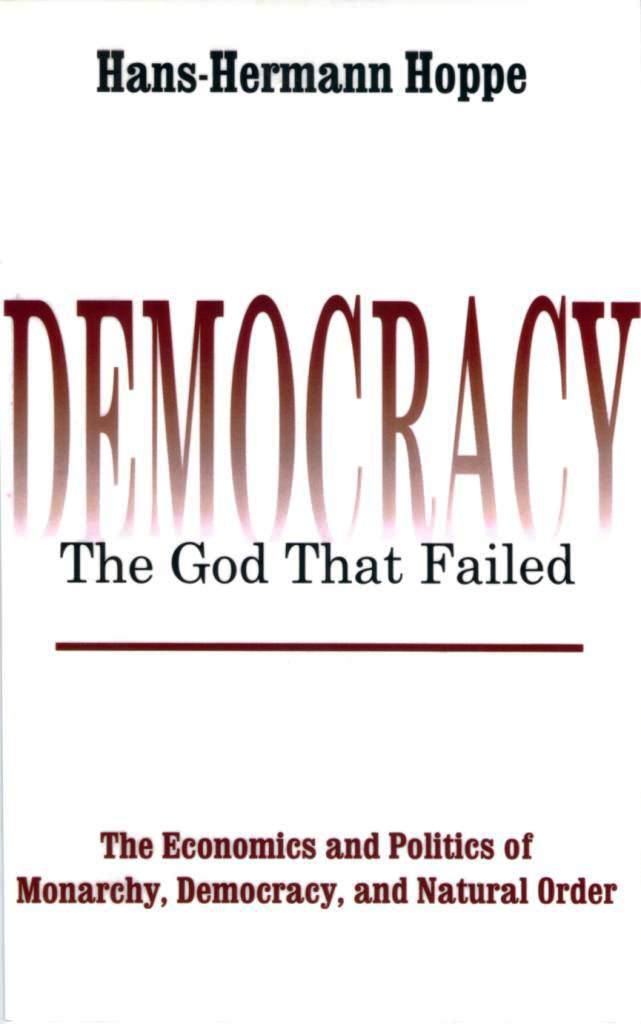



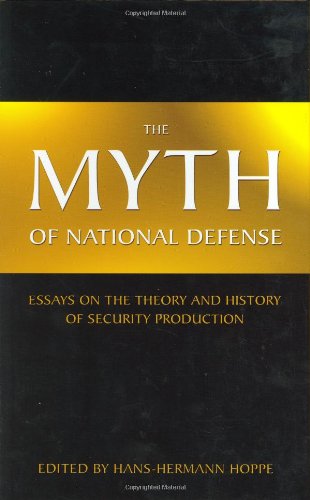

 Alessandro Fusillo
 Andreas Tögel
 David Dürr
 Doug French
 Fernando Chiocca
 Greg Morin
 Hans-Hermann Hoppe
 Jay Baykal
 Jayant Bhandari
 Jeff Deist
 Jeffrey Barr
 Juan Fernando Carpio
 Ken Yamarashi
 León Isidoro
 Martin Cabrera
 Nick Hoppe
 Oscar Grau
 Peter Wong
 PFS
PFS scholarium
 Saifedean Ammous
 Sean Gabb
 Sean Ring
 Stephan Kinsella
 Stéphane Geyres
 Thomas Jacob
 Tom DiLorenzo