Gerald P. O’Driscoll, “Hayek’s System of Principles,” The Libertarian Review (October 1978): pp. 39–41, reviewing Friedrich Hayek, New Studies in Philosophy, Politics, Economics and the History of Ideas (Chicago, University of Chicago Press, 1978. This review of Hayek is well worth reading.
O’Driscoll writes: “Hayek is no conservative. He is the preeminent liberal of his day.” Well. Is is true he was not exactly a conservative, except for his opposition to change evolved orders:
One source of such confusion has been Hayek’s emphasis on the importance of traditions and custom. But this emphasis is part of his critique of a rationalism that values only designed orders and institutions. Such an attitude overlooks both the importance of undesigned order (of which the price system, money, and, indeed, the whole market are instances), and the knowledge that comes only through experience and trial-and-error procedures. Hayek has long emphasized this nonrational element in law, harking back to the Roman private and English common law traditions, in which law is discovered not made: good law is old law; new law is impossible. Though for his own reasons he chooses not to emphasize it, Hayek’ s approach can be broadly interpreted as being in the Natural Law tradition. In this vein, he cites Cicero (quoting Cato) on the superiority of Roman law, which “was based upon the genius, not of one man, but of many: it was founded, not in one generation, but in a long period of several centuries and many ages of men. For, said he, there never has lived a man possessed of so great a genius that nothing could escape him, nor could the combined powers of all men living at one time possibly make all the provisions for the future without the aid of actual experience and the test of time.” This argument is essentially the same as the argument for decentralized rather than centralized planning in economics.
But as even O’Driscoll’s review makes clear, he was no libertarian, if he even was really a liberal, much less the “preeminent” one of his day. For example, a few choice quotes from O’Driscoll’s review:
On public goods / government provision of services
Throughout the essay Hayek appears almost self-conscious about striking such a moderate pose. In a number of places he denies that liberals, except for “an extreme wing of the liberal tradition,” object to particular policies, even governmental actions to which even modern “minarchists” and limited government libertarians would object. In some cases, such as government provision of public goods, Hayek appears insufficiently aware of the pioneering work of, among others, Professors Coase and Demsetz, who have shown how markets could (and have) produced public goods. … And it is today scarcely an “extreme” libertarian position to question the necessity of government’s providing a wide range of public goods.
On money and education as major concessions to the state
Indeed, Hayek’s studied moderation itself reveals much about why classical liberalism declined in the 19th century. Entirely too much was conceded to the sphere of state action, money creation and public education being the two most egregious and empirically most important examples. It is to Hayek’s credit [! —SK] that even where he cedes a role to government, he would withhold mo-nopoly rights. In Denationalisation of Money, Hayek has recently come out for competition even in the case of money.
On public education specifically
But in “Liberalism,” Hayek continues to point with pride to liberal support of a “universal system of education,” the legacy of which is with us today. Though Hayek identifies this as a liberal achievement, he is factually in error here. As Professor E.G. West has noted, though liberals tended to support compulsory schooling, many opposed public provision of “free education.” The distinction between compulsory schooling and public provision of schooling is an important one, one which was not lost on nineteenth century liberals.
On free immigration
Here O’Driscoll chides Hayek for not hewing to the then-predominant libertarian “open borders” view on immigration, but some today might actually give Hayek credit for this “deviation”:
Hayek has recently backed away from a consistent application of liberal principles (as he develops them) in the case of free immigration. In The Mirage of Social Justice, he argues that “attempts to push a principle further than general sentiment is yet ready to support it is apt to produce a reaction which may make impossible for a considerable period even what more modest attempts might have achieved.” He therefore renounces free immigration “within any period with which we can now be concerned.”
Related
- Gerald P. O’Driscoll Jr., “The Puzzle of Hayek,” The Independent Review IX, no. 2 (Fall 2004): 271–281
- Other PFS posts on Hayek
- Hoppe, “Socialism: A Property or Knowledge Problem?“, in The Economics and Ethics of Private Property, originally in Rev. Austrian Econ. 9, no. 1 (1996): 143–149
- ——, Hoppe on Hayek
- ——, “The Hayek Myth” (PFS 2012)
- F.A. Hayek on Government and Social Evolution: A Critique, in The Great Fiction, originally in Rev. Austrian Econ. 7, no. 1 (1993)
- ——, Why Mises (and not Hayek)?
- Kinsella, Knowledge vs. Calculation, Mises Blog (July 11, 2006)
- ——, Don’t tell me to read Hayek
- ——, “Second Thoughts on Leoni, Hayek, Legislation, and Economic Calculation,” The Libertarian Standard (May 9, 2014)
- ——, The Great Mises-Hayek Dehomogenization/Economic Calculation Debate (Feb. 8, 2016)
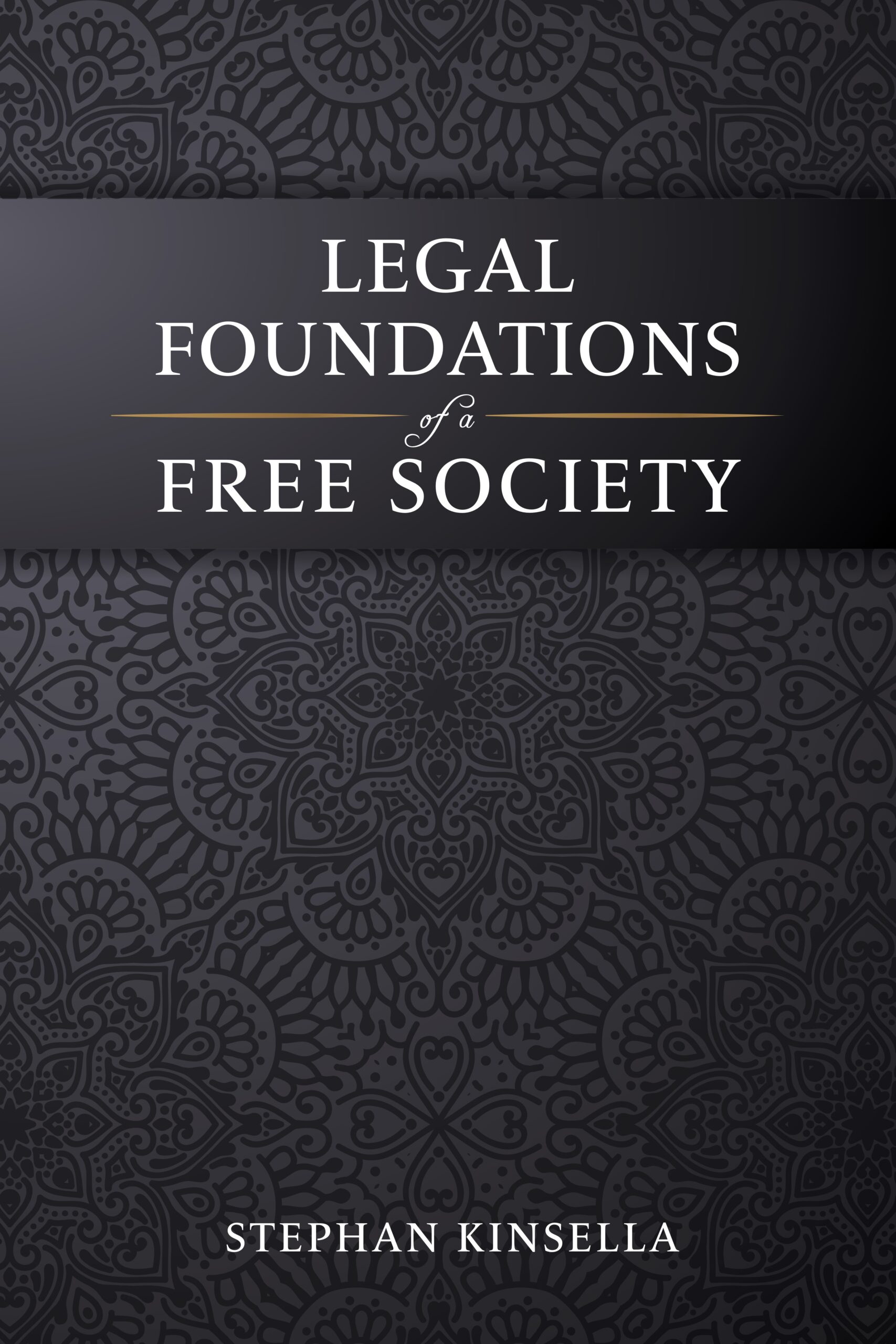
- ——, “Legislation and the Discovery of Law in a Free Society,” in Legal Foundations of a Free Society (Houston, Texas: Papinian Press, 2023)
- ——, On the Role of Commentators and Codes
- ——, Epstein on Roman Law
- ——, The Superiority of the Roman Law: Scarcity, Property, Locke and Libertarianism
Discover more from The Property and Freedom Society
Subscribe to get the latest posts sent to your email.









 Alessandro Fusillo
 Andreas Tögel
 David Dürr
 Doug French
 Fernando Chiocca
 Greg Morin
 Hans-Hermann Hoppe
 Jay Baykal
 Jayant Bhandari
 Jeff Deist
 Jeffrey Barr
 Juan Fernando Carpio
 Ken Yamarashi
 León Isidoro
 Martin Cabrera
 Nick Hoppe
 Oscar Grau
 Peter Wong
 PFS
PFS scholarium
 Saifedean Ammous
 Sean Gabb
 Sean Ring
 Stephan Kinsella
 Stéphane Geyres
 Thomas Jacob
 Tom DiLorenzo