Justice Clarence Thomas has cited Murray Rothbard in a concurring opinion in Monsanto Co. v. Durnell (on June 25, 2026); Court rules for Roundup maker in dispute over cancer warnings on pesticide labels (SCOTUSblog). The decision addressed whether the Federal Insecticide, Fungicide, and Rodenticide Act (FIFRA) expressly preempts state-law failure-to-warn claims about pesticide labeling (specifically, Roundup/glyphosate and cancer warnings). The Court (Kavanaugh opinion, joined by Thomas among others) held that it does in relevant respects and reversed the lower court. Jackson dissented (joined by Gorsuch).
Thomas joined the majority but wrote a concurrence flagging broader constitutional concerns with FIFRA itself (Commerce Clause limits on regulating intrastate manufacturing/use, nondelegation to the EPA, and administrative preemption issues under the Supremacy Clause). In a footnote discussing how broad regulatory delegations often benefit large incumbents (creating barriers to entry via onerous requirements that smaller competitors can’t meet), he cited:
Such delegations of broad regulatory authority often benefit large incumbent companies at the expense of smaller competitors and consumers. Incumbent companies “exercise considerable sway over agency rules,” which they use to lobby for more “favorable regulations” that “protect the existing regulated firms from threats arising from new firms.” Those regulations often enable a “profitable alliance” between corporations and government, as the corporations look “for government to cartelize their industry after private efforts for cartels and monopoly ha[ve] failed.” M. Rothbard, The Progressive Era 318 (2017). This scheme is a perfect example.
Some commentary:
Tweet from the Libertarian Party of Maryland:
Justice Thomas is citing Murray Rothbard. Those regulations often enable a “profitable alliance” between corporations and government, as the corporations look “for government to cartelize their industry after private efforts for cartels and monopoly ha[ve] failed.” M. Rothbard, The Progressive Era 318 (2017).
Today, Justice Clarence Thomas has two references to Murray Rothbard’s Conceived in Liberty in his dissent over birthright citizenship.
Available free at https://t.co/uYpc3ozC5f: https://t.co/DUDE7JrZMB pic.twitter.com/liujmN92n9
— Mises Institute (@mises) June 30, 2026
We wish you a very happy Rothbard summer.
Justice Thomas is citing Murray Rothbard. Those regulations often enable a “profitable alliance” between corporations and government, as the corporations look “for government to cartelize their industry after private efforts for… pic.twitter.com/LXOoGEQR0K
— Libertarian Party of Maryland (@LPMaryland) June 28, 2026
I confess that I did not have Justice Thomas citing Murray Rothbard in a preemption case on my bingo card.
— Jonathan H. Adler (@jadler1969) June 25, 2026
https://t.co/NsWMDuSxG2 pic.twitter.com/4BjdpDK0dW
— Jonathan H. Adler (@jadler1969) June 25, 2026
Justice Thomas tells the truth about central banking in the U.S. It really isn’t compatible with our republican system of government — it’s a progressive, German import. pic.twitter.com/56BDU4lgj3
— Benjamin Weingarten (@bhweingarten) June 29, 2026
Clarence Thomas cited Murray Rothbard’s The Progressive Era in his concurrence in the Monsanto decision today:
“Those regulations often enable a ‘profitable alliance’ between corporations and government, as the corporations look ‘for government to cartelize their industry after… pic.twitter.com/OzOPN0ahoY
— Liam McCollum (@MLiamMcCollum) June 25, 2026
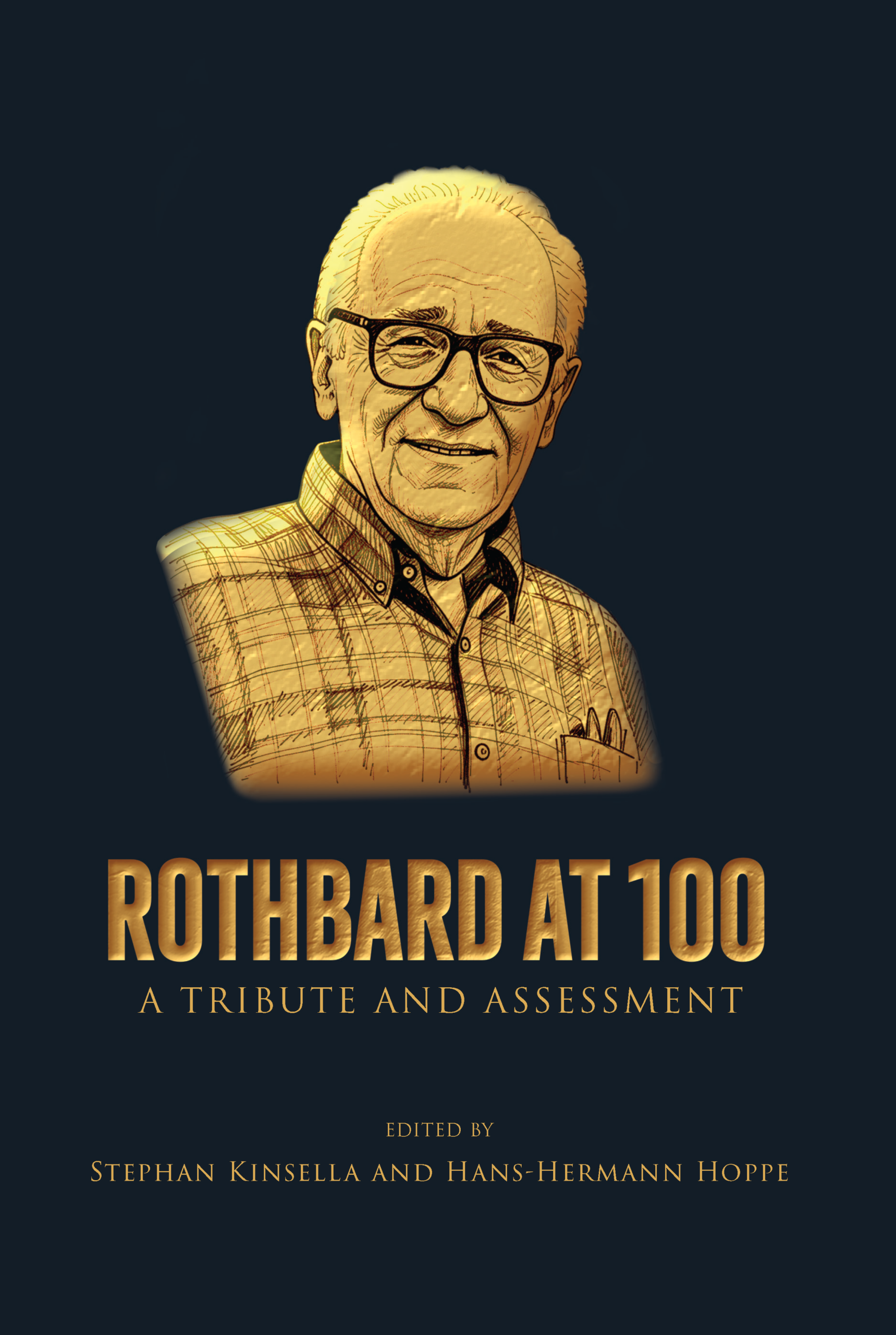
See also Sean Gabb, “Rothbard: An Appreciation from England,” in Rothbard at 100: A Tribute and Assessment, Stephan Kinsella and Hans-Hermann Hoppe, eds. (Papinian Press and The Saif House, 2026):
Rothbard did not deny that regulation could be oppressive. He denied that it was primarily designed to curb the strong. In Left, Right, and The Prospects for Liberty, drawing in part on the work of Gabriel Kolko, he argued that much Progressive Era regulation was instigated by big business itself.[9] When competition proved inconvenient, when cartels were unstable under market pressure, the state could be invited to stabilise them. The Interstate Commerce Commission did not so much shackle railroads as regularise their pricing. The Federal Reserve System did not so much discipline bankers as cartelise them.
9. See, e.g, Murray N. Rothbard, “Confessions of a Right-Wing Liberal,” Ramparts VI, 4 (June 15, 1968), republished in Mises Daily (March 2, 2022), criticizing Ayn Rand’s view that Big Business is “America’s most persecuted minority” and echoing Gabriel Kolko’s observations about how Big Business has long benefited from and supported various types of welfare statism and federal regulation. See also Murray N. Rothbard, “Origins of the Welfare State in America,” in The Progressive Era (Auburn, Ala.: Mises Institute, 2017), originally published as “Origins of the Welfare State in America,” J. Libertarian Studies 2, no. 2 (Fall 1996): 193–232; idem, For a New Liberty, 2d ed. (Auburn, Ala.: Mises Institute, 2006), p. 388 et pass.; idem, The Betrayal of the American Right, Thomas E. Woods, ed. (Auburn, Ala.: Mises Institute, 2007), pp. 185–86, and quoting Albert Jay Nock, at p. 22 (“The simple truth is that our businessmen do not want a government that will let business alone. They want a government they can use. Offer them one made on Spencer’s model, and they would see the country blow up before they would accept it.”).
See also Timothy P. Carney, The Big Ripoff: How Big Business and Big Government Steal Your Money (Hoboken, NJ: John Wiley & Sons, 2006) and Llewellyn H. Rockwell, Jr., “The Economics Of Discrimination,” in Speaking of Liberty (Auburn, Ala.: Mises Institute, 2003), p. 99 (“One way the ADA [Americans with Disabilities Act] is enforced is through the use of government and private ‘testers.’ These actors, who will want to find all the ‘discrimination’ they can, terrify small businesses. The smaller the business, the more ADA hurts. That’s partly why big business supported it. How nice to have the government clobber your up-and-coming competition.”) But see Robert L. Bradley, Jr. and Roger S. Donway, “Reconsidering Gabriel Kolko: A Half-Century Perspective,” The Independent Review (Spring 2013).
Discover more from The Property and Freedom Society
Subscribe to get the latest posts sent to your email.














 Alessandro Fusillo
 Andreas Tögel
 David Dürr
 Doug French
 Fernando Chiocca
 Greg Morin
 Hans-Hermann Hoppe
 Jay Baykal
 Jayant Bhandari
 Jeff Deist
 Jeffrey Barr
 Juan Fernando Carpio
 Ken Yamarashi
 León Isidoro
 Martin Cabrera
 Nick Hoppe
 Oscar Grau
 Peter Wong
 PFS
PFS scholarium
 Saifedean Ammous
 Sean Gabb
 Sean Ring
 Stephan Kinsella
 Stéphane Geyres
 Thomas Jacob
 Tom DiLorenzo