 Below is a documentary on Carl Menger, produced by the Ludwig von Mises Institute Poland. Carl Menger. Notes on the margin, a film by Tomasza Agenckiego:
This film, “Carl Menger. Notes on the margin” — a documentary about a visionary without whom the economic genius of Ludwig von Mises would not have emerged — was made possible thanks to the support of our Donors.
With Tom Woods, narrator. Transcript below.
See:
Premiera filmu „Carl Menger. Notatki na marginesie” już 27 grudnia!:
Ladies and Gentlemen,
We are pleased to announce that the film “Carl Menger – Notes in the Margins” will premiere on the Mises Institute channel on December 27 at 8:00 p.m.
The film portrays the titular protagonist—Austrian economist Carl Menger, a pioneer of the Austrian School, one of the initiators of the marginalist revolution in economics, but also a lecturer, journalist, and lawyer. His profile is presented against the backdrop of his era, places, and political events. Economists and researchers speak about Menger in places significant to him (Vienna, Nowy Sącz, Prague).
The live premiere took place on December 1, 2023 in Warsaw.
A film that commemorates a man of great vision. A man without whom the economic genius of Ludwig von Mises would not have manifested itself. A man without whose contribution the achievements of the entire Austrian School of Economics would not have been created. After many months of work, we await the premiere of the film Carl Menger: Notes in the Margin, directed by Tomasz Agencki.
The film’s premiere date is no coincidence. The screening will take place on December 1st, the day before the 10th Austrian Congress. To attend this exceptional premiere, simply purchase a special ticket. By purchasing a ticket to the premiere, you will also have the opportunity to attend the evening reception, where you will have the opportunity to talk with both the filmmakers and many guests invited to the screening.
You can read all the details of the event, which will take place in Warsaw at the headquarters of the Warsaw School of Economics, on the Congress website .
You can also purchase a ticket for the screening of the film about Carl Menger directly via this website .
Our film unfolds on two levels. The first is historical: the biography of Carl Menger. The second is the story of the people who are rediscovering his character.
The historical level allows us to understand how Menger built his system, what shaped it, and how he attempted to change reality. The contemporary level is the story of whether Menger’s ideas are still relevant and what can be achieved with tools unavailable to Menger.
We believe that together – with the entire Austrian School of Economics in Poland – we will be able to, thanks to this production, honor Menger’s memory and repay our debt of gratitude to him.
Transcript (Grok)
Carl Menger. Notes on the Margin
Corrected transcript
Documentary: Carl Menger. Notes on the margin [Carl Menger. Notatki na marginesie]
Source: https://www.youtube.com/watch?v=QKI52d8PSCo
Channel: Instytut Misesa · Published 27 December 2024 · Runtime 1:44:29
Spelling, names, and broken word-joins have been corrected. The spoken wording has not been paraphrased. Descriptive headings and section timestamps were added by the editor. Mixed British/American spelling in the original speech is left as spoken except where a word was misspelled.
Schumpeter and the idea that Menger came out of the blue
0:20
Schumpeter said that Menger came more or less out of the blue.
Which, of course, is not right. Nobody comes out of the blue.
Anniversaries of Principles of Economics and of Menger’s death
0:47
It’s been 150 years since the book that forever changed the way we see value was published.
It’s been 100 years since the death of its author. A man born in a country ridden with poverty and political conflict.
Just over 30 years later, he would be a tutor to the heir of the Austro-Hungarian Throne, a professor at the University of Vienna,
and the founder of the Austrian School of Economics. The man who corrected the errors
of Karl Marx and Adam Smith, and yet a man who is completely unknown to the majority of today’s students of economics.
Commemorations, conferences, and a petition in his hometown
1:29
Many conferences and seminars were held in honour of these anniversaries. We’ve seen a wave of scientific publications,
commemorative speeches and YouTube vlogs.
There was even a petition to lend his name to one of the roundabouts in his hometown.
A Viennese NGO organized an online video event and miraculously brought Menger back to life for several days.
These have been fantastic opportunities to tell the story of Menger and his influence from its beginnings all the way to the present.
But Menger is many stories in one.
Burned papers, the stock exchange anecdote, and birth in Nowy Sącz
2:12
The earliest memory Menger’s son recalls was a bonfire in which Carl is said to have burned
all his correspondence and private notes 10 years before his death. For economists, memories of Menger extend back
to his time on the Vienna stock exchange. Its ever-changing stock prices inspired him to describe the phenomenon of marginal utility.
For the world at large, Carl Menger’s life began in the perfect birthplace for one of the empire’s greatest modernizers,
in Nowy Sącz with 7,000 inhabitants.
Here we find the very first record of our protagonist.
The baptismal certificate of 23 February 1840
3:01
From the baptismal certificate, which is kept in the Collegiate Church, and is the first document of Carl Menger’s existence in the world,
we can deduce many facts, that reveal the reality of his life here in Nowy Sącz.
23 February 1840,
– this is the date of his birth. Then we have 12 March 1840, the date of his baptism.
The period between Carl’s birth and baptism which is quite long, may suggest,
that he was a healthy baby. In Galicia, if a child was born weak and sickly,
it was customary to baptise it almost immediately after birth, for fear that it might die prematurely.
Next we have 22. That is the house number.
He was born at number 22, in this very building.
This tenement belonged to the Kostarkiewicz family.
All of this gives us an idea of the small world of the Mengers, that was here. And we can link another place outside the collegiate church to the Mengers.
Parents, the Wolfensgrün title, and the Gerżabek family
4:12
Next are the details of the parents. Here we have “the noble Antoni Menger”
“Antonus Menger, Wolfensgrün”. The title of “Wolfensgrün” was probably given to Carl’s father,
Anton Menger, because he had bravely moved to Galicia which is located at the very end of the Austrian world.
What’s more, he was very loyal and did his job very well.
Next we have his mother, Karolina Gerżabek, daughter of Józef and Teresa Nata Kalaus.
It was an interesting family, because the Gerżabeks also came from Bohemia. They made a killing during the Napoleonic Wars
and decided to invest their wealth here. The last column is that of the godfathers.
This is quite interesting, as the godfather was Józef Gerżabek, and it would appear that he was the grandfather of Carl.
Next we have the godmother, Teresa Gerżabek. She was Carl’s aunt.
The Maniowe estate, the move to Biała, and the Galician Slaughter
5:15
Maniowe is an estate that was bought by the Gerżabek family. They invested money in it when they moved from Bohemia.
When they bought it the estate was in ruins. They developed it quite vigorously
and treated their peasants very well. Shortly after Carl is born,
his father leaves the family with his in-laws and goes on a business trip to Biała to open a shop.
His mediocre results could have been a consequence of the economic breakdown at the time.
Three years of poor crops and a four-fold price increase had led to a bloody peasant revolt
against the gentry. In 1846 the Galician Slaughter took place.
The peasants set out to kill their masters. The massacre begins. However, the story of Menger’s grandparents
is very different from that of most landed gentry, because they were protected by their peasants.
The peasants formed a peasant guard and as a result the Gerżabeks emerged unscathed from the Galician Slaughter.
The Gerżabeks had a completely different attitude towards the peasants that worked for them
than the typical Galician gentry. They had previously been merchants,
and they didn’t have the mentality of oppressing the peasants. They had a more humane attitude towards their peasants.
Childhood memories, Anton Menger’s death, and the widow with ten children
6:45
Carl’s earliest memories revolved around fear for his family members’ safety during the revolt
and his father at work in his book-filled study. Anton Menger leaves for Bielsko in the second half of the 1840s.
He sets up a textile business there and enters politics. In 1848, in the wave of the Springtime of Nations, he was elected a member of parliament.
Unfortunately, he fell ill and died in early August 1848.
Sadly, his father passed away when Carl was only 8 years old.
He left the family and the widow with 10 kids. Six of these children survived.
Three sisters and three brothers. As you can imagine, it was a catastrophe for the family.
It’s definitely a switch that is turned in in the life of young children.
They probably need to be more independent than other children.
Carl used to recall that his mother impressed him with her work,
and despite the family’s modest means, she was always able to make ends meet. Around the year 1843
and goes to his grandparents, the Gerżabeks, at the Maniowe estate,
where he observes the life of the village and, as a child, observes
the relations between the manor and the peasants. As these relations were good,
Menger often went to play by the river with the local children. He observed the peasants’ work
and bonded with the people living there.
Carl is a participant observer. He explores the local trails with his elder brother Max and younger brother Anton.
Together they play with their peers, watch people work and even help to the extent they can.
You find them everywhere. They need to know and understand everything.
All of this happens during a momentous historical moment – the abolition of serfdom.
Schooling in Biała, Cieszyn, and Kraków
9:07
Despite good grades, Carl repeats a second year of school.
He repeated the last class in Biała, voluntarily. We don’t know the reasons.
In 1851 he came to the gymnasium in Cieszyn.
After enrolling in gymnasium, that is high school in Cieszyn, young Carl generates his first earnings tutoring his younger colleagues.
His very first student was his landlady’s son.
The gymnasiums back then were focused primarily on the humanities and on foreign languages: French, English, and classical languages: Latin and Greek.
High School is also the place where Carl polishes his writing style –– clear, precise,
but at times a bit repetitive. Every day they started their lessons with a morning mass.
The year before, it was a Catholic gymnasium, and the teachers stayed at the school,
so the whole atmosphere of the school was Christian, Catholic. They weren’t the kind of students who just sat in their seats,
listened to their instructors and did what they were told.
It was a typical Prussian school, a hard school where pupils were treated roughly,
especially in the secondary school, but also in the primary school, as Menger found out himself.
They had some disputes with the teachers concerning religion.
Anton Menger, the younger brother, denied the dogma of original sin,
and that caused some problems. Unfortunately, he had to leave the school
and was transferred to St Anne’s Gymnasium in Kraków.
Carl spends a year in Kraków. Tadeusz Kościuszko, a Pole fighting beside George Washington
in the American Revolutionary War, piques his interest. Carl writes a poem about him.
In the spring of 1859 Carl graduates from St Anne High School with honors.
In the autumn he packs his books and inkwell, and departs for the city that will be associated with his name forever.
Vienna – the Empire’s capital.
Arrival in Vienna and the building of the Ringstrasse
11:33
Vienna in the 19th century was an amazing and terrifying place.
The state was almost bankrupt. They had lost a war in Italy. It’s been said by historians that the Austrian Empire was one of the most backward ones in the 19th century.
In the second half of the 19th they caught up very quickly.
Carl arrives in Vienna which is undergoing the biggest change in its history.
The emperor Franz Joseph I decided to bulldoze the medieval defensive walls.
This was the boundary of the city. Where the Ring is now, there were the traditional medieval walls of Vienna.
And Ring was finished, I think in 1865. The government sold off
the areas of the old fortifications of the city. 168 million guldens was received from the sale,
and it was invested in Vienna. And you build all the palaces,
you build the university, you build the parliament. Apartment buildings, bank branches, the palaces of rich families.
When Menger started here, it was one big construction site.
There was a lot of investment coming into Vienna. It was also a huge conglomerate.
People from all of the nations of the empire moved into Vienna.
The people who rushed to Vienna were highly talented, were interested in doing new things.
What an enormous growth! A lot of poverty, a lot of difficulties,
but people still run away from villages where there was complete poverty, and try to find themselves out in this new urban, market environment.
There’s probably no other city in the West that’s as diverse as Vienna.
The greatest place to be if you had an interest in social phenomena. Rapidly growing Vienna surprises Menger with its optimism
and hospitality. For him it’s fascinating. The city, the huge city. The constant movement, the construction sites,
and the huge stock exchange. There was definitely an economic boom.
Very optimistic look into the future, how technology and entrepreneurship
will improve the people’s lives. And you already can see it in Vienna.
Constitution is reenacted, the press has much more freedoms, university reform is under way. You could choose any textbook you wanted.
From Vienna to Prague: law, Staatswissenschaften, and student life
14:13
Carl is not able to enjoy it for too long, and after his first year at the university he packs his bags again.
And thus does Carl Menger, a student of his father’s profession, arrive in his mother’s homeland.
That would be the Emperor on the bridge. Well, I don’t know specifics about Menger’s decision,
but it was pretty normal back then to study in different places of the Austrian monarchy.
Two philosophy professors left Vienna University when Menger left Vienna.
And several other came to Prague just when he came here. So we don’t really know whether this is the reason,
but it wouldn’t be uncommon if academic reasons were behind his choice.
At that time universities exploded. The number of students increased.
There was a room and space for intellectual development.
Menger came to Prague just at the time when the major university reform was under way in Austro-Hungarian Empire.
He was much freer in what he could choose, which professors he could listen to.
So you could choose the professor you would listen, and compare, go from class to class.
If we talk about how economics is being taught, this is very interesting because there was no such a thing
as studying economics. In Austria you could study law,
and you could study Staatswissenschaften – the science of how the state is run.
Which actually helped to create a good framework for the study of social sciences
because law was always connected to economics. As a lawyer you learned to use logic,
precise terminology, scientific foundation, and you applied that to the political economy.
Otherwise it’s really hard to put in economics in a field of subjects,
and you can only go wrong. In this law studies there was a reform.
Legal evolution tradition was introduced. And that is a kind of a liberal view of law
which dissociates law from the state, and introduces the idea of spontaneous order of law.
By the time Carl passes his first exams cum laude, he’s living next to a street which from medieval times until today
has been a huge marketplace. He studies a lot, but he also parties.
That’s definitely what we know. He liked to drink a beer here or there.
The students were male, exclusively. And almost everyone was a member of a fraternity.
The city was parted, so there was one German street, called Am Gruben,
and there was the Czech Street, Národní, which is just ahead of us.
Menger is a part of this German society. Menger saw himself very much as a part of the Germans.
He was not anti-Czech in any way. He had quite an attachment to the German cultural world,
which was of course a connection back then to Western Europe.
The fraternities were very different from each other, and there were some fraternities that did fencing. And they would have some sort of armour, but their cheeks would be free when they were fencing.
One fencer might cut another on the cheek, and he might have a scar on his cheek.
They were much more tough than today.
Early writings, an essay against communism, and the clash with the Prague dean
18:07
Carl begins writing long before
he founds the Austrian School of Economics. In his first works, he focuses on language as an institution,
human perception, and the weakening role of marriage in society. But economics fascinates him, and before too long
he’s discussing economic issues: the pros and cons of free trade, money as an institution. And he even writes an essay on the impossibility of communism.
That may not seem particularly bold or original in the 21st century. But let’s not forget this is 1861,
and Carl Menger is 21 years old. All kinds of nations, all kinds of different backgrounds,
all kinds of different levels of economic development, and political traditions.
Menger just understood that central planning of the society and the economy
is just impossible. It was not his critique of communism
but his critique of the quality of education that caused serious problems for Carl.
In 1862 Menger is a young journalist at the Prague journal called Tagesbote aus Böhmen,
and he protests against the changes at the university. University liberal professors are away in Vienna
sitting in the parliament, doing reforms, which Menger appreciates, but they are not there, at the university,
where Menger needs them at the moment. He protested, he wanted to keep the liberal atmosphere of the university
he was witnessed when he entered the university in Prague. The dean was outraged,
and he forbade Menger some academic freedoms.
“What are you doing! You are just a student, you are trespassing my orders!”
“We have press freedom, we have academic freedoms. I can say what I consider is right.”
This shows a very important trait of Carl Menger in early years. He was very self-determined.
“I’m standing for these academic freedoms and for these press freedoms”. He didn’t shy away from conflict.
“And I know you are a professor, I respect you and your position, but this is my opinion, and I stand by it.”
He could fight for his opinion.
And then the professor didn’t let Menger pass several courses.
Which is part of the academic freedoms taken away from him. He was actually kicked out of the university
because the dean did not share his views.
After such a dispute Menger is just clearly dissatisfied.
He has nothing left of what was once his love in Prague.
He understood very clearly that he would have no academic future in Prague even if he wanted to.
Journalism in Lemberg and return to Vienna
21:08
Carl embittered by what had happened with his scientific career is looking for a new start.
For over a year he occupies the position of junior editor in “Lemberg Zeitung” in Lviv.
He just needed to take a step further, and that step further was journalism.
In Lemberg he worked as a journalist. For the local paper, he followed the news about the economy
the stock exchange, and other information.
Besides stock market quotations Carl left other traces.
They say more about his mood than the economic situation.
and the environment of Maniowe in the Lemberg newspaper. You see that the guy who wrote that,
and I suppose it was Menger, loves this part of the country. It is warm-hearted.
He describes the people there, the landscape, how the people there fish in winter by poking ice holes in the ice on the river.
In Maniowe, Menger spent time with the locals. He hung out not only near his grandparents’ estate.
More than once he probably went down to the river, to the boys who were his age.
He must have played with them and observed their parents’ lives. It must have had an effect on his life and future.
He had a relationship with this landscape. He decides to abandon an attribute
he’s carried since childhood – Wolfensgrün, a nobility title he wasn’t able to trace,
and which didn’t really fit his liberal attitude. What suits him better, he finds, is the beard he started to grow.
A beard that was supposed to cover his cuts from fencing duels during his time in Prague.
“Lemberg Zeitung” closes after one year and Carl finds a similar position
at the liberal oriented, state run Vienna “Botschafter” and yes it was both liberal and state run.
When he arrived in Vienna, he was at some point working for the cabinet.
Checking the newspapers and the news and making reviews and preparing documents for the government.
Economic journalists usually make market reports: the price of wheat in Prague, in Vienna, in Graz.
That means you have to be in touch with the reality of how people actually live,
how they make transactions in their lives.
They also were sent to the world fairs, where the whole world would witness
technological innovations from all corners of the world. In total there were about six newspapers he wrote for.
Some of these newspapers were close to the government line, which was partly the more liberal line,
and some very popular, in a tabloid style. Menger seems to have been pragmatic about where to write.
Stock market reports and satirical short stories, renowned government papers and tabloids…
Carl can reach different audiences. And then the idea arises of combining two different kinds of content under one title.
Wiener Tagblatt, popular education, and the gap between theory and business life
24:47
“Wiener Tagblatt”, financed only by advertisements, wants to cover issues previously restricted to more serious publications,
for an audience accustomed to reading about more mundane topics. A journalist, but not for journalism’s sake,
but for the sake of the real life of the people. The man on the street needs to read it,
needs to know why the price of the bread is as high or as low, or how markets work.
What he saw in Maniowe and in those Galician towns made him believe
that education was the fastest way to progress. “Wiener Tagblatt” promotes various causes like reform of the penitentiary system
and opening inexpensive grocery markets for citizens of limited means. It lobbies in support of the unemployed,
as well as for public libraries. He always wanted to make sure
that people were better off and could learn and could advance and could elevate themselves.
That those who are poorer or less well off should be provided with the opportunity.
Although he was the son of a civil servant, he did not live in the lap of luxury. In towns like Nowy Sącz,
this Galician poverty was palpable. Especially here. If you look out of the window,
you can see the Piekło [Hell] district. It was the poorest part of Nowy Sącz.
In a way, Menger was part of this Galician poverty. Whether he liked it or not, he looked at it and observed it.
This relationship is vivid. Before he writes his “Principles of Economics”, he is an entrepreneur,
and he also fails as an entrepreneur. So he has all these booms and bust cycles,
he experiences that in his own life. Readers appreciated Menger’s paper.
But Menger was most valued by the publishers of the state run “Wiener Zeitung”.
They offered him the option of buying the title back and editing the newspaper’s economics section.
When he was doing that work and when he was checking what he had learned in Cracow and in Prague, at the university about economics
and what was actually done every day in the normal business activity
there was such a huge gap that there was some problem either with the theory or with reality.
Now reality is what it is, therefore, there is a problem with the theory somewhere. So what is needed is a new theory.
Return to scholarship and the Kraków degree of 1867
27:34
After a few years, young Carl feels the desire to return to a more scientific approach to issues,
about which he is only scratching the surface in the popular newspapers. He resigns from two press posts
and decides to give himself a few months to decide on his next course of action. He has finished his course work, but he doesn’t have the title,
which would open him doors to many careers. He rents an apartment with his younger brother Anton,
who has just graduated from law school in Kraków. And then there is Cracow, which is close to his birthplace.
Julian Dunajewski, economics professor, becomes the rector of the university.
Dunajewski is at three of Menger’s four state’s exams.
Menger is simply an outstanding student again, passing all exams with A’s and B’s.
And he graduates from university finally in March 1867 in Cracow.
Just two years before the university was fully Polonized. In September 1867 he wrote in his diary:
“die nationalökonomische Studien”, which means, “I start to study political economy”.
From the moment that he takes that clearly in his mind
he gets into a very serious study of political economy as such,
and is preparing for his project where “Principles…” is only the introduction.
Writing Principles of Economics between the classical and historical schools
29:17
Over the next four years it is hard to say what is more frequent: Carl’s change of jobs
or the changes in his vision for his first book. It began as a philosophical treatise, through disputes with other authors,
to a study of legal reform or the origins of the meanings of economic terms,
through to the vision of a book about economic theory.
Rather than write a book about the economy of Austria Carl decides to tell a more universal story, independent of time and place.
Menger’s approach is to try to understand first before judging. Try to figure out if there’s a way to understand human action
without assuming already that everyone else is stupid or immoral, and that you know better.
Two different takes on economics need to be addressed. These are
British classical economics and the German historical approach. Carl Menger is somewhere in between
or first it looks like he is somewhere in between. It is too abstract
what the British classical political economists say. It is not helpful to go and just collect lots of facts, as the German historicists do.
To correct classic works in value theory, and to explain to his German colleagues
that some principles are universal and apply everywhere, including in the German world.
Piece of cake, right? Only over time he realizes himself
how far reaching that is. And he published “Principles of Economics” in 1871,
when he was just 31 years old. Imagine, this huge book, this tremendous collection of wisdom,
by a 31 year-old. This is unbelievable! I believe it was not Menger’s decision to write a revolutionary book.
He just felt he has a contribution to the contemporary debate on political economy,
he wanted to talk to German colleagues. He wants to show the German Historical School,
“Come on, it’s not just German economics”. Of course there are different historical movements and processes,
but look at the patterns, look at the processes themselves, and see what’s more universal, and what’s more peculiar,
and then you’ll have a better understanding, even maybe of the German culture and identity.”
Subjective value, the labour theory, and the diamond–water paradox
31:53
One of the main topics in economics at that time was the theory of value.
Carl Menger’s theory of value appended the labour theory of value, which states that the value of a good comes from the amount of labour
which is used to produce it. The idea is kind of intuitive, right? You have to put some effort into something, into a resource, in order to make something.
It takes time and all that… So it’s not totally wrong. It’s of course an aspect of how value comes about.
It’s not only the labour that is important, The price of labour, but you also have to look at the value,
that a good represents for an individual, for a client, for a customer.
I can spend one year producing a chair because I’m not a learned carpenter,
but that doesn’t mean it’s worth a one-year wages. In the end who will determine what this chair is worth
are other people and their subjective valuation of this chair.
So he adds something to what Adam Smith wrote.
Menger realized that Adam Smith is able to explain why people trade,
but is not able to explain why people stop to trade.
And it was not cost of production that determined value, it was the future use of the good.
This must have been a very exciting discovery, to turn things around, and suddenly to come up with a theory
that was able to explain much more than the cost of production theory. Of course the cost of production theory has many obvious weaknesses.
He basically solved “the diamond–water paradox”. Why a diamond is worth much more than water
although a diamond is more or less useless, and water is essential for survival?
You cannot say that diamonds in general are worth a lot, and water in general is worth little.
It all depends on the context. If we’re in a very developed civilization,
we’ve solved our water problems a long time ago. Then it’s cheaper. But if we’re in the desert, one would probably give away that diamond,
which back home is worth maybe a thousand times more than a glass of water, we’ll trade it in for a glass of water.
Not necessarily, the person might prefer to die than give away the diamond, but you get the picture.
So there’s no objective value. How can it be?
And if you go into a market, like a traditional market, where you can still haggle, not a supermarket, where all prices are fixed,
you would also realize that value changes, changes based on the customer. And that would seem unfitting to
a more static labour theory of value. It is people, not objective measurement,
that make value. Menger places man at the centre of the universe,
instead of production. It’s the subjective value that determines the price. Now we take these things for granted,
but back then nobody was thinking about those values of individuals.
Everybody was looking into the prices of labour.
Where the idea came from: stock prices, Roman law, and Galician life
35:18
I have no idea actually what inspired Menger. I think he was a highly original thinker.
But of course he grew up in a house where there was a large library, and he may have read a lot of the Scottish Enlightenment.
Where did he get the idea? One perspective is that he saw price formation live in the stock exchange.
He didn’t see one fixed price which was not changeable, but actually prices which were changing the whole time.
So this story is not completely untrue,
but it’s anecdotal evidence. I don’t think it’s the stock exchange that really inspired his book.
He was covering the stock exchange, but as part of the general necessity of covering real facts
as a journalist who wants to be read. One of the questions I have always had is:
How did Menger come up with this idea? This could be one way: as a lawyer, he had learned
that in Roman law there was the so-called “estimatio affectionis”,
which means the “value of sentiment”. This was a concept in the Roman law which was taught at that time in the first two semesters.
To give you an example: the wedding rings have high value
that goes far beyond the market value. If you elaborate that idea,
you may come to the subjective theory of value.
Marginal utility, time and error, and a book about human needs
36:55
Carl takes a closer look at people from the other end of the social ladder,
rather than stock brokers or owners of diamond necklaces. What is the utility of every additional tool for a poor shoemaker?
What difference does one more kreutzer make for a paper boy.
What needs will go unmet, if a farmer What urgent needs will you satisfy
with just one litre of water? What needs with an unlimited quantity?
Carl was aware of these problems not from his work at the paper, or from the Scottish classics,
but from his own life. The value you attach to your only litre of potable water
is different from the value you attach to the 5th or the 15th litre. The price of a tool with a new use will go up.
If a consumer good becomes less popular the prices of the machine used to make it will fall.
This is the Mengerian marginal revolution in a nutshell.
And if one hears this, one thinks: “Yeah, of course, right, it’s simple
Why is this so revolutionary?”. It’s revolutionary in the perspective of the whole history of economic thought.
And this has consequences on how you approach the management of scarce goods.
His revolution was to move value from history of the good into the future of the good,
namely the capacity of the good to satisfy human needs. Because the point of all production is of course to satisfy human needs.
And if you haven’t understood people exchanging carrots and bushels of wheat,
there’s no way you’ll understand money, and no way you’ll understand the modern economy.
What was new in my consideration, is that he wrote about the topos of time and error.
And time at that time didn’t play role in political economy. Yeah, it played a role, but it did not play role in the theory of economy.
Also the notion that people can mistakes.
Menger is not writing about the so-called homo economicus, who is always thinking about profit.
He is writing about the persons who want security. And he is asking: What is the best institutional setup
which can help us to achieve security and satisfaction of our needs?
And if you count how often he uses the term “need”, it’s almost 300 times.
And it’s really looking for human universals, that’s why his library was mainly based on ethnology.
It is a book about human being.
Menger can be an eyeopener, in particular if you compare him to the other works of the time,
which are mostly unreadable nowadays. It’s well written, it’s concise, it’s realist.
it’s not some wishful thinking. It does not have any Nazi or proto-Nazi
or socialist ideological extremes in it, which a lot of the works of the time are just that.
The book is one of the first textbooks in political economy to be totally secularized.
There’s no moral axiom. There’s no religion, there’s no God.
There is nothing transcendental from which economy is derived.
It’s the human being And this is one of the reasons
why this book became so successful afterwards. It was a seed, an early seed, for a secularized area.
And the people in the 1880s understood the book much better, and for them in the 1880s or 1890s it was natural,
there was no question about that.
Reception of Principles, Schmoller, habilitation, and the professorship
41:15
Menger thought when he published “Principles of Economics”,
and correctly he believed, that he made a revolution in economics.
So he was quite disappointed when people didn’t take up his ideas and develop them.
Menger’s efforts are not accepted very well.
I think he was surprised and maybe upset by the reception of his book by the German historical school.
He was attacked right away by the German historicists. He was not understood.
It got several reviews. Some were positive, some mixed,
and one by a person signed G.S. Which is Gustav von Schmoller,
the head of the “younger” German Historical School. And that one was a very critical one. He was a contender to the general economic narrative,
and that obviously causes controversy. The last chapter of the book Menger presented at the university
as his habilitation thesis before it was published sparked controversy, too.
Lorenz von Stein, the faculty of law’s leading scholar, is said to have disliked the chapter
on the origins and functions of money. When Menger wrote “Principles…”,
he very soon quit the bureaucratic position and quit politics
because he wanted to be a professor, and other people were telling him, “Oh, you want to be a professor?
Poor you! You will have like minus 50% of your income”.
Then he gets this position as an associate professor, and then very soon he becomes a professor.
Austria had a painful shortage of economists at the universities.
It was very difficult to get people from Germany because most of them were not jurists, they were not lawyers.
The demand for economists with a legal background confirmed Menger’s career decision as the right one.
The 1873 World’s Fair, the Vienna crash, and a theory vindicated by events
43:26
The catastrophe of the World’s Fair and the stock market collapse
make Menger’s book more popular.
What happened in this period before the crash was that the people were irrational,
totally irrational. There was a lot of speculating, there was a bit too much optimism.
Companies were founded without any assets. A lot of people became rich quickly,
and other people also wanted to get rich quickly but with other means. It was a time when credit flowed openly.
Nowhere comparable to nowadays, but compared to the past already quite in expansion.
During this business cycle an exhibition started here in Vienna. The exposition was probably too big of a project,
so they set their goals too high. They just expected more activity than there really was.
The weather was not fine, people felt that something bad is going on. The hotels which were prepared for that expected a lot of visitors.
It didn’t work. And the whole thing burned down.
And some weeks later the crash came over Vienna. There are boom and bust cycles.
We get a lot of money injection, we get a lot of investment coming into Vienna which led to the boom and then later of course to the bust,
when there is too much money wrongly allocated. Konsekwencją był “kryzys zasadniczy”.
It had a huge impact on the development of the society in Vienna. The New York stock exchange was closed for two weeks
just because of the crash in Vienna. More than 150 people committed suicide
in a town where everybody knows everyone. 150 suicides.
One of the victims was professor von Stein who lost all his savings due to the collapse
and could no longer afford to live in Vienna. So even the professors had gone bankrupt.
Tutor to Crown Prince Rudolf
45:49
The accuracy of the insights in “Principles of Economics” and Menger’s growing popularity as a lecturer
make him known to the emperor’s advisers
who are looking for a tutor in political economy for the heir to the throne – Prince Rudolph.
was a tutor of Crown Prince Rudolph in 1875.
He recommends Menger to the Emperor as a tutor to the Crown Prince.
Menger was a professor already. Such a position was always very close to politics.
Given the idea that it was the Crown Prince, and that he would be heading the Empire that was a important responsibility,
at least morally. And I think Menger also knew that this was no opportunity to spread his personal views and his political preferences.
It was five days a week, two hours in the morning, and then eventually an hour or two in the afternoon.
Menger started with a topic, introduced the Crown Prince to the topic for the first half hour.
And then the next one and a half hours, the two of them were elaborating on the topic.
He of course uses “Principles…” because he has them in his mind, but they would discuss all kinds of literature.
recovered notes of Rudolf about the lectures of Menger.
I read these lectures and practically he followed the “Wealth of Nations”.
How to become the ruler of such a huge monarchy, how to understand the economic and societal problems.
They were also discussing the importance of a sound currency, because back then the empire was borrowing a lot of money
from the Austrian national bank. And Menger was concerned about devaluation,
and he was discussing that with the Crown Prince as well. So economics at its best.
Their studies take place inside and outside of the palace. Both Carl and Rudolph are fond of fishing,
which prompts them to discuss fish supply, or stimulating demand with bait.
He spent a lot of time with Crown Prince Rudolph. He also travelled a lot with him. They have almost friendship-like relationship.
More personal than one would have thought appropriate. Crown Prince was traveling like a civil person,
and being not discovered as the Crown Prince they would travel like two friends together,
go to pubs together, abroad, and it certainly gave the Crown Prince a sense of liberty.
For the next 3 years Rudolph and Carl visit France, Italy, Berlin
and Great Britain, which played a key role in 19th century innovation.
So it shows him the results. It shows that Great Britain, starting from Smithian,
then Ricardian economics, becomes one of the first world powers,
and how it got industrialized, etc. So much so that the Crown Prince is convinced
that it is not enough to have parade of riches and balls, and Strauss family, music,
and parades of army that basically had been defeated. If you want a modern country,
you have to go the way that economics brings to modernity.
The Archives of St Anne gymnasium in Kraków, a school Carl graduated from,
mentioned Rudolph’s visit in 1880 also.
After Menger delivered his lectures to the Crown Prince,
Rudolph became, let’s say, liberal, and represented the liberal movement in Austrian Empire.
The anonymous pamphlet and a warning to the aristocracy
50:09
So one interesting part of Carl Menger’s relationship with Rudolph were pamphlets, especially one famous pamphlet
which he helped Crown Prince Rudolph write. It was published through the connections of Menger.
So it was pretty sure for everyone who knew him that he must be involved. The pamphlet, even though it was published anonymously,
is the result of the travel to the western parts of Europe and seeing how modernization is needed for a country to develop.
It was critical of the general state of the leadership of the empire,
of the aristocracy. He claimed that the aristocracy in Austria was conservative,
not meritocratic. Claiming that they have no elite position anymore
because if they’re not useful in a modernized society, then it’s just they are a thing of the past, and they should step aside.
He was not really trying to say that you should abolish aristocracy or monarchy He was saying that the aristocracy should live up to its ideals.
Or take an active responsibility in still maintaining that kind of leadership function,
but in a different society, which is not a feudal order but an open, more commercial society.
And that as long as the court and the nobles in the old imperial style would dominate,
then this Empire wouldn’t be modernizing, could not prepare the empire for what was coming.
At that time the efforts of the aristocracy to prevent liberalization were quite clear.
The pamphlet is very explicit on that, and it’s been quite attacked by the court for that reason.
I think it was a wake up call to his peers, but like many wake up calls
in an environment where the people feel quite comfortable they did not hear it.
Investigations into method and the Methodenstreit with Schmoller
52:14
Carl struggles with the negative reception of “Principles of Economics” among his German colleagues.
He changes plans and instead of writing a sequel he decides to write a separate book
focusing on where we begin when we build theories, and how the institutions described by these theories emerge.
So after teaching Rudolph, Menger comes back to his methodological project, and finishes the book called “Investigations” in 1883.
He was still on that line to improve economics. “Okay, if my first attempt was not sufficient,
I have to do something more”. And that book sparks the conflict between him and Schmoller
called Methodenstreit. He feels that the German economists are not the real economists,
that they are historians, that they underestimate the significance and importance
of economic analysis. The historic school tells us that only history can tell us
how the future will look like. Information, details, names, quantities of history.
They were just accumulating facts. They were not so interested in what we can know before we look at all the data.
It was not the problem that it was historical. It was selectively looking at history
to make a political and then geopolitical point. The people there were educated to be practitioners,
not scientists. So it’s not really out for truth, it’s for making truth by using political power and legitimizing political power.
Germans stressed the central role of the state. Menger’s approach was more of a spontaneous order approach.
He does not propose ahistorical, ainstitutional theory. In that sense he is close to the German Historical School,
but he wants more. Menger thinks it’s actually a conflict about theory;
they are opposed to any kind of theory. Carl Popper has actually described this very well.
He has explained the contrast between two kinds of science: one is the bucket theory of science, and the other one is the search light theory of science.
The bucket theory is that you have a bucket, and you collect facts into the bucket.
This is what the German professors did. The other theory is that you see something which is dark somewhere,
and you direct a search light to it, and you try to explain what happened.
“Oh yes, gosh, this is what happened!” This is the Mengerian idea of science,
which was then described even better by Popper and by Hayek.
Again reaction came from Schmoller, which was a dismissive one. And then it went violent
because Menger as a stiff person he wouldn’t let Schmoller have the discussion, not that easily for sure.
If someone is criticizing it, he’s not German enough to understand your objective,
so it’s all wrong. Menger takes it very personally. It’s very emotional for him.
So many people joined in so it was like a plethora of reactions from German side, and from Austrian side.
The war was declared, but maybe it was a surprise, he didn’t want it to be in such a contrast with the historical school.
The German Historical School attacked him,
and he had to answer. Therefore, he writes an attack on them, or a critique of them,
which only served to make him more of an outlaw in German speaking countries except Austria.
Spontaneous order: money, language, and starting with the individual
56:21
To really characterize the Methodenstreit in one sentence: It would be about the nature of institutions.
Whether they are really top-down institutions, or whether they arise from spontaneous orders.
When and how could they emerge if they were not already there? It means that institutions – e.g. money or laws rules –
can develop spontaneously. They emerge out of human behaviour, they’re not something cosmological or metaphysical.
It’s a bottom-up process because it emerges out of action of real human beings.
And the best example he gives is language. The German language at the time –
it cannot be something ideal from heavens because you see the history.
You can go back and see how it emerged, how it has loan words from other languages.
There’s no first German speaker. How do you go from no language to language?
How do you go from no money to money? Then once you have some kind of money,
it’s easier to understand how you change for another kind because it’s more saleable, marketable and easier to use.
But from the start, how do you get the idea of money? Well, he explains about barter
that you would change one thing, but then indirect exchange would be more efficient. Spontaneous development of money
at some point meets the fact that the state comes in, standardizes,
and with simplification and standardization comes more trust.
The illusion that the authority of the state is the reason why this happens
is an illusion, and as such it is detrimental.
Money has not been generated by law.
In its origin it is a social and not a state institution. Sanctioned by the authority of the state,
it is a notion alien to it. They look at a coin and there’s an emperor on it.
So it’s got to be related to the Emperor. Or there’s a number on it, so it’s got to be the number.
Carl Menger says, “I got to understand the function. I got to understand why are people using that, and what did they use before, and what did they use before that,
and how could that have emerged.” German historical economist did not follow him
because he wanted to identify a universal law,
which does not exist for German historicists. Representatives of the historical school in Germany didn’t even understand
what Menger was talking about. It was too theoretical, too far away.
Economics was either Austrian or Jewish. It’s just not German
because German economics is just what German geopolitical need is. For the Germans Carl has made the same mistake again.
Just as in “Principles…,” where it was said he did not take supernatural forces into account, in the new text
he neglected the role of the Zeitgeist, the leading role of the German Nation,
or the importance of putting collective needs above those of the individual. I wciąż to podkreślanie uniwersalności zasad
i wciąż ten nacisk na indywidualizm. We always talk about the economy and the nation,
and these are legitimate terms, but they’re of course abstractions. In order to be precise and realistic, you first need to start with basics.
And that’s the individual. Menger says, “As long as you are using collective concepts,
you cannot provide an accurate account of what happens effectively in the economy”.
So you have to start with the individual dealing with his own needs given the availability of resources,
and what he or she can exchange. If he or she has already everything they need,
there is no need to exchange. But if it is not the case, then they exchange. With whom will they exchange? With somebody else.
So there is no Robinson Crusoe alone on his island suddenly discovering Friday.
No! There are many individuals. Each of them thinks for oneself
given the environment that is around. Immediately this individual is related to the others.
Why does he start with the individual alone? Because you have to start the analysis at some point.
If I get in touch with someone else, it’s because what I have only by myself is not enough.
And each of us is doing exactly that: we are entering into interaction,
we are making associations we are building a society. But to analyze that,
you have to start with what each of us is doing. Because that’s the only way to understand what why we are doing it.
Do you know the intentionality of monetary aggregates? Do you know the intentions of a country or a nation as a whole?
When you’re talking like that, you’re making a metaphor. The only clear understanding
of why you are entering a transaction is to understand and reconstruct logically
the reasoning of the human being
that is entering into that transaction. You are doing the only analysis that can help you understand
the intention of the active agent, Der wirtschaftende Mensch.
Who won the Methodenstreit, and was it a waste of time?
1:02:13
If one looks now on a limited amount of time who won the debate on method,
I would say: it’s more the historical school just because the modern science has become much more empirical.
We have to ask ourselves not the question who won, even if I think Menger did.
We should ask ourselves the question: What is more intellectually satisfying,
to explain things in terms of unintended consequences, or just to collect data and publish it
more or less without doing anything with it? What’s more interesting?
And I find the search light theory of science, that is being presented by Carl Menger and Carl Popper as well,
much more fascinating and stimulating
than just collecting facts into a bucket.
Methodenstreit is actually wasted time. This is how Schumpeter expressed it.
He says, “It’s a waste of time that Menger spent so long in the dispute
with Schmoller and with the historic school. He should have used his time in a better way.”
A large waste of time and energy. But it was wrong.
The fact that the ideas that Menger was promoting have become obvious, natural, almost self-evident, was then granted
The Methodenstreit was a moment that established that permitted,
with pain, to establish those ideas as the dominant.
So yes, the Methodenstreit was a necessary episode in the history of the economics,
not a waste of time and energy. Menger has his final proof he does not fit into the German club.
What he suggests in his books is not a bridge between the German historical school and the classics.
It is a completely new approach. It puts man at the centre
and attempts to view the economy through his eyes. It obviously helps shape Menger’s way of thinking and arguing
and also knowing that the Germans definitely do not like him.
Founding the Austrian School and Menger’s students in public life
1:04:47
Menger might have been a fringe person in Germany, but he was not fringe at all in Austria.
He’s very much a very respected economics professor, if not the most respected.
Menger in his time was well known, and he was a corresponding member of Moral and Political Sciences Academy in France,
which is one part of the major French Academy. He succeeded Roscher, and was chosen instead of Schmoller.
And he has lots of students in all areas of society. Who else has among his students
three ministers and diplomats, excellencies? The highest ranks of the Austro-Hungarian Monarchy are filled up with students of Carl Menger.
Böhm-Bawerk was the minister of finance, Victor Mataja was the minister of social works, social minister.
Richard Schüller was immensely important for European history and Austrian history in particular.
It could be that there would not be an Austria today without Richard Schüller. Felix Somary was crucially important for banking
because he started the private banking industry in Switzerland at the time when no one thought Switzerland would be of any importance.
It was just a poor European country. Emil Sax was the first of the series of Menger’s friends and students
who got the position in Prague, and they took actually a very firm grip of economics in Prague
for six decades until the Second World War. After all Böhm-Bawerk was the Minister of Finance three times.
Pretty successful! So the Austrian economists actually enjoyed quite a lot of social recognition.
And it was a project of a small elite to maybe use the empire to get it modernized in a better way.
Against the German solution, like the big German solution of creating a German Reich.
People started differentiating between the Germans and the Austrians. You had the German Historical School of Economics,
and you had the Austrian School of Economics. It never was a school in the narrow sense,
it was quite a loose group. If you look at the biographies and the intellectual profiles
of the people allotted to the Austrian School of Economics, they’re quite different from one another.
Well there is something that must be mentioned. In a letter to the Kultusministerium
Menger is making clear that he is consciously founding a school.
He says that he has already disciples, and that it is his own intention to develop the school
as a counterpart to the German Historical School.
In a relationship with my seminar of political economy and finance,
which I have been holding for about two decades now,
my lecturers have met with quite some success beyond the usual audience
that the lecturer would find. And this holds especially concerning
“Die Begründung der Österreichischen Schule der Nationalökonomie”,
“The Foundation of the Austrian School of Political Economy”.
So the phrase “Austrian School” is present self-consciously in Menger’s writings.
The three Menger brothers: Carl, Anton the socialist, and Max the advocate
1:08:20
One of the criticism of the Austrian School is that is just a class legitimization.
“They are all capitalist because they are a part of the capitalist class.” So if you criticize Carl Menger,
“Of course, he’s from Austrian upper class, of course he’s in favour of capitalism,”
then you got to criticize Anton Menger as well, and say, “Of course, he’s an upper class Austrian,
of course he is an socialist.” It’s very interesting that Menger had two brothers.
One brother was a liberal, but the other one was a leading socialist.
And if one is the opposite of the other, how come? Maybe class isn’t all that deterministic
as they claim, maybe race isn’t all deterministic as the other side claims it is.
They met at Landtmann Café, and discussed Austrian affairs. It must have been interesting to have listened to their conversations.
Anton was actually quite a leading socialist, and written books that were translated and read in many other countries.
The relationship between Anton and Carl went worse and worse with time.
Not because Anton was a socialist, but because he was putting a cause
before the scientific concerns. Carl would reproach his brother for becoming
some kind of an advocate. Well, for a lawyer after all it’s quite natural,
but Menger thought of his field, about economics, as a science.
Menger thought that value neutrality is important for economics, which means you want to understand even if you don’t like the outcome,
and you try to dissociate from your own ideology. You don’t give value judgment.
You help to understand what’s going on, as it is, not as it should be.
Menger would say: “No, I have no judgment on free trade or protected trade.
I want to understand trade. In this regard the relationship with Max was much better
because Max didn’t play on the word science on the one end and the activity of advocate on the other.
He was an advocate. He had many relationship with the entrepreneurs. He had also at some point started doing some entrepreneurship,
but when he became a representative at the National House,
then he would make bridges between the political world and the world of entrepreneurs,
and assume that fully. He would accept and play that role without saying anything about science.
The clarity of the position was fine with Carl.
The three brothers each in their own way wanted the Empire to modernize.
You cannot go on in that old frame, old structures.
You have to adapt, and make the empire strong economically,
strong in terms of entrepreneurship just in order to cope with the future. And if you don’t do that, you disappear.
Currency reform, the gold standard, and an essay on money
1:11:42
But Menger does not want to disappear. On the contrary, he puts great hope in his students,
including those from the University and Rudolph. He does not stop teaching,
publishing, and if necessary: working with government commissions.
There is a huge picture at the Academy of Science where we see Carl Menger sitting together with Böhm-Bawerk,
who was back then the Minister of Finance, and the Emperor in the monetary commission,
where they debate or discuss how to get from the gulden, from the silver currency to the gold currency.
After 20 years, he returns to the same government building, not to collect market data in tables,
but to lead the committee that is supposed to save this market. The big point of those years, 1890 and the following years,
is the first Great Recession, especially in Austria.
It’s the moment where the Kreditanstalt, a major institution in Vienna, fell.
Menger is a part this study group which is trying to figure out what’s going wrong,
and how to go when more and more countries are switching to a gold standard.
Menger always argued, “be careful not to destroy the trust in money.” And this is what we see these days.
If you destroy the trust in a currency, then you’re in deep problems.
Money is part of every transaction. So if you spoil money,
then all transactions are spoiled, and it has consequences.
Money is of course a medium of exchange and the unit of accounting, but if you produce too much money,
then the price is going to go down. And when the price of money goes down, we have inflation
So this is a marginal revolution applied to money? This is marginal Revolution applied to money. So what he proposes is quite pragmatic:
try to let the market find out exchange rates; don’t intervene too much.
This monetary reform was an absolute necessary reform that the country needed,
and such a professor as Menger was involved in that. But for him this was an episode.
“Let’s do this reform, but I’m not interested in big politics”.
Near the end of his three years of leading the currency committee
Menger publishes an extensive essay on money. But he’s already thinking of something else.
Unfinished sequels, blocked translations, and the decay of liberalism
1:14:30
After “Principles…” and “The method of the social sciences” Menger gets the idea to write about sociology.
Although this time, not to try to explain anything to his German colleagues. Simply for his own scholarly satisfaction.
At the same time Menger prepares material for subsequent parts of “Principles…”,
and once again puts off the publication of the revised part one. He blocks translations of the first edition into other languages.
He promises to allow them only after part one is revised,
and integrated with the subsequent four parts. Menger starts to doubt whether the monarchy
will be able to maintain its religious and ethnic diversity against new political movements.
The classical liberalism of Menger’s generation slowly gives way to socialism,
and then nationalism and statism. From the politically liberal perspective,
it was the era of decay. You would think that the wealthiest urban parts
would be the most liberal ones, but it and turned out the other way around. It was in the urban centres with the most economic development,
where nationalism flared up, where the youth became radicalized. The best educated wealthiest people of the Empire
becoming radicalized, militaristic chauvinists. That was all against what the liberals would have expected.
And the more the voting rights became popularized the less the liberals played a role in politics.
Rudolf’s suicide and the loss of a pupil, friend, and protector
1:16:06
It is believed that Menger passed on Rudolph a kind of scepticism about the future,
and it would be this scepticism of the liberal party. Menger also warned Rudolph
not to be too libertarian, and not to be anti-conservative forces
that were still operating. Menger gave Crown Prince Rudolph a more realistic perspective.
He saw where Austria but also Europe was going towards.
Mises writes in his memories that he thinks it must have been the influence of Carl Menger.
I don’t think so, because Crown Prince Rudolph had issues. We just know through the little correspondence we have
and information about his life that actually his personal views were unorthodox for the time.
They were a little bit radical, yes. Unfortunately, Rudolph committed suicide,
and Menger was left without a future to be.
Rudolph did not get the chance to improve the processes in the Austrian Empire
because aristocracy and also the Kaiser Franz Joseph
were anti-liberal. The monarchy was very monolithic and very stable,
and it was not so easy for one person to change that. The death of Crown Prince Rudolph had a bigger impact on Carl Menger
than Carl Menger’s premonitions had on the Crown Prince.
Menger had lost a promoter and a friend and a protector
and a very important part of his network. As a tutor, if you got the confidence, you’ll be put in a very high position
once the Crown Prince becomes the Emperor.
in political economy? So now imagine how special that could be to have a well educated Emperor,
who would influence most of Europe and sort of contribute to a free social order
which would be economically sound and based on some sort of private property underpinning.
The best approach would have been – and that’s possible that Menger would have pushed for –
a loose confederation of a kind of free trade zone in place of the Austro-Hungarian Empire,
a radical decentralization, keeping the borders open
for trade and exchange. That’s the best possible outcome we could have seen.
And then maybe – no world wars. But that’s really stretching it a lot…
The world could be a different place with Rudolph in charge and Menger being the intellectual guru of the Emperor.
One year after the death of Rudolph in one of the Viennese newspapers,
a brief biography of Crown Prince Rudolf appeared, authorless.
And it is written in a language typical of Menger.
It is also written from a point of view of someone
who has taught him, who know him very well, who has travelled with him.
And there are not so many people like that, so I’m sure this was Menger. The suicide of Crown Prince Rudolph was for sure a huge shock to him.
And it also detached him from society.
The great library, Hermina Andermann, retirement, and son Karl
1:20:01
Menger decides to focus on scientific work and detach himself from the monarchy.
He finds refuge in his own library, which has been growing day after day from the moment he arrived in Vienna,
when the memory of his late father was still vivid.
He mostly worked with his books and in the library. He held a private seminar at his home with the best of his students.
A lot of students contacted Menger not only to get to know him but especially to get to know his library, and to be able to study his books.
Menger was famous for his huge collection of books. We can claim that his library was about 20,000 books
Menger’s collection was far above the norm. Those 20,000+ volumes were a collection
that had almost no equivalent in private hands in Europe.
This is a typical Viennese apartment with higher floors, so if you put in like that, it’s feasible to have 20,000 books,
in an apartment full of books. The collection is actually a representation of the world
that he is evolving in, and he is creating that world. A new figure enters Carl’s world –
Hermina Andermann. A young woman who brings warmth to Carl’s home.
Not through book collections or scholarship but thanks to her relationship with Carl.
Not everyone is happy with this new element in Carl’s world.
Very few people seem to realize that Menger retired because of a family scandal.
Everyone in Vienna knew that, but it happens. Hermina was a journalist, an author, and a musician.
She was much younger than him. It was not considered an appropriate relationship,
with a lady 30 years younger than him. Already a relationship that would have been frowned upon
by society and made him impossible in upper-class Austrian Society. The relationship started in the early 1890s,
when Hermina was about 20 years old. It was a couple well known in Vienna,
but it was considered as inappropriate. Nowadays as an old professor, if you have a love affair with a student,
it’ll be a bit frowned upon still in some classes you’d have less invitations for social gatherings
Just due to that impossible relationship, and it was of course much stricter at that time.
Carl and Hermina’s relationship was never confirmed in front of an altar. It is said that Carl’s Catholic and Hermina’s Jewish background
explain it. But Hermina was baptized in December 1893.
Had Carl kept his opinions on marriage that he voiced during his time at the university in Prague?
Menger retires from University in 1903. He’s a young father, he has a one-year-old son back then.
I believe that Menger actually retired of his own free will. He was embarrassed by the whole episode
and just wanted to be quiet and withdraw.
And devote himself then to his family and to his studies. He didn’t want to be exposed.
A moment before his son is born Menger is invited to the higher chamber of the Austrian parliament – Herrenhaus.
He will sit there silent for over a decade.
It is more of a promotion as a form of recognition for the role that he’s been playing during his life at the University,
and also as a counsellor for the currency reform, etc.
But the fact is that he missed most of the meetings that his health was not good enough anymore
for him to play any significant role in it as far as I know. In 1911 Menger asks the Kaiser
to officially recognize his son born out of wedlock and the emperor does so.
Soon Menger moves in with Hermina and their son – Karl, spelled with a K.
The unfinished revision of Principles and the burning of notes
1:24:38
70-year-old Menger living outside academia government committees newspapers and court
does not surrender. He is left with his most important task – finishing the series he began 40 years earlier
with the first volume of “Principles of Economics”.
After discovering the existence of the archive in Japan, I discovered for the first time this copy of “Principles…”
that Menger was himself using. And I could imagine him writing in order to prepare for the second edition.
Carl Menger had a request for a special edition of his “Principles of Economics”
in which each printed page would have a second blank page attached to it.
At this point he realised that he had to write a new and improved edition of the ‘Principles…’.
He was rewriting it constantly. If we look at his version, he had tons of notes in there.
Once you have 20,000 books, you realize, “Oh my God! I need maybe 100,000.”
The more books you have the more links you get to new books to look into. So it’s a kind of exponential development of his library.
Menger himself started to perhaps overdo, overwrite the book when he was revising it.
Rethinking things over so often that the simple basics that he had described
became too complicated. Menger never really began writing further volumes of the book
which was intended as a bigger bulk of books. When you set yourself a program like that,
“I’ll write the introduction and I will write each volume later.” you are preparing yourself for a nightmare.
At the great crossroads of that last 30 years, you have so many different streams of thought
the end of the classical political economy, the beginning of the marginalism Walras in France, Jevons in Britain,
and Menger himself. When you have the German Historical School, when you have all these,
you have to catch up all the time with the development of the economics of the moment.
It was too much. We can see that he stopped reading important books at some point.
He got overwhelmed by the flow of books. Even important new additions have no annotations.
Annotations stopped appearing in the margins of new books, even the existing ones were lost.
One of Karl Jr’s first memories was of a big fire in which his father was supposed to have burned many of his papers and notes.
We may regret not to have part two, three, four. but we have enough in order to develop his thought.
Satisfaction of needs, availability of resources,
and marketability, or saleability. It is enough in the sense that we have at that high level of abstractions
all the concepts that he would have used anyway. Menger was said to have burned his notes in 1912.
We don’t know for sure. Some say that the notes were not burned in such a fire,
but kindled the house during the World War’s cold nights.
World War I, Böhm-Bawerk’s death, hunger, and the fall of the Empire
1:28:15
One month after the war begins the staunchest student of Menger, Eugen von Böhm-Bawerk,
passes away. Menger delivers a eulogy that many mourners
consider inappropriate. And then he lived through the First World War.
All of it. That’s not a nice thing to live through. He was struggling to get food because in Vienna there was a shortage of food,
And you can imagine what that means for someone who is 80 years old. The difficulties that the war created in the capital of the Austro-Hungarian Empire
were worries as simple as how to get something to eat. This is why Menger said to his wife,
“Sell the only thing that we have. As long as I’m alive I want to keep my books.
But once I’m not there anymore, you need to survive with our son.
So sell!”
And it must have been very sad for Menger to observe this destruction of the empire in the last years of his life.
There’s not much space for classical liberals like Carl Menger. And that his hopes for a loose confederation of different people
with different languages is very much out of the picture. It must have been depressing for him.
He has seen the country and the monarchy he grew up in falling apart.
Death in 1921, Red Vienna, and the afterlife of the school
1:30:01
When you showed me the photos yesterday, this was the first time I saw the photo of the old Menger.
And what grabbed my attention was his eyes.
He’s sitting like a grandfather, but on that photo his eyes were completely young.
Vibrating young eyes. So he should have remained a brilliant thinker despite his old age.
And he passes away in 1921 in a Vienna
that is the so-called Red Vienna.
Menger leaves the former empire, now reduced to a feeble country,
whose inhabitants foresee an ultimate reunion with Germany.
German economists could not be persuaded of Menger’s individualist approach,
or his scepticism toward the central government. But before long, some of them will start praising another Austrian
who becomes a leader of a small German National Socialist Workers Party.
Karl Jr publishes a second edition of “Principles of Economics”. But he does so without knowledge
of annotations in the margins of books from the library Hermina sold to a collector from Japan.
A handful of students of the Austrian School of Economics are dispersed around Europe, where they teach the rising generation.
They are not yet aware of two mortal threats: the plagues of Communism and anti-semitism.
The Austrian-Mengerian tradition migrated from Europe to the US, and only sort of through America then got back to places such as Prague.
From Menger to Böhm-Bawerk, Mises, Hayek, and Rothbard
1:32:05
My opinion is that there is a wide gap between the older Austrian School
and his work as a founder of that school and what this school has become especially once it crossed the Atlantic.
If you look at the German original of “Principles…”, you see footnotes and footnotes and footnotes about history of every aspect.
Then the American editors reorganized the book, so that the reader would not be so distracted by these endless footnotes.
Menger’s only disciple who went on in economics and continued economics was Böhm-Bawerk.
And the most important disciple of Böhm-Bawerk was Ludwig von Mises. And the most important disciple of Mises in Europe is Hayek.
Mises moves at fairly late stage in his life to the US.
And there is Rothbard in the US. There is one German speaking student called Roland Baader,
who studied at University under Hayek. Paradoxically, I’m the last economist
teaching Austrian economics at Austrian universities. That’s true that Austrian economics is not routinely taught at universities.
It’s very difficult for politicians and for other academics
to agree that the individual counts, and that the individual is the most important.
That the individual knows better. Today, economics is mathematics,
but maybe too much mathematics. And we lose what is the meaning behind the theorems.
This is very dangerous because from the very beginning political economy was about the seen and the unseen
the direct and the indirect. The same attitudes towards knowledge
that supported the German Historical School: there’s interest in data, discarding theory,
is also what we face today in the field of economics. And reading Menger helps you go back
to the real meaning of economic phenomena.
Late translations and work still to be done
1:34:21
The history of the 20th century and the relationship between the German speaking world and France
is such that this was almost forgotten for most of the 20th century.
Menger was in a way on the losing side of history because a German speaking thinker was not likely to gain the same influence
as he would have if he had written in English. We waited 150 years for the translation of “Principles…”.
From 1871 to 2020. And for “Investigations” we waited from 1883 to 2011
128 years. The only major language of science in which those works didn’t exist.
Major author dealing with issues that are really revolutionary.
Not group rebellion, but what is the individual about. Who are you?
What are you doing when you’re making some economic transaction? We still don’t have Menger in Czech
so that’s a task for us to make his book accessible to the Czech audience.
The “Principles”? Well, nothing I guess. We might have some article on money,
but the books are not available in the Czech language. Not the original foundational works.
So that needs to be done. We publish books with various authors
on Carl Menger, about various topics related to Menger. Then of course there is tomorrow’s conference.
The 10th anniversary of the Austrian economics conference.
That we biannually do in Vienna,
and the other second year is in Latin America It was the centenary of his death,
and in economics we like to make big events
for such occasions. He deserves to be recognized.
If Menger was still alive, he would have still a lot of work to do. Perhaps we should say that we have a lot of work to do.
What Menger would see if he appeared today
1:36:36
I think that if Menger just appeared today and saw how things were going on in economics,
he would be upset by the arrogance of economists. Maybe he would be disappointed
with the dependence of sciences from politics. He would criticize the loss of
individual freedom that we have, overregulation. He would have learned how many of his worst prophecies
have become true. But then maybe he would regain optimism in seeing how rebuilding is possible,
How bottom-up things can reemerge. How important are the more invisible parts
of the capital structure which he had appreciation for. He would welcome the general reduction of custom walls.
That we have practically a free trade world, and we have globalization.
Positively surprised by the accessibility of books, whether it is electronically
How easy it is today. He would love that everybody can study, that we have equal opportunities.
He would also be a strong supporter of academic freedom,
because science is a free competition of ideas. I think he’d be totally immersed in in the fascinating study
of how this present tense of ours has emerged out of history. And second he would like the new materials for the fishing equipment.
And would he equipped with the newest fishing gear visit Zalew Czorsztyński?
And how would he react had he known that this great fishing area was created after flooding in 1997 of Maniowe,
his grandparents beloved village.
A world-stature figure still forgotten in Nowy Sącz
1:38:44
These biographies escape people’s attention. Figures like Carl Menger,
figures of world stature, escape our attention.
I am passionate about Menger not only as an economist, but also as a figure who has somehow been
erased from history, here in Nowy Sącz and in Galicia.
This is surprising. After all, this was a man who could have changed the course of politics
if things had gone differently with Rudolf. An incredibly influential man with an unusually open mind.
The kind of mind that few people in Galicia had. And yet he has been forgotten.
For me, this is simply incomprehensible. And that’s what makes me passionate about Menger.
Why did this happen? Why did history turn out the way it did?
If we were to walk around Nowy Sącz today, go to the market square, the square where Menger’s mother might have pushed him around in a pram,
and ask passers-by, “Who was Carl Menger?”, I think few would know.
As far as anyone would know. So there is still work to be done, we still have to work
to remind people of this great figure.
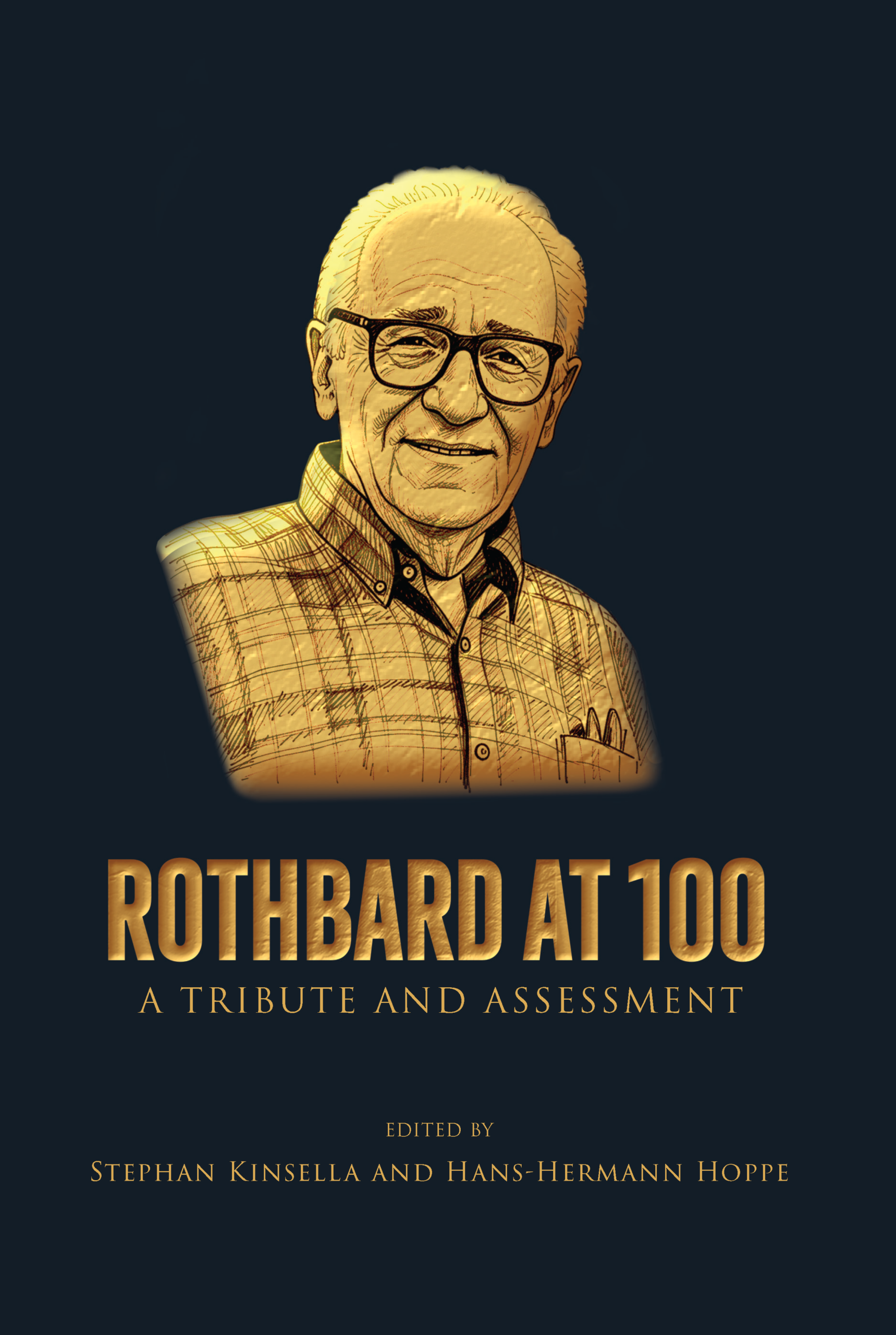
















 Alessandro Fusillo
 Andreas Tögel
 David Dürr
 Doug French
 Fernando Chiocca
 Greg Morin
 Hans-Hermann Hoppe
 Jay Baykal
 Jayant Bhandari
 Jeff Deist
 Jeffrey Barr
 Juan Fernando Carpio
 Ken Yamarashi
 León Isidoro
 Martin Cabrera
 Nick Hoppe
 Oscar Grau
 Peter Wong
 PFS
PFS scholarium
 Saifedean Ammous
 Sean Gabb
 Sean Ring
 Stephan Kinsella
 Stéphane Geyres
 Thomas Jacob
 Tom DiLorenzo