 Len D. Pozeram, “Let the American Middle East Die,” Libertarian Alliance (26 August, 2026).
What if the decline of American power in the Middle East is good news for Americans?
Marc Lynch begins a recent Foreign Affairs essay with a declaration that would have been unprintable in the respectable journals a few years ago: “The American Middle East is finished.” He means the regional system built after the 1991 Gulf War, when the United States emerged from the Cold War as the only superpower and decided that this entitled Washington to supervise everything from the eastern Mediterranean to the Persian Gulf.
That system rested on American bases and security guarantees. It protected Arab monarchies, contained Iraq and Iran, and placed Israel at the center of a regional order assembled under American management. Oil would flow. Israel would receive protection. Arab governments would be brought into line through weapons sales and diplomatic pressure. Any state that refused the arrangement would be sanctioned, bombed, or isolated until it submitted. It looked formidable on a map. Then came the American-Israeli war with Iran.
According to Lynch, the war exposed two facts that had previously been hidden behind the scale of American military spending. The United States could not overthrow the Iranian government, and it could not protect its Gulf clients from the consequences of trying. Iran remained standing. American bases and allied infrastructure suffered serious damage. The Strait of Hormuz was disrupted despite decades of promises that the United States Navy guaranteed freedom of navigation. Gulf rulers learned that an American guarantee could involve being dragged into a war they opposed, attacked by a country they had been trying to accommodate, and then told to remain grateful for the protection. That is quite a bargain. I have had guests at the motel complain about a room after they flooded the bathtub themselves, but none has demanded that I pay them for the privilege.
The Iran war did not create the weakness of American power. It forced the weakness into the open. Washington had spent thirty-five years confusing the ability to destroy things with the ability to produce a tolerable political settlement. Iraq should have cured this confusion. Libya ought to have finished the job. Instead, every failure became the argument for another intervention. Trump’s war was therefore not a departure from the old policy. It was the policy stripped of its diplomatic upholstery. The United States had spent decades containing Iran through sanctions and military threats while building a regional coalition around Israel. Trump attempted to settle the matter by force. He assumed that superior weapons would break the Iranian state and that frightened allies would fall into line.
They did not. Iran adapted. Gulf governments resented being exposed to retaliation. The regional order that was supposed to demonstrate American supremacy instead revealed the limits of American power. There will still be American troops in the region. Gulf monarchies will continue buying American weapons, particularly while they are afraid. Diplomats will hold conferences and announce renewed commitments. Empires seldom close in a single afternoon. Britain remained active in the Middle East after the Suez fiasco of 1956, but nobody serious believed after Suez that London remained an independent world power. The outward machinery can continue long after the governing assumption has died. Britain retained bases and issued declarations. What it had lost was the power to decide events without permission from stronger countries or resistance from the people under its influence. The same change is happening to Washington now.
The foreign-policy establishment regards this as a catastrophe. Ordinary Americans should be slower to mourn. The empire has never been free. Its costs cannot be measured only by adding up the Pentagon budget or the interest on money borrowed for wars. Americans have paid for empire with their constitutional freedom. They have also paid through the progressive debasement of their currency. A government that claims the right to manage the world cannot remain limited at home. Empire requires secrecy and surveillance. It needs executive power broad enough to begin wars without declarations from Congress. It needs officials who can classify their mistakes, monitor domestic opposition, and punish people who reveal what has been done in the public’s name.
The 2001 Authorization for Use of Military Force was passed after the September 11 attacks to pursue those responsible. It became a roving permission slip for military operations far beyond Afghanistan and long after the men who planned the attacks were dead. Presidents of both parties treated the constitutional power of Congress to declare war as an antique formality. Troops could be deployed, missiles launched, and foreign governments attacked under elastic theories of presidential authority.
The same war on terror brought the PATRIOT Act, secret surveillance, watch lists, and an expanding national-security bureaucracy. Americans became accustomed to taking off their shoes for federal agents before boarding an airplane. Their communications were collected because the government claimed that finding a few dangerous foreigners required examining the activities of millions of innocent citizens.
Each measure was described as temporary or exceptional. Together they changed the relationship between the citizen and the state. The government no longer had to establish suspicion before watching a man. The man was expected to prove that he presented no threat to a government that reserved the right to keep its evidence secret. Foreign war also returned home through policing. Military equipment moved into local departments while police training absorbed the language of occupation. Protesters became potential extremists. Journalists who published inconvenient information were accused of helping the enemy. The line between protecting the country and protecting the government from criticism grew thinner.
This was not an accidental side effect of empire. Arbitrary power does not remain politely overseas. A government that may kill foreigners without trial will eventually claim extraordinary powers over its own population. The legal category may change, but the institutional appetite remains.
The monetary bill arrived more slowly. Wars once required governments to impose taxes that voters could see. The taxpayer felt the cost and might ask whether the objective justified it. Modern Washington discovered a more convenient method. Borrow the money, expand the balance sheet; let the cost appear later through interest payments and the declining purchasing power of the dollar.
Not every dollar of federal debt was incurred for war, and it would be dishonest to pretend otherwise. Social programs and financial rescues contributed enormously. Yet empire helped establish the governing rule that no present ambition need be paid for by present sacrifice. A base could be built abroad and another campaign begun while politicians promised tax cuts at home. The bill was passed forward. Treasury data show a federal government carrying liabilities that earlier generations would have regarded as fantastic. The Bureau of Labor Statistics explains the practical result of inflation without any ideological ornament: as prices rise, the purchasing power of the dollar falls. A motel owner sees it in replacement linens, insurance premiums, and the parts required to keep an old air-conditioning unit alive. A family sees it at the grocery store and when trying to save for a house.
The connection between empire and debasement is moral as well as financial. Both depend upon separating a decision from its cost. Washington orders a war, but somebody else loses a son. Congress spends borrowed dollars, but a future worker pays the interest. The Federal Reserve supplies monetary accommodation, and the person holding cash discovers that his savings buy less. Sound money imposes a kind of discipline. So does the constitutional requirement that Congress debate and declare war. The managerial state dislikes both for the same reason. They force rulers to admit what their policies cost.
The decline of American power in the Middle East may finally restore some of that discipline. If Gulf governments no longer trust Washington to manage their security, they will make their own arrangements. Some will reach accommodations with Iran. They may build stronger relations with China or Russia. None of this guarantees peace, but it removes the American subsidy for reckless local behavior.
It is time for the Europeans to make their own arrangements as well. Europe has an obvious interest in repairing its relationship with Russia. Geography will not change to suit a NATO communiqué. Europeans need Russian energy and a stable eastern frontier more than Americans need to supervise either. If European governments prefer continued hostility, they should pay for it and accept the danger themselves. The United States should wish them well and come home.
Israel must also be left to face the consequences of its conduct. American money and diplomatic protection have allowed Israeli governments to believe they can murder and dispossess Palestinians, expand settlements across occupied land, and invade neighboring countries without paying the normal price for such behavior. Washington has not restrained Israel. It has financed the illusion that restraint is unnecessary. Ending that subsidy would not be an act of hostility toward Israeli civilians. It would mean treating Israel as an independent country responsible for its own decisions. If Israelis want safety, they will have to stop making permanent enemies of the Arabs under their power and beyond their borders. They will need political settlements rather than another shipment of bombs.
The Arabs will then bear responsibility for what they do, as they should. Iran’s rulers are repressive and perfectly capable of destructive behavior. Arab monarchies will continue serving themselves. None of that makes American domination either lawful or useful. The Middle East belongs to the people who live there, and they will have to find their own balance of power.
Washington will object that withdrawal creates a vacuum. This is the preferred language of every imperial bureaucracy. A “vacuum” means a place where foreigners are acting without American permission. There was no vacuum in the Middle East before Washington arrived, only countries and peoples with interests of their own.
Nor does withdrawal require commercial isolation. Americans can buy and sell goods, travel, and conduct ordinary diplomacy without maintaining an archipelago of military bases. Voluntary exchange does not require an aircraft carrier behind every invoice. Switzerland has managed to trade with the world without claiming jurisdiction over it. A republic should defend its territory and citizens. It should maintain armed forces capable of making an attack on America prohibitively expensive. That is a serious task. It has little in common with protecting every hereditary ruler who buys American weapons or ensuring that Israel never has to compromise with the people it has displaced.
The end of the American Middle East will be messy. Clients will complain. Officials whose careers depend on managing the region will warn of chaos. Defense contractors will discover urgent new threats on television. Yet none of them can explain why an order that produced Iraq, Gaza, the Iran war, and repeated attacks on American forces deserves to be preserved.
For ordinary Americans, imperial decline offers a possibility that imperial triumph never did. We might get our country back. That will require more than closing bases. Congress must recover its authority over war. The surveillance powers created during the war on terror should be dismantled. Federal spending must again be constrained by the resources Americans are willing to provide openly, rather than hidden through debt and monetary depreciation. These changes will not restore constitutional government overnight. They would at least remove one of the largest excuses for its destruction.
I look forward to an America that minds its own business in the world. Let the Europeans negotiate with Russia. Let Israel make peace with the Palestinians and stop invading its neighbors. Let the governments of the Middle East discover that sovereignty brings responsibility as well as freedom from Washington’s orders. Americans have spent thirty-five years paying for a regional order that made other countries dependent and our own government dangerous. If that order is now dying, we should not send more money or another generation of young people to resuscitate it.
Let the American Middle East finish. Then let America begin again.
Sources: Marc Lynch, “The End of the American Middle East,” Foreign Affairs, August 20, 2026; U.S. Bureau of Labor Statistics, “Purchasing Power and Constant Dollars”; and U.S. Treasury Fiscal Data, “Debt to the Penny”.















 Alessandro Fusillo
 Andreas Tögel
 David Dürr
 Doug French
 Fernando Chiocca
 Greg Morin
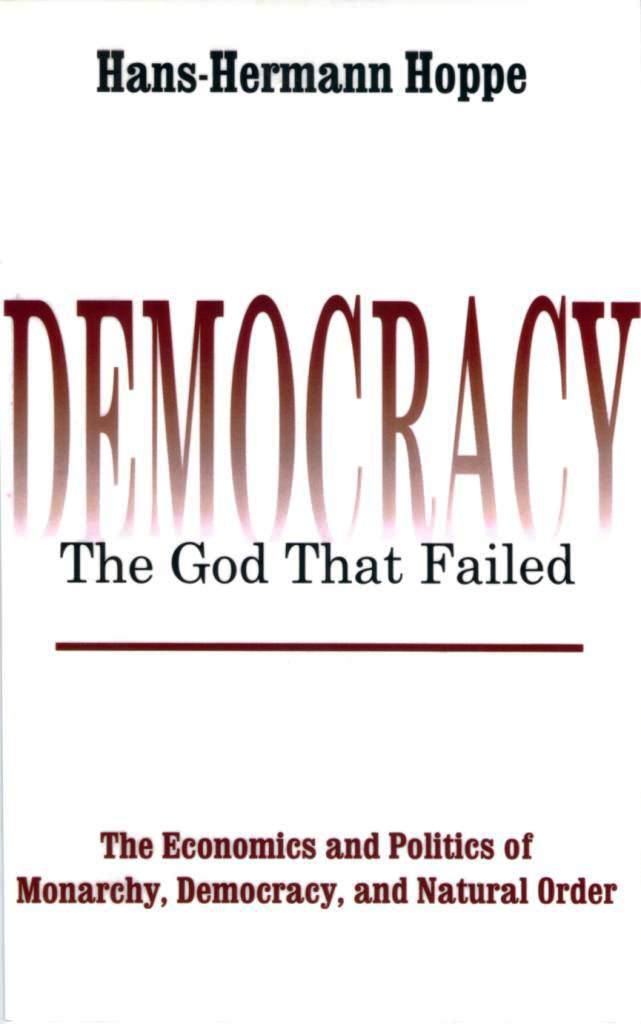
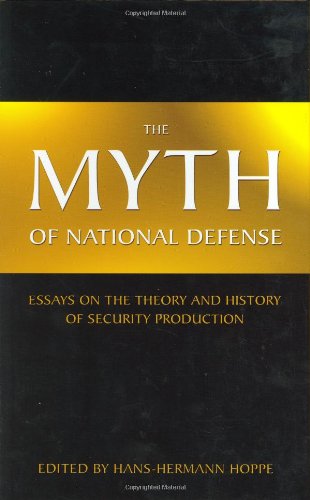
 Hans-Hermann Hoppe
 Jay Baykal
 Jayant Bhandari
 Jeff Deist
 Jeffrey Barr
 Juan Fernando Carpio
 Ken Yamarashi
 León Isidoro
 Martin Cabrera
 Nick Hoppe
 Oscar Grau
 Peter Wong
 PFS
PFS scholarium
 Saifedean Ammous
 Sean Gabb
 Sean Ring
 Stephan Kinsella
 Stéphane Geyres
 Thomas Jacob
 Tom DiLorenzo
Follow Us!