Gilbert Cavanaugh, “Libertarians and Race Realism,” American Renaissance (Oct. 11, 2013). An interesting article I must have missed, by “Gilbert Cavanaugh is a proud Middle American Radical.” As it is subject to copyright and does not use a permissive copyright policy, I excerpt only the beginning and then provide a summary from Grok. At the end, I append some notes and links concerning developments since this article was written in 2013.
From the article:
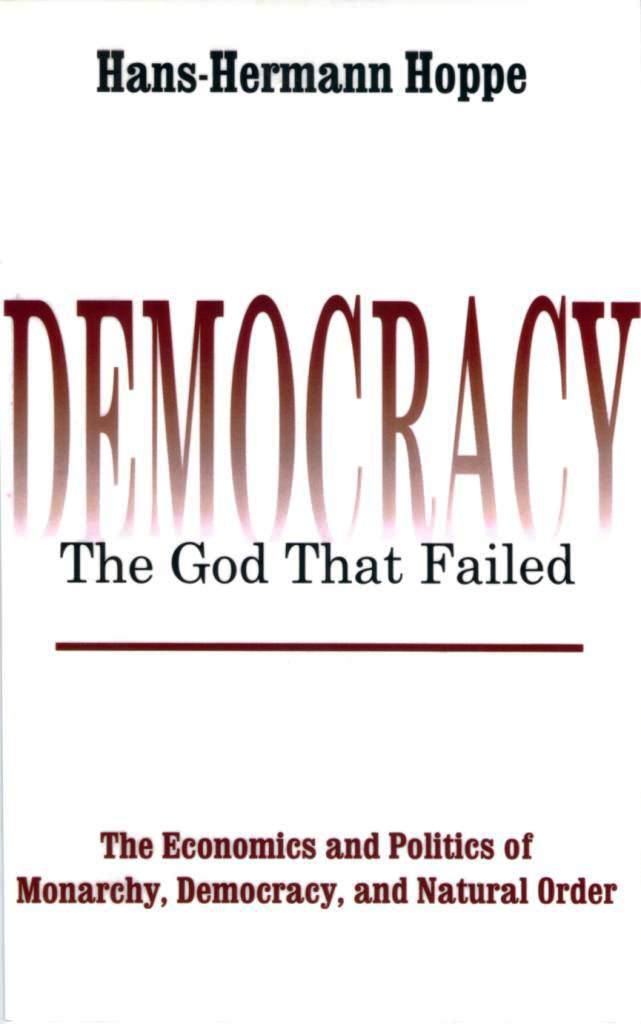
For those of us who enjoy a touch of libertarianism, the news of Jared Taylor’s recent appearance at Hans-Hermann Hoppe’s Property and Freedom Society was well received. It also begs the valuable question, “Which libertarians are friendly to race realism, and which are not?” As it stands, what Mr. Taylor wrote over a decade ago in his review of Prof. Hoppe’s Democracy: The God That Failed is still (unfortunately) for the most part true: “Libertarians, to the extent they have any influence on American policy, have been bitter opponents of immigration control. From the Cato Institute, to the Libertarian Party, to the editorial pages of the Wall Street Journal, their generally laudable opposition to government control leads them to view border control as just one more intolerable act of government tyranny.” However, both then and now, Prof. Hoppe and a small band of allies within the libertarian movement have fought that trend; and they deserve notice for their principled and courageous stance.
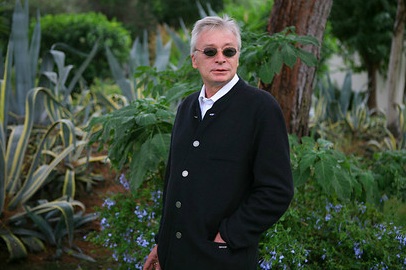
Hans-Hermann Hoppe
Prof. Hoppe (sometimes referred to as “HHH”) and his Property and Freedom Society is a good place to start. Founded in 2005, it was forged in large part out of Prof. Hoppe’s dislike for the mainstream and politically correct libertarian group, the Mont Pelerin Society, of which he had been a member. Both the PFS’s tone and speakers lists have been influenced from the beginning with touches of race-realism and anti-establishmentarianism gleaned from Prof. Hoppe’s participation in the John Randolph Club. The latter group, paleo-libertarian in pedigree, featured many speakers familiar to AmRen readers, such as Taki Theodoracopulos, Joe Sobran, Sam Francis, and during the early years, even Michael Levin and Jared Taylor. Unfortunately the Randolph Club has been more or less dormant for many years now, after several of its main participants died, and the remnants began fighting among themselves. Occasional AmRen contributor James P. Lubinskas’ essay, “The End of Paleoconservatism” examines that group’s fall in greater detail.
The talks given at Prof. Hoppe’s gatherings can be found easily on YouTube (although this year’s are not available yet), and feature not only Richard Spencer and Peter Brimelow, as Mr. Taylor mentioned, but other prominent race realists as well, such as John Derbyshire and Paul Gottfried. Prof. Hoppe also wrote an interesting reflection on the origins and nature of his society, which can be found on VDARE — frankly, any libertarian willing to post on VDARE is a libertarian worth listening to. Additionally, much of Prof. Hoppe’s writings on immigration and discrimination can be found online. Especially noteworthy for AmRen readers are, “On Free Immigration and Forced Integration” and “Secession, the State, and the Immigration Problem.”
Lew Rockwell is another libertarian figure worth knowing about, but is something of an enigma. In 1982 he founded the Ludwig von Mises Institute, which quickly became a conservative and radical counterweight to the increasingly liberal and mainstream Cato Institute. Murray Rothbard, considered a kind of libertarian god to many, would soon join him after being purged from the Cato Institute, which he had helped found. The Mises Institute, while more libertarian than anything else, has time and again shown itself to be unconcerned with the taboos that even many other libertarians fear. It has published sharp critiques of such liberal totems as feminism and multiculturalism.
Mr. Rockwell would also go on to propose a “paleo libertarian alliance” in 1990 that would make the case for libertarians to avoid the company of certain “liberated” groups that had begun making common cause with the movement, such as habitual drug users, nudists, and the like. Instead, Mr. Rockwell argued that libertarians should establish closer ties with the rising paleo-conservative movement. That same year Mr. Rockwell took his own advice and started the paleo-libertarian Rothbard-Rockwell Report, which ran into the late ’90s and featured a plethora of AmRen contributors such as Michael Levin, Paul Gottfried, and Robert Weissberg, as well as the then less well known Hans-Hermann Hoppe.
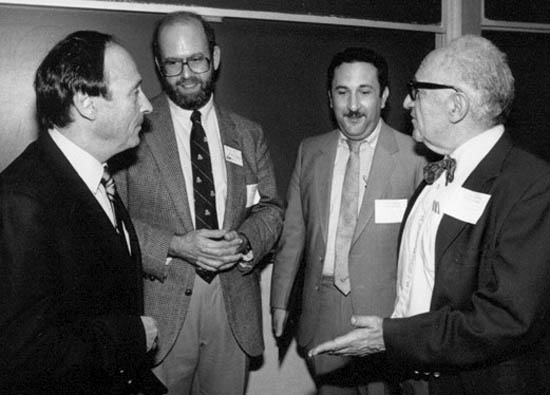
Burton Blumert, Lew Rockwell, David Gordon, and Murray Rothbard.
Now
A few notes. Cavanaugh writes:
The two most powerful open-borders radicals among the libertarian ranks are, by far, Anthony Gregory and Walter Block. Walter Block has been with the Mises Institute for some time now, and is frequently Prof. Hoppe’s sparring partner on immigration. One such ideological duel can be found in this issue of the Journal for Libertarian Studies (which is put out by Mises), in which John Hospers, the founder of the Libertarian Party, voiced emphatic opposition to the idea of open borders. Anthony Gregory is of a younger generation of libertarians, and works for the fairly small Independent Institute — which also employs Alvaro Vargas Llosa (son of Mario) who recently penned a gushingly pro-immigration book. Troublingly, Anthony Gregory and Walter Block have both found ways to be featured frequently in what are otherwise reliable bastions of sensible libertarianism, namely the Mises Institute and LewRockwell.com. Mr. Gregory seems to have redoubled his efforts, having made it into The American Conservative as well, while also being published in liberal publications such as The Huffington Post.
Two other important libertarian open-border advocates are Alex Nowrasteh and Jesus Huerta de Soto, while two other important libertarian immigration restrictionists are Gary North and Sean Gabb.
Kinsella comments:
I note that Cavanaugh links to a symposium issue of the Journal of Libertarian Studies; that link is now broken, of course, because the Mises Institute has sabotaged the website.1 Cavanaugh points to Huerta de Soto’s article in that symposium issue (Jesús Huerta de Soto’s, “A Libertarian Theory of Free Immigration,” J. Libertarian Stud. 13 no. 2 (Summer 1998): 187–197) as evidence that he is an open-border advocate. I’ll let the reader decide, but Grok doesn’t see it that way; I do not see much difference between Huerta de Soto’s and Hoppe’s views on the immigration issue: both favor an anarcho-capitalist or private law society where the concept of citizenship, immigration, and public property do not exist; and where in the meantime there must be restrictions on the right to immigrate.
It also seems clear that the anti-open borders position has continued to fade among libertarians. In addition, Hoppe refused to make the mistake in previous “fusionist” attempts,2 and while hosting Richard Spencer in 2010 at the PFS (PFP047 | Richard Spencer, The “Alternative Right” in America (PFS 2010)), before he became “Richard Spencer,” Hoppe later criticized him and others such as Pat Buchanan and Sam Francis explicitly.3
Grok summary and analysis
Gilbert Cavanaugh’s “Libertarians and Race Realism” (American Renaissance, October 11, 2013) argues that mainstream libertarians (Cato, the Libertarian Party, Wall Street Journal types) have long treated immigration controls as tyranny, consistent with their opposition to government power. A smaller group of “paleo-libertarians,” centered on Hans-Hermann Hoppe, has resisted this and shown openness to race realism, cultural conservatism, and discrimination as expressions of freedom of association. Cavanaugh presents these figures as principled outliers who deserve notice for rejecting political correctness within libertarianism.
Hoppe, the Property and Freedom Society, and related institutions
Hoppe is the central figure. He founded the Property and Freedom Society (PFS) in 2005 largely out of dissatisfaction with the politically correct Mont Pelerin Society. PFS’s tone and speaker lists from the start incorporated “touches of race-realism and anti-establishmentarianism” drawn from Hoppe’s earlier involvement in the John Randolph Club (a paleo gathering that included speakers familiar to AmRen readers such as Taki Theodoracopulos, Joe Sobran, Sam Francis, Michael Levin, and Jared Taylor). PFS has hosted race realists and related figures (Richard Spencer, Peter Brimelow, John Derbyshire, Paul Gottfried, Jared Taylor). Cavanaugh quotes Hoppe’s writings on immigration, including “On Free Immigration and Forced Integration” and related pieces, which treat open borders in a welfare state as forced integration that undermines property rights and freedom of association. He portrays Hoppe as continuing the “fearless and conservative-oriented libertarianism” of Murray Rothbard and notes that Hoppe has faced libertarian backlash (including living partly in Turkey).
Rothbard, Rockwell, LewRockwell.com, and the paleo alliance
Murray Rothbard is presented as the foundational example of this orientation: purged from Cato, co-founder of the Mises Institute, endorser of Pat Buchanan in 1992, youthful supporter of segregationist figures like Strom Thurmond, author of a glowing review of The Bell Curve, and writer of “Egalitarianism as a Revolt Against Nature.” The Mises Institute invited Sam Francis and Joe Sobran to conferences. Lew Rockwell (Mises Institute founder) proposed a “paleo libertarian alliance” in 1990 to link libertarians more closely with rising paleoconservatives while distancing from “liberated” cultural libertines. The Rothbard-Rockwell Report featured AmRen-adjacent contributors (Michael Levin, Paul Gottfried, Robert Weissberg) alongside Hoppe. Rumors of Rockwell ghost-writing Ron Paul newsletters that referenced Jared Taylor positively are noted. LewRockwell.com (launched 1999) initially reflected this pedigree (archiving Rothbard, carrying Hoppe, Buchanan, Clyde Wilson, and some race-realist or paleo-leaning writers) but, according to Cavanaugh, later moved toward greater political correctness, deleting authors such as Michael Levin and Jared Taylor.
Open-borders vs. restrictionist libertarians
Cavanaugh identifies Anthony Gregory and Walter Block as the most prominent open-borders radicals (Gregory at the Independent Institute; Block a Mises affiliate who debated Hoppe on immigration in the Journal of Libertarian Studies). Jesús Huerta de Soto is cited for “A Libertarian Theory of Free Immigration.” Restrictionist or more culturally conservative voices mentioned include Gary North, Sean Gabb, Thomas Woods Jr. (who has reviewed Hoppe alongside Buchanan’s The Death of the West and written for Mises/LRC), and earlier figures like John Hospers. The piece contrasts these with mainstream open-borders tendencies and notes that Hoppe’s approach (restricted immigration compatible with free trade and private property) offers a coherent alternative.
Overall, the 2013 article frames a historical “harmonious relationship” among race realists, paleoconservatives, and certain libertarians in the 1990s (John Randolph Club, early Mises Institute, Rothbard-Rockwell) that partially frayed, while Hoppe’s PFS kept a version of the paleo orientation alive.
Updated assessment of paleolibertarian and paleoconservative currents (drawing on the linked Hoppe, Kinsella, and related material)
Hoppe’s own writings provide the clearest internal critique and continuity. In the unpublished 1996 piece “From Nation to Household: The Middle American Illusions of Sam Francis (and Pat Buchanan),” Hoppe rejects Francis/Buchanan-style “Middle American” populism as a form of national socialism: socialist economics (preserving welfare institutions) combined with top-down cultural nationalism and protectionism. He argues this is internally contradictory, economically destructive, and incompatible with genuine restoration of family, morals, and prosperity. The alternative he sketches is “national capitalism” or grass-roots, property-based order: cultural conservatism and selective association/exclusion rooted in private households and freedom of association, free trade (not protectionism), restricted immigration via private property and invitation rather than centralized state policy, abolition of welfare and regulations, and sound money. Immigration controls are justified as protecting property owners from forced integration in a welfare-democratic state; true resolution requires decentralization toward anarchy.
Hoppe’s later reflections (including the 2010 PFS piece and the 2017 “Libertarianism and the Alt-Right” talk) treat the paleolibertarian-paleoconservative alliance of the 1980s–90s (John Randolph Club era) as having broken down because conservatives would not accept libertarian economics while libertarians were willing to learn cultural lessons. He has continued a “cautious fusionism” through PFS: inviting paleocons, race realists, and later alt-right-adjacent speakers for sociological insights on hierarchy, group differences, anti-egalitarianism, and opposition to multiculturalism/mass immigration/cultural Marxism, while criticizing protectionism, “socialism for whites only,” and the lack of rigorous theory among many nationalists. Kinsella’s compilations and essays (“Hoppe vs. the Alt-Right,” “The Three Fusionisms”) frame old fusionism (Meyer-style), the short-lived 1990s new/paleo fusionism, and Hoppe’s ongoing cautious version centered on private property, covenant communities, and freedom of association/discrimination rather than nation-state identity.
Current state of the paleolibertarian tendency: The explicit 1990s “paleo strategy” (Rothbard-Rockwell alliance with paleocons for political relevance) largely dissipated after Rothbard’s death; Rockwell himself later distanced from the label. Remnants persist in the intellectual orbit of the Mises Institute, LewRockwell.com archives, and especially Hoppe’s PFS, which remains active (20th annual meeting scheduled for September 2026 in Bodrum). Elements appear in the Mises Caucus within the Libertarian Party and among some figures associated with Austrian economics and cultural conservatism. The broader strategy is widely viewed as having failed to libertarianize the right; instead, populist energy was absorbed into movements that retained or expanded protectionism, executive power, and nationalism while discarding pure free-market radicalism. Hoppe’s version remains a niche, theoretically rigorous project emphasizing private order over state-centric nationalism.
Paleoconservative movement and related currents: Traditional paleoconservatism (Buchanan, Francis, Chronicles, opposition to neocons, multiculturalism, mass immigration, and globalism while retaining more statist/protectionist economics) declined institutionally after the 1990s–2000s but influenced the alt-right and Trump-era “America First” politics. Themes of cultural preservation, restricted immigration, and anti-woke reaction have broader currency on the contemporary right (including postliberal and some populist strands). However, key institutional vehicles have faced severe pressure: VDare suspended operations amid New York Attorney General lawfare and related challenges around 2024; Peter Brimelow stepped down after 25 years, with Lydia Brimelow handling wind-down; the site’s future accessibility is limited. AmRen and similar race-realist outlets continue in a more marginalized space. Chronicles and related paleo intellectual efforts persist, and some observers note a partial revival or absorption of paleo themes into the broader Trumpist right, though often stripped of the older paleo economic and foreign-policy consistency.
In short, the 1990s paleo alliance Cavanaugh described was real but fragile and short-lived. Hoppe has maintained the most consistent property-rights, anti-egalitarian, and culturally realist version through PFS and his writings, while critiquing both open-borders libertarianism and nation-state populism. Explicit paleolibertarianism is a small intellectual current; paleoconservative ideas have partially diffused into the larger right under different labels, while pure institutional expressions face ongoing cancellation, legal, and cultural headwinds. The core tension Hoppe identified—cultural realism versus economic interventionism, and private association versus top-down nationalism—remains unresolved in the broader movements.
***
Related articles
- Kinsella, Hoppe vs. the Alt-Right
- Hoppe, The Property And Freedom Society—Reflections After Five Years, The Libertarian Standard (June 10, 2010); also published at VDare and as ch. 24 in The Great Fiction; video
- ——, “From Nation to Household: The Middle American Illusions of Sam Francis (and Pat Buchanan),” HansHoppe.com (1996)
- Hoppe, Where the Right Goes Wrong (1997)
- ——, The Case for Free Trade and Restricted Immigration (Vol. 13 Num. 2) (also in The Great Fiction and as “On Free Trade and Restricted Immigration” in Democracy: The God That Failed)
- ——, On Free Immigration and Forced Integration, LewRockwell.com (June 1, 1999) and Chronicles, July 1, 1995, also in Democracy: The God That Failed (Transaction, 2001)
- ——, Natural Order, the State, and the Immigration Problem (Vol. 16 Num. 1, Winter 2002): 75-97 (also in The Great Fiction)
- ——, PFP183 | Hans-Hermann Hoppe, Libertarianism and the “Alt-Right” (PFS 2017)
- Other links at On “Unowned” State Property, Legal Positivism, Ownership vs. Possession, Immigration, Public Roads, and the Bum in the Library
- Hoppe and Kinsella on Immigration
- Kinsella, The Three Fusionisms: Old, New, and Cautious
- Peter Brimelow, “Why We’ve Suspended VDARE And I’ve Resigned After 25 Years“
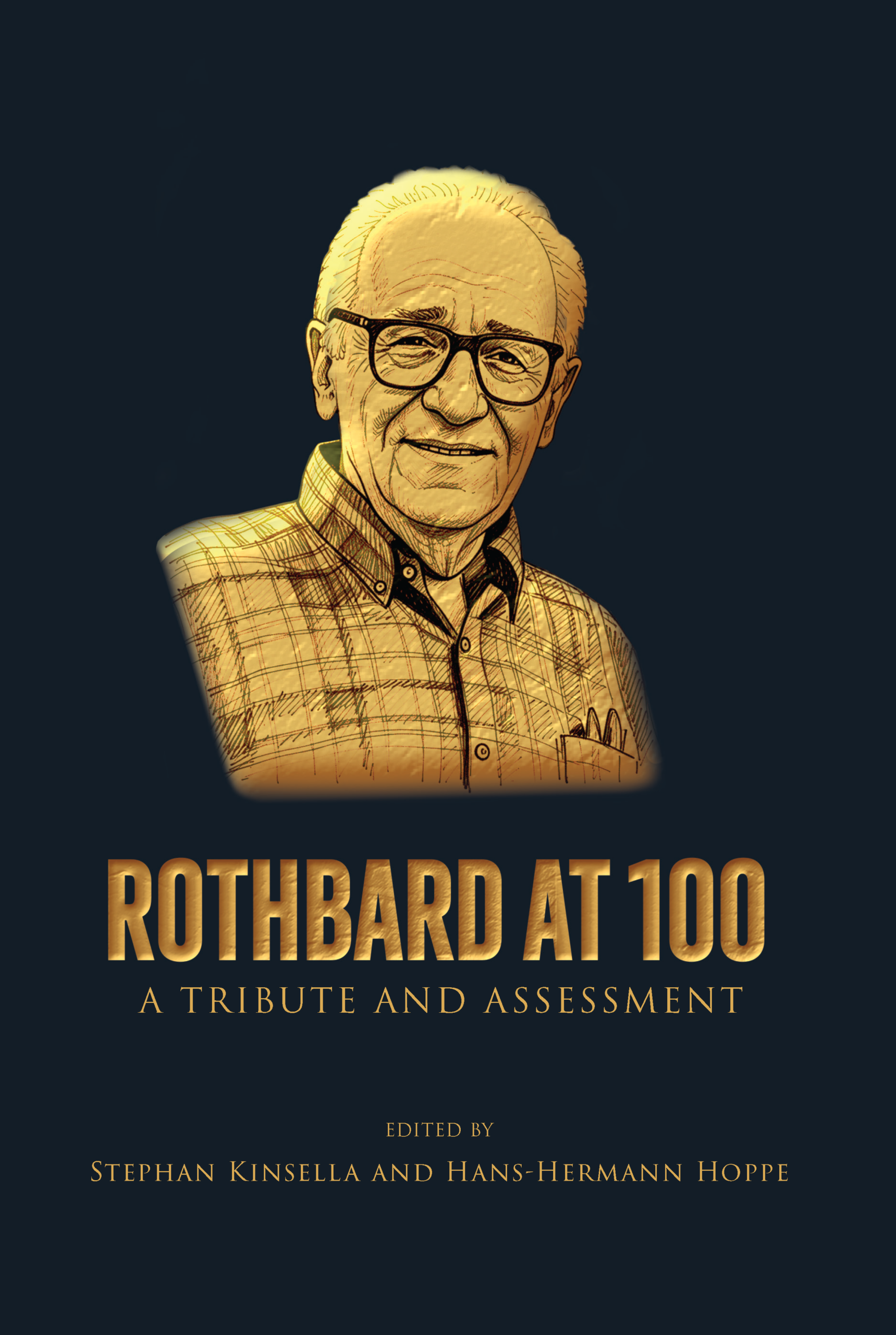
- See Kinsella, “My Years with the Mises Institute,” Property and Freedom Journal (May 2, 2026), in particular in the subsections: “Pointless Name Changes, Website Changes, and Journal Confusion,” “Open Publishing Abandoned,” “Mises.org; Copyright and Open Publishing/Information“; Kinsella, McMaken: Why Comments Sections Are Not Coming Back to Mises.org. See also Kinsella, “Mises, Rothbard, Hoppe: An Indispensable Framework,” in Rothbard at 100: A Tribute and Assessment, Stephan Kinsella and Hans-Hermann Hoppe, eds. (Papinian Press and The Saif House, 2026), where after noting Rothbard had become more skeptical of immigration later in life, I cited that piece and the individual pieces of the symposium issue, since the issue can no longer be found at Mises.org: “Murray N. Rothbard, “Nations by Consent: Deconstructing the Nation-State,” J. Libertarian Stud. 11, no. 1 (Fall 1994; pdf version): 1–10. Three years after Rothbard’s death, the Journal of Libertarian Studies, now under Hoppe’s editorship, featured a symposium issue (Vol. 13 no. 2, Summer 1998) on the immigration issue featuring the following, only one of whom (Walter Block) opposed all immigration restrictions: Ralph Raico, “Introduction,” pp. 135–136; Julian Simon, “Are There Grounds for Limiting Immigration?“, pp. 137–152; John Hospers, “A Libertarian Argument Against Opening Borders,” pp. 153–165; Walter Block, “A Libertarian Case for Free Immigration,” pp. 167–186; Jesús Huerta de Soto, “A Libertarian Theory of Free Immigration,” pp. 187–197; Tibor R. Machan, “Immigration Into A Free Society,” pp. 199–204; Gary North, “The Sanctuary Society and its Enemies,” pp. 205–219; Hans-Hermann Hoppe, “The Case for Free Trade and Restricted Immigration,” pp. 221–233 (also in The Great Fiction and published as “On Free Trade and Restricted Immigration” in idem, Democracy: The God That Failed [Transaction, 2001]). See also idem, “On Free Immigration and Forced Integration,” LewRockwell.com (June 1, 1999) (also published in Chronicles (July 1, 1995) and in idem, Democracy: The God That Failed) ); and idem, “Natural Order, the State, and the Immigration Problem,” J. Libertarian Stud. 16, no. 1 (Winter 2002): 75-97 (also in The Great Fiction). [↩]
- Kinsella, The Three Fusionisms: Old, New, and Cautious. [↩]
- Hoppe, PFP183 | Hans-Hermann Hoppe, Libertarianism and the “Alt-Right” (PFS 2017); Hoppe, “From Nation to Household: The Middle American Illusions of Sam Francis (and Pat Buchanan),” HansHoppe.com (1996); Hoppe, Where the Right Goes Wrong (1997); Kinsella, Hoppe vs. the Alt-Right. [↩]










 Alessandro Fusillo
 Andreas Tögel
 David Dürr
 Doug French
 Fernando Chiocca
 Greg Morin
 Hans-Hermann Hoppe
 Jay Baykal
 Jayant Bhandari
 Jeff Deist
 Jeffrey Barr
 Juan Fernando Carpio
 Ken Yamarashi
 León Isidoro
 Martin Cabrera
 Nick Hoppe
 Oscar Grau
 Peter Wong
 PFS
PFS scholarium
 Saifedean Ammous
 Sean Gabb
 Sean Ring
 Stephan Kinsella
 Stéphane Geyres
 Thomas Jacob
 Tom DiLorenzo
Follow Us!