Cristiano Fiori Chiocca, “Rothbard’s 100th birthday celebration in Porto – and the libertarian cause was the one who received the gift,” Instituto Rothbard (20/07/2026)
[Google translation]
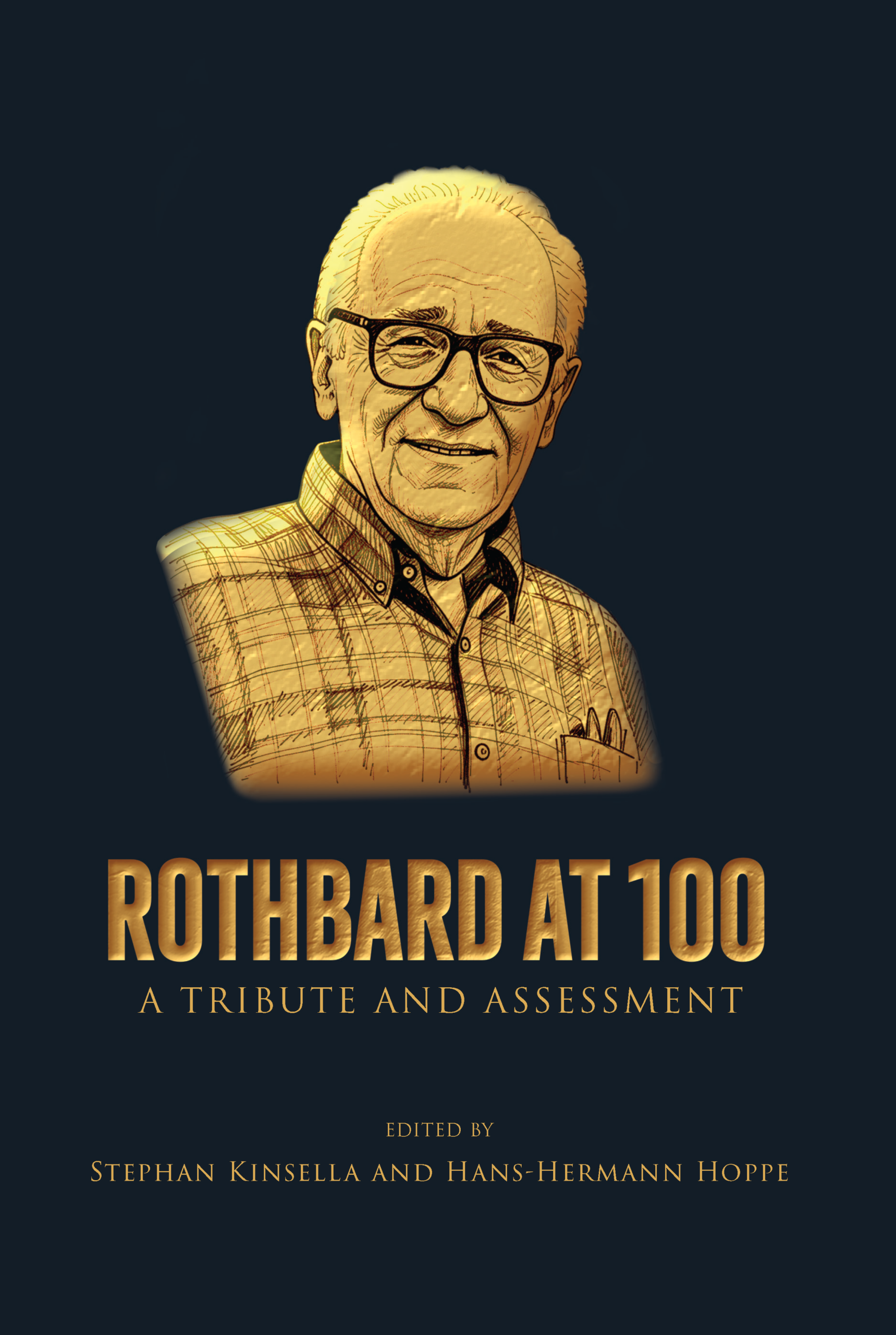
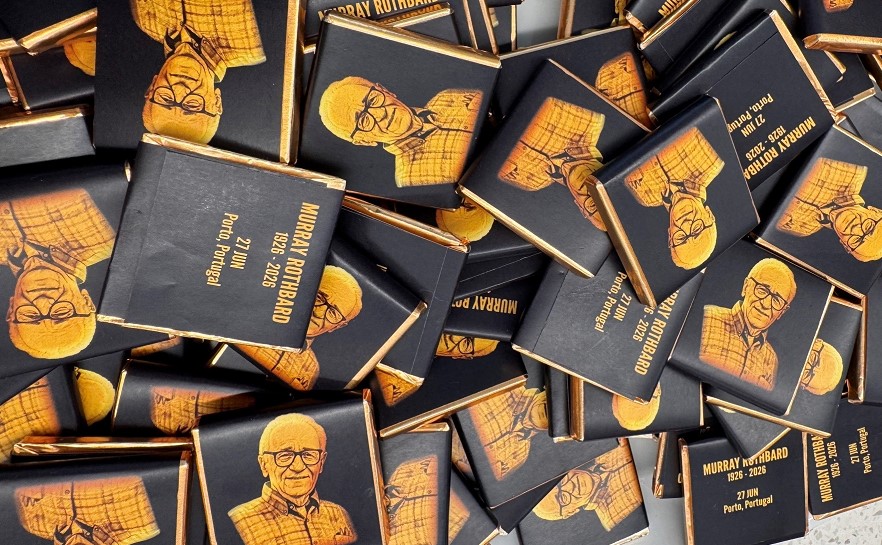 This year, 2026, marks the 100th anniversary of the birth of Murray Rothbard, an economist, philosopher, activist, intellectual, and professor with encyclopedic knowledge on such a vast range of subjects that he is one of the few people in history who can boast the title of polymath.
By definition, a polymath is someone who has in-depth knowledge of a wide range of subjects, and Rothbard, in addition to perfectly fitting the definition, had the clarity to express this knowledge as another remarkable quality.
This is how Rothbard gained so many friends and admirers to celebrate his centenary, even after his untimely death in 1995 at the age of 68. The vast number of books, academic publications, videos, and lectures left students and readers scattered throughout the world, and it was a group of these “friends” of Rothbard who organized his centenary celebration.
Before talking about the party, let me tell you a little about this group, an unlikely group, I would say. Unlikely because the group is Portuguese, a nation intoxicated up to its neck with cultural progressivism, economic control, subsidies, and little freedom. However, these valiant Portuguese, in the figure of Manuel Ogando, created the local Mises Institute and cultivate the civilizational treasure of the Austrian School with great care.
But that alone would be insufficient; this Portuguese core group embodies other characteristics that contributed to this celebration: they are warm, welcoming, friendly, and highly competent—the event was not only technically impeccable, it was also a gathering of friends; it felt like I was in my own living room, it was so welcoming. Rothbard’s powerful ideas also have this effect; you recognize friends when you share them.
So, speaking of the event, it brought together speakers from various parts of the world, including some who were students and personal friends of Rothbard, such as Hoppe, who is now the most important beacon of Rothbard’s legacy. But talking about the speakers would be an understatement; the energy of the event came from a contagious audience, a young, interested, and engaging public, and this denotes another characteristic of Rothbard: despite having passed away more than 30 years ago, his writings are extremely relevant today, and it is impossible to understand the world today without reading what he wrote decades ago—Rothbard’s work is alive and relevant.
From the lectures came a gift to the libertarian movement: Hoppe, Ammous, and Fernando Chiocca touched on the sore spot of the Palestinian cause and the manipulation of wars caused by Israel without mincing words, as Rothbard did. We can say that, with this event, the Palestinian cause, a cause of justice, freedom, and private property—themes dear to Rothbard—was rescued by the libertarian movement and is no longer identified solely as a cause of the Western left.
Even the greatest injustices and oppression can be ended by the wind of ideas, and that wind blew in Porto.
Discover more from The Property and Freedom Society
Subscribe to get the latest posts sent to your email.









 Alessandro Fusillo
 Andreas Tögel
 David Dürr
 Doug French
 Fernando Chiocca
 Greg Morin
 Hans-Hermann Hoppe
 Jay Baykal
 Jayant Bhandari
 Jeff Deist
 Jeffrey Barr
 Juan Fernando Carpio
 Ken Yamarashi
 León Isidoro
 Martin Cabrera
 Nick Hoppe
 Oscar Grau
 Peter Wong
 PFS
PFS scholarium
 Saifedean Ammous
 Sean Gabb
 Sean Ring
 Stephan Kinsella
 Stéphane Geyres
 Thomas Jacob
 Tom DiLorenzo