From Kinsella on Liberty Podcast, Episode KOL490.
This is my interview by Cody Cook (@CantusFirmusCC) of the Libertarian Christian Institute (@LCIOfficial), whose show I’ve been on previously,1 and whose book, Faith Seeking Freedom: Libertarian Christian Answers to Tough Questions, I endorsed, to discuss my recent book Rothbard at 100: A Tribute and Assessment (2026). Episode: Rothbard at 100: Why His Ideas Still Matter, with Stephan Kinsella (May 22, 2026 (recorded May 5, 2026)).
Why does an economist born 100 years ago still matter now? @NSKinsella talks anarchist polymath Murray Rothbard and about a new book written in his honor. Link in comments. pic.twitter.com/BgHe67VtjD
— Libertarian Christian Institute (@LCIOfficial) May 22, 2026
From Rothbard at 100: Why His Ideas Still Matter, with Stephan Kinsella (May 22, 2026):
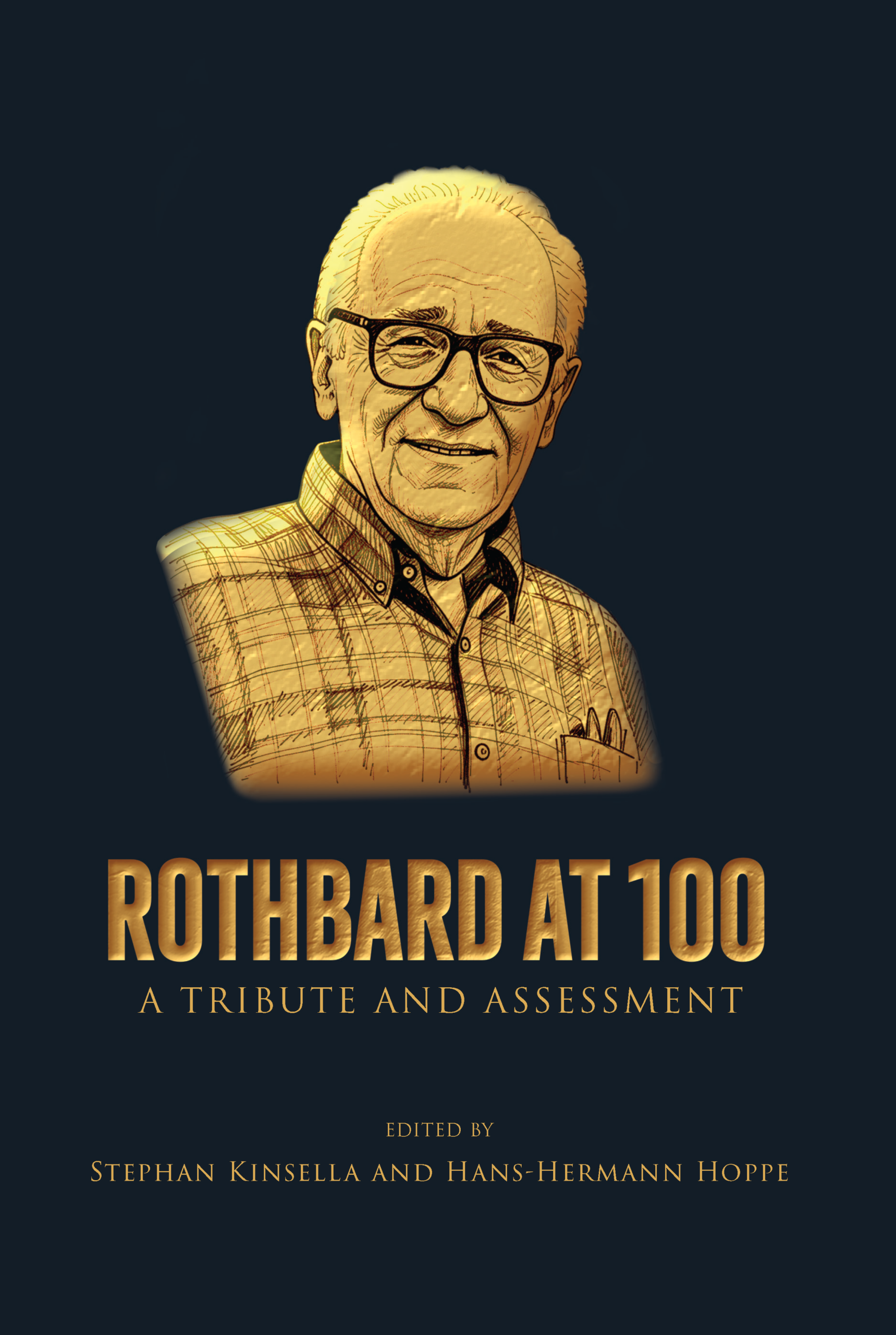 If he hadn’t passed away in 1995, Murray Rothbard would have turned one hundred this year. Why do his ideas still endure, inspire, and provoke? The answer isn’t nostalgia. It’s that Rothbard’s ideas continue to shape libertarian thought, economics, and the case for a free society in ways few thinkers ever have. His influence is visible in the modern liberty movement, in the resurgence of Austrian economics, and in the ongoing debates about property, the state, and intellectual freedom.
Stephan Kinsella, himself a friend and ally of Rothbard disciple Hans-Hermann Hoppe, joins Cody Cook to explain why Rothbard’s legacy endures. The episode argues that Rothbard still matters because he built a framework that remains indispensable for understanding political economy, human action, and the moral limits of state power.If he hadn’t passed away in 1995, Murray Rothbard would have turned one hundred this year. Why do his ideas still endure, inspire, and provoke? The answer isn’t nostalgia. It’s that Rothbard’s ideas continue to shape libertarian thought, economics, and the case for a free society in ways few thinkers ever have. His influence is visible in the modern liberty movement, in the resurgence of Austrian economics, and in the ongoing debates about property, the state, and intellectual freedom.
Stephan Kinsella (@NSKinsella), co-editor of the new book Rothbard at 100, joins Cody Cook to explain why Rothbard’s legacy endures. The episode argues that Rothbard still matters because he built a framework that remains indispensable for understanding political economy, human action, and the moral limits of state power.
The Case for Rothbard: Ten Reasons Why Rothbard Still Matters
1. Rothbard helped define the modern libertarian movement
Rothbard stands at the foundation of the post‑war libertarian tradition, synthesizing Austrian economics, natural rights theory, and radical anti‑statism into a coherent worldview. The episode argues that without him, the movement would lack its intellectual backbone. This is one of the core reasons Rothbard still matters: he built the architecture others now inhabit.
2. He systematized libertarianism into a full philosophy
Where earlier thinkers offered fragments, Rothbard produced treatises. Man, Economy, and State, Power and Market, and The Ethics of Liberty form a unified system of economics, ethics, and political theory. That system continues to anchor libertarian scholarship.
3. Rothbard advanced Austrian economics beyond Mises
Rothbard didn’t merely popularize Mises; he extended him. His corrections to monopoly theory and his insistence that state‑created privilege—not market structure—is the real source of monopoly remain central to Austrian analysis. This refinement is one of the reasons Rothbard still matters for anyone studying markets and state intervention.
4. He embraced radical conclusions others avoided
Rothbard took the logic of liberty to its endpoint: anarcho‑capitalism. Even those who reject that conclusion must grapple with his arguments. His willingness to follow principles to their logical end continues to challenge libertarians who prefer half‑measures.
5. His contract theory remains groundbreaking
Kinsella argues that Rothbard’s “title‑transfer theory of contract,” is one of his most overlooked achievements. It reframes contracts not as promises but as transfers of property titles. This innovation still shapes libertarian legal theory and is a key reason Rothbard still matters in debates about consent, obligation, and ownership.
6. Rothbard influenced the thinkers who influence us
Hans‑Hermann Hoppe, one of the most important living libertarian theorists, was one of Rothbard’s closest students. The intellectual lineage from Mises → Rothbard → Hoppe forms a framework Kinsella calls “indispensable.” Understanding that lineage is essential for understanding today’s liberty movement.
7. He built institutions that still shape the movement
Rothbard helped launch the Mises Institute and mentored scholars who now lead major libertarian organizations. His institutional legacy ensures that his ideas continue to shape research, education, and activism.
8. Rothbard’s historical works remain unmatched
Conceived in Liberty and his Austrian Perspective on the History of Economic Thought demonstrate a breadth few libertarian thinkers have matched. His historical method—tracing ideas, incentives, and power—still informs how libertarians analyze political development.
9. His mistakes sharpened later libertarian theory
The episode doesn’t hide Rothbard’s errors, especially on intellectual property. Kinsella argues that Rothbard’s missteps helped clarify why scarcity, not creation, grounds property rights. Even his mistakes are reasons Rothbard still matters, because they pushed the theory forward.
10. Rothbard’s work remains accessible and alive
The new Rothbard at 100 Festschrift—featuring scholars who knew him and those shaped by him—shows that his ideas continue to inspire serious scholarship. The fact that this book exists is itself a reason Rothbard still matters: his intellectual world is still expanding.
Conclusion
Rothbard still matters because he built something durable. His synthesis of Austrian economics, natural rights, and radical anti‑statism remains the most coherent framework for understanding liberty. The episode argues that his influence is not a relic but a living force shaping how libertarians think about property, the state, and human action.
Kinsella’s case is that Rothbard’s work forms part of an indispensable triad with Mises and Hoppe. That framework continues to guide scholars, pastors, activists, and anyone seeking a principled defense of a free society. The reasons Rothbard still matters are not sentimental—they are structural. His ideas continue to do real work in the world.
Additional Resources
From the Libertarian Christian Podcast
- “We Don’t Need No Stinkin’ Intellectual Property” — Kinsella’s earlier appearance on LCP discussing why IP conflicts with libertarian principles.
- “Faith Seeking Freedom (2nd Edition)” — Mentioned in the episode; LCI’s expanded guide to Christian libertarianism.
External Reads
- Rothbard at 100 — The Property and Freedom Society’s tribute to Murray Rothbard, edited by Stephan Kinsella and Hans-Hermann Hoppe.
- Murray Rothbard, The Ethics of Liberty — Rothbard’s core moral and political treatise; foundational for natural‑rights libertarianism.
- Murray Rothbard, Man, Economy, and State — His major economic work, extending Misesian praxeology.
- Hans‑Hermann Hoppe, A Theory of Socialism and Capitalism — Represents the next step in the Mises‑Rothbard‑Hoppe lineage.
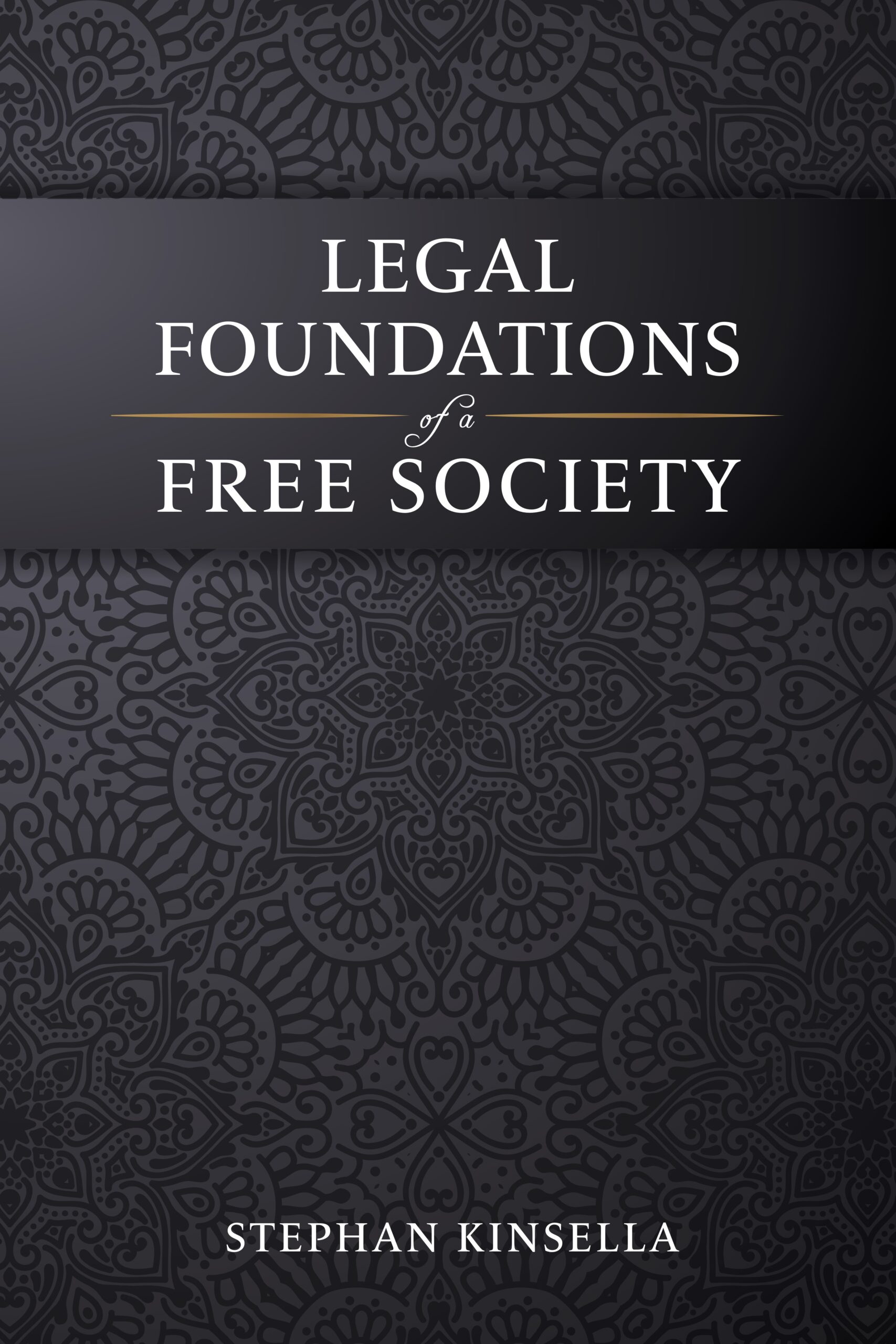
- Stephan Kinsella, Legal Foundations of a Free Society — Kinsella’s own contribution, heavily influenced by Rothbard and discussed in the episode.
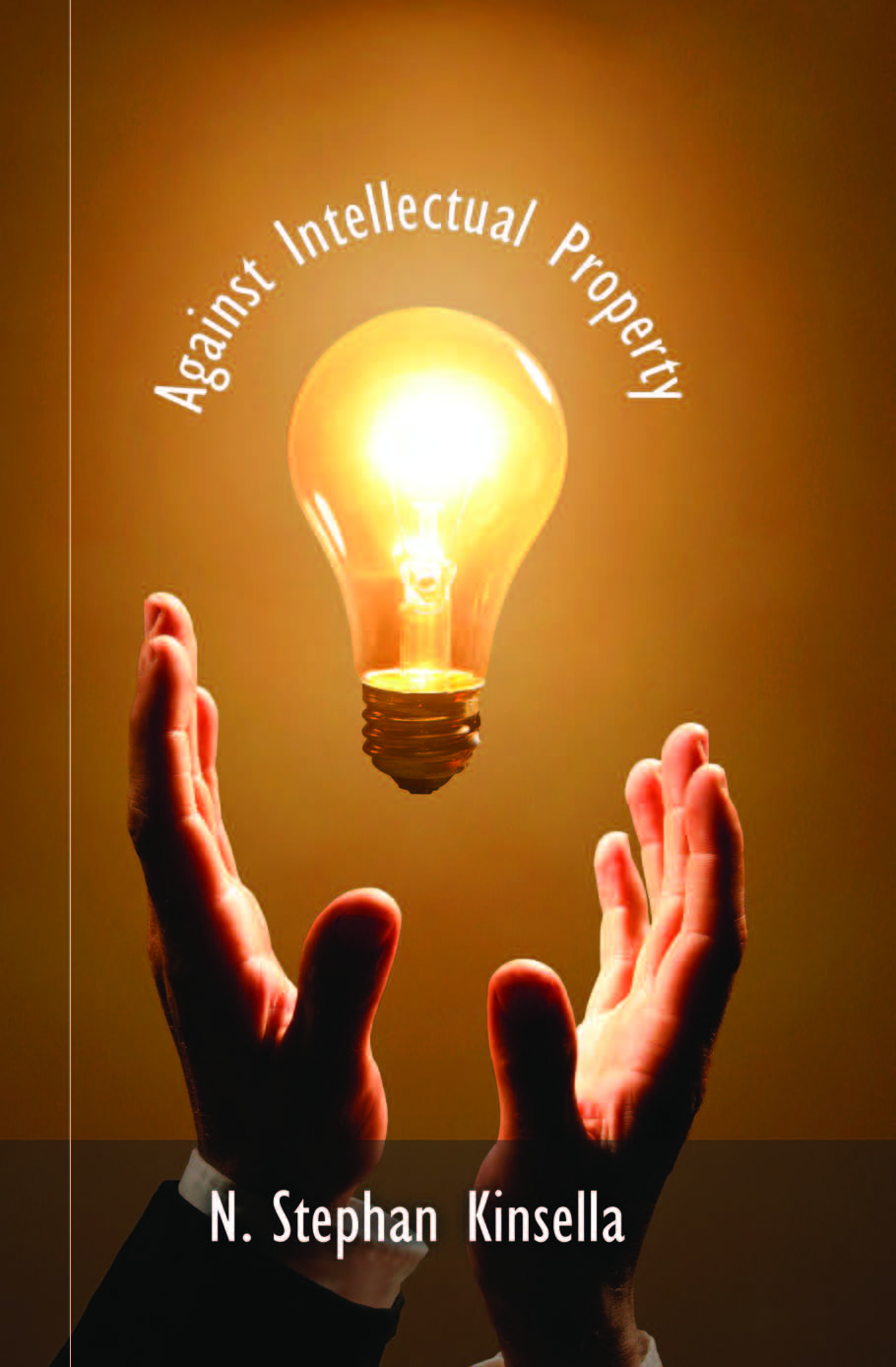
- Stephan Kinsella, Against Intellectual Property — Kinsella’s robust and persuasive argumentation for abandoning the notion of intellectual property.
Discover more from The Property and Freedom Society
Subscribe to get the latest posts sent to your email.










 Alessandro Fusillo
 Andreas Tögel
 David Dürr
 Doug French
 Fernando Chiocca
 Greg Morin
 Hans-Hermann Hoppe
 Jay Baykal
 Jayant Bhandari
 Jeff Deist
 Jeffrey Barr
 Juan Fernando Carpio
 Ken Yamarashi
 León Isidoro
 Martin Cabrera
 Nick Hoppe
 Oscar Grau
 Peter Wong
 PFS
PFS scholarium
 Saifedean Ammous
 Sean Gabb
 Sean Ring
 Stephan Kinsella
 Stéphane Geyres
 Thomas Jacob
 Tom DiLorenzo