From Kinsella Kinsella on Liberty Podcast: Episode 494.
This is my interview by Alex Buxeda of at Schweizer Monat [Swiss Monthly; linktree]; recorded June 22, 2026. [Note: Professor Hoppe has been featured in this publication: “Debatte: Small is Beautiful,” Schweizer Monat (04.06.2026); Democracy or Private Law Society: Hoppe’s Schweizer Monat Interview (2010) (“Hans-Hermann Hoppe in Conversation”)]
Grok summary: We discussed why intellectual property is fundamentally incompatible with genuine property rights. Stephan Kinsella argued that patents and copyrights are not legitimate property but state-granted monopolies that violate real ownership of scarce, physical resources. He explained that ideas and knowledge are non-scarce and non-rivalrous — one person’s use does not prevent another’s — so enforcing IP requires aggression against others’ tangible property. We explored the flaws in common justifications for patents (especially in pharmaceuticals), the arbitrary nature of IP law, the myth that “creation” grants ownership, and how free competition and open knowledge flows drive far more innovation than government-protected monopolies. Kinsella also addressed the ethics of piracy, the distorting effects of the FDA and tariffs, and why emerging technologies like 3D printing and AI will increasingly undermine IP systems.
Related links/publications (Grok assist)
For further discussion of the issues raised in this conversation, see the following resources by Stephan Kinsella, grouped by topic:
Core Case Against IP & Property Rights Fundamentals
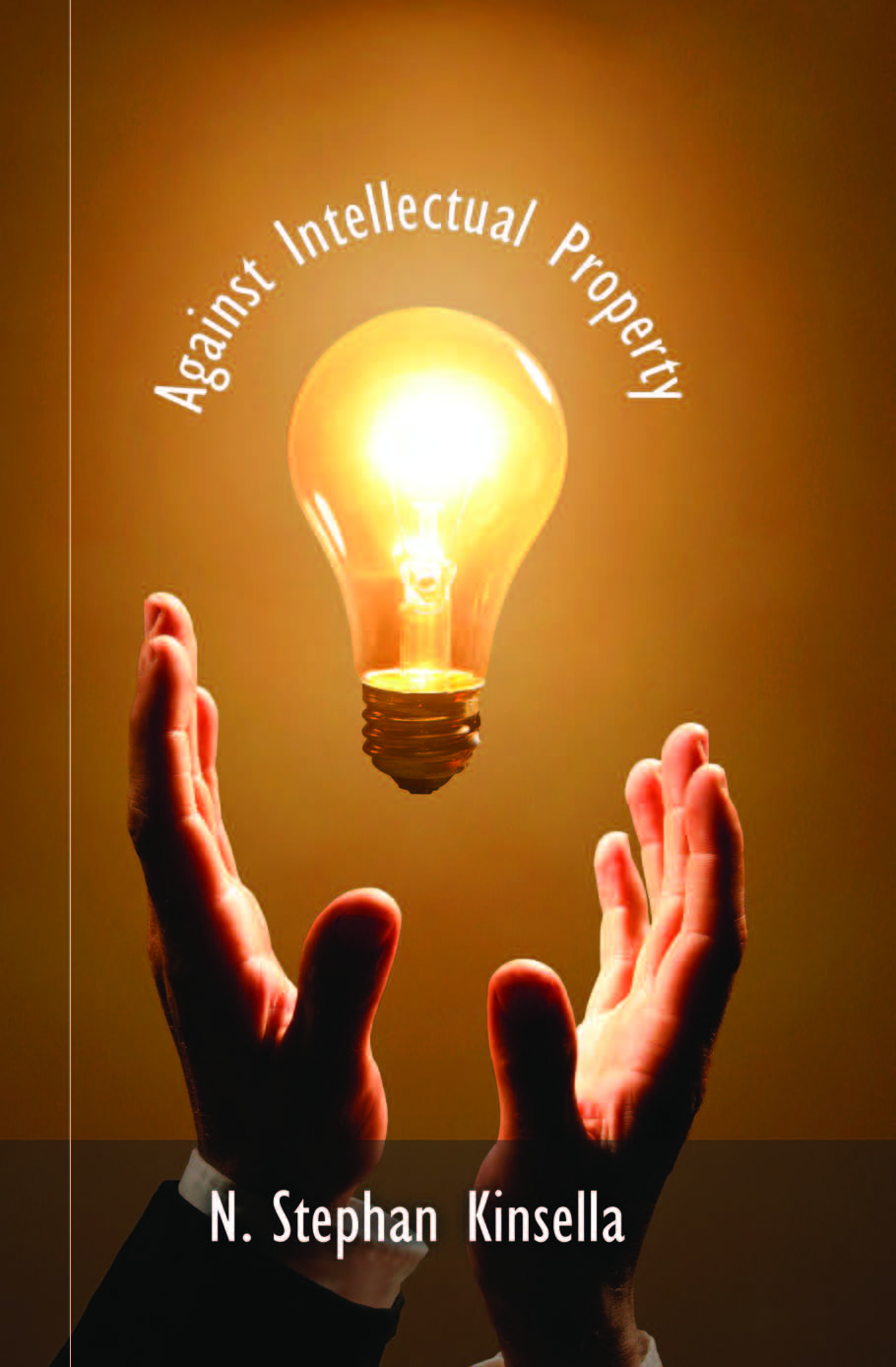
- Against Intellectual Property (2001/2008) — Kinsella’s foundational monograph making the case that patents and copyrights are incompatible with libertarian property rights based on scarcity and homesteading.
- The Problem with Intellectual Property (2025) — A comprehensive recent paper arguing that IP rights are unjust state-granted monopolies that violate legitimate property rights in scarce resources.
- Against Intellectual Property After Twenty Years: Looking Back and Looking Forward (2022) — Updated reflections on the original arguments, addressing common objections and developments since 2001.
- Intellectual Property Rights as Negative Servitudes (2011) — Argues that IP functions as non-consensual negative servitudes on others’ physical property, violating true property rights.
- Another Way to Explain the Problem with IP: Resources v. Knowledge; Ownership v. Possession (2017) — Clear distinction between scarce resources (subject to ownership) and non-scarce knowledge/ideas.
Scarcity, Ideas, Labor Theory & Creationism Critiques
- Ideas are Free: The Case Against Intellectual Property (2010) — Explains why ideas and knowledge are non-scarce and why libertarians were mistaken in supporting IP.
- Libertarian Lockean Creationism (2025) — Critique of the mistaken “creation” theory of property rights often used to defend IP.
- Locke’s Big Mistake: How the Labor Theory of Property Ruined Political Theory
- Locke’s Big Mistake (Transcript) (2013)
- Hume on Intellectual Property and the Problematic Labor Metaphor (2011)
- On the Danger of Metaphors in Scientific Discourse (2011)
- Objectivist Law Prof Mossoff on Copyright; or, the Misuse of Labor, Value, and Creation Metaphors (2008)
- How We Come to Own Ourselves (2006) — Explains self-ownership and original appropriation, central to why IP conflicts with libertarian property theory.
- Superabundant Bananas & Property Rights as Normative Support for Possession (2025) — Further clarification on scarcity, superabundance, and the nature of property rights.
Pharmaceuticals, FDA & Market Distortions
- Patents and Pharmaceuticals (2023)
- Are Patents Needed to Make Up for FDA Kneecapping? (2011)
- FDA and Patent Reform: A Modest Proposal (2023)
- Milton Friedman on the Distorting Effect of Patents (2011)
Practical & Reform Topics
- Do Business Without Intellectual Property (2014)
- How to Improve Patent, Copyright, and Trademark Law (2011)
- The American Invents Act and Patent Reform (2011)
- IP Law and Market Failure (2022)
Foundational Libertarian Theory
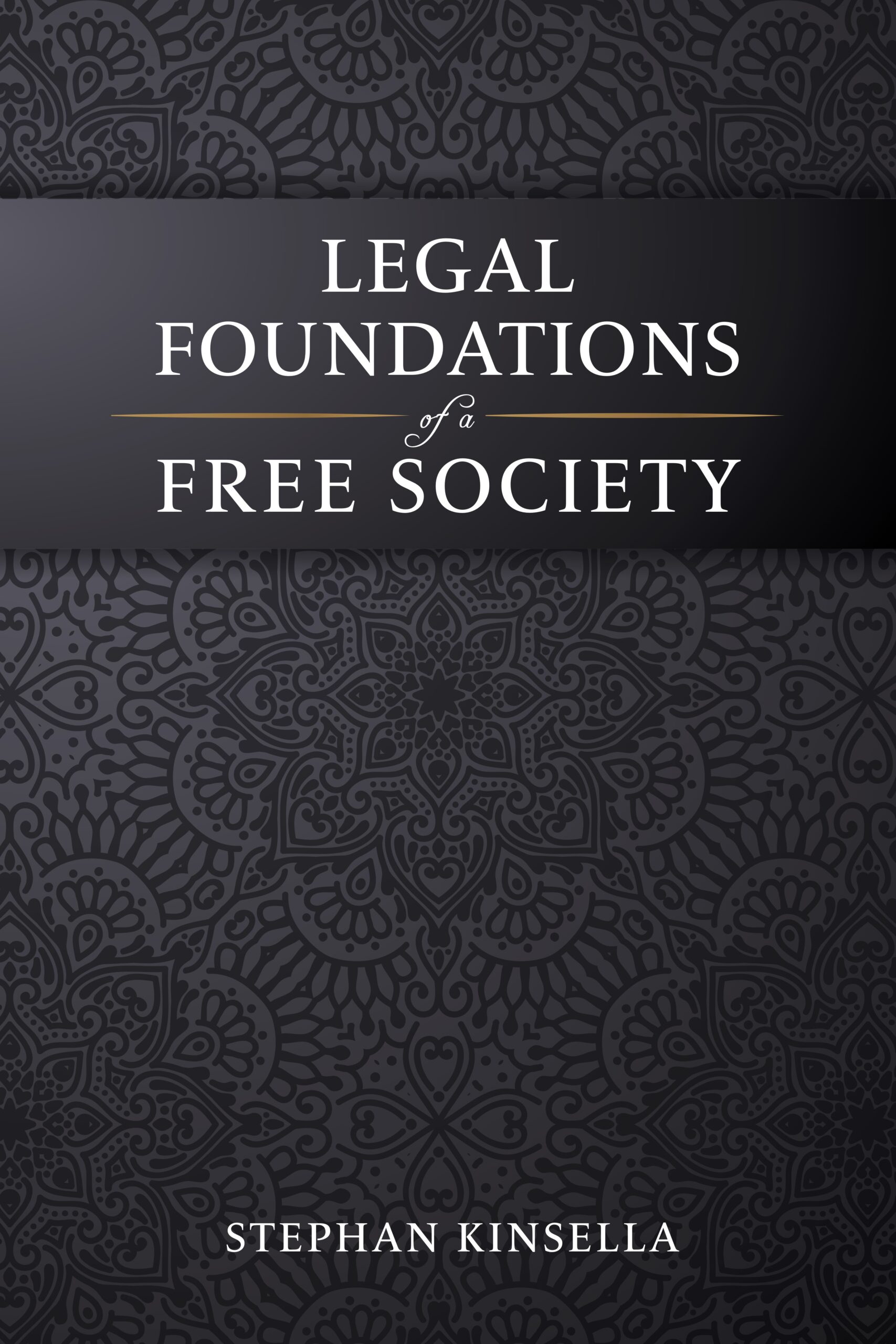
- Legal Foundations of a Free Society (2023)
- Disentangling Legal and Economic Concepts (2025)
- The Title-Transfer Theory of Contract (2024)
- A Libertarian Theory of Contract (2003)
- What Libertarianism Is (2009)
Recent Audio/Lectures
- KOL489 | The Problem with Intellectual Property (Audio) (2026)
- KOL483 | The Economics and Ethics of Intellectual Property (2026)
These resources expand on the core themes of scarcity versus ideas, negative servitudes, pharmaceutical patent issues, market distortions, FDA interactions, practical business strategies, Locke’s labor theory mistakes, contract theory, self-ownership, metaphors in discourse, and libertarian first principles discussed in the interview.
Shownotes (Grok)
Podcast Shownotes
Episode Title: Stephan Kinsella: Why Intellectual Property is Incompatible with Property Rights
Guest: Stephan Kinsella (retired patent attorney & libertarian legal theorist)
Host: Alex Buxeda
Episode Summary
Stephan Kinsella delivers a rigorous, first-principles critique of patents and copyright. He argues that IP is not property at all, but a government-granted monopoly that violates genuine property rights in scarce resources. Drawing on Austrian economics and libertarian ethics, he explains why ideas are non-scarce, why IP slows innovation, and why free markets and competition are superior engines of progress. A clear, uncompromising defense of abolishing intellectual property.
Total Runtime: ~1 hour 22 minutes
Key Topics & Timestamps
0:00 – Introduction and Practical Market Realities
Kinsella begins by noting that entrepreneurs can use strategies like loss leaders and price discrimination, but cartels and monopolies are hard to sustain due to competition and cheating — setting the stage for his deeper critique of state-enforced monopolies like IP.
1:00 – Kinsella’s Journey from Pro-IP to Abolitionist
As a former patent attorney and lifelong libertarian, Kinsella originally accepted Ayn Rand’s defense of IP. After deep study while practicing patent law, he concluded that IP is literally unjustifiable and incompatible with property rights. This realization forced him to refine his understanding of libertarian property theory, relying more heavily on Mises, Rothbard, and Hoppe.
4:22 – Core Argument: Scarcity, Property Rights, and Why Ideas Are Not Property
Property rights exist solely to resolve conflicts over scarce, rivalrous resources. Ideas and knowledge are non-scarce — one person’s use does not prevent another’s simultaneous use. Granting IP rights therefore requires using force against others’ legitimate physical property (factories, printers, materials), creating artificial conflict rather than resolving it. IP is not ownership of information; it is a negative servitude on real property.
14:55 – The Pharmaceutical Patent Defense and Why It Fails
Kinsella directly refutes the claim that expensive R&D requires patents. High drug costs stem primarily from FDA regulation, not invention. Patents create monopoly pricing and slow knowledge diffusion, which is the true source of long-term progress. He criticizes utilitarian “market failure” arguments, arbitrary patent terms, and the state’s schizophrenic approach (granting monopolies via patents while attacking monopolies via antitrust). Free markets naturally reward first movers with temporary profits before competition drives prices down.
31:45 – Arbitrariness of IP and the Myth of “Creation” as a Source of Rights
Patent and copyright durations are completely arbitrary. You cannot patent laws of nature but can patent their “practical application” — with no principled distinction. The common belief that “I created it, so I own it” rests on a mistaken reading of Locke. Creation produces wealth by rearranging scarce resources, but does not create new ownable property in patterns or ideas. Labor is an action, not ownable property. This error leads to labor theories of value and justifies theft of others’ physical property through IP enforcement.
46:18 – Competition, Profits, and How Innovation Reaches the Masses
New products start expensive because the rich fund early adoption and refinement. Competition and economies of scale then drive costs down, benefiting everyone. Profit signals attract competitors, which is good — it erodes monopoly profits and spurs further innovation. Attempts to legally protect high profits (via patents) distort this natural process and harm the poor in the long run.
52:30 – Price Discrimination, Arbitrage, and Government Distortions
Price discrimination is natural but limited by arbitrage in free markets. Patents, tariffs, FDA rules, and socialized medicine prevent arbitrage and allow inflated prices. Kinsella shows how IP advocates often abandon free trade when it conflicts with patent privileges (e.g., opposing drug reimportation).
1:01:20 – Libertarian History with IP and Extreme Views
Most early libertarians accepted IP due to its constitutional status and Rand’s influence. Kinsella contrasts this with extreme positions like Andrew Galambos’, who treated ideas as eternal, primary, and inalienable property — a position that would paralyze human action if enforced.
1:08:26 – Ethics of Piracy and Technological Undermining of IP
Copyright violation is not immoral because publishing an idea makes it public — there is no victim or rights violation (echoing Benjamin Tucker). Piracy is already hard to stop and will become harder with technology. Kinsella welcomes this: 3D printing and AI will undermine patents just as the internet undermined copyright, accelerating progress by weakening artificial monopolies.
1:21:58 – Closing
Mutual appreciation and final thoughts on the conversation.
Key Takeaways
- IP is not property — it is state violence against real property rights.
- Ideas are infinitely reproducible; only scarce resources need property rules.
- Patents and copyrights slow innovation, raise prices, and enrich rent-seekers at everyone else’s expense.
- True progress comes from open competition and the free flow of knowledge.
Recommended Resources
- Stephan Kinsella – Against Intellectual Property
- “Do Business Without Intellectual Property” (Kinsella booklet)
- Works by Mises, Rothbard, Hoppe, and Benjamin Tucker
These shownotes are now concise, argument-focused, and ready for your podcast platform. Let me know if you want any adjustments!
Discover more from The Property and Freedom Society
Subscribe to get the latest posts sent to your email.











 Alessandro Fusillo
 Andreas Tögel
 David Dürr
 Doug French
 Fernando Chiocca
 Greg Morin
 Hans-Hermann Hoppe
 Jay Baykal
 Jayant Bhandari
 Jeff Deist
 Jeffrey Barr
 Juan Fernando Carpio
 Ken Yamarashi
 León Isidoro
 Martin Cabrera
 Nick Hoppe
 Oscar Grau
 Peter Wong
 PFS
PFS scholarium
 Saifedean Ammous
 Sean Gabb
 Sean Ring
 Stephan Kinsella
 Stéphane Geyres
 Thomas Jacob
 Tom DiLorenzo