
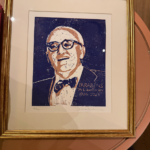
Rothbard Porto: Hoppe: Beegarc AI watercolor rendering
Below is the video of the speech by Professor Hoppe at 100 Years with Rothbard (Porto, Portugal, June 27, 2026). See Cataláxia Editora Rothbard 100 Youtube playlist. Transcript and summary below.
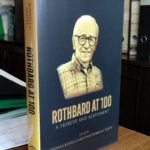
Select photos (for further information and additional photos, see Kinsella, Rothbard Takes Portugal: 100 Years with Rothbard: A Personal Account).
Portuguese translation at Obstáculos, dificuldades e surpresas no caminho para o rothbardismo: recordações pessoais.



-

- Hoppe, Rothbard, Rockwell, July 1992




-

- Rothbard 100, Portogal, Fernando Chiocca, Saifedean Ammous, Hoppe



-

- Rothbard Porto – Kinsella speaking Rothbard Porto – Kinsella and Adriano Paranaiba, with Hoppe and Gulcin Hoppe, Brazil Bucket Meme












-

- Mises University 1991: Rockwell, Yuri Maltsev, Hoppe, Rothbard
-

- Thumbnail for Youtube Video, Hoppe Voiceover for Rothbard Tribute, “100 Years with Rothbard” (Porto, Portugal, June 27, 2026).
-

- Rothbard at porto chocolates

Related
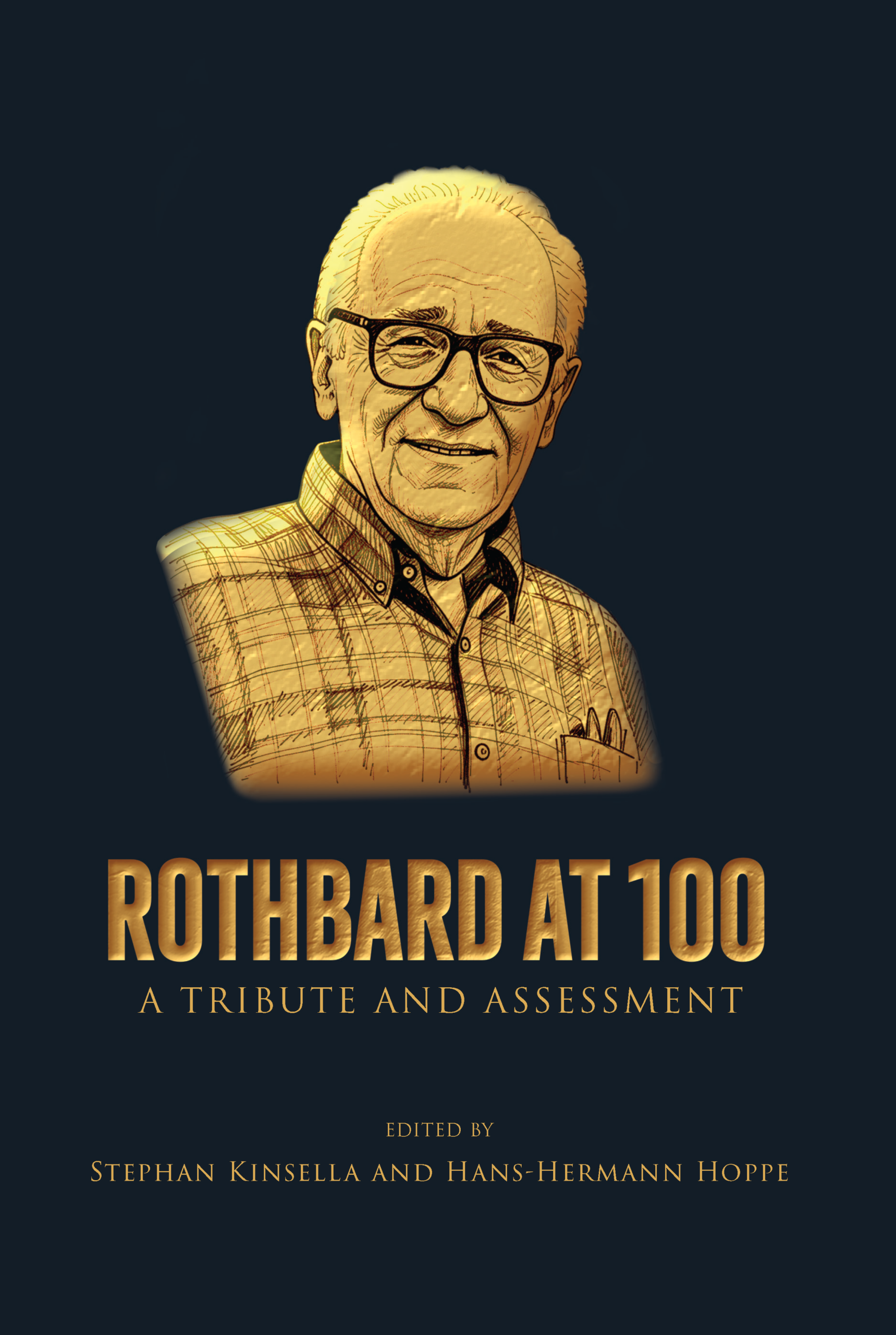
- “Introduction,” in Rothbard at 100: A Tribute and Assessment, Stephan Kinsella and Hans-Hermann Hoppe, eds. (Papinian Press and The Saif House, 2026)
- “Coming of Age with Murray,” in Rothbard at 100: A Tribute and Assessment
- Based on Hans-Hermann Hoppe, “Coming of Age with Murray” (Mises Institute 2017),” Keynote speech, Mises Institute 35th Anniversary Gala (Oct. 7, 2017), and the related article based on the transcript, “Coming of Age with Murray,” Mises.org (10/16/2017), which was also published in idem, Getting Libertarianism Right (Auburn, Ala.: Mises Institute, 2018) and idem, The Great Fiction: Property, Economy, Society, and the Politics of Decline, 2d. ed (Auburn, Ala.: Mises Institute, 2021)
- Hoppe, Murray N. Rothbard and the Ethics of Liberty, Introduction to the new edition of Murray N. Rothbard, The Ethics of Liberty (New York: New York University Press, 1998)
- ——, “Murray N. Rothbard: Economics, Science, and Liberty,” in: Randall Holcombe, ed., Fifteen Great Austrian Economists (Auburn, Al.: Ludwig von Mises Institute, 1999)
- ——, Introduction to Murray N. Rothbard, The Logic of Action, Collected Economic Papers, 2 vols. (Aldershot: Edward Elgar, 1997) (with David Gordon) (later republisyed as Rothbard, Economic Controversies (Auburn, Ala.: Mises Institute, 2011)
- ——, Rothbardian Ethics (based on the Murray N. Rothbard Memorial Lecture at the Mises Institute’s Austrian Scholars Conference in 1999), LewRockwell.com, May 20, 2002 (also in EEPP)
- Murray N. Rothbard: In Memoriam (Auburn, Ala.: Mises Institute, 1995) (various authors)
- Hoppe, Murray Rothbard, R.I.P., The Free Market 13, no. 3 (March 1995)
Summary (Grok)
Hoppe’s Path to Rothbardianism: Personal Recollections 0:19
Hans-Hermann Hoppe shares how he became a Rothbardian despite his post-World War II German upbringing. He describes himself as a low-tech speaker with no slides, recounting obstacles and steps in non-chronological order on his intellectual journey.
Post-War Indoctrination in West Germany 1:09
Born after World War II to refugee parents, Hoppe absorbed prevailing teachings in West Germany. His mother was expropriated as a landowner in East Germany. His father, a late-released American POW, revealed taboo details of German prisoners dying from hunger in fenced camps without civilian aid. Such topics remained largely unknown due to post-war taboos. America was portrayed as the greatest power, with democracy, legislation, paper money, and state infrastructure presented as normal. Germans were taught collective guilt for 20th-century evils, including both world wars and crimes against Jews, with no proof required.
Doubts About Democracy and State Authority 4:50
Hoppe began questioning democracy after realizing parental authority allowed exit while democratic rule did not. No social contract existed with rulers. Citizens never consented to taxes or laws imposed on their conduct and property. Elected officials were unknown strangers who knew nothing about individuals they governed. This insight revealed a fundamental lack of agreement or personal entrustment.
Critique of Politicians, State Expansion, and Majority Rule 6:57
Politicians often lacked competence, as illustrated by examples like a German foreign minister qualified only in trampoline jumping or an economics minister ignorant of company insolvency. States naturally expand through taxation and legislation, increasing dependent employees while shrinking the taxpaying base, ultimately impoverishing society. The majority principle promotes relativism: truth and justice do not depend on majorities. Rothbard’s writings proved most influential in clarifying these issues.
Flawed Justice System and War Guilt Narratives 10:35
In conflicts with the state, the same institution acts as judge, leading to predictably biased verdicts. School history, licensed by occupying forces, enforced German guilt for both world wars. America faced no threat yet intervened, shaping outcomes that birthed Nazism, fascism, and communism after World War I, and communist domination of Central and Eastern Europe after World War II. Post-war Europe remained a U.S. vassal with American troops stationed across the continent.
The Paradox of Imperialism and Monetary Power 15:37
States pursue expansion, with internally liberal nations like the United States advancing furthest due to greater economic strength, creating a paradox where freer societies pursue aggressive foreign policies. Private actors bear war costs, but states externalize them through drafting and taxation. Central banking and fiat money enable enrichment without heavy taxation and facilitate endless wars by printing currency out of nothing. Mises and Rothbard opposed this monopolistic privilege.
Multiculturalism, Discrimination, and Group Realities 21:17
America’s multicultural society contrasted with Europe’s relative homogeneity. Compulsory discrimination against Blacks reversed into affirmative action and compulsory nondiscrimination, extending to women, homosexuals, and others, increasing tensions and perverting justice. Europe followed this pattern. Hoppe stresses the value of group averages alongside individual differences for practical decision-making, such as assessing risks in real-world scenarios. Discrimination, in its original positive sense of refined judgment, is essential.
Ruling Class, Taboos, and Libertarian Conduct 27:29
The U.S. ruling class, particularly Jewish elites dominating academia, Hollywood, media, and politics, remains a forbidden topic. Jewish lobbying powerfully influences foreign policy toward Israel and the Middle East, destroying careers including Rothbard’s for speaking out. Hoppe encourages courage in noticing group differences and realities. He critiques unappealing elements within libertarian circles and urges libertarians to achieve personal excellence, behave admirably, and serve as positive examples rather than repelling others.
Closing Reflections 31:25
Hoppe concludes by advocating accomplished, proud, and emulation-worthy conduct among libertarians.
Transcript (Youtube/Grok)
Introduction and Personal Style 0:19
Thank you very much all of you. I will follow a slightly different style from the previous lectures. I am also a low tech person. There will be no slides of any kind. And it is my objective to tell you a little bit step by step how I became a Rothbardian. What obstacles were in the way of doing this? The steps are not all in chronological order. But in a way you can say how a standard person like myself happened to be a Rothbardian at the end of his life.
Early Life and Post-War German Indoctrination 1:09
I had no parents or immediate relatives who were libertarians. And as a matter of fact, I was born shortly after World War II. And I absorbed in a way all those things as right and true that were taught at that time in West Germany. My parents had been refugees. My mother was expropriated as a major landowner in East Germany. My father had been a prisoner of war with the Americans. Only late in his life he told me for instance how German prisoners of war were treated by Americans. They were fenced in in concentration camps and tens of thousands died from hunger trying to crawl to the Rhine to drink water without any outside help from German civilians allowed to send over packages or so to these prisoners of war. But these things are up to this day almost unknown in Germany because these were taboo subjects.
American Influence and Standard Beliefs 2:51
So when I grew up, America was of course the greatest and everything that we learned as being normal and part of normal life were things that Americans in some education re-education campaign taught the new Germans of which I am of course one. So it was absolutely normal that you had democracy, that you had legislation, that you had paper money, that you had governments being in charge of infrastructure. And that Germans were guilty for everything bad that had happened in the 20th century. All our parents were considered to be guilty. There was no proof or anything required for that. It was self understood that Germans were evil people. We had after all lost two wars. World War I was caused by Germany. World War II was caused by Germany. And all Germans have been somehow responsible for having done evil things to the Jews. This was the standard view that was preached and taught to all Germans of my generation.
Emerging Doubts About Democracy 4:50
Then gradually questions emerged in my mind. We all understood what parental authority was, but parental authority was something that and of course like most people we also sometimes had difficulties with our parents. But you could evade that. There existed exit. At one point you could leave the household and you got rid of the authority that your parents exercised over you. It was very different with democracy. So my first doubts about democracy arose. There existed no exit. It was also obvious that there was no contract with any of these people who ruled over you. You were subjects. You never agreed to being taxed. You never agreed to the laws that were passed and imposed on your conduct or on your property. There existed people that ruled over you and you had never selected these people. Yes, there existed elections. But the people who finally came to power were not people that you personally knew that you had personally entrusted with doing anything. They did not know anything about you and you did not know anything about them. That was an astonishing insight.
Observations on Politicians and State Growth 6:57
You also then in a way discovered as you grow up reading becoming a little bit smarter that many of these people were not exactly very smart. You just have to look at the present crop of politicians that we have. Let’s say take a look at Mr. Biden or Mr. Trump who were obviously senile and belonging to the nut house instead of being people who should rule over you. Now this applies to the politicians in Germany either. We had a foreign minister for instance for four years her only qualification was that she was very good at trampoline jumping. But nonetheless she represented Germany and the rest of the world. We had an economics minister who did not know what an insolvency of a company was. But he was minister of economics in Germany. And I’m sure in Portugal you find many of these wonderful examples just as well.
Then I discovered of course that if you are an institution that can tax and that can legislate this institution has a tendency to continuously grow. If you can tax other people of course you prefer to get more taxes rather than less taxes. If you can make laws, you tend to make laws that benefit you regardless of what they do to other people. There is a tendency that a minimal state, a state that was maybe very small at the beginning will grow and grow. The number of employees working for the state or being dependent on the state will continuously grow. You have a secretary but then your secretary needs an under secretary and that under secretary needs an under under secretary. So the number of people working for the state and being dependent on the state getting their salaries from taxes will continuously grow. And the number of people that have to provide the taxes to pay for all of these people will continuously diminish ultimately of course resulting in an impoverishment of society at large.
Critique of Majority Rule and Justice Systems 9:51
Then I discovered of course that the majority principle itself is somehow an immoral principle. It leads to relativism. Does truth depend on majority? The answer is truth has nothing to do with majorities. Does justice depend on majorities and the answer is justice has nothing to do with majorities. Then I discovered of course again in all of this readings of different people helped me. Most important of course was the readings of Rothbard. Then I discovered what type of justice system is it if in every case of conflict with other people one guy can decide who is right and wrong. That is if you have a conflict with the state. Complain about what some state agent has done to you. Who decides then who is right in this conflict? It is an employee of the same company with whom you have these difficulties. You have a conflict with the policeman complain about it who decides whether you were right, a judge who is an employee of the same company that also employs the policeman. You can roughly predict that this will not lead to just verdicts but this will lead to systematic unjust verdicts in almost all cases.
War Guilt, History, and the Paradox of Imperialism 11:40
Now then coming to the question of war and war guilt. My reading then indicated that it was not always as easy as we were taught in school. Again, remember I mentioned that all school books in Germany after World War II were licensed by the occupying forces. Germany like many other countries in Europe is in a way a vassal state of the United States indicated by the fact that you have troops stationed all over Europe. After World War I, the American troops withdrew to the United States. After World War II, the United States stayed in Europe. There are troops stationed in Germany. There are troops stationed in Portugal. There are American troops stationed in Italy, in Spain, in Turkey. There’s practically no country in Europe that does not have American troops stationed there. Imagine that would be the other way around. If there would be German and Portuguese and Turkish troops stationed in the United States, what the United States would then say in this case, we are not a sovereign country.
Obviously, so this is also true for Germany. All the books were licensed by the occupying forces in Germany. And of course what they presented as a correct version of modern history was World War I was German guilt even though it was quite clear that America was not threatened by Germany in World War I. America was protected by two oceans in between. And it was an inner European war. America got involved in the war and in a way decided the outcome of World War I because it was persuaded by England to join World War I. What was the result of the involvement of America in World War I? It was that Nazism, fascism rose in Europe and communism. America got involved in World War II. Again, there had been no reason Germany did not threaten the United States. Germany also did not even declare war. The first country that declared war against Germany was England and France. All of these things were of course not taught in school. It was always Germany did the wars and we were the only guilty ones. What was the outcome of World War II? America rises to the rank of the supreme power in the world and the result is all of Central and Eastern Europe turn communist.
Why did the United States get involved in these wars and continues to get involved in wars up to this day? There is no country in the world after World War II who has bombed as many other countries as the United States. Why is that? And all of these things you could learn from Rothbard. They exist what I call the paradox of imperialism. All states like to expand their territory and their reach of influence. There’s a tendency towards a world state and what places what countries will proceed furthest on this way. Those countries that are internally liberal, comparatively liberal and the United States is of course internally comparatively liberal as compared to most other countries and on the basis of the greater economic power that results from being internally liberal. The chances that you will win in wars and expand your territories are higher. So it is paradoxically those countries that seem to be the nicest countries the freest countries that tend to pursue the most aggressive foreign policy. So this explains in my view and also the view of Rothbard the imperialist tendencies that you can see in particular in the United States.
State Aggression and Monetary Policy 17:08
I should also mention, of course, it is easy to see why states tend to be more aggressive than private citizens or even mafia groups, gangster groups for the simple reason that private citizens or private gangs fight each other, they must bear the cost involved in fighting. You have to pay for injuries. You have to get the weapons and there is economics involved in these types of problems. But if you have a state, you can externalize the cost of your aggressiveness onto other people. You can draft people into the army. You can tax people who have no business and no interest in warlike endeavors in the rest of the world to nonetheless fund those people who are interested in taking over other countries who are exercising control over the policies in other countries.
Then another thing that I learned especially after moving to the United States was the importance of monetary policy. It became clearer and clearer to me that the most important institution for a state and the source of state power is a central bank. The abolishing of a commodity money such as gold and silver. The replacement of commodity money by a fiat money, by a paper money or electronic money that can be created at will, that can be created out of nothing. That is easier in order to enrich yourself at the expense of other people by simply printing additional money than it is by imposing ever more taxes on people. No state will easily if ever give up this privilege of being the monopolistic printer of money. And you will get enormous amount of support from all sorts of people once they find out that you have the privilege of printing money out of nothing. I always told my students, imagine you would be the only person in the country that can print money and everybody else who would do it would be locked up as a counterfeiter. How many friends do you think you will have the next day of which you didn’t even know before? They will all come and think you can come and rescue them out of any type of difficulties because you have the magic wand. Because of that, Mises and of course Rothbard as well were strict opponents of the central bank and of paper money. It allows you also of course to go far more easily to war than without having a central bank that can create money out of thin air. If you would have to borrow the money from the public the public might sometimes not cooperate but if you can simply print the money for the war there you go it’s much easier.
Multiculturalism, Discrimination, and Group Differences 21:17
Another thing I discovered and that was something that did not appear when I was younger a problem at all in Europe. America was a multicultural society. America had black people. There were different races in the United States. Germany was relatively homogeneous. I think Portugal until relatively recently was also very homogeneous. France was very homogeneous. Most countries in Europe were rather homogeneous groups, people very much alike. The United States was very different in this regard. And what took place there was first you had compulsory discrimination against blacks for instance. Blacks were not allowed to do certain things. And then this was turned around to the complete opposite. That is instead of simply saying all these compulsory discrimination laws will simply be abolished, they turned it around and said now we have to make good on the discrimination, the unjust discrimination that existed before. Now we have compulsory nondiscrimination or which is called in the United States affirmative action that is we have to give those people special privileges which caused of course tremendous problems and increased the racial hatred to a level that had not existed before. Schools that were before been segregated were now compulsorily integrated and then this nondiscrimination or compulsory nondiscrimination was extended to ever more groups. So the next discriminated groups they found out were women. The next discriminated group that they found out were homosexuals or lesbians or transsexuals or whatever it is. So these sorts of things led to a perversion of justice in an inexplicable way and Europe followed the American pattern. Of course not as fast because the initial problem that is the racial problem of blacks versus whites did not exist to this extent in Europe. But as soon as the extension came females, homosexuals, lesbians, whatever it is, this whole thing caught on in Europe as well.
I also learned then that it is important not only to learn about the differences between different races and different sexes. That is also an error to believe you should only look at individuals. No, you also sometimes need to know something about averages. Not only individuals are different one from the other, also groups of people are different from other groups. Sometimes you don’t have enough information about people on the individual level to make decisions about what to do with this guy and that guy. Sometimes you lack information and you have to just make decision based on your knowledge of averages. You know that if you meet a group of girls coming home at night from some party and a group of black males for instance coming home at night and you have to choose which side of the street you should use in order not to be mugged. It is good to know which group is likely less aggressive and which group is likely more aggressive. These sorts of insights were basically made taboo to talk about in the United States. And what I did learn and again helped me in this was you have to be discriminating. Discriminating between people and groups of people is a good thing. In the old days when people said this person has a discriminating taste that meant this person knows his way around in the world. Nowadays if people say this person is a discriminating person that is considered to be a negative thing. I am a discriminating person. There are many libertarians that claim to be libertarians. I would never want to go out with them. And there are many people who are non libertarians who I think behave in a way that I consider to be polite, good, admirable with whom I would like to go out and who I would like to have as my neighbors and many libertarians who I would not like to have as my neighbors. So discriminating is a very important thing to do.
Ruling Class, Jewish Influence, and Final Advice 27:29
Lastly I should mention coming back to the topic that Saifedean spoke about. You also learn of course who the ruling class in the United States is. The ruling class are those people about whom you are not allowed to speak and you are not allowed to say in the United States that the United States is ruled by the Jewish elite. All top academic posts, all top posts in Hollywood, in the news in the newspapers even in politics are predominantly occupied by Jews. But this is something that you are not supposed to say. We are not supposed to notice this. Also, the American foreign policy that is pursued is a foreign policy that is dominated by Jewish influences. Israel is of enormous influence in the United States. The Jewish lobbying groups are the most powerful groups that exist in the United States. They destroy careers. You will not be able to get a job if you have said certain things about certain types of people. It was also these lobbies that destroyed Rothbard’s career. Rothbard was outspoken about the power of the Jewish lobbying groups and the power of Jewish elites as far as American foreign policy is concerned and their ardent pursuit of destroying the countries in the Middle East. So his career was hampered and ruined despite his enormous talents that he had his unrivaled talents by his own co-religionists if you want to speak about these types of things.
That I said at the end here about discriminating between different people, learning what the talents or the thoughts of certain groups are and certain individuals and saying so is a very dangerous thing. And I encourage people to become courageous enough to not hesitate to point these things out. I am not the most liked person among the libertarians because I make these types of remarks. You should just see some conventions of libertarian party people and you will be surprised what you see there and they are not very appealing. So as libertarians we also have to make an attempt to be accomplished people to have something to show for to be proud of achievements and to behave in a way that let other people try to emulate what we do and not behave in a way that abhors other people once they look at what we do. Thank you very much.
Discover more from The Property and Freedom Society
Subscribe to get the latest posts sent to your email.
















 Alessandro Fusillo
 Andreas Tögel
 David Dürr
 Doug French
 Fernando Chiocca
 Greg Morin
 Hans-Hermann Hoppe
 Jay Baykal
 Jayant Bhandari
 Jeff Deist
 Jeffrey Barr
 Juan Fernando Carpio
 Ken Yamarashi
 León Isidoro
 Martin Cabrera
 Nick Hoppe
 Oscar Grau
 Peter Wong
 PFS
PFS scholarium
 Saifedean Ammous
 Sean Gabb
 Sean Ring
 Stephan Kinsella
 Stéphane Geyres
 Thomas Jacob
 Tom DiLorenzo