[Cross-posted at C4SIF]
From @Fhoer_here, “The Death of Physical Media,” Fhoer’s Substack (July 16, 2026): “The Digital Panopticon and the Attack on Property.” According to the author: The end of physical media can be blamed on IP laws…
The planned obsolescence of physical media and the forced migration to cloud storage are often celebrated as the pinnacle of modern logistical convenience. The illusion of a frictionless world is sold, where entire libraries and collections fit in the palm of your hand. However, behind this supposed logistical utopia, a profound reconfiguration of property rights is at work. The disappearance of the physical format is not merely a technological advancement, but a structural maneuver designed to make it difficult for individuals to maintain their own collections, separate from the network and beyond the reach of state-corporate scrutiny and control.
To understand the gravity of this movement, it is imperative to observe the problem through the lens of intellectual property criticism. In a natural order, the concept of property applies exclusively to scarce goods, that is, physical resources over which conflicts may arise, such as a piece of land, a printed book, or a hard drive. Information, in turn, is not scarce; thus, the act of copying a file does not deprive the original author of its ownership.
Intellectual property (IP) is therefore an artificial construct, a monopoly privilege granted by the State. The great dilemma of IP is that, in order for the State to impose artificial scarcity on ideas and information, it necessarily needs to violate legitimate and physical property rights.
This is precisely where the elimination of physical media reveals its purpose. When you own a USB drive, a CD, or an external hard drive, you have physical sovereignty over that object. By natural law, you have the right to organize the electrons within your hard drive in any way you prefer. However, to enforce copyright laws and censor unapproved information, the system needs to prevent you from exercising control over your own hardware. The transition to a purely digital and connected environment is the mechanism that transforms your private property into a conditional rental terminal.
The control, which previously occurred at network bottlenecks, now infiltrates directly into your machine. The integration of Artificial Intelligence directly into the root of operating systems, as in recent Windows updates, represents the materialization of the digital panopticon. The embedded AI is not just there to optimize searches, but to catalog, index, track, and inevitably, police your local disk.
Imagine this scenario: you possess a “forbidden” PDF, whether it’s a work that violates new IP guidelines, an unsanctioned technical manual, or a dissenting text. When you try to store or transfer this file, the operating system’s AI locates the document’s hash , silently corrupts the file, or worse, reports the infringement. The system can lock you out of your own machine, seizing your legitimate files in the name of “terms of service violations” or “national security.” Your computer ceases to be your functional property and begins to act as an informant infiltrated on your work desk.
The internet, once the free, decentralized, and exploratory environment in which we grew up, has been parceled out, sterilized, and converted into a vast walled garden. It has become a corporate environment whose sole function is to capture attention, extract data, and, fundamentally, drain resources.
This model of perpetual subscriptions and revocable “usage licenses” is the most modern facet of Usurocracy. You no longer own anything; you merely rent the temporary privilege of accessing culture and information, paying a constant tithe to corporations that operate in symbiosis with the state apparatus. They don’t want you to have local files because what isn’t indexed in the cloud can’t be taxed, monitored, or deleted.
In light of this scenario, the perspective of Ordonaturalism reminds us that true autonomy demands a return to the materiality of property and unrestricted respect for the natural order of scarcity. Owning physical media, maintaining local collections disconnected from the network, and using open-source operating systems are not mere nostalgic whims. Today, possessing a physical library, isolated archives on one’s own storage media, and refusing to submit one’s property to the scrutiny of centralized algorithms constitute the primary acts of intellectual resistance.
If intellectual property requires the end of physical private property in order to survive, the defense of freedom demands the complete rejection of the cloud as the repository of our culture. The sovereignty of the individual begins with sovereignty over the means of their own education and the education of their children.
***
Related
- The Structural Unity of Real and Intellectual Property
- The “Ontology” Mistake of Libertarian Creationists
- Objectivists: “All Property is Intellectual Property”
- Inventors are Like Unto …. GODS….. : “intellectual property is after all the only absolute possession in the world. The man who brings out of the nothingness the child of his thoughts has rights therein which cannot belong to any other sort of property. Land or chattels are pre-existing in some form, and the rights therein are limited in many ways, and are held in the great service of the world, but the inventor of a book or other contrivance of thought holds his property, as a god holds it, by right of creation“
- A Recurring Fallacy: “IP is a Purer Form of Property than Material Resources”
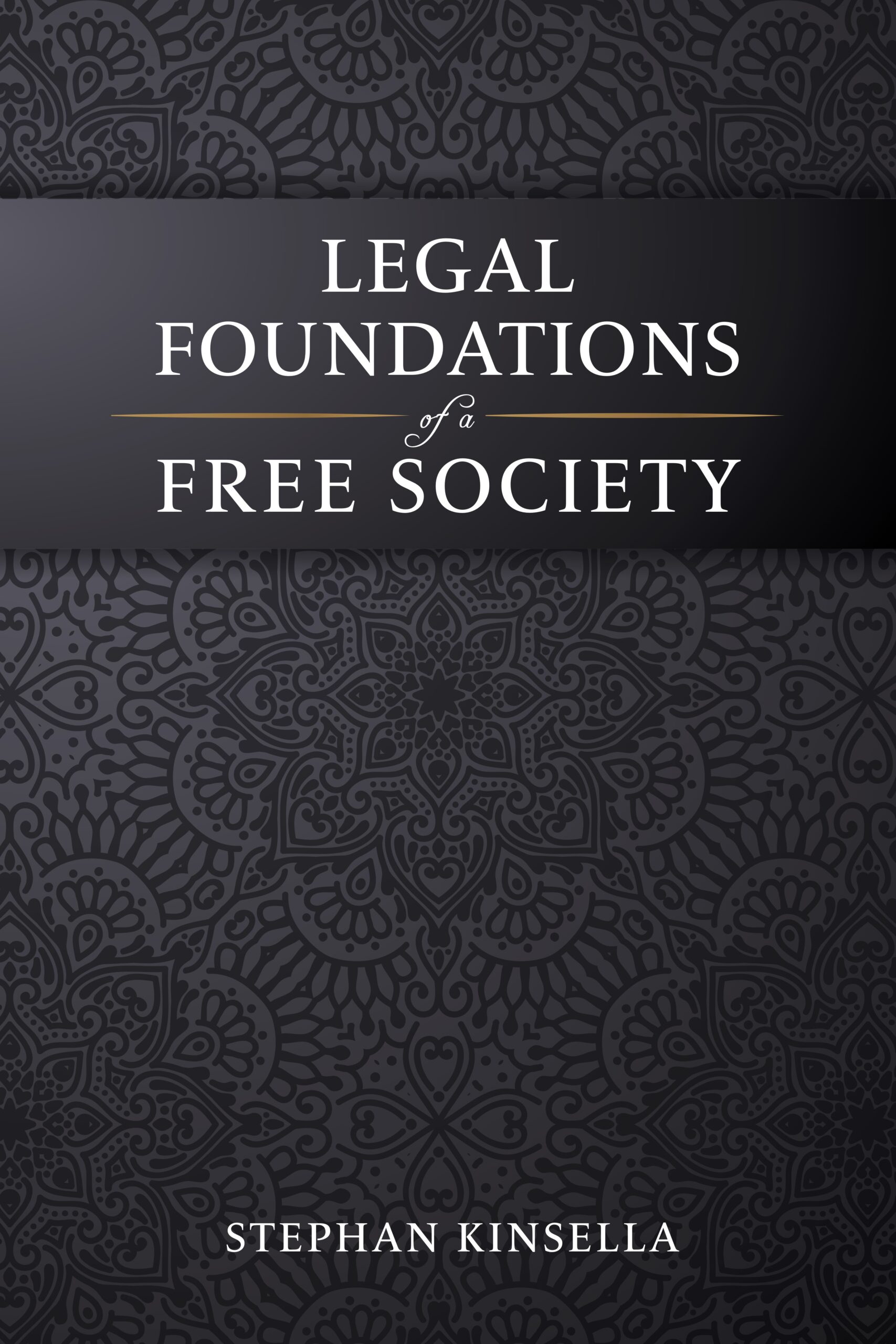
- Stephan Kinsella, “Against Intellectual Property After Twenty Years: Looking Back and Looking Forward,” in Legal Foundations of a Free Society (Houston, Texas: Papinian Press, 2023), Part IV.I. In particular, references in notes 75-76 et pass.
- A Recurring Fallacy: ‘IP is a Purer Form of Property than Material Resources’”
- KOL229 | Ernie Hancock Show: IP Debate with Alan Korwin: “Korwin’s Defense and Departure (49:59–1:17:42) … Korwin doubles down, arguing that copyright is a natural right, more real than physical property because it’s a unique creation.”
- Richard Epstein on “The Structural Unity of Real and Intellectual Property” (Mises 2006)
- Classifying Patent and Copyright Law as “Property”: So What?
- Trump’s Proclamation World Intellectual Property Day, 2025: Of course these geniuses just repeat the same nonsense about IP being “the same as” property and how infringing IP is “theft” of course they are insinuating China “steals American IP,” all of which are confused bullshit lies and distortions. See The China Stealing IP Myth; Copying, Patent Infringement, Copyright Infringement are not “Theft”, Stealing, Piracy, Plagiarism, Knocking Off, Ripping Off; KOL460 | Rant about the “China is Stealing Our IP” Myth
- Demented Cato “Doctor” Wants to Strengthen Patent Law (“This Term’s alignment of rights in trademarks and copyright with traditional rights in real property is a welcome baby step (indeed, two steps) forward for the Court, which in recent years has refused to put other intellectual property rights on par with real property. One can only hope that the Court will soon explicitly tie the intellectual property rights to the law of real property. One also hopes that while doing so, the Court will take a third step in the right direction by again treating patent rights on par with real property.” Gregory Dolin, M.D., “Intellectual Property in OT 2022: Two Baby Steps in the Right Direction,” Cato Supreme Court Review 2022–2023)
- Update: Penner on Intellectual Property, Monopolies, and Property: “If property is a right to things, we must provide some characterization of the things that can be property. … Most persons familiar with philosophical treatises on property are never faced with the task of thinking about why some things are objects of property and others are not.”






 Alessandro Fusillo
 Andreas Tögel
 David Dürr
 Doug French
 Fernando Chiocca
 Greg Morin
 Hans-Hermann Hoppe
 Jay Baykal
 Jayant Bhandari
 Jeff Deist
 Jeffrey Barr
 Juan Fernando Carpio
 Ken Yamarashi
 León Isidoro
 Martin Cabrera
 Nick Hoppe
 Oscar Grau
 Peter Wong
 PFS
PFS scholarium
 Saifedean Ammous
 Sean Gabb
 Sean Ring
 Stephan Kinsella
 Stéphane Geyres
 Thomas Jacob
 Tom DiLorenzo
Follow Us!