Some libertarians smugly “correct” people who think Abraham Lincoln’s Emancipation Proclamation freed the slaves in the US. Not so, they point out; this was a wartime order that did not free slaves in Union territory and only a applied to the CSA states where the order had no power. It took the Thirteenth Amendment, ratified after the Civil War, to really free the slaves, they say.
But Thirteenth Amendment did not end slavery. It states:
Neither slavery nor involuntary servitude, except as a punishment for crime whereof the party shall have been duly convicted, shall exist within the United States, or any place subject to their jurisdiction.
In other words you can still enslave people as long as you make up a crime with legislation. For example, the “crime” of tax evasion, selling drugs, or refusing to be conscripted can get you imprisoned and enslaved. Prison is slavery. Ever heard of prison labor?
This is because the state can use legislation—what Hoppe calls “democratic law making”—to create punishable offenses, statutes that are malum prohibitum (conduct that happens to be prohibited) instead of malum in se (things wrong in and of themselves—violations of natural rights, i.e. aggression).
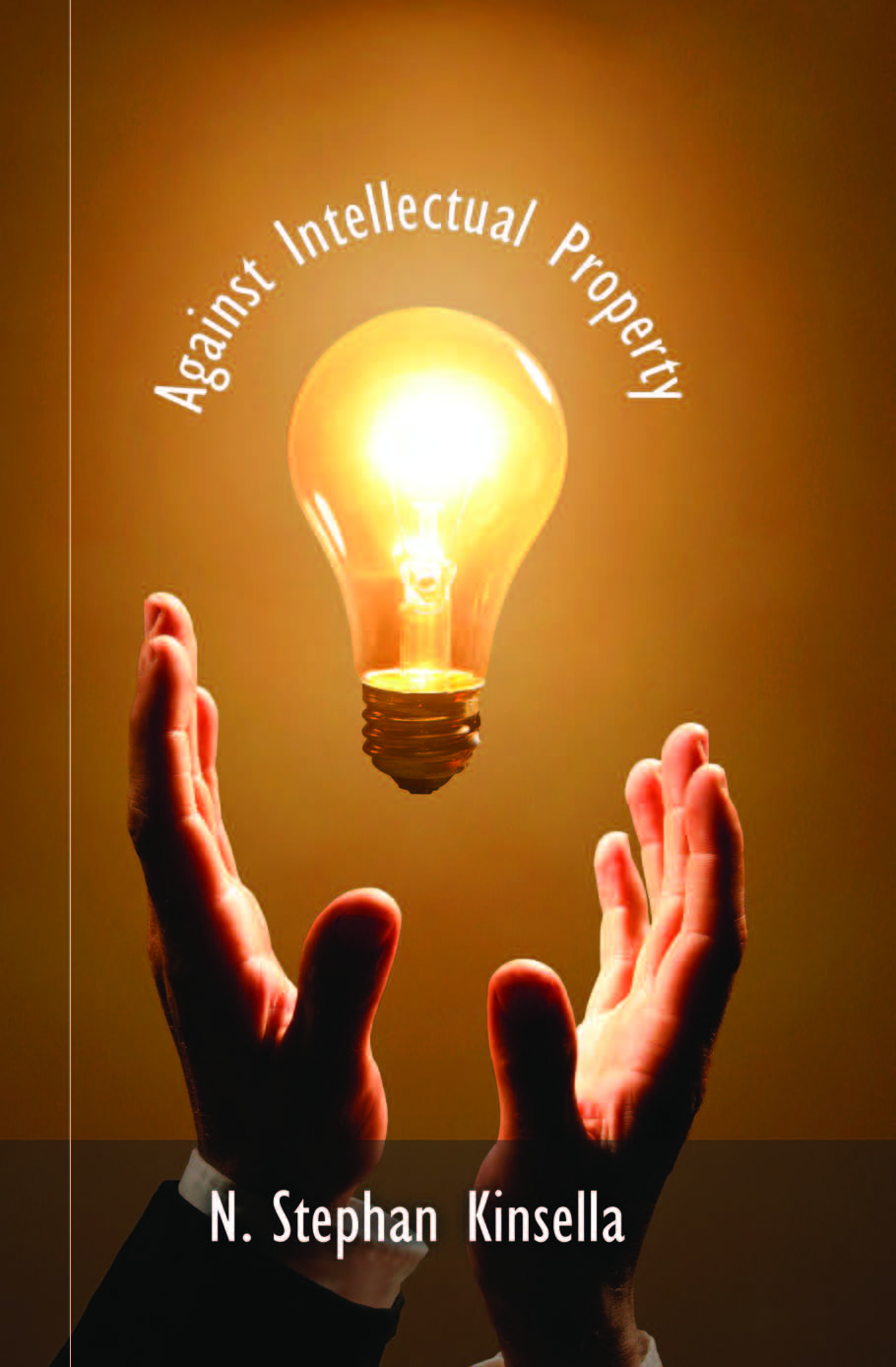
(This is of course yet another problem with patent and copyright law: they are not based on natural rights, not evolved common law principles, but purely creatures of statute and legislation. Like fiat money, they are fiat law. The Problem with Intellectual Property, Part III.D.)
Related
- The Universal Principles of Liberty
- Legislation and the Discovery of Law in a Free Society
- Another Problem with Legislation: James Carter v. the Field Codes
- Rockwell on Hoppe on the Constitution as Expansion of Government Power
- Spooner on Knaves, Dupes, and the Constitution; and the Highwayman vs. The State
- A Tale of Two Legal Systems: Common Law and Statutory Law
- The Problem with Intellectual Property






 Alessandro Fusillo
 Andreas Tögel
 David Dürr
 Doug French
 Fernando Chiocca
 Greg Morin
 Hans-Hermann Hoppe
 Jay Baykal
 Jayant Bhandari
 Jeff Deist
 Jeffrey Barr
 Juan Fernando Carpio
 Ken Yamarashi
 León Isidoro
 Martin Cabrera
 Nick Hoppe
 Oscar Grau
 Peter Wong
 PFS
PFS scholarium
 Saifedean Ammous
 Sean Gabb
 Sean Ring
 Stephan Kinsella
 Stéphane Geyres
 Thomas Jacob
 Tom DiLorenzo
Follow Us!