Related:
- Hoppe: A Précis
- Mises Institute, 2019 Austrian Economics Research Conference (AERC), Mises Institute, Auburn, Alabama (March 22–23, 2019), Panel: The Significance of Hans-Hermann Hoppe, on the occasion of Professor Hoppe’s 70th birth year
- Hoppe, Hans-Hermann, et al., The Significance of Hans-Hermann Hoppe (2019) (March 26, 2026 [March 23, 2019])
- Kinsella, KOL263 | Hoppe on Property Rights, “Panel: The Significance of Hans-Hermann Hoppe” ([March 23, 2019])
Blast from the past. Panel: The Significance of Hans-Hermann Hoppe. Austrian Economics Research Conference, Mises Institute 2019, Auburn, Ala.
- 1:15 — David Gordon “Hoppe and German Philosophy”
- 5:35 — Mark Thornton “Hoppe as Textbook Writer”
- 11:40 — Stephan Kinsella “Hoppe on Property Rights”
- 18:45 — Thomas DiLorenzo “Hoppean Political Economy vs. Public Choice”
- 28:14 — Jörg Guido Hülsmann “Hoppe as Mentor”
- 37:25 — Joseph Salerno “Hoppe and the Art of Economic Controversy”
- 49:40 — Response from Hans-Hermann Hoppe.
[continue reading…]
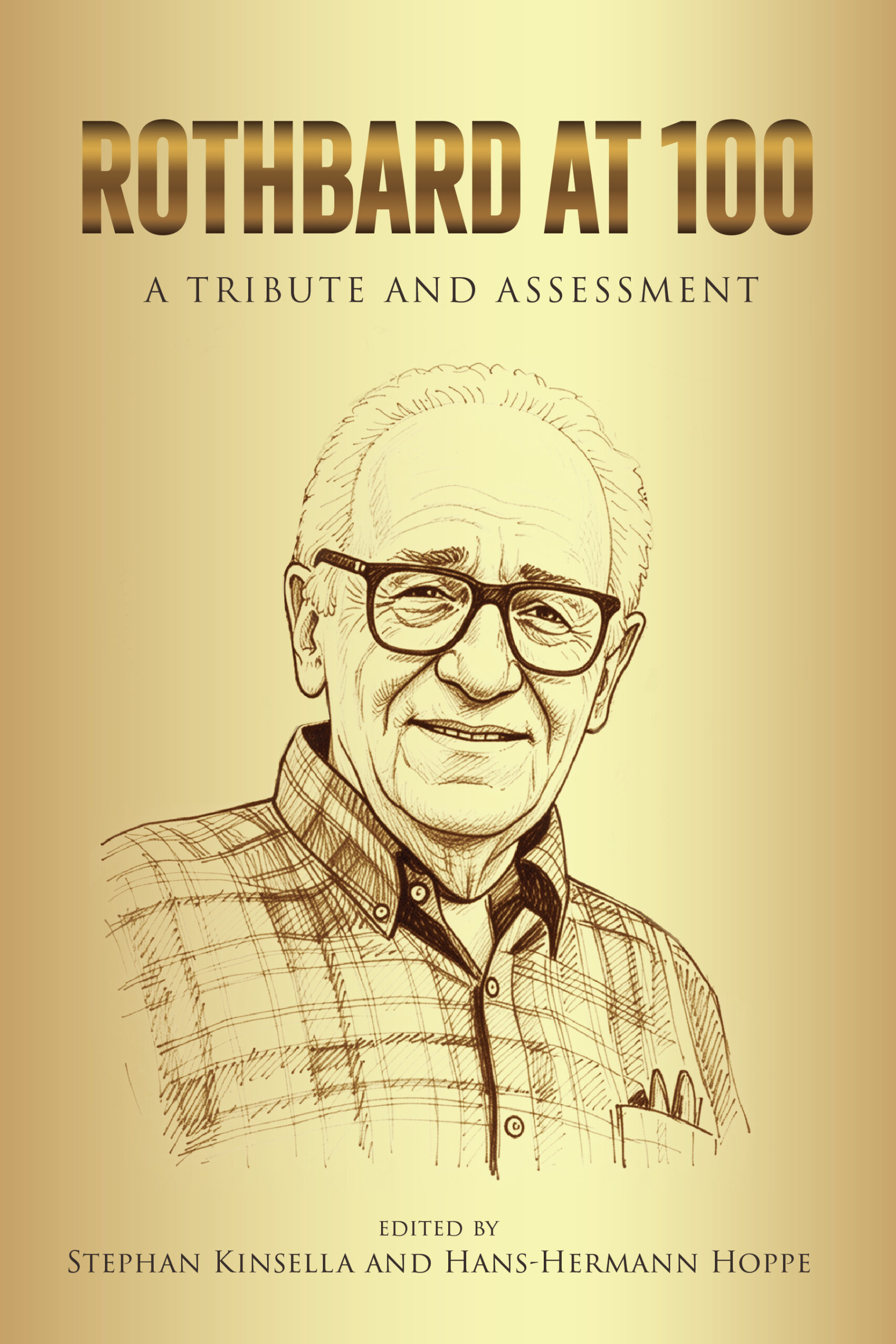
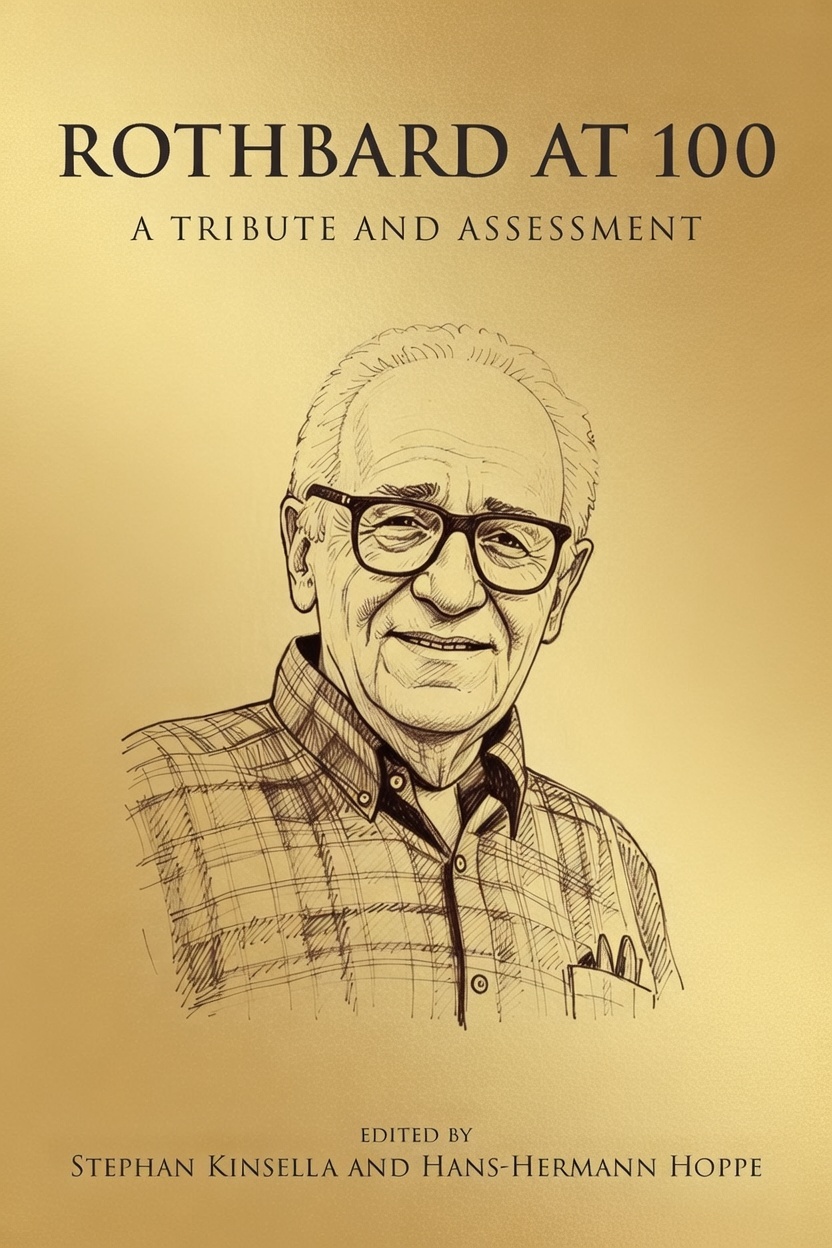
Choosing covers for the paper version of Rothbard at 100: A Tribute and Assessment (Papinian Press and The Saif House, 2026): Weigh in! The editors disagree. I won’t tell you which one der Hoppeinator prefers.
Update (April 15, 2026): We have selected 1b.
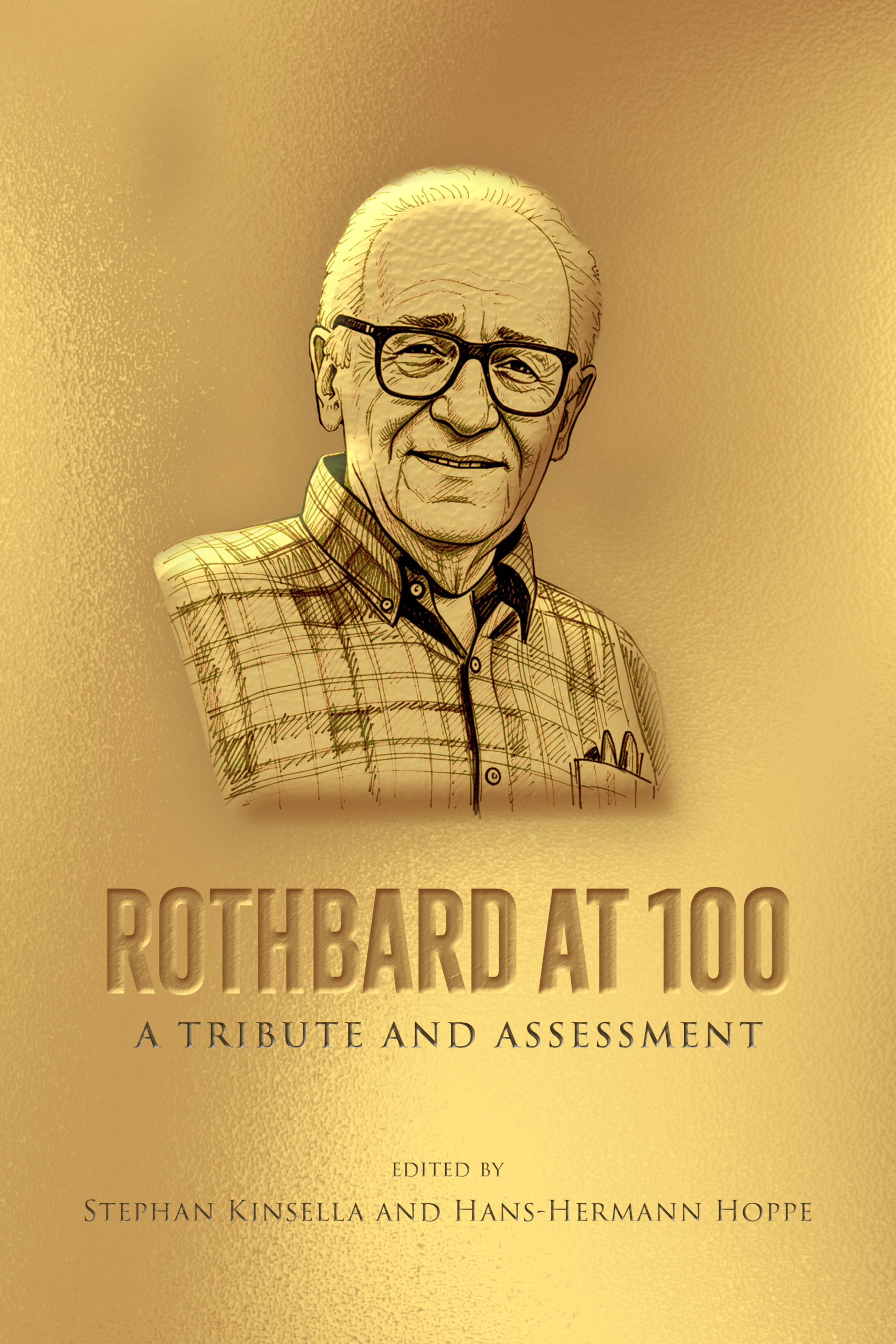
Rothbard at 100: new cover 2
I have today published Mises Institute: Quo Vadis? on my site and as Hans-Hermann Hoppe, “Mises Institute: Quo Vadis?,” Property and Freedom Journal (March 25, 2026)
Update: Hoppe Removed as Mises Institute Senior Distinguished Fellow
Mises Institute: Quo Vadis?
Hans-Hermann Hoppe
March 25, 2026My close, personal association with the Mises Institute goes back more than 40 years, to 1985, only three years after the Institute’s founding. In the course of the years I have given dozens upon dozens of lectures. I have been awarded its Schlarbaum Prize and the Rothbard Medal. For a decade, I served as editor of its Journal of Libertarian Studies. I am the MI’s only long standing Distinguished Senior Fellow. Only two years ago, in 2024, I was a featured speaker at the Institute’s Human Action Conference, and my 75th birthday was celebrated at the occasion. In the same year I sent this congratulatory note to Lew Rockwell at the occasion of the festivities organized in honor of his own 80th birthday:
Dear Lew, to your 80th birthday I send you my best wishes and want to say thanks for by now almost 40 years of friendship and intellectual camaraderie.
I know you are too humble to say this, but I can certainly do it: You rank among the most brilliant commentators and analysts of the present age and you are the world’s greatest living promoter of sound economics in the tradition of Ludwig von Mises and Murray N. Rothbard and, more generally, of liberty, peace, common sense, and reason.
Your legacy is assured: You are already a legend.
Yours truly,
Hans
The consequences of hosting Milei’s Spaniard propagandist, who stated from the Mises Institute podium that the most Zionist president in the world is the person who had done more than anyone before to spread the principles of the Austrian School and anarcho-capitalist ideas, came quickly.
On the same day, accounts promoting the Chabad-Lubavitch asset took advantage of this phrase to reaffirm, with the imprimatur of the Mises Institute, that the cryptoscammer Milei is the greatest Austro-libertarian who ever lived: [continue reading…]

Podcast: Play in new window | Download (Duration: 13:01 — 4.5MB)
Property and Freedom Podcast, Episode 318.
 AI-assisted audio narration of the main chapters of Rothbard at 100: A Tribute and Assessment (Papinian Press and The Saif House, 2026) is available at this PFS Youtube Playlist; the mp3 files may also be downloaded in this zip file.
The first two chapters—my “Preface” and Hans’s “Introduction”—were published the week of Rothbard’s birthday here on the Property and Freedom Podcast (PFP315 and PFP314). The other main chapters will be released sequentially weekly on Mondays. The next in the queue:
3. Thomas J. DiLorenzo, “The Inspiring and Courageous Intellect of Murray Rothbard”
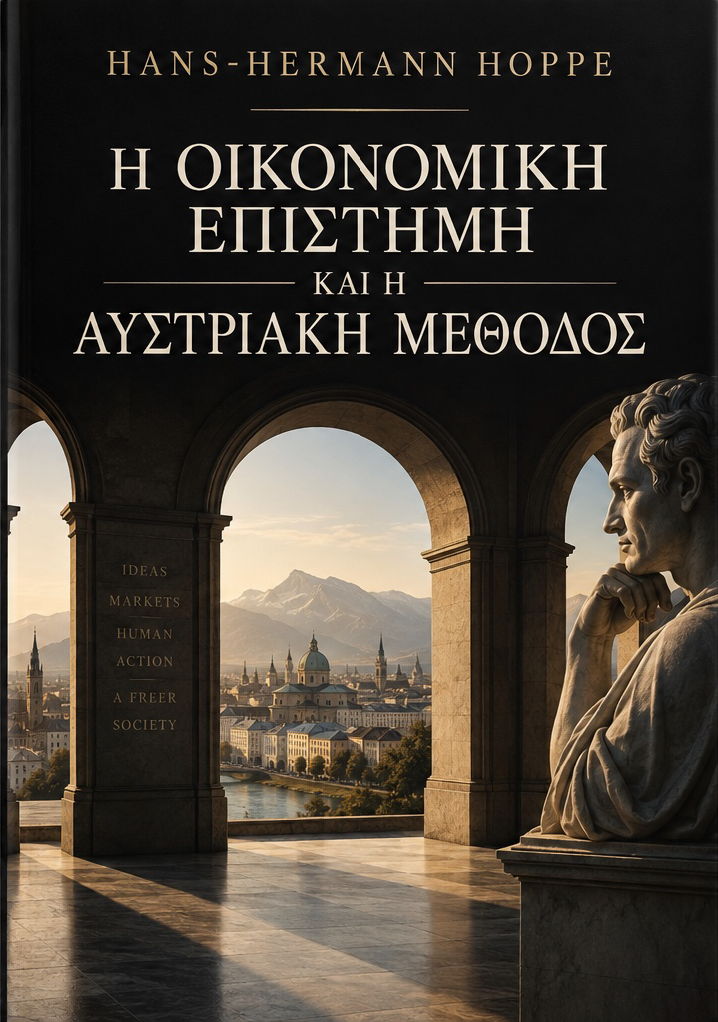
Professor Hoppe’s Economic Science and the Austrian Method (1995) has been translated into Greek as Η Οικονομική Επιστήμη και η Αυστριακή Μέθοδος. (pdf; .txt; docx; text below, from the .txt file; the translator notes that it is possible that some characters may not migrate properly to the Word file).
According to the translator, the aptly soi-disant Praxeologos,
Introducing this important work to a Greek audience that is largely unfamiliar with economics (and that includes Professors of Economics) would be of real value.
More on Milie: PFS; HansHoppe; StephanKinsella
From Oscar Grau’s tweet:
Many followers of the Austro-libertarian tradition in political and economic thought will, for some time, remain unable to grasp the shamefulness of this particular moment and the way in which it has dishonored the memory of Mises and Rothbard within the Mises Institute itself. pic.twitter.com/xH5IRxHkbe
— Oscar Grau (@ograu90) March 21, 2026
So … the self-professed world’s greatest Zionist president, supporter of Natenyahu’s genocidal war in Gaza, Trump, and the USrael war against Iran is the greatest libertarian ever … What a joke. And, sadly, there is applause instead of boos.
The list of countries currently at war is staggering. Murray Rothbard, who would have been 100 on March 2, was always against war. He was dismayed by the cold war. He would be more than alarmed by the aforementioned list and the US’s and Israel’s invasion of Iran. “I am getting more and more convinced,” he wrote a libertarian associate in 1959,
that the war-peace question is the key to the whole libertarian business, and that we will never get anywhere in this great intellectual counter-revolution (or revolution) unless we can end this Verdamte cold war—a war for which I believe our ‘tough’ policy is largely responsible.
Cross-posted at C4SIF Blog. See other posts on Javier Milei at PFS and https://stephankinsella.com/tag/milei/.
***
As I noted in Classical Liberals, Libertarians, Anarchists and Others on Intellectual Property, I was initially not clear what Javier Milei’s position on IP is. As I wrote there:
I’ve heard he has read my IP writing. He seems to be skeptical; see this tweet and Yumber Vera Rojas, “A decree by Javier Milei attacks copyright,” Página|12 (June 29, 2025) (“The regulations mean that hotels and party halls do not pay Sadaic … Musicians, managers, and directors of Sadaic oppose the measure, which could be brought to court in the coming days.”); “Milei government deregulates collection of author’s royalties“: “President Javier Milei government orders deregulation of the collection of authorship royalties in Argentina, whose processing was previously obliged to pass through a society for artists but can now be transmitted without intermediation.”
But see: [continue reading…]
 Cross-posted at StephanKinsella.com
As PFS followers know by now, this month marks Murray Rothbard’s 100th birthday, which is precisely why we released Rothbard at 100: A Tribute and Assessment two weeks ago, on his birthday. Hans Hoppe realized only a couple months ago that this must be done, so we worked hard with our network of supporters and friends to make it happen in time for this occasion.
This month, and this year, is thus a special time of celebration for admirers of Rothbard and lovers of liberty around the world. A deluxe clothbound version of the book will be released soon, and the PFS will feature a panel on Murray and the book at the upcoming 2026 (and Twentieth Anniversary) Annual Meeting of the Property and Freedom Society in Turkey in September.
No doubt other groups and institutions are also celebrating and commemorating in their own way. For example, “100 Years of Rothbard” will be held in Porto, Portugal, on June 27, 2026, sponsored by several Portuguese libertarian groups: Mises Portugal, Catalaxia, Don’t Trust Verify (bitcoin podcast), Zugatv (libertarian podcast), and Golpe de Sstado Podcasto (ancap podcasters). Hans Hoppe and I plan to attend and speak about Rothbard. [continue reading…]
It was Jeffrey Tucker’s good idea to ask Brian Doherty to write an introduction to Strictly Confidential: The Private Volker Fund Memos of Murray Rothbard back in 2010. Doherty had spent time years before at the Mises Institute researching Murray’s unpublished papers and letters when writing his monumental libertarian history, Radicals For Capitalism: A Freewheeling History of the Modern American Libertarian Movement. He was everything you want for an introduction writer: eager to do it, quick to the task, and provided gravitas to the book.
Sadly, Doherty “was found dead Friday morning after a fall the night before in Battery Yates park along the San Francisco Bay. He was 57.”
Doherty’s other book-length treatments of libertarian phenomena included Gun Control on Trial: Inside the Supreme Court Battle Over the Second Amendment (2008), Ron Paul’s rEVOLution: The Man and the Movement He Inspired (2012), This Is Burning Man, and Modern Libertarianism: A Brief History of Classical Liberalism in the United States (2025). [continue reading…]
Podcast: Play in new window | Download (Duration: 8:40 — 3.0MB)
Property and Freedom Podcast, Episode 317.
AI-assisted audio narration of the main chapters of Rothbard at 100: A Tribute and Assessment (Papinian Press and The Saif House, 2026) is available at this PFS Youtube Playlist; the mp3 files may also be downloaded in this zip file.
The first two chapters—my “Preface” and Hans’s “Introduction”—were published the week of Rothbard’s birthday here on the Property and Freedom Podcast (PFP315 and PFP314). The other main chapters will be released sequentially weekly on Mondays. The next in the queue:
Neo-Marxist German philosopher Jürgen Habermas has died; see Jürgen Habermas, influential German philosopher, dies at 96Jürgen Habermas, influential German philosopher, dies at 96 (AP, March 14, 2026).
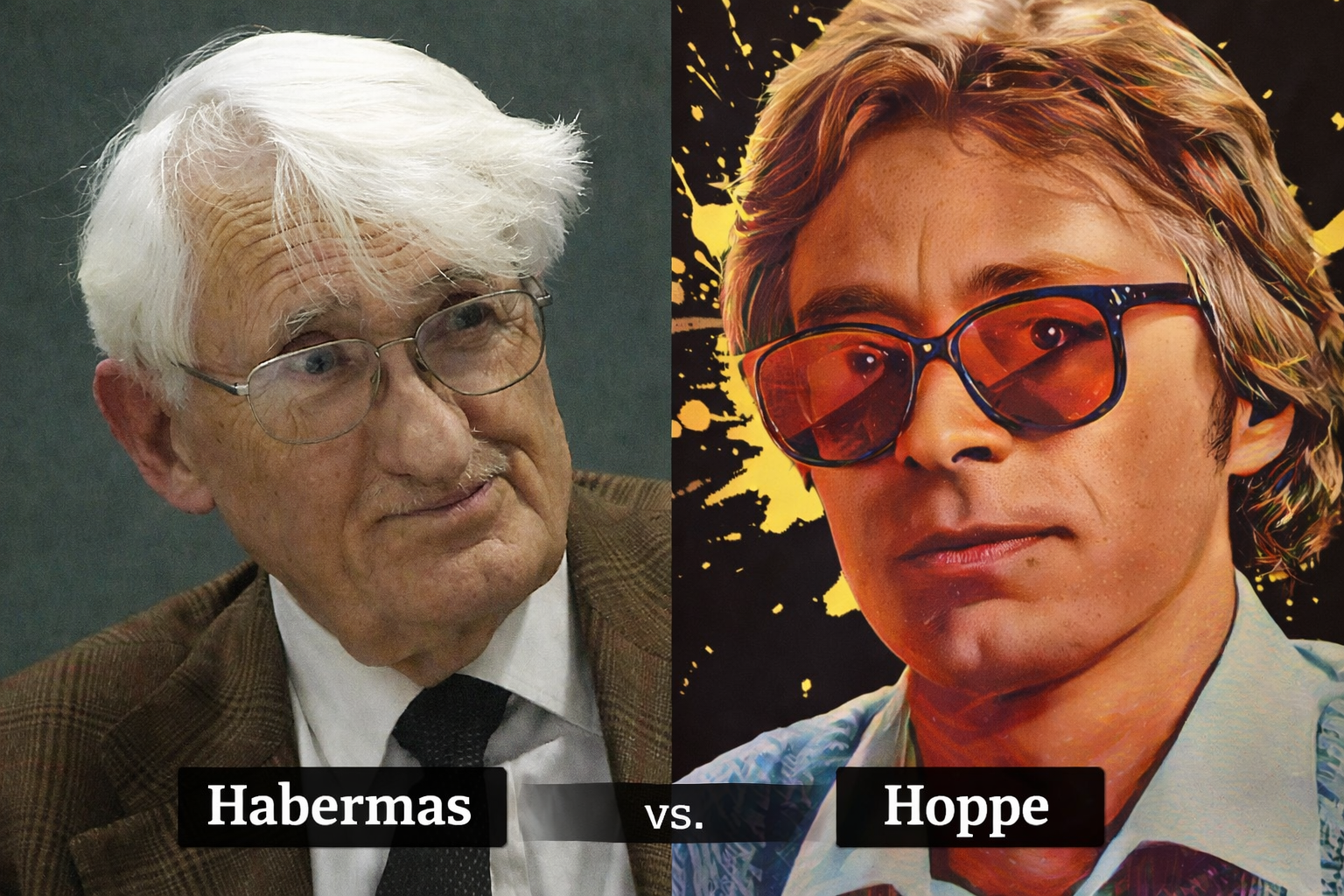 As admirers of Hans-Hermann Hoppe know, Habermas was one of Hoppe’s teachers and the principal advisor for his doctoral dissertation in Philosophy on David Hume and Immanuel Kant at Goethe-Universität, Frankfurt am Main from 1968–1974, Handeln und Erkennen [Action and Cognition] (Bern 1976) ). (At the time of time of his PhD dissertation, Hoppe was 24. He regards his “habilitation” thesis, written by the time he has reached intellectual maturity, and of course later work, as far more important than the PhD dissertation.)1 Hoppe soon abandoned the leftism of Habermas and the Frankfurt School and adopted Misesian Austrian economics and Rothbardian anarchist libertarianism. As Grok and ChatGPT recognize, Hoppe is Habermas’s most famous but politically most distant student (other prominent students of Habermas including more aligned figures like Axel Honneth, Rainer Forst, Claus Offe, and Hans Joas). [continue reading…]
- For his “Habilitation” thesis, in Sociology and Economics, from Goethe-Universität, Frankfurt am Main, in 1981, see Hans-Hermann Hoppe, Kritik der kausalwissenschaftlichen Sozialforschung: Untersuchungen zur Grundlegung von Soziologie und Ökonomie [Critique of Causal Scientific Social Research: Studies on the Foundation of Sociology and Economics] (Opladen: Westdeutscher Verlag, 1983); Kinsella, Hoppe’s Habilitation Thesis: Critique of Causal Scientific Social Research. [↩]
 From an email sent to PFS Members today:
Dear PFS Members,
As you know, earlier this month we published, on Murray Rothbard’s 100th Birthday, March 2, 2026, Rothbard at 100: A Tribute and Assessment online in digital format, and we are working on kindle, paperback, and deluxe hardcover/cloth editions which will be released well before our upcoming 20th Anniversary PFS meeting in September.
Appreciative of our efforts at the PFS to prepare and publish this book, and aware that such books are usually produced at a loss, some PFS members and friends have expressed an interest in helping to defray PFS costs associated with this and other projects. Accordingly, we will list Patrons in the published version of the book and provide a signed copy of the hardback to each Patron (after the 2026 PFS Annual Meeting, when many of the contributors will be available for signing). [continue reading…]
Brian Doherty, “100 Years of Murray Rothbard: Remembering America’s most radical and definitive modern libertarian intellectual,” Reason (3.2.2026):
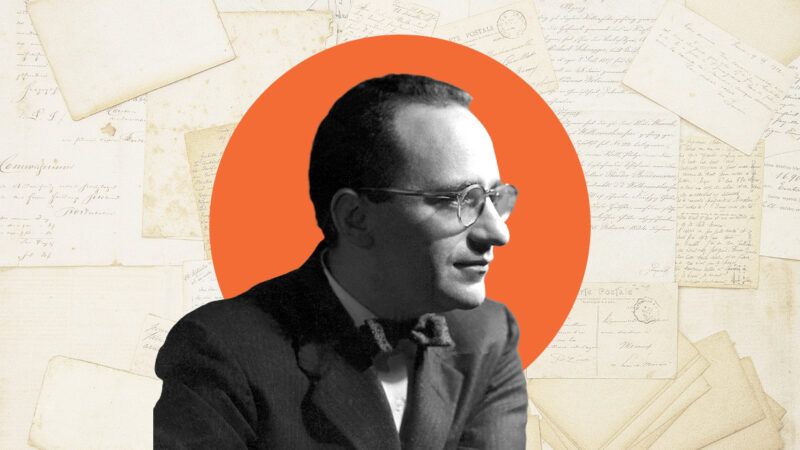
Murray Rothbard’s ferocious radicalism shaped the modern American libertarian movement. (Illustration: The Ludwig von Mises Institute/Liligraphie/Dreamstime)
Today is the centennial of the birth of Murray Rothbard. While he was alive, Rothbard was the most significant direct influence both on a wide range of individual libertarian scholars and activists and on the major institutions that constituted the American libertarian movement in the second half of the 20th century. He was key to the functioning of the Volker Fund, the Institute for Humane Studies, the Libertarian Party, the Center for Libertarian Studies, the Cato Institute, and the Mises Institute.
Rothbard’s intellectual goal was to forge a systematic approach to liberty, covering all the humane sciences—his particular specialties were economics, political philosophy, and history. He was a dedicated economics scholar and teacher, as well as a polemicist and movement builder. Most young libertarian writers and activists who arose from the 1950s through the ’70s credit Rothbard as a key influence, both intellectual and personal. For a time in the 1960s, per movement lore, the American libertarian movement was both forged and contained in his New York City living room. [continue reading…]
See also: 100 Years with Rothbard
100 Anos de Murray Rothbard,” Instituto Mises Portugal (March 2, 2026)
English translation:
100 Years of Murray Rothbard
News March 2, 2026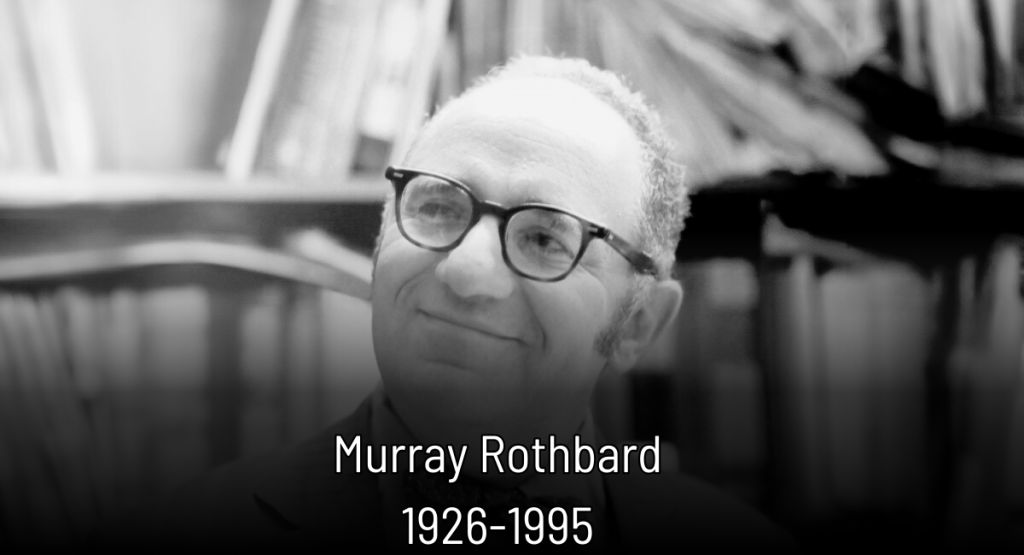
Murray Rothbard was a genius. Counting his contributions to economics, history, political philosophy, strategy, and even cultural commentary, he left this world a vast array of extraordinary ideas. One could spend years reading his work and still not exhaust it completely. [continue reading…]
Podcast: Play in new window | Download (Duration: 39:11 — 13.5MB)
Property and Freedom Podcast, Episode 316.
AI-assisted audio narration of the main chapters of Rothbard at 100: A Tribute and Assessment (Papinian Press and The Saif House, 2026) is available at this PFS Youtube Playlist; the mp3 files may also be downloaded in this zip file.
The first two chapters—my “Preface” and Hans’s “Introduction”—were published the week of Rothbard’s birthday here on the Property and Freedom Podcast (PFP315 and PFP314). The other main chapters will be released sequentially weekly on Mondays, starting with the one:
AI-assisted audio narration of the main chapters of is available at this PFS
Various members of the Libertarian Party of Switzerland and others held a Live Stream in honor of Rothbard on his birthday, March 20, 2026, including Martin Hartmann (Libertarian Party of Switzerland), Thomas Jacob (Witness at Mises University, Switzerland), Matthias Hummels (Board Member, Libertarian Party of Germany), and Andreas Tank (Translator of some of Rothbard’s works). This was held on Tank’s channel, Der rosarote Panzer, which, according to one of the commenters, is is one of the top libertarian channels in the German-speaking world.
The live stream included a reading, by Tank, of Hans-Hermann Hoppe’s “Introduction” to Rothbard at 100: A Tribute and Assessment (Papinian Press and The Saif House, 2026) (from about 21:00 – 1:07:27). Tank’s German translation of Hoppe Introduction is available at Einleitung: German translation of “Introduction” to Rothbard at 100. [continue reading…]
Podcast: Play in new window | Download (Duration: 27:24 — 9.4MB)
Property and Freedom Podcast, Episode 315.
AI-assisted audio narration of the main chapters of Rothbard at 100: A Tribute and Assessment (Papinian Press and The Saif House, 2026) is available at this PFS Youtube Playlist; the mp3 files may also be downloaded in this zip file.
The first two chapters—my Preface and Hans’s “Introduction”—are released today here on the Property and Freedom Podcast, with the other main chapters to be released sequentially weekly on Mondays.
Second “front matter” chapter: Hans-Hermann Hoppe, “Introduction.” [continue reading…]
Podcast: Play in new window | Download (Duration: 8:17 — 2.8MB)
Property and Freedom Podcast, Episode 314.
Thanks to volunteer efforts from Jorge Besada, AI-assisted audio narration of the main chapters of Rothbard at 100: A Tribute and Assessment (Papinian Press and The Saif House, 2026) is available at this PFS Youtube Playlist; the mp3 files may also be downloaded in this zip file.
The first two chapters—my Preface and Hans’s “Introduction”—are released today here on the Property and Freedom Podcast, with the other main chapters to be released sequentially weekly on Mondays.
First up: Stephan Kinsella, “Preface.”
Note: These audio versions were prepared by Jorge Besada. A professionally-produced audio format is now also available from the Saif House.
The cloth hardcover edition of Rothbard at 100: A Tribute and Assessment will be presented at 100 Years with Rothbard, Porto, Portugal, June 27, 2026. This and other formats are available at Amazon; Saif House also offers these versions as well as the professionally-produced audio version.
Thorsten Polleit, “Ohne Murray N. Rothbard kein Libertarismus” [“Without Murray N. Rothbard, There Would Be No Libertarianism”], Ludwig von Mises Institut Deutschland [Mises Institute Germany] (March 4, 2026) has published an appreciation of Rothbard and mentioning Rothbard at 100: A Tribute and Assessment (Papinian Press and The Saif House, 2026). Auto-translate below: [continue reading…]
Thanks to volunteer efforts from Jorge Besada, AI-assisted audio narration of the main chapters of Rothbard at 100: A Tribute and Assessment (Papinian Press and The Saif House, 2026) is available at the this PFS Youtube Playlist, and will also be podcast on the Property and Freedom Podcast in upcoming weeks. The mp3 files may also be downloaded in this zip file.
Jeffrey A. Tucker, “Murray N. Rothbard at 100,” Epoch Times (3/2/2026).
(See also Tucker’s “The Murray Rothbard I Knew,” Rothbard at 100: A Tribute and Assessment, Stephan Kinsella and Hans-Hermann Hoppe, eds. (Papinian Press and The Saif House, 2026), also published today).
Reprinted with permission of author.
Murray N. Rothbard at 100

Commentary
My friend Murray N. Rothbard, easily ranked as the leading and most productive libertarian scholar of the second half of the 20th century, would have been 100 years old on March 2. It is said he died too soon and surely those who knew him feel that often. That said, he produced more writing and scholarship in his life than hundreds of other great scholars combined. His library, which will likely never come out in collected works, amounts to a lifetime of reading. [continue reading…]
Related:
From LewRockwell.com:
Rothbard at 100
March 2, 2026
Today, March 2, would have been Murray Rothbard’s 100th Birthday. Rothbard’s most important intellectual heir, Hans-Hermann Hoppe, has published on his Property and Freedom Society Web site a tribute to this great man with twenty new essays by people who knew him, admired him, and were inspired by him. The book is online and will soon be available as a real book.
Hans Hoppe is widely regarded all over the world as Murray Rothbard’s most important intellectual heir and his closest disciple. He was a close collaborator, economics department colleague at UNLV, and great friend in Rothbard’s later years. Hans called his mentor “the greatest social theorist of the 20th century.” He extended Rothbard’s anarcho-capitalism significantly with his hallmark book Democracy: The God That Failed. Nothing else comes close.









 Alessandro Fusillo
 Andreas Tögel
 David Dürr
 Doug French
 Fernando Chiocca
 Greg Morin
 Hans-Hermann Hoppe
 Jay Baykal
 Jayant Bhandari
 Jeff Deist
 Jeffrey Barr
 Juan Fernando Carpio
 Ken Yamarashi
 León Isidoro
 Martin Cabrera
 Nick Hoppe
 Oscar Grau
 Peter Wong
 PFS
PFS scholarium
 Saifedean Ammous
 Sean Gabb
 Sean Ring
 Stephan Kinsella
 Stéphane Geyres
 Thomas Jacob
 Tom DiLorenzo
Follow Us!