≡ Menu

Doug French on PFS 2012: The World’s Greatest Haircut

I just returned from the 7th Annual Meeting of the PFS. Laissez-Faire Books’ Jeff Tucker has already weighed in (see Jeff Tucker on PFS 2012: The Center of the Conspiracy); here is Doug French’s piece (for other accounts of previous Annual Meetings of the PFS, see our Press page). Originally published as: Douglas French, “A Haircut in the Turkish Style,” Laissez Faire Books (Oct. 3, 2012; https://perma.cc/WJ9B-HL4X).

Dear Laissez Faire Today Reader,

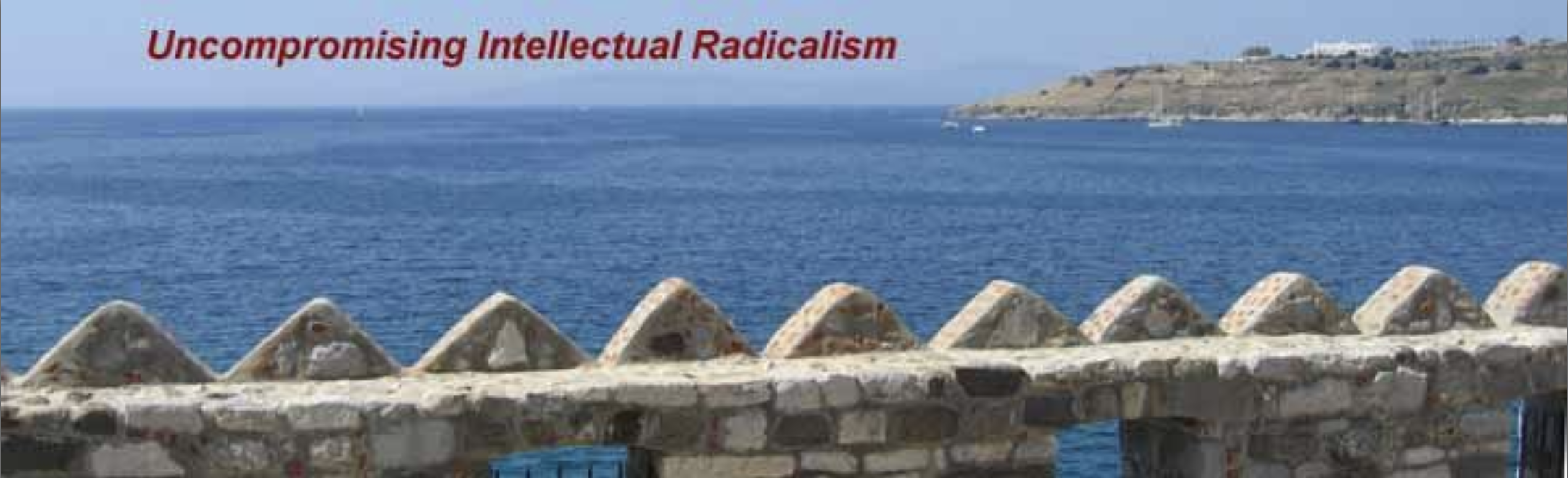
I’ve just returned from the sector of Bodrum, Turkey, that is the source of life and energy for every community in the world: the market. Yes, the Black Sea is fabulous, the mountains are stunning, the wild pigs intriguing, and the fish exotic. But it’s the commerce that gives Bodrum is essential charm.

The same is probably true in your community. So why are political elites all over the world conspiring to hobble, loot ,and otherwise put stumbling blocks in the way of commercial enterprise? The answer is wealth. Governments want it. The private sector has it and creates. QED.
The Doug French article below provides an evocative look at the local commercial culture. I know you will enjoy its insights. Afterward, I will describe some of the people who have attended this wonderful event that brought me to this far-flung place, and tell you something that has animated much of the conversation here.

Jeffrey Tucker
Laissez Faire Club

A Haircut in the Turkish Style
by Douglas French 

3A trip to Hans and Gulcin Hoppe’s Property and Freedom Society (PFS) salon in the beautiful port city of Bodrum is unforgettable in so many way ways. The “politically correct-free zone,” as professor Hoppe described it in his introductory remarks, is chicken soup for the isolated anarchist’s soul, with four days spent with the creme de la creme of stateless thinkers and theorizers.

The experience for invitation-only attendees is not as an admirer from afar, as is so often the case at conferences where the speakers rush in to give their talks, grab their honorariums, and rush off, out of reach of any real questions or socializing. In Bodrum, the stars are there to relax, and do, enjoying the tremendous hospitality, camaraderie, and comfort provided by the current dean of the Austrian School and his wife, Dr. Hoppe.

One is very likely to gain just as much insight during casual breakfast conversation as taking in the formal presentations. This is what is so special about Hoppe’s PFS salon. I’m attending my fourth PFS conference, and it is my fifth trip to Turkey, a country that while situated so close to much of the conflict in the world, always provides a sense of calm and serenity for me, faraway from America’s police state.

At the top of my agenda now whenever I come to Turkey is getting a real Turkishhaircut. My dad was a barber, who cut hair right up until the day he died at age 74. I grew up hanging around a barbershop. But the American haircut is but a doughnut hole compared to baklava.

The Turkish experience is rich and memorable. The Turkish barber is well aware that men grow hair in a number of places besides the top of their head. No knowledge of the Turkish language is required. It’s best to put yourself in the hands of the master scissorsmith, as he knows what needs to be done.

The communication required is the universal language of barbershops, pointing to the top of the ear and a short discussion in hand signals of what the back should look like.

The Turkish barber always scissor cuts, layering on both sides and back from bottom to top. Most U.S. barbers layer from front to back. The results are much different, and the shape of the cut remains intact much longer. There is no use of electric clippers with bulky plastic guides, as used so often at franchised barbershops in the U.S. The barber’s scissors work is fast and furious, pinching thumb and forefinger together in rapid succession, his concentration as intense as a painter’s working on a portrait.

The neighborhood shop in Bodrum that I visited had multiple flat-screen TVs blaring what looked and sounded to be local news. A particular news item gave my barber cause to stop suddenly, crank up the TV’s volume, and stop the proceedings as he peered into the tube. As is the case of all barbershops, a young apprentice waited patiently to sweep the floor, pick up dropped combs, and provide towels as needed. In a few years, he will become a master of the scissors universe. The look on his face said he thought he was ready to start cutting hair already, instead of being relegated to sweeping up the results of his employer’s work.

Although a young man, my barber’s place in the neighborhood was illustrated by the half-dozen people who acknowledged the coiffeur as they walked or drove by on the narrow cobblestone street that fronted his shop.

Next to the mirror, a small crockpot cooked up a plastic goo the color of bubble gum. After the hair cutting was complete, the barber scooped out a bit of the warm plastic on the tip of a tongue depressor and scrapped the substance into my ear. After it settled briefly, he ripped the plastic out and with it came hairs that had been growing unperturbed until then. He proudly showed me what was pulled out with the plastic.

Next he applied a clear liquid to my forehead with a cotton wipe. The liquid was a skin toner product, and he again made sure he showed me the grease and dirt that the toner had lifted from my forehead, despite my having showered but a couple hours prior. My eyebrows were next to be trimmed.

The removal of hair from the ear region did not stop with the plastic goo treatment. My hairsmith lit a small torch, and while shielding my eyes, he ran the flame expertly around my earlobes and top of my cheeks, singeing off any peach fuzz.

It’s rare that you see a straight edge razor in a U.S. barbershop, but it is standard equipment in Turkish shops. My Turkish barber handled the straight edge with dexterity. With it, he painstakingly trimmed my sideburns and shaved the back of my neck. There is no cleaner feeling.

From there, he spent an inordinate amount time trimming and shaping my gray sideburns, using his scissors to cut expertly, literally hair by hair. A huge contrast to the quick buzz over your sideburns U.S. barbers provide. The barber then directed the scissors to my nostrils, to excise annoying hair that most barbers stateside ignore.

If this attention weren’t bracing enough, next came a splash of lavender aftershave that made the cool breeze from the shop’s fan rush in my pores. The assistant then swung into action with towels and prepared the sink for a shampoo. My barber opened a cabinet door pointing to more than half-dozen large bottles of different brands of shampoos, giving me my choice. I left it up to his expert judgment.

The vigorous shampoo was followed by a massage starting first with my shoulders. The barber-turned-masseuse then worked down each arm and finished by pulling each of my fingers, popping the knuckles one by one.

I was then good to go. All for 20 Turkish lira ($12). My 10 lira tip looked to genuinely make his day, and we walked out to street arm in arm.

Civilization has been around for a long time in Bodrum. The Amphitheatre situated in the hillside overlooking Bodrum was built during the Carian reign in the Hellenistic age (330-30 B.C.). The Castle of St. Peter, Bodrum’s most distinguished landmark, divides the city’s harbor inu half. Work on the castle began in 1402 by the Knights of St John. The castle and city came under Ottoman rule in 1523. After centuries of neglect, the castle became a prison in 1895, and was even damaged during World War I by shells from aFrench warship.

Barbering was going on in Bodrum long before barbers were cutting hair in the U.S. Perhaps American haircutters will come around. But it’s not likely. Barbers have licensing and state rules to live buy. Minimum wage laws make hiring apprentices impossible. Sticking warm plastic in customers and burning off slight hairs with open flames would be frowned upon by the U.S. nanny state.

In an increasingly uncivilized world, made that way by ever-present and engorged governments, it is refreshing to attend a conference of anarchists to renew one’s sanity. I was able to recharge my intellectual batteries listening to presentations from the likes of Laissez Faire authors Hoppe, Kinsella, and Tucker. I can now return to the U.S. replenished, ready for the intellectual fight.

And with the best haircut in the world.

Sincerely,

Douglas French

{ 4 comments }

Jeff Tucker on PFS 2012: The Center of the Conspiracy

Perma: https://perma.cc/5ZM9-BEF3

I’m just leaving the 7th Annual Meeting of the PFS—a day early, unfortunately. Held, as always, in Bodrum, Turkey, this is my favorite PFS conference  that I’ve attended yet—in part because my good friend Jeff Tucker attended, and in part because this time I brought my 9 year old son with me. While he was here, Jeff posted this sparkling account of his initial impressions of the conference on the Laissez-Faire Books site. It’s reprinted below. For other accounts of previous Annual Meetings of the PFS, see our Press page.

Update: See also Interview with Jeffrey Tucker and Professor Hans-Hermann Hoppe – PFS 2012 and Jeffrey A. Tucker, “The Joys of Fresh Whole Fish,” Epoch Times (Nov. 20, 2024).

The Center of the Conspiracy

Jeffrey A. Tucker
September 29, 2012

I’ve found it: the organizing cell of what must be the world’s most dangerous intellectuals. It is right in this room where 100 people now sit, listening and discussing. But instead of heated and sweaty plotting, what we find instead is the atmosphere is of a 19th-century salon: polite, smart, fun. It’s the ambition and dream that is delightfully dangerous: to upend and overturn the oppression that most people in all nations suffer and figure there is little they can do about it.

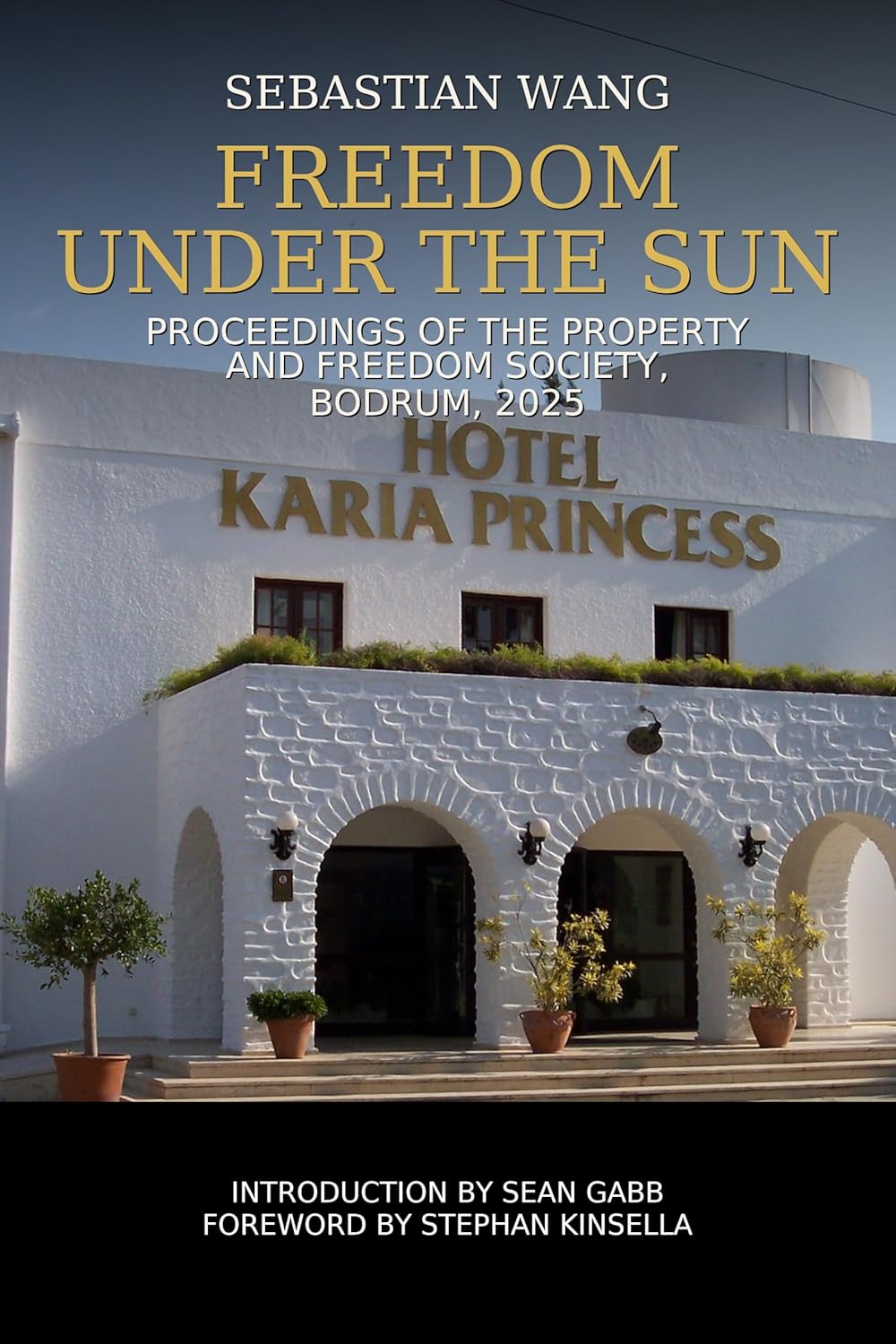
The cause is liberty, property, and anti-imperialism — same as that which inspired the American Revolution. But the place this time is Bodrum, Turkey — a place that seems to have been founded at the beginning of time — at the beautiful hotel called Karia Princess. It’s in a land I’ve never visited before and couldn’t even imagine before seeing its terrain out of the airplane window.

Yes, I’m a typical American who has a hard time imaging the existence of vibrant, thriving, beautiful worlds outside the nation-state I know best. The farther reaches of Europe’s oldest civilization are precisely this, and filled with surprises around every corner.

The commercial district is teeming with modern energy, with all the newest stuff. But just a few feet away, fishermen sell their catches straight from the boat at the wharf, like a scene from a Renaissance painting. The old and new mix in a symphonic way, and to the same degree that multifarious languages and cultures live side by side in peace.

The meeting is the annual gathering of the Property and Freedom Society, as founded and headed by the famed radical intellectual Hans-Hermann Hoppe, a man who has become a legend in his own time. He makes his home in Istanbul, but comes here once a year to run this little adventure. His newest book, The Great Fiction, has been published by Laissez Faire Books. The book is on display here and is the talk of the conference.

The book takes on the idea of the nation-state most directly. Nations are real, he argues, insofar as we think of them as distinct groups of people with particular cultures and religions. States are something else entirely — gangs of elites who bamboozle the population with ideology into giving up property, freedom, and power that should naturally belong to the people. The answer to the future in the Hoppean view: Embrace society and abolish the state. [continue reading…]

{ 6 comments }

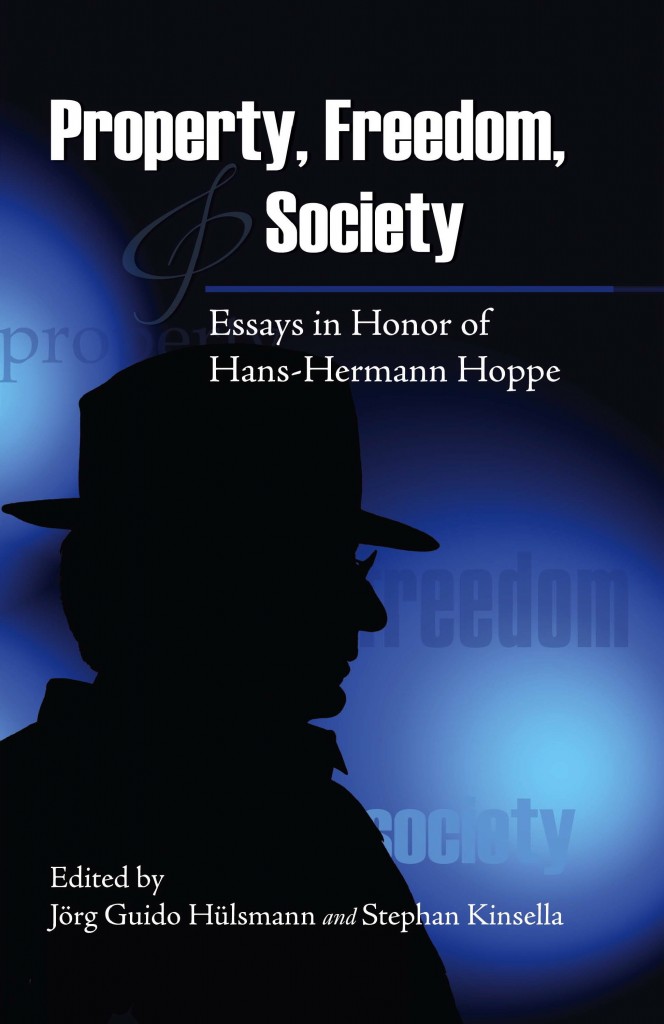
Professor Hoppe’s festschriftProperty, Freedom, and Society: Essays in Honor of Hans-Hermann Hoppe (Mises Institute, 2009), which was already available in PDF, print, and epub formats, is now available in a large print edition as well. Thanks to Skyler Collins and the Large Print Liberty service.

{ 0 comments }

Hoppe’s New Book: The Great Fiction

Hoppe, The Great Fiction-coverProfessor Hoppe’s latest book, The Great Fiction: Property, Economy, Society, and the Politics of Decline, was published today by Laissez Faire Books. It is available for purchase in print or ebook form here; a free epub of the book, along with epubs of many other books, is available to members of the Laissez Faire Club.

As Jeff Tucker’s Editorial Preface indicates:

The title comes from a quotation by Frederic Bastiat, the 19th century economist and pamphleteer: “The state is the great fiction by which everyone seeks to live at the expense of everyone else.”

Other information about the book:

The release of Professor Hoppe’s new book is timed nicely to coincide with the Seventh Annual Meeting of the Property and Freedom Society later this month in Bodrum, Turkey.

{ 0 comments }

Hoppe in FOCUS: Der Staat als bloßer Konkurrent

Professor Hoppe’s article Der Staat als bloßer Konkurrent [PDF] [“The State as a Mere Competitor”] has appeared in a recent issue of the conservative/free-market leaning magazine FOCUS (35/2012), the third-largest weekly news magazine in Germany.

{ 0 comments }

Neville Kennard, R.I.P.

Neville Kennard,  R.I.P.

My dear friend Neville Kennard died on June 3, 2012, at the age of 74. I first met Nev about 4 years ago. Out of the blue, he had contacted me, briefly introduced himself, and asked if he could attend the 2008 Property and Freedom Society meeting in Bodrum. He came to Bodrum again in 2009 and 2010, and we – he, his wife Gaby, Gulcin and I – met again in Istanbul, in January of 2011. Nev had then planned to come back in May to attend our 2011 PFS meeting, but he had to cancel in the last minute, because he had been diagnosed with melanoma and required urgent surgery. Everything appeared to go well after that, or so it seemed. In November of 2011, we met in Australia. Nev had sponsored my trip to Sydney to be the keynote speaker at the first Australian Mises Seminar and Conference. At the time he appeared full of energy and enthusiasm and was looking forward to another trip to Bodrum. But in January, he wrote me that the cancer had returned and he would be unable to come. He did not indicate how serious the matter was, however, and so I was in complete shock when I learned, only a couple of weeks ago, from his son Sam and his wife Gaby that Nev was about to die.

Nev was an enormously successful self-made Australian businessman, a sailor, aviator, globetrotter and adventurer. He was unpretentious. He traveled with only a handbag and, while in Turkey, for example, he crisscrossed the country by bus and train. From his appearance and conduct you never would have guessed that he was a man of great wealth. He was extremely well read, immensely curious and always full of ideas and plans. He was a hard-core Rothbardian, an uncompromising anarcho-capitalist, and a formidable intellectual fighter. He loved and he hated all the right people. He was a great supporter of the Property and Freedom Society and its most generous donor. In the short time that we knew each other Nev and I had become very close friends. I feel blessed to have known a great man, and I will sorely miss him.

My thoughts go out to his family, to his wife Gaby, to his sons Sam, Walt and Jim, and to his brother Andy.


Benjamin Marks has written a moving tribute to the great Neville Kennard:

http://economics.org.au/2012/06/neville-kennard-obituary/

Hans-Hermann Hoppe

{ 3 comments }

[Update: For further information about this edition as well as the expanded second edition, 2021, see here. See also:

Professor Hoppe’s new book, The Great Fiction, is forthcoming from Laissez Faire Books, and discussed by Jeff Tucker in his post Conspiracies and How to Defeat Them. As Tucker writes:

“If you are unfamiliar with the work of Hoppe, prepare for The Great Fiction to fundamentally shift the way you view the world. No living writer today is more effective at stripping away the illusions most everyone has about economics and public life. Hoppe causes the scales to fall from one’s eyes on the most critical issue facing humanity today: the choice between liberty and statism.”

A longer excerpt from the post follows below:

[continue reading…]

{ 0 comments }

Recently we published an excerpt on www.misesinfo.org from von Mises’ book Bureaucracy, which states: “Representative democracy cannot subsist if a great part of the voters are on the government payroll.” You, too, echo these points, almost 70 years later. When will von Mises’ insights finally bear fruit?

I go even further in my views than Mises. I maintain, and have tried to provide evidence of this in many different ways in my writings, that it is democracy which is causally responsible for the fatal conditions afflicting us now. The number of productive people is constantly decreasing, and the number of people parasitically consuming the income and wealth of this dwindling number of productive people is increasing steadily. This can’t work in the long

A longer excerpt from the post follows below: Interview with Professor Hans-Hermann Hoppe – Producers against parasites: a call for class struggle

Professor Hoppe’s new book: Der Wettbewerb der Gauner (“The Competition of Crooks”)

{ 0 comments }

Interview mit Prof. Dr. Hans-Hermann Hoppe:

“Produzenten gegen Parasiten: Aufruf zum Klassenkampf”


{ 0 comments }

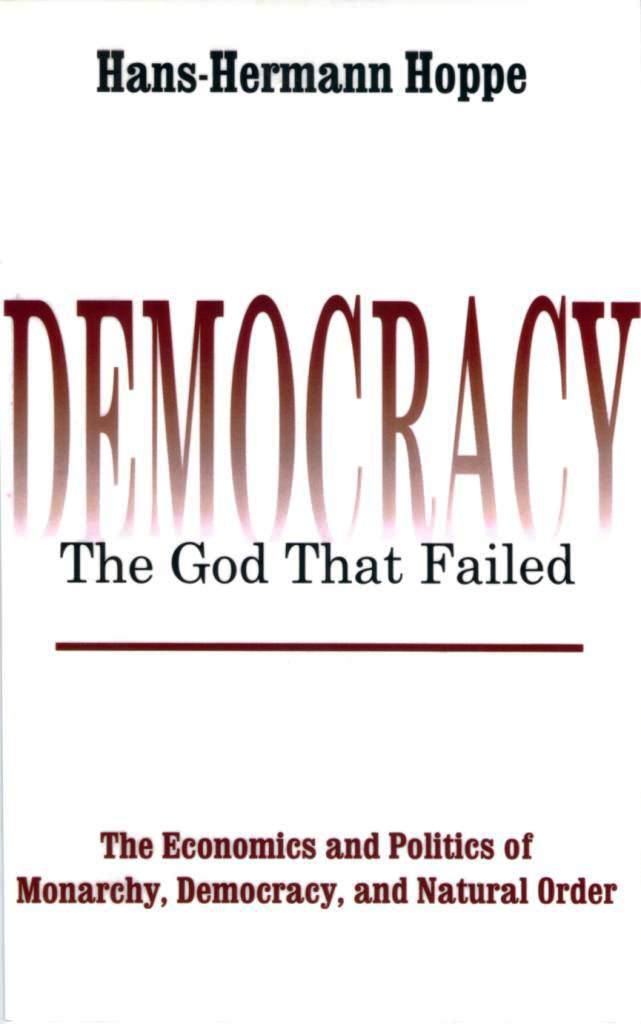
Democracy – The God That Failed

Andy Duncan (http://thegodthatfailed.org/) has been interviewed by Greg Moffitt on ‘Legalise Freedom’.

They discuss the works of Professor Hans-Hermann Hoppe, particularly, Democracy, The God That Failed.

MP3 link: go to http://legalise-freedom.com plus /audio/LF2-Andy-Duncan.mp3

{ 0 comments }

“Steuern sind Diebstahl”

Steuern sind Diebstahl

German translation of Hoppe’s Philosophie Magazine Interview on Taxation (2011).

{ 0 comments }

Der Staat ist eine kriminelle Organisation”  (The state is a criminal organization) Interview with Hoppe, Wiener Zeitung

Der Ökonom und Anarchokapitalist Hans-Hermann Hoppe spricht über die Mängel des Sozialismus, über Privateigentum als Voraussetzung für Wohlstand, untersucht die Zukunft der EU und plädiert für eine Welt ohne staatliche Regulierungen.

{ 0 comments }

Der Wettbewerb der Gauner: Über das Unwesen der Demokratie und den Ausweg in die PrivatrechtsgesellschaftA new book has been released in German with material from Prof. Hoppe and a foreword by Prof. Thorsten Polleit. This is an introduction to the field of private law societies and contains translations of several speeches held at the PFS and the LvMI, texts from LewRockwell.com and interviews from German newspapers. Amazon.de link; publisher’s website.

{ 0 comments }

Dr. Hans-Hermann Hoppe despre impracticabilitatea unui Stat mondial şi despre eşecul democraţiilor de tip vestic, the Romanian translation of “Dr. Hans-Hermann Hoppe on the Impracticality of One-World Government and the Failure of Western-style Democracy,” The Daily Bell (Mar. 27, 2011), has just been published.

{ 0 comments }

Professor Hoppe was previously interviewed on Australian Broadcasting Corp. Radio, on the topic “Anarcho-capitalist libertarianism: What is it?” (approx. 25 minutes). It was aired on Jan. 23, 2012; audio is available here. As described on the ABC site, “What is anarcho-capitalist libertarianism? Hans Herman Hoppe explains the idea behind it and why it’s a very different and quite radical way to think about government, society and the economy.”

{ 1 comment }

Pictures from PFS 2011 Annual Meeting

Paul Vahur has organized selected pictures from the 2011 meeting; they can be seen at https://plus.google.com/photos/102370610460720295055/albums . The relevant albums are 5 topmost, names starting with PFS2011.

{ 0 comments }