Javier Milei’s administration has recently announced a plan to inject pesos through Argentina’s central bank, with the declared objective of boosting consumption and thus “stimulating growth. This implies a reduction by 5 points in the banking system reserve requirements.”1
This economic plan is textbook Keynesian economics. The Keynesian myths behind this policy—namely, the Keynesian multiplier, the accelerator principle, and the idea that credit expansion can create sustainable economic growth—have been refuted time and again by Austrian economists.2 Its long-term negative consequences are entirely predictable: distorted relative prices, malinvestment leading to business cycles, renewed inflation, and a further entrenchment of the very monetary central planning that Milei once promised to abolish.
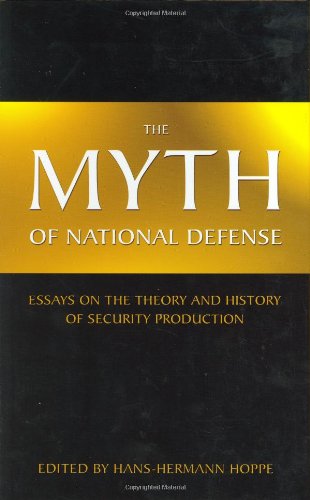
This is just one of many examples demonstrating that Javier Milei is not an Austrian economist, let alone a libertarian. Here is a president who publicly hails Murray Rothbard as the greatest economist who ever lived, only to attack Professor Hans-Hermann Hoppe—whose views on monetary theory are virtually identical to Rothbard’s as “economically illiterate,” while implementing Keynesian economic policies. Rothbard would be rolling in his grave.
It is shameful that some Austrian economists and self-proclaimed “libertarians”—even those who have contributed to the critique of Keynesian economics and the refutation of its dogmas—continue to promote Milei as an Austro-libertarian hero worthy of praise.
- See https://www.infobae.com/economia/2026/03/29/el-gobierno-sale-a-inyectar-pesos-con-un-doble-objetivo-darle-un-envion-al-consumo-y-sacar-del-piso-al-dolar/. [↩]
- For a critique of the Keynesian multiplier and accelerator principle, cf. Henry Hazlitt, The Failure of the “New Economics” (Princeton, N.J.: D. Van Nostrand, 1959) pp. 135-155; Jesús Huerta de Soto, Money, Bank Credit and Economic Cycles, 4th ed. (Auburn, Ala.: Mises Institute, 2020), pp. 558-571. For the Austrian theory of the business cycle, which demonstrates that credit expansion can never achieve sustainable economic growth, see Ludwig von Mises, Human Action: A Treatise on Economics, Scholar’s ed. (Auburn, Ala.: Mises Institute, 1998 [1949]), chapter XX, pp. 535-583, Murray N. Rothbard, Man, Economy, and State, with Power and Market, Scholar’s ed, 2nd ed. (Auburn, Ala.: Mises Institute, 2009 [1962]), pp. 989-1024, Huerta de Soto, Money, Bank Credit and Economic Cycles, pp. 167—714. For other critiques of Keynesian economics, cf. Hans-Hermann Hoppe, “Theory of Employment, Money, Interest, and the Capitalist Process: The Misesian Case Against Keynes”, reprinted as chapter 5 in The Economics and Ethics of Private Property, 2nd ed. (Auburn, Ala.: Mises Institute, 2003), pp. 139-174, Rothbard, Man, Economy and State with Power & Market, pp. 776-792. [↩]

















 Doug French
 Fernando Chiocca
 Hans-Hermann Hoppe
 Jay Baykal
 Juan Fernando Carpio
 PFS
PFS Stephan Kinsella
 Tom DiLorenzo