It was Jeffrey Tucker’s good idea to ask Brian Doherty to write an introduction to Strictly Confidential: The Private Volker Fund Memos of Murray Rothbard back in 2010. Doherty had spent time years before at the Mises Institute researching Murray’s unpublished papers and letters when writing his monumental libertarian history, Radicals For Capitalism: A Freewheeling History of the Modern American Libertarian Movement. He was everything you want for an introduction writer: eager to do it, quick to the task, and provided gravitas to the book.
Sadly, Doherty “was found dead Friday morning after a fall the night before in Battery Yates park along the San Francisco Bay. He was 57.”
Doherty’s other book-length treatments of libertarian phenomena included Gun Control on Trial: Inside the Supreme Court Battle Over the Second Amendment (2008), Ron Paul’s rEVOLution: The Man and the Movement He Inspired (2012), This Is Burning Man, and Modern Libertarianism: A Brief History of Classical Liberalism in the United States (2025).
Reason’s Nick Gillespie wrote on Facebook:
Unlike Camus with Sisyphus, I don’t have to imagine Brian happy as he chronicled the great, innovative weirdos who created things like Burning Man, underground comix, cryptocurrency, and the modern libertarian movement. He was every bit as weird, cranky, and wonderful as the people and movements he wrote about.
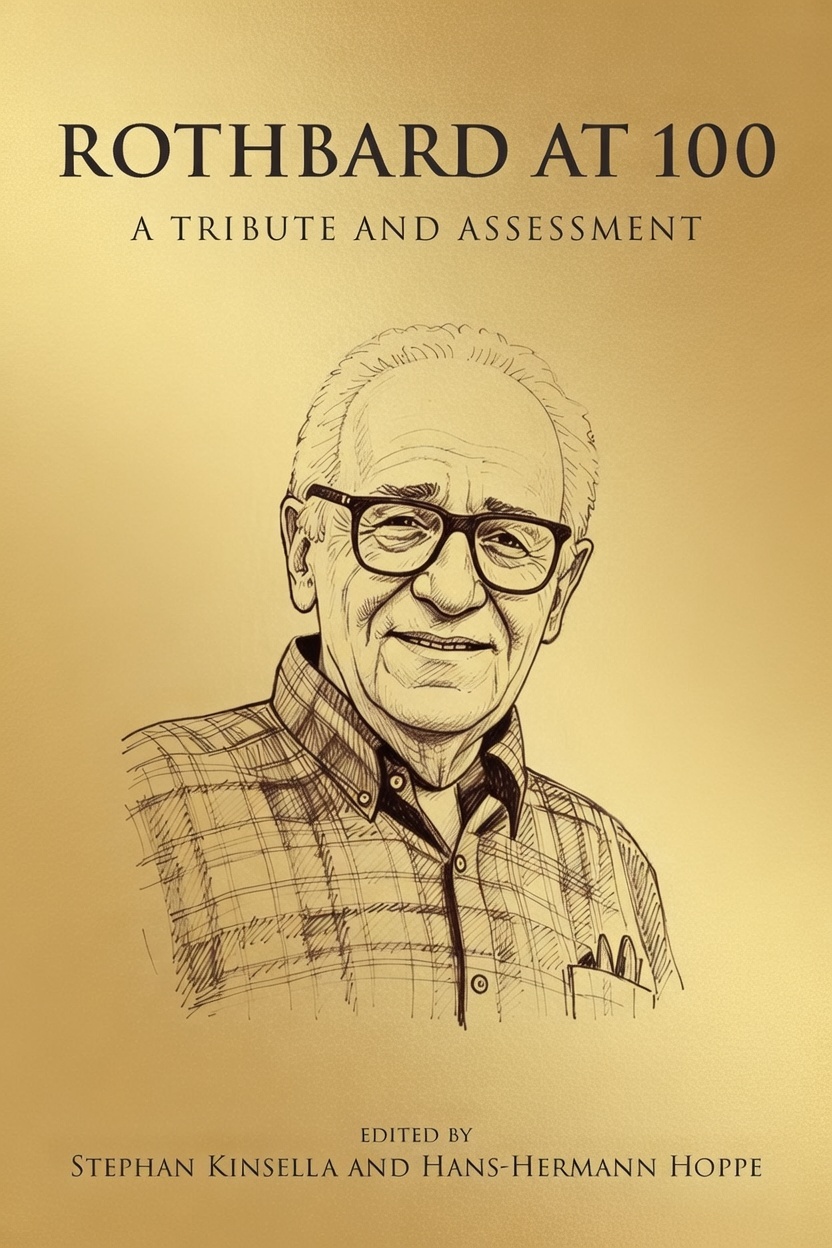
Doherty emphasized (twice) in his Strictly Confidential introduction, “I never met Murray Rothbard.” But the man who spent his career researching libertarianism wrote, “More than any other person, Murray Rothbard was the modern American libertarian movement.”
David Leonhardt wrote a sizable review of Radicals for The New York Times. He wrote that everything about the book was too long—its terms like “Popperian falsificationist,” its length (more than 700 pages), and some sentences exceeding 100 words.
Writing about Rothbard in Strictly Confidential, one can see Doherty was not afraid to use a full array of punctuation.
But most especially in this book—because of its immense range, its private purpose, and its easy and wide erudition—you are meeting the man at his finest: impassioned, funny, learned, brilliant, invaluable, relentless. I advise you to read this with a pen and notebook in hand. Rothbard is going to teach you so many things, in so many unforgettable formulations, that you are going to want to take note of them; just as Rothbard, in his decades of staggering reading and thinking, took notes for us, and passed on his insights tirelessly.
Doherty studied all the great Austrian thinkers, “and above all Murray Rothbard, the latter of whom, fittingly, was the subject of Doherty’s last piece published before his death, ‘100 Years of Murray Rothbard,’” writes Matt Welch.
Doherty’s last piece contained this nugget:
When I interviewed Milton Friedman the year Rothbard died, I learned that Friedman continued to worry over Rothbard’s critiques for decades, despite being a more famous and respected Nobel winner.
The piece also contained some questionable characterizations of Rothbard’s later views on immigration, but out of respect for the moment we shall let that pass.
Doherty concludes his piece with:
The vast majority of Rothbard’s writing and advocacy was about realizing a human society bound by the unavoidable logic of free markets to maximize how human beings can best serve each other through the free exchange of private property, free from violent interference against the peaceful. It’s a vision that’s highly noble and highly energizing, and it will continue to influence generations of libertarians to help make the world a richer, freer, and more just place.
The world is worse for losing Brian Doherty far too early.











 Doug French
 Fernando Chiocca
 Hans-Hermann Hoppe
 Jay Baykal
 Juan Fernando Carpio
 Martin Cabrera
 Oscar Grau
 PFS
PFS Stephan Kinsella
 Tom DiLorenzo